modi ramps gen
|

Modi ramps up Gen Z outreach on Instagram

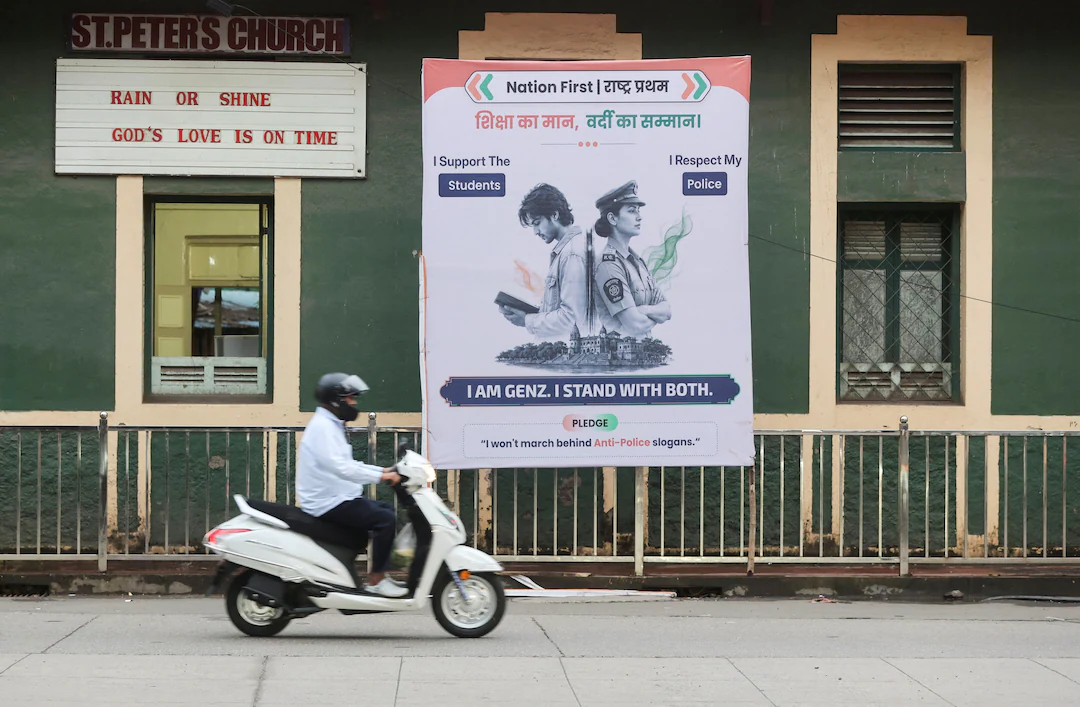
Indian Prime Minister Narendra Modi has launched a fresh social media campaign aimed at winning over young voters, shifting to a more informal and relatable style on Instagram after recent student-led protests exposed growing frustration over jobs and education.

The campaign features selfie-style videos, casual greetings and short clips with popular music, reflecting a departure from the highly polished political messaging traditionally associated with Modi and his Bharatiya Janata Party (BJP). The strategy is designed to connect with India’s Generation Z audience, which is expected to play a decisive role in the 2029 general election.

The renewed digital push follows nationwide protests by students and job seekers last month after an examination paper leak triggered widespread anger over the country’s education and employment system. The demonstrations eventually led to the resignation of India’s education minister.

In response, BJP leaders and government ministries have increased their presence on youth-focused platforms by sharing short videos with minimal editing and a more spontaneous style. Officials believe authentic content is more likely to resonate with younger audiences than carefully scripted political messaging.

Political observers say Instagram and similar platforms reward creativity, humour and genuine interaction, making them more challenging environments for traditional political campaigns. They note that recent protests gained significant momentum through viral reels and short videos that amplified public dissatisfaction.

Beyond social media, the BJP and its ideological affiliate, the Rashtriya Swayamsevak Sangh (RSS), have also expanded outreach efforts by organising events and discussions targeting students and first-time voters.

With more than half of India’s 1.4 billion population under the age of 35, analysts say younger voters are expected to become one of the most influential electoral groups in the next general election.

Similar Posts

  • | |

    Federal government freezes ad hoc relief allowance…

    The federal government has decided to keep the 2023 and 2024 ad hoc relief allowances unchanged for its employees, maintaining the existing rates while also outlining the allowance structure for newly appointed staff. According to a notification issued by the Ministry of Finance, the Ad Hoc Relief Allowance-2023 will remain frozen at the level applicable on June 30, 2023, and will not be revised until further instructions are issued. Under the current arrangement, employees in Grades 1 to 16 will continue to receive an allowance equal to 35% of their basic pay, while officers in Grades 17 to 22 will receive 30% of their basic pay under the 2023 relief allowance. The ministry has also announced that the Ad Hoc Relief Allowance-2024 will remain frozen at the rates applicable on June 30, 2026. Employees in Grades 1 to 16 will continue to receive 25% of their basic pay, whereas those in Grades 17 to 22 will receive 20% of their basic pay. The decision means there will be no increase in these allowances until further notice, although eligible employees will continue receiving them at the existing rates. The notification also provides guidance on the applicable allowance rates for newly recruited federal government employees, ensuring uniform implementation across government departments. The Finance Ministry said the revised pay and allowance framework will remain effective unless amended through a future government notification.

  • |

    Gulf families seek fairer inheritance through UK law

    Wealthy families in the Gulf are increasingly preparing wills under British law to reduce the difference between the inheritance shares traditionally allocated to sons and daughters under Islamic law. According to a report in a Western publication, some experts have described the emerging trend as “Shariah Lite”, referring to families using the flexibility offered by English succession law to distribute their wealth among their children on relatively equal terms. British lawyers say families are increasingly exploring these legal arrangements to protect the financial future of their children, particularly in cases where they have only daughters or where daughters outnumber sons. Under traditional Islamic inheritance rules, the shares received by male and female heirs can differ depending on the family structure and circumstances. The growing use of foreign legal frameworks allows wealthy families with international assets to consider alternative succession arrangements within the limits of applicable laws. Experts say several factors are contributing to the trend, including changing attitudes among younger generations, increasingly complex marital arrangements and political uncertainty across parts of the Gulf region. These developments have encouraged affluent families to pay greater attention to estate planning, asset protection and succession arrangements to ensure that their wealth remains within the family and is transferred according to their wishes. Gulf states are also introducing legal systems that offer foreign residents and some families alternatives to traditional Sharia-based procedures. Abu Dhabi, for example, has established a separate civil legal framework for matters including divorce, providing an alternative route outside the traditional Sharia system. The growing interest in British wills highlights the changing approach of some wealthy Gulf families toward inheritance and succession planning, as they seek greater control over how their assets are distributed among future generations.

  • |

    Sonu Nigam opens up on being banned by music companies over copyright fight

    Sonu Nigam recently revisited one of the most controversial chapters of his career. He spoke about it during a candid conversation on the YouTube show Game Changers with Komal Nahta. The topic centered on the time music companies banned him after he raised his voice on copyright issues. Nigam began by looking back at how well his career was going before the controversy started. He said albums kept releasing one after another during that time. Audiences loved his work, and everything seemed to be going smoothly. That changed the moment he raised concerns over copyright. Several music companies responded by cutting ties with him entirely. He recalled how people within the industry began labelling him an activist at the time. The tone behind that label, he noted, was often dismissive rather than respectful. Looking back now, he finds it ironic that those same companies eventually started paying him royalties. He added that representatives from these companies now visit his home as guests. Nigam also explained his reasoning behind taking such a bold stand at the time. He said someone had to take the risk, comparing his decision to belling the cat. According to him, he felt he was meant for something bigger than just singing. He believed he was destined to carry forward a movement that legendary singer Lata Mangeshkar had once started. That movement, he said, had never reached its logical conclusion. When asked whether he felt scared during that turbulent period, Nigam said fear was not something he experienced. He admitted he never expected to actually get banned in the first place. He initially believed things would eventually work out on their own. However, as the situation kept worsening and more doors closed around him, he found strength through his live performances instead. He felt confident that nobody could stop him once he stepped on stage. Nigam went on to describe how his relationship with music companies gradually improved over time. He credited changing laws, along with the industry’s eventual realization that his stance had been justified. According to him, this shift slowly repaired his equation with these companies. Today, he said, their interactions feel warm and almost familial in nature. Reflecting on the entire journey, Nigam suggested that everyone involved likely needed to go through that difficult phase for real change to happen. He noted that any bitterness or resentment that once existed between him and the industry has since completely faded away, leaving behind a much healthier relationship.

  • | |

    Jibran Nasir says No hope from Sindh government in…

      Jibran Nasir, lawyer for Raza Mir, the father of young businessman Mir Raza who was found dead in Karachi’s Gulistan-e-Johar area, has said that he has no expectations from the Sindh government led by the Pakistan Peoples Party (PPP), urging police officials to perform their duties and calling on the provincial government not to adopt a “double policy” in the case. Speaking to the media after the first meeting of the investigation committee formed to probe Mir Raza’s death, Nasir said the family had made a mistake by identifying an honest police officer who had tried to bring facts to light. “We made the mistake of finding an honest officer,” Nasir said, referring to an officer who had written a letter to the authorities on August 3, informing them about alleged mistakes made by officials working under him. The lawyer alleged that those attempting to bring the facts of the Mir Raza case before the public were being targeted. He said the medical board had been constituted on the orders of the court and criticised what he described as unfair criticism of officials who had performed their duties during the past 11 days. Nasir also defended Dr Samia, saying that targeting her with criticism was unjustified. He maintained that the Sindh government had corrected its earlier mistakes and had moved the investigation in the right direction. According to the lawyer, certain individuals had attempted to quickly portray the case as suicide. He said the government itself had not failed, but rather those who had adopted an incorrect position regarding the case had been proven wrong. Nasir said that after new facts emerged, evidence indicating that Mir Raza had been murdered was acknowledged. He added that those who had initially insisted that the death was a suicide had been proven wrong and that officers who helped move the investigation in the correct direction should be encouraged. Speaking on the occasion, Mir Raza’s father said that if these steps had been taken earlier, there would have been no need for the exhumation of his son’s body. He said the family had provided investigators with all the information they had and only wanted justice for their son. Earlier, Jibran Nasir had written to the Sindh government, stating that Mir Raza’s parents did not want a judicial inquiry. He said the family had complete confidence in the judiciary but believed that the government wanted to make the case controversial under the name of a judicial commission. He also maintained that, under the law, the police had the authority to conduct the investigation. Later, Sindh Home Minister Zia Lanjar said that the decision to establish a judicial commission had been postponed for the time being following a request from Mir Raza’s parents. Mir Raza’s body was recovered from Gulistan-e-Johar on July 29. Following the exhumation of his body, a second post-mortem examination was conducted on August 8. The examination reportedly revealed traces of acid in Mir Raza’s stomach. His lungs were also found to have been severely affected by acid, while signs of acid exposure were reportedly detected on his shirt, hands and feet. Police have sealed a guesthouse near the location where Mir Raza’s body was recovered. Six people working at the guesthouse have reportedly been taken into custody. So far, 21 people, including Mir Raza’s friends and business partners, have been detained for questioning, and their statements have been recorded. Meanwhile, a five-member investigation committee headed by DIG Crime Branch Amir Farooqi held a meeting to review the case. Authorities said Section 201 of the Pakistan Penal Code has also been added to the case, in addition to Sections 365 and 302. Section 201 relates to causing evidence of an offence to disappear or giving false information with the intention of screening an offender. The investigation is continuing as authorities examine the emerging evidence and statements from people connected to the case.

  • | |

    Pakistan, Iran reaffirm goal to boost bilateral tr…

    ISLAMABAD: Pakistan and Iran have reaffirmed their commitment to expanding bilateral trade to $10 billion, underscoring their determination to strengthen economic cooperation and deepen commercial ties. The pledge was made during the 10th session of the Pakistan-Iran Joint Trade Committee, where representatives from both countries reviewed trade relations and explored measures to enhance economic collaboration. Addressing the meeting, Pakistan’s Federal Minister for Commerce, Jam Kamal Khan, said the longstanding brotherly relationship between Pakistan and Iran should now be transformed into a robust economic partnership. He emphasized the importance of finalizing the proposed Pakistan-Iran Free Trade Agreement, saying it would open new opportunities for businesses and significantly increase trade between the two neighboring countries. The minister stressed the need to remove barriers affecting cross-border logistics, customs procedures, and cargo transportation to ensure smoother and more efficient trade flows. He also highlighted the potential of establishing joint border markets and implementing an electronic data interchange system to facilitate commerce and improve connectivity. Jam Kamal Khan noted that the private sectors of both countries are ready to expand trade and investment, adding that it is the responsibility of governments to provide a stable, business-friendly, and predictable environment that encourages commercial activity. He expressed confidence that the outcomes of the Joint Trade Committee meeting would produce a practical roadmap for strengthening Pakistan-Iran economic relations and accelerating progress toward the shared trade target of $10 billion.

Leave a Reply

Your email address will not be published. Required fields are marked *