pakistan iran reaffirm
| |

Pakistan, Iran reaffirm goal to boost bilateral tr…

ISLAMABAD: Pakistan and Iran have reaffirmed their commitment to expanding bilateral trade to $10 billion, underscoring their determination to strengthen economic cooperation and deepen commercial ties.

The pledge was made during the 10th session of the Pakistan-Iran Joint Trade Committee, where representatives from both countries reviewed trade relations and explored measures to enhance economic collaboration.

Addressing the meeting, Pakistan’s Federal Minister for Commerce, Jam Kamal Khan, said the longstanding brotherly relationship between Pakistan and Iran should now be transformed into a robust economic partnership. He emphasized the importance of finalizing the proposed Pakistan-Iran Free Trade Agreement, saying it would open new opportunities for businesses and significantly increase trade between the two neighboring countries.

The minister stressed the need to remove barriers affecting cross-border logistics, customs procedures, and cargo transportation to ensure smoother and more efficient trade flows. He also highlighted the potential of establishing joint border markets and implementing an electronic data interchange system to facilitate commerce and improve connectivity.

Jam Kamal Khan noted that the private sectors of both countries are ready to expand trade and investment, adding that it is the responsibility of governments to provide a stable, business-friendly, and predictable environment that encourages commercial activity.

He expressed confidence that the outcomes of the Joint Trade Committee meeting would produce a practical roadmap for strengthening Pakistan-Iran economic relations and accelerating progress toward the shared trade target of $10 billion.
Similar Posts

  • | |

    PM Shehbaz Sharif says Pakistan used autonomous sy…

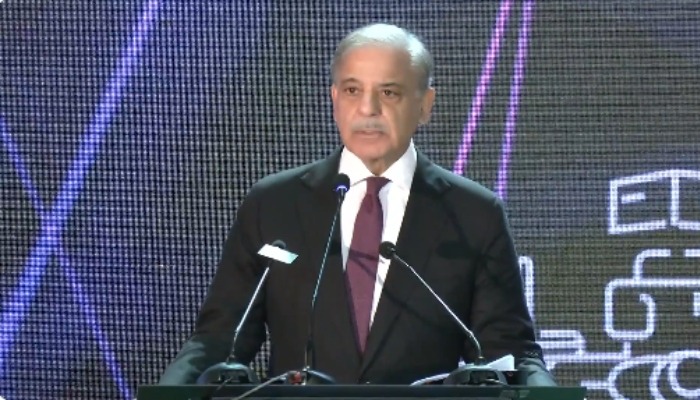
    Prime Minister Shehbaz Sharif has reaffirmed Pakistan’s commitment to strengthening national security through advanced technology, stating that the country’s armed forces relied on autonomous systems and cybersecurity capabilities to protect its borders during what he described as “Marka-e-Haq.” His remarks came while addressing the Indus Robotics and Autonomous Systems Expo in Islamabad. Speaking at the event, the Prime Minister said Pakistan is making significant progress in modern technology and innovation, adding that initiatives such as the robotics and autonomous systems exhibition will help position the country among leading technology-driven nations in the 21st century. Shehbaz Sharif emphasized that the use of advanced technologies in the security sector is a matter of national pride. He noted that Pakistan has achieved important milestones in the development of indigenous defense capabilities, particularly in drone technology. According to the Prime Minister, more than 60 percent of the country’s drone production is now being carried out locally, reflecting continued efforts to reduce reliance on foreign technology and strengthen domestic manufacturing. The Prime Minister also praised the leadership of Field Marshal Syed Asim Munir, saying the armed forces successfully adopted modern technological solutions during Marka-e-Haq. He acknowledged the contributions of the Chief of Air Staff and the Chief of Naval Staff, stating that their coordination and leadership played an important role in strengthening Pakistan’s defense preparedness. Highlighting the growing importance of digital security, Shehbaz Sharif said autonomous systems and cybersecurity have become essential components of modern warfare and national defense. He stressed that Pakistan will continue investing in emerging technologies to enhance its security capabilities and protect its sovereignty in an increasingly technology-driven world. The Prime Minister added that innovation in robotics, artificial intelligence, unmanned systems, and cyber defense is not only important for military preparedness but also for the country’s broader technological and economic development. He encouraged collaboration between government institutions, the private sector, and academic organizations to accelerate research and promote local innovation. The Indus Robotics and Autonomous Systems Expo showcased advancements in robotics, autonomous technologies, and indigenous defense solutions, highlighting Pakistan’s growing focus on technological self-reliance. Government officials believe such initiatives will help strengthen the country’s industrial base while supporting long-term national security objectives. Shehbaz Sharif concluded by reaffirming that Pakistan will continue to adopt modern technologies to safeguard its borders and enhance its defense capabilities, ensuring the country remains prepared to address evolving security challenges in the years ahead.

  • | |

    Lower Kohistan marks Youm-e-Istehsal Kashmir with …

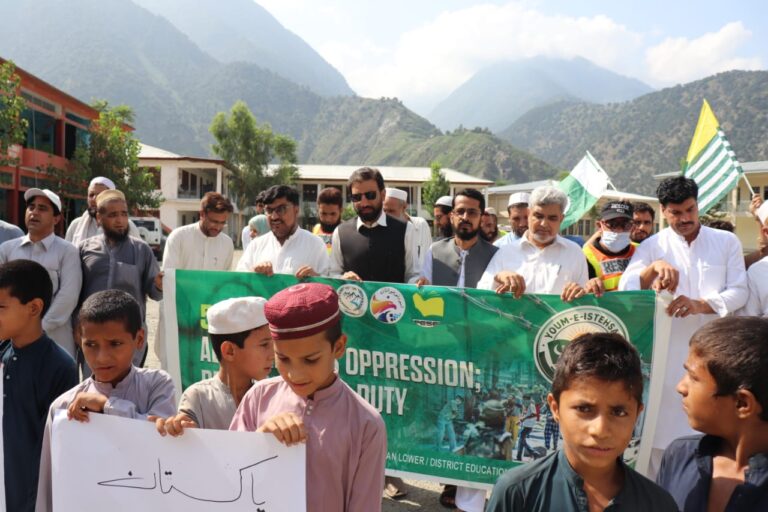
    LOWER KOHISTAN: The District Youth Office Lower Kohistan, in collaboration with the district administration and the education department, organised a ceremony at Government Model Girls High School (GMGHS), Pattan, on Wednesday to observe Youm-e-Istehsal Kashmir and reaffirm solidarity with the people of Indian Illegally Occupied Jammu and Kashmir (IIOJK). The event was attended by district administration officials, education department representatives, teachers, students, youth, and members of the local community. Participants paid tribute to the courage and resilience of the Kashmiri people and reiterated Pakistan’s continued support for their internationally recognised right to self-determination. Students presented speeches highlighting the historical significance of Youm-e-Istehsal Kashmir and staged thought-provoking tableau performances portraying the sacrifices, determination, and ongoing struggle of the people of Kashmir. The performances received appreciation from the audience for effectively conveying the message of peace, resilience, and national solidarity. Director Youth Affairs Khyber Pakhtunkhwa Abbas Khan Afridi said that the youth of the province had an important role in promoting awareness about the Kashmir issue and strengthening the values of unity, peace, and justice. He said the observance of Youm-e-Istehsal Kashmir reflected the nation’s unwavering commitment to standing with the people of Kashmir and supporting their legitimate right to self-determination. He urged young people to remain informed, responsible, and actively engaged in promoting truth, human rights, and national cohesion. The organisers said the event formed part of the Directorate of Youth Affairs Khyber Pakhtunkhwa’s continued efforts to engage young people in constructive civic activities while fostering patriotism, national unity, and awareness of issues of national importance.

  • | |

    Sindh University VCs seek extensions as tenures ne…

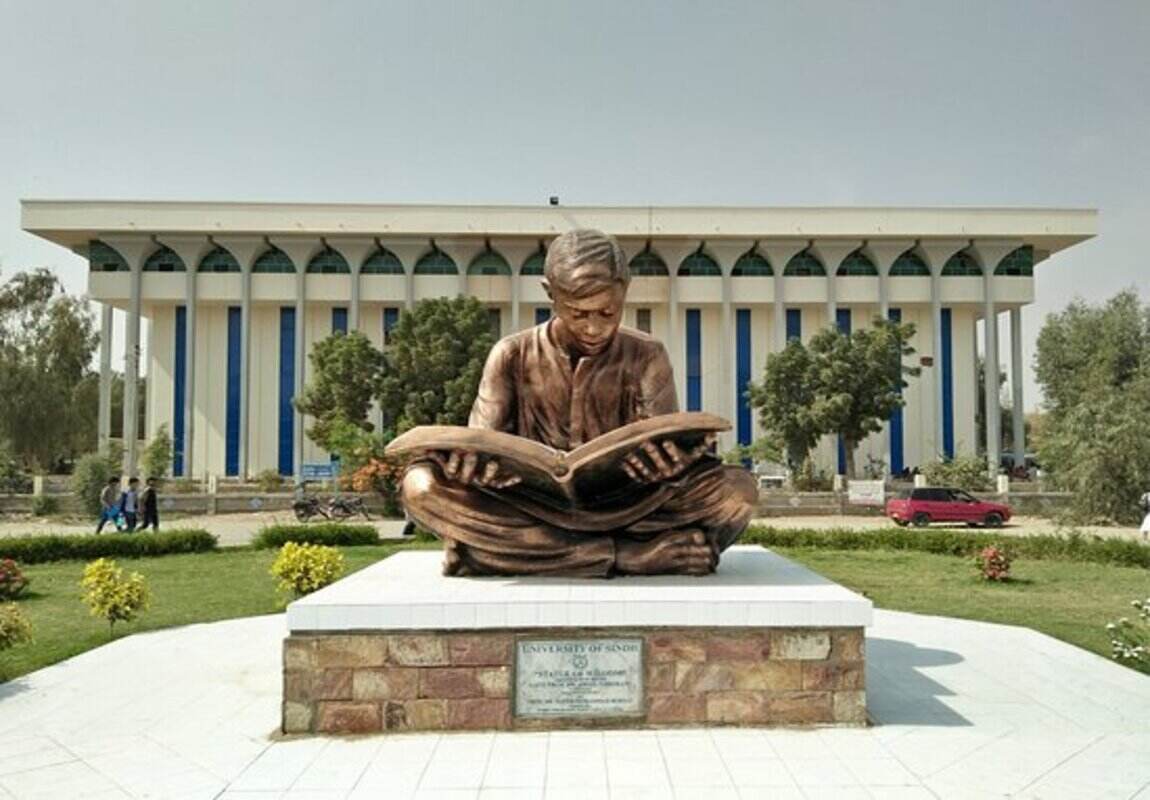
    ISLAMABAD: The extension of the tenure of Professor Dr Nusrat Shah, Vice Chancellor of Shaheed Mohtarma Benazir Bhutto Medical University (SMBBMU), Larkana, has reportedly prompted vice chancellors of several public-sector universities across Sindh to seek extensions as their first terms approach completion. According to sources, the first four-year terms of vice chancellors at eight government universities are set to expire over the coming months. Almost all of the serving VCs, except one, are reportedly seeking second terms. Nusrat Shah’s extension case reaches CM House Sources in the Sindh Chief Minister’s House said that a summary seeking an extension for Dr Nusrat Shah has been forwarded to the Chief Minister of Sindh. Dr Nusrat Shah’s current four-year term is scheduled to expire on January 1, 2027. She is the daughter of former Sindh chief minister Syed Qaim Ali Shah. Sources said her extension case has gained considerable attention and may receive approval. The development has reportedly encouraged other vice chancellors whose terms are also nearing completion to pursue extensions. One extension approved so far The Sindh government has so far approved an extension only for Dr Amjad Siraj Memon, Vice Chancellor of Jinnah Sindh Medical University. Sources said extension cases of Dr Khalid Iraqi and Dr Farooq Hassan have been rejected. Other VCs seeking second terms   Several other vice chancellors are also approaching the end of their first terms: Dr Ikramuddin Ujan — Vice Chancellor, Liaquat University of Medical & Health Sciences, Jamshoro. His term expires on January 1, 2027. His extension case is reportedly complicated by allegations concerning the awarding of multiple gold medals to his son at the university. Dr Zahid Hussain Khand — Vice Chancellor, Aror University of Art, Architecture, Design and Heritage, Sukkur. His term expires on January 19, 2027. Arbela Bhutto — Vice Chancellor, Shaheed Allah Buksh Soomro University of Art, Design and Heritages. Her term expires on January 19, 2027. Dr Asif Sheikh — Vice Chancellor, IBA Sukkur. His term expires on January 19, 2027. Dr Taha Hussain — Vice Chancellor, Mehran University of Engineering and Technology. His term is due to expire in mid-March 2027. Tahmina Nangraj — Vice Chancellor, Begum Nusrat Bhutto Women University, Sukkur. Her term expires on January 19, 2027.  Dr Samreen Hussain — Vice Chancellor, Dawood University of Engineering and Technology, Karachi. Her term expires in January 2027. Sources said summaries seeking extensions for several of these vice chancellors are expected to be forwarded to the Chief Minister’s House in the coming weeks. Test for Sindh government The growing number of extension requests is likely to pose a fresh challenge for the Sindh government and the Chief Minister, who exercises an important role in the appointment and continuation of leadership at public universities. The decisions are expected to be closely watched, with the candidates’ performance, administrative record, political affiliations and any controversies surrounding their tenures likely to come under scrutiny. The outcome of these cases could also shape the leadership of Sindh’s public-sector universities for the next several years.

  • | |

    Allah Rakha’s family urges Sohail Ahmed to respe…

    Lahore: The family of late Pakistani comedian Allah Rakha, popularly known as Allah Rakha Pepsi, has appealed to veteran actor and comedian Sohail Ahmed to refrain from making personal remarks about the late entertainer, saying such comments have caused them pain. In a recent interview, Allah Rakha’s daughters expressed disappointment over Sohail Ahmed’s public statements, urging him to respect their father’s memory. One of his daughters recalled that her father had introduced Sohail Ahmed to the family as someone they should regard like an uncle, making the recent remarks especially hurtful. She requested that their family’s dignity be respected and asked that her father’s name not be dragged into public discussions. She added that Allah Rakha had faced many hardships during his lifetime and deserved to rest in peace after his passing. The response came after Sohail Ahmed praised Allah Rakha as a talented performer but also spoke publicly about the circumstances surrounding his death, claiming the comedian suffered a heart attack while filming and was under emotional stress due to concerns about his daughter’s divorce. Allah Rakha Pepsi passed away last month after suffering a heart attack during a shooting session, leaving behind a legacy as one of Pakistan’s beloved comedians.

  • | | | |

    SBP holds interest rate at 11.5pc amid growth conc…

    The State Bank of Pakistan (SBP) has kept its policy rate unchanged at 11.5 per cent, maintaining the existing monetary policy stance amid concerns over economic growth. The decision was announced on Monday by SBP Governor Jameel Ahmed following a meeting of the Monetary Policy Committee (MPC). The central bank’s decision was largely expected by financial market analysts. Most experts had predicted that the SBP would maintain the current rate to support macroeconomic stability while monitoring economic conditions. Market surveys conducted by brokerage firms showed that more than 90 per cent of respondents expected the policy rate to remain unchanged. Only a small number of analysts had anticipated a possible increase. The decision comes as Pakistan continues to balance economic stability with the need to encourage business activity and investment. Higher interest rates can help control inflation and support financial stability, but they can also increase borrowing costs for businesses and consumers. The SBP had reduced its policy rate by 50 basis points to 10.5pc in December 2025. It later raised the rate by 100 basis points to 11.5pc in April 2026. Since then, the central bank has maintained the rate at 11.5pc. Business groups have continued to call for a significant reduction in borrowing costs. They argue that lower interest rates could help businesses expand operations, increase investment and support economic activity. However, the central bank has opted for a cautious approach. Policymakers appear focused on maintaining overall economic stability while assessing inflation, growth and other financial indicators.

  • | |

    NCLEX programme under fire: only 7 nurses pass out…

    Islamabad: A Government backed programme designed to help Pakistani nurses qualify for international jobs came under strong questioning in the National Assembly after lawmakers raised concerns over the transparency, student selection and results of the NCLEX Nursing Training Programme. The National Assembly Standing Committee on Federal Education and Professional Training questioned how a Rs 150 million programme selected its training partner and why only seven nurses had cleared the NCLEX exam out of 500 trainees so far. The committee supported opportunities for Pakistani nurses to work abroad but demanded complete transparency regarding the programme’s planning, the selection of the implementing partner, and the use of public money. The issue was discussed during the 25th meeting of the committee, where members reviewed the performance and implementation of the NCLEX Nursing Training Programme launched by the National Vocational and Technical Training Commission (NAVTTC). NAVTTC Executive Director Muhammad Amir Jan informed the committee that before this initiative, Pakistani nurses had to travel to countries such as Dubai, Bahrain, Turkey and Thailand to appear in the NCLEX examination. He said that with support from SIFC, NAVTTC was given responsibility to bring the examination system to Pakistan for the first time through Pearson VUE during 2024 and 2025. Officials informed the committee that the programme was designed to train 500 nurses. The training phase has been completed, 182 nurses have applied for the NCLEX examination and seven nurses have successfully cleared the test. However, members questioned the low success rate and asked whether the programme was producing the expected results. One committee member pointed out that seven successful candidates out of 500 trainees represented a very small percentage and questioned whether the programme needed improvements before more public funds were spent. NAVTTC officials defended the programme, saying that NCLEX is a difficult international examination and nurses who pass the test still require additional time before moving abroad for employment. Officials said nurses might need eight to eighteen months after passing the exam before they can travel for work opportunities. The committee also raised questions about the selection of the implementing partner, the Institute of Contemporary Studies. Members questioned whether a public advertisement was issued before selecting the organisation or if other institutions were given an opportunity to compete. They said programmes funded through public money must follow transparent procedures to maintain public confidence. NAVTTC officials explained that the programme was developed under an industry led model and was based on a proposal received from the Pakistan Nursing and Midwifery Council. They said such programmes do not always follow open advertisement procedures because they are based on specific industry requirements. However, members questioned whether a government body could recommend a specific private organisation without a competitive process. The committee also raised concerns about the role of the Pakistan Nursing and Midwifery Council. Members noted that in previous discussions, representatives of the council had stated they were not fully aware of the nurse selection process and training arrangements. NAVTTC officials responded that the council had formally approached NAVTTC for the project and that decisions taken by government bodies should be accepted by all stakeholders involved. Financial matters also came under discussion. NAVTTC informed the committee that the total project cost was Rs 150 million and that Rs 87 million had been released so far. Officials clarified that the remaining funds would be released only after achieving agreed results under a performance-based payment system. They said a bank guarantee was also available to protect government funds. The committee also questioned the quality and locations of the training centres. MNA Dr Shazia Sobia Aslam Soomro raised concerns about some training locations, including Matta in Swat, and asked how proper facilities and monitoring were ensured in those areas. NAVTTC officials responded that Khyber Medical University conducted training in Matta and promised to provide complete details of nurses trained there. Questions were also raised about trainer qualifications. Members asked how individuals with nursing degrees could provide NCLEX preparation training. Officials explained that trainers must themselves be NCLEX qualified according to programme requirements. The committee further discussed the selection of nurses for training. NAVTTC officials said their role was to set eligibility criteria, not directly select candidates. They explained that under the pay for success model, the training provider selects participants because the provider is responsible for results. At the conclusion of the meeting, the committee decided to invite the Pakistan Nursing and Midwifery Council in the next session to clarify the selection process of nurses and the appointment of the training partner. Chairperson Mahtab Akbar Rashdi said that every concern must be properly addressed because public funds were involved and the programme was created to provide international opportunities for Pakistani nurses.

Leave a Reply

Your email address will not be published. Required fields are marked *