pakistan8217s olive oil
| |

Pakistan’s olive oil export dream at risk, g…

LAHORE: Pakistan’s rapidly growing olive oil industry has reached a defining moment, with growers and processors warning that the country’s ambitions to become a major exporter could be undermined unless authorities introduce stricter quality standards, certification systems and stronger market regulation.

Industry stakeholders say Pakistan has made significant progress in expanding olive cultivation over the past decade, but the absence of an effective regulatory framework now poses the biggest challenge to long-term growth.

Dr. Qurat-ul-Ain Irfan, founder of Meshak Farms in Mardan, believes the focus should now shift from planting more olive trees to protecting product quality and building consumer confidence.

“There is no proper implementation framework,” she said, noting that products of varying quality can currently be marketed as olive oil with little monitoring. “Consumers deserve to know whether they are buying premium extra virgin olive oil, blended oil or another edible oil altogether.”

According to growers, the lack of routine laboratory testing, nationally recognized grading standards and certification mechanisms has made it difficult for genuine producers to distinguish their products from adulterated or lower-quality alternatives.

Pakistan imports an estimated $5-6 billion worth of edible oil annually, making it one of the country’s largest import expenses. Policymakers have promoted olive cultivation as a strategic alternative capable of reducing dependence on imports while creating new export opportunities.

Government-backed initiatives have led to the plantation of millions of olive trees, particularly across Potohar, Khyber Pakhtunkhwa and Balochistan, where nearly 10 million acres are considered suitable for olive cultivation.

The industry’s latest boost has come through the OliveCulture Scale-Up Project (2024–2027), funded by the Italian Agency for Development Cooperation (AICS) and implemented by CIHEAM Bari, which aims to strengthen Pakistan’s olive value chain from cultivation to processing and marketing.

Despite these initiatives, growers argue that commercial olive farming requires long-term investment and stronger policy support. Unlike seasonal crops, olive orchards often take several years before generating meaningful yields and may require 10 to 15 years to reach peak production.

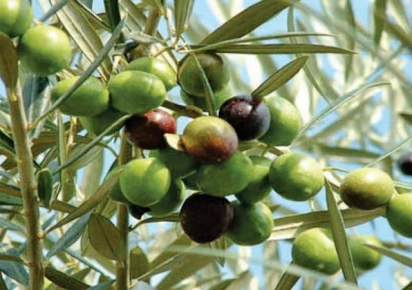
Meshak Farms reflects this long-term approach. Established on previously uncultivated land in Mardan, the farm uses imported Arbequina olive saplings, modern drip irrigation systems and internationally recognized cultivation techniques learned through collaboration with Italian experts.

Dr. Irfan, who also leads a pharmaceutical company exporting to the United Kingdom and the European Union, said the same principles of traceability, laboratory testing and quality assurance should become standard across Pakistan’s olive industry.

She revealed that representatives of an Italian company had expressed interest in sourcing Pakistani olive oil if producers consistently met internationally recognized certifications, including ISO 14000, and maintained premium quality standards.

Experts also point to changing global market conditions as an opportunity. Climate change, ageing orchards and declining olive production in parts of the Mediterranean have encouraged international buyers to diversify their supply chains, potentially opening doors for emerging producers like Pakistan.

However, industry leaders caution that export ambitions will remain difficult to achieve without mandatory grading systems, accredited testing laboratories, traceability mechanisms and consumer awareness campaigns promoting authentic Pakistani extra virgin olive oil.

They also argue that reducing taxes and offering incentives for growers would encourage investment and help lower domestic prices.

“The challenge is no longer proving that olives can grow in Pakistan,” Dr. Irfan said. “The real test is whether policy reforms can keep pace with an industry that is ready to compete in international markets.”

Similar Posts

  • 3,182 kanals of ETPB land still occupied despite invalid transfers

    Islamabad: More than 3,182 kanals of federally owned Evacuee Trust Property Board land in Attock still has not been restored in government ownership records even after the transfers were declared invalid. The Ministry of Religious Affairs told a parliamentary committee that local revenue authorities allegedly failed to cooperate despite repeated requests. The Senate Standing Committee on Religious Affairs and Interfaith Harmony reviewed the disputed transfer of ETPB land to private occupants under a Punjab provincial law. The issue was raised through a question by Senator Syed Waqar Mehdi, who sought details about how federally owned trust property was transferred and what action had been taken to restore ownership. The committee was informed that 1,907 kanals of ETPB land in Mouza Neeka had allegedly been transferred to occupants. Another 1,275 kanals and 12 marlas of ETPB land in Mouza Ameer Khan, Tehsil Fateh Jang, District Attock, had also allegedly been transferred. Together, the disputed properties amount to more than 3,182 kanals of land. According to the Ministry of Religious Affairs briefing, the transfers were unauthorised. The ministry alleged that the occupants obtained ownership rights through the connivance of local revenue officials. The briefing did not identify the individual revenue officials allegedly responsible in the material provided to the committee. The committee was also told that the ETPB Chairman had already declared the transfers invalid under the Evacuee Trust Property Management and Disposal Act. That decision was later upheld by the Additional Secretary of the Ministry of Religious Affairs and Interfaith Harmony. However, the land has still not been restored in the revenue record under the name of ETPB or the Federal Government. According to the briefing, ETPB field offices in Hassanabdal and Attock repeatedly contacted the concerned revenue authorities in an effort to restore federal ownership. Despite those written requests, the ownership record had not been corrected. The ministry blamed the delay on alleged non cooperation by local revenue authorities. The ministry also clarified that there was no evidence of internal involvement. It told the committee that no ETPB official was found involved in the disputed transfers. According to the official briefing, the occupants succeeded in obtaining ownership rights through the alleged connivance of local revenue staff rather than ETPB employees. The case has raised questions about how federally owned religious trust property could be transferred through a provincial law and why the land has not been restored even after the transfers were officially declared invalid. The disputed property belongs to the Evacuee Trust Property Board, which manages properties connected with religious trusts and heritage assets. The committee took serious note of the continuing problem and discussed the need to protect federal ownership of ETPB properties. Members were also concerned about the failure to update the official revenue record despite earlier administrative decisions against the transfers. The case now centres on restoration of legal ownership in government records and accountability for officials, if any, found responsible for facilitating the disputed transfers. The committee directed the concerned authorities to continue pursuing the ETPB land matter and bring further clarification before it in subsequent proceedings. The controversy is likely to remain under parliamentary scrutiny until the land is restored to ETPB or the Federal Government and responsibility for the allegedly unauthorised transfers is clearly determined.

  • Thailand Braces for Severe Super El Niño Next Year

    BANGKOK, Thailand – Thailand is preparing for the severe impacts of a Super El Niño expected to strike the country this October and persist through the early part of the 2027 rainy season, threatening agricultural output, rice plantations, and national water security. El Niño Drought Forces Water Rationing on Koh Samui The Thai Meteorological Department […]

  • Man Shoots Ex-Wife and Her 19-Year-Old Lover in Deadly Bangkok Ambush

    BANGKOK – A tragic shooting on Sunday evening shocked a quiet neighborhood in Bangkok’s Prawet district. A former husband tracked down his ex-wife and her new teenage partner before opening fire on them. The brutal attack left a young factory worker dead and a young woman fighting for her life. Police investigators identified the suspect […]

  • | |

    AKMCCC Hyderabad organizes health camp on World He…

    HYDERABAD,— In observance of World Hepatitis Day, the Aga Khan Maternal and Child Care Centre (AKMCCC), Hyderabad, organized a one-day health camp aimed at improving access to preventive healthcare and promoting early detection of liver disease. Held under the global theme “Hepatitis Elimination Starts with You,” the camp offered discounted specialist consultations and complimentary diagnostic services to residents from across Hyderabad. The health camp provided expert consultations with Family Medicine and Internal Medicine specialists at subsidized rates. To encourage timely diagnosis, participants received free rapid screening tests for Hepatitis B and C, along with complimentary assessments of blood pressure, pulse rate, height, and weight. The program also included health education and awareness sessions on hepatitis prevention, transmission, and treatment, as well as discounted laboratory and radiology services for further evaluation and follow-up. “Hepatitis remains a significant public health challenge, yet early detection and timely intervention can drastically alter patient outcomes,” said Syed Muhammad Sohail, Chief Operating Officer for Outreach Services and Off-Campus Hospitals at Aga Khan University Hospital (AKUH). “Through today’s camp, AKMCCC is helping remove financial and geographic barriers to specialized care, empowering individuals across Hyderabad to take proactive steps toward their health,” he added. Health officials and AKMCCC representatives stated that such community outreach initiatives are essential to achieving the World Health Organization’s goal of hepatitis elimination by 2030. They reaffirmed the centre’s commitment to continuing similar programs in underserved areas to strengthen public health and foster a more informed community.The successful execution of the camp underscores AKMCCC’s ongoing dedication to preventive healthcare and community well-being.

  • | |

    Maryam hits back at Bilawal with video proof

    Punjab Senior Minister Maryam Aurangzeb has responded to criticism by Pakistan Peoples Party (PPP) Chairman Bilawal Bhutto Zardari by releasing video footage showcasing the condition of roads, streets, and sanitation in several cities across Punjab. The response followed Bilawal’s address at an election rally in Azad Jammu and Kashmir (AJK), where he questioned the state of development and municipal services in different parts of Punjab. During his speech, Bilawal raised concerns about the condition of cities beyond Lahore and asked whether residents of other districts were receiving the same level of attention and development. Soon after the speech, Maryam Aurangzeb shared a series of videos on social media. The footage focused on the same cities mentioned by Bilawal. According to her, the videos were intended to present the actual situation on the ground and respond directly to the questions raised during the rally. The videos highlighted roads, streets, and cleanliness operations in different districts. They showed paved roads, cleaned streets, and sanitation activities carried out by local authorities. Maryam Aurangzeb maintained that the footage reflected the provincial government’s ongoing efforts to improve infrastructure and public services across Punjab. She gave special attention to Vehari and Kasur, two districts specifically mentioned by Bilawal in his speech. To answer his criticism, she shared separate videos from both cities. The footage displayed roads, residential streets, and cleanliness arrangements, which she described as evidence of the government’s development work. Maryam Aurangzeb said the videos served as visual proof of the progress made in Punjab. She maintained that the provincial government was working to improve civic facilities in both major cities and smaller districts, rather than focusing only on Lahore. https://x.com/i/status/2079953668946976948

  • | |

    Mir Raza’s father raises new questions over son?…

    The father of businessman Mir Raza Ali has raised fresh concerns about the investigation into his son’s death. Speaking to the media on Monday, Mir Hassan claimed that his son’s business partner went missing after being questioned by police. He said police had questioned the business partner once. The man was allegedly not seen again after the questioning. Hassan said the family had not been informed about the investigation involving employees of the guest house in Gulistan-e-Johar. Mir Raza’s body was found near the guest house. “We have not been told what investigations were conducted with the employees,” he said. The victim’s father also questioned why CCTV footage from the guest house had not been made public. The latest concerns have emerged as investigators continue to review the circumstances surrounding Mir Raza’s death. The case took a new turn after the businessman’s body was exhumed for a second post-mortem examination. The second medical examination found a firearm injury and several wounds that had occurred before death. It also reported signs of internal bleeding. According to the findings, a bullet entered the upper right side of Mir Raza’s back and exited through the left side of his chest. The bullet fractured his sixth rib and caused internal bleeding. The report also documented injuries to different parts of his head, face, neck and chest. Following the medical findings, police added Section 302 of the Pakistan Penal Code to the case. The section relates to murder. The original FIR had been registered under Section 365, which concerns kidnapping. Mir Raza, 25, was allegedly abducted from the PECHS area. His body was later found in bushes near a wedding hall in Gulistan-e-Johar. Police had earlier suspected that he may have been tortured before being shot. The case initially faced uncertainty over whether Mir Raza had been murdered or had died by suicide. His family, however, consistently rejected the suicide theory. The second post-mortem has strengthened the family’s claim that Mir Raza was killed. Questions had also been raised about the first post-mortem report. Karachi Police Surgeon Dr Summaiya Syed had pointed out several issues in the initial examination. She had questioned why the body was not X-rayed and why hand swabs were not collected for gunshot residue testing. She had also raised concerns over the scientific measurement and photography of firearm injuries. Questions were further raised about the documentation of the bullet’s path and the examination of the entry and exit wounds. Following these developments, police dissolved the previous investigation team. A new team was formed under the leadership of DIG Crime and Investigation Amir Farooqi. The new team was tasked with conducting a fresh investigation based on the latest medical findings. Investigators were also expected to revisit the crime scene. They were directed to re-question the victim’s family and other relevant individuals. The team was also expected to examine forensic, technical, physical and circumstantial evidence. Mir Raza’s family has repeatedly criticised the handling of the case. They have maintained that he was murdered and demanded that those responsible be identified and brought to justice. The family’s lawyer, Jibran Nasir, had also alleged that investigators pressured the family to accept a suicide theory. He called for an independent and impartial investigation. The Sindh government has meanwhile decided to establish a judicial commission headed by a Sindh High Court judge. The commission is intended to oversee a transparent and impartial investigation into Mir Raza’s death.

Leave a Reply

Your email address will not be published. Required fields are marked *