imf pushes pakistan
| |

IMF pushes Pakistan provinces for rs430bn tax incr…

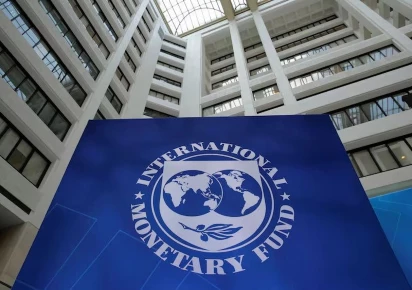
ISLAMABAD: The International Monetary Fund (IMF) has asked Pakistan’s provincial governments to generate an additional Rs430 billion in tax revenue during the current fiscal year, as part of broader efforts to strengthen public finances and increase provincial own-source revenues.

According to official details, the proposed increase in tax collection is equivalent to 0.3 per cent of Pakistan’s Gross Domestic Product (GDP) and is expected to be shared among the four provinces in line with their allocations under the National Finance Commission (NFC) Award.

The move is aimed at improving fiscal sustainability by encouraging provinces to rely more on locally generated revenues rather than transfers from the federal government. Officials believe stronger provincial tax collection would also help create greater financial discipline and support long-term economic reforms.

Sources said each province would contribute to the additional revenue target based on its respective share under the NFC formula, although specific collection targets for individual provinces have yet to be announced.

The recommendation comes as Pakistan continues implementing economic reforms under its programme with the IMF, with revenue mobilisation remaining one of the key priorities for both the federal and provincial governments.

Meanwhile, the federal government has decided to establish an inter-ministerial committee, to be headed by the prime minister, for the implementation of decisions made by the National Economic Council (NEC).

According to officials, the committee will include federal and provincial ministers along with senior government representatives. It will be responsible for monitoring the execution of national policies, reviewing progress on major development initiatives and ensuring timely implementation of decisions taken by the NEC.

The committee is also expected to strengthen coordination between the federation and the provinces, particularly on economic planning, fiscal reforms and development projects that require close cooperation among different levels of government.

Government sources said improved coordination is considered essential for achieving national economic objectives and ensuring that development programmes are implemented efficiently across the country.

Economists say increasing provincial tax revenues has long been a key recommendation of international financial institutions, which argue that greater fiscal autonomy can improve governance, reduce dependence on federal transfers and create a more balanced financial system.

The IMF’s latest recommendation is likely to shape upcoming provincial budgetary decisions as governments evaluate measures to expand their tax base while balancing the need to protect economic activity. The proposed revenue measures are expected to remain a major focus of fiscal policy discussions in the months ahead.

Similar Posts

  • | | |

    Uganda backs sending troops to planned Gaza peace …

    Uganda’s Parliament has approved a government proposal to deploy troops to a planned international peace and stabilisation force for Gaza, marking the country’s first commitment to the proposed multinational mission. The resolution was introduced by Uganda’s Minister of Defence and received parliamentary approval following debate among lawmakers. With the decision, Uganda joins Morocco, which has also announced its willingness to contribute troops to the proposed force. The Ugandan government has not publicly disclosed the diplomatic discussions or political considerations behind its decision. However, the move sparked debate in Parliament, with opposition members expressing concerns about the potential implications for Uganda’s foreign policy and regional relationships. Opposition lawmaker Hassan Kiromera questioned the mission’s objectives, asking which parties Ugandan troops would ultimately be expected to confront if deployed. He argued that the government should provide greater clarity regarding the mandate of the proposed force before committing military personnel. Defence Minister Jacob Oboth-Oboth defended the proposal, stating that the Uganda People’s Defence Forces (UPDF) possess extensive experience in international peacekeeping operations, including missions in Somalia and other conflict zones. He said that this experience would enable Ugandan troops to contribute effectively to efforts aimed at restoring peace and stability in Gaza. According to the report, the proposed Gaza International Stabilisation Force is expected to consist of approximately 20,000 personnel from multiple countries. The force is reportedly planned under a proposal associated with US President Donald Trump’s Board of Peace and would be commanded by US Major General Jasper Jeffers. The mission is intended to help maintain law and order in Gaza following the end of hostilities between Israel and Hamas. Reports indicate that the proposal was first introduced earlier this year as part of broader discussions on post-conflict governance and security arrangements in the territory. The development follows recent announcements regarding a reported agreement under which Hamas would disarm and Israel would gradually withdraw its military forces from Gaza. Under the reported framework, the international stabilisation force would be deployed after the phased Israeli withdrawal. However, uncertainty remains over the implementation of the proposed arrangement. Israeli officials have reportedly expressed serious security concerns after reviewing the reported agreement, arguing that certain provisions could pose risks to national security. As a result, questions remain about the timeline and conditions for the deployment of the multinational peace force despite Uganda’s parliamentary approval.

  • Viral video raises questions over staff availability at DHQ Hospital Tank

    TANK: A video circulating on social media showing the Children’s Ward of District Headquarters Hospital Tank has raised serious questions about the availability of medical staff and administrative supervision at the hospital. In the video, an attendant of a patient can be heard speaking in Pashto and claiming that he brought his patient to the Children’s Ward but, despite waiting for two hours, neither a doctor nor a nurse was present. The video also shows an apparently empty counter and beds in the Children’s Ward, prompting concerns among citizens regarding the functioning of the hospital, availability of medical staff and timely provision of treatment to patients. However, the claims made in the video could not be independently verified. The patient’s attendant also questioned elected representatives, saying that people had voted for MNAs and MPAs with the expectation that healthcare facilities in the area would improve, asking who would now be responsible for improving the condition of the hospital. Following the circulation of the video on social media, citizens and social circles have expressed concern and called for immediate action by the relevant authorities. Public representatives and social activists have urged the Chief Minister Khyber Pakhtunkhwa, Chief Secretary and senior health authorities to conduct an immediate and surprise inspection of DHQ Hospital Tank. They demanded that the attendance of doctors, nurses and other medical staff, duty rosters and the availability of healthcare facilities in all wards be thoroughly reviewed. The citizens further called for the hospital to be made fully functional in practical terms rather than merely being upgraded on paper, with the presence of medical staff ensured in all wards and patients provided timely, quality and dignified healthcare services.

  • |

    Oil prices fall as US-Iran pause raises hopes for Hormuz talks

    Global oil prices dropped sharply on Monday after signs of easing tensions between the United States and Iran raised hopes that negotiations could resume over the Strait of Hormuz, one of the world’s most important oil shipping routes. Investors welcomed the temporary pause in military action, believing it could reduce the risk of further disruptions to global energy supplies. The decline came after both countries appeared to step back from recent hostilities. Following nearly two weeks of military exchanges, the United States did not carry out additional strikes over the weekend. President Donald Trump’s envoy to the United Nations said Washington was allowing diplomacy a chance by giving negotiations more time. Iran also announced that it would halt retaliatory attacks against neighboring countries, offering relief to Gulf shipping companies and international energy markets. The latest pause has renewed hopes that the fragile ceasefire between the two sides could be restored after breaking down earlier this month. The recent conflict began after Iran targeted vessels passing through the Strait of Hormuz, leading to a rapid escalation in tensions with the United States. The confrontation later spread beyond the Gulf, with Iran backed Houthi fighters in Yemen attacking Saudi ships near the Bab al Mandeb Strait, another critical maritime route linking the Red Sea with global trade networks. The fighting caused oil prices to surge, with Brent crude climbing above $100 per barrel for the first time since May. However, reports that shipping traffic through the Red Sea had continued without major disruption, combined with the latest diplomatic developments, encouraged traders to reduce their concerns over possible supply shortages. Iranian officials said discussions with Oman had made progress regarding the future management of the Strait of Hormuz. According to Foreign Ministry spokesman Esmaeil Baqaei, the talks focused on establishing practical measures to ensure the safe movement of commercial vessels while respecting the sovereignty of countries bordering the strategic waterway. There were also reports that Pakistan was exploring efforts to revive peace talks between Washington and Tehran with support from China. Although no formal agreement has been announced, the diplomatic activity has strengthened expectations that both sides may return to negotiations instead of further military escalation. As a result, both major oil benchmarks recorded significant losses. Brent crude fell by more than seven percent during trading before recovering slightly, while West Texas Intermediate also declined sharply. Analysts said the market viewed the latest developments as a positive signal that reduced the immediate threat to global oil supplies. Lower oil prices also eased fears that renewed energy inflation could force central banks to raise interest rates again. This helped lift many stock markets across Asia, although technology shares continued to face pressure because of concerns about the long term returns on heavy investment in artificial intelligence. Stock markets in Hong Kong, Shanghai, Sydney, Wellington, Manila, and Tokyo posted gains, while Seoul, Taipei, Singapore, and Jakarta closed lower. Investors remained cautious ahead of earnings reports from major technology companies including Samsung, SK hynix, Microsoft, Meta, Apple, and Amazon, with particular attention on future spending plans and investment in artificial intelligence. Market participants are also awaiting this week’s US Federal Reserve policy meeting. While expectations for another interest rate increase have grown slightly following recent geopolitical tensions, most analysts believe the central bank will leave rates unchanged for now. Even so, some economists continue to predict additional tightening before the end of the year if inflation remains above target. The combination of easing tensions in the Middle East and hopes for renewed diplomacy has provided financial markets with some relief, though investors remain alert to any developments that could quickly reverse the recent decline in oil prices.

  • | |

    Canada suspends trade talks with US over 50% tarif…

    OTTAWA: Canadian Prime Minister Mark Carney has announced the suspension of trade negotiations with the United States after Washington moved to impose a 50 per cent tariff on certain Canadian imports, escalating tensions between the two North American trading partners. The tariff decision, covering Canadian goods worth an estimated $20 billion, has raised concerns about the future of economic relations between the two countries. The new duties were announced as part of broader US efforts to secure more favourable terms for American trade and address what Washington considers unfair trading practices. The US Customs authorities have also issued guidance regarding the additional duties on selected Canadian products, signalling that businesses on both sides of the border could soon face higher costs and increased uncertainty. US Trade Representative Jamieson Greer said Canada had refused to finalise a trade agreement and continued to take retaliatory measures against American interests. He said Washington had offered Canada more favourable access to the US market but had not received the concessions it expected. The Canadian government, however, has rejected the suggestion that sufficient progress has been made in the negotiations. Carney said the talks had failed to deliver the results required to protect Canadian interests and meet the targets set for his government. “If the United States imposes a 50 per cent tariff, Canada will impose tariffs of equal value,” Carney said, signalling that Ottawa was prepared to respond firmly rather than accept what it considers an unfair trade arrangement. The dispute marks another difficult chapter in the economic relationship between the two neighbours, whose economies are deeply connected through cross-border trade and supply chains. Industries ranging from manufacturing and agriculture to energy and consumer goods could be affected if the tariff measures remain in place. Businesses are now watching closely for signs of further escalation, particularly because higher import duties can increase the cost of products and disrupt established supply chains. The latest development also puts pressure on both governments to return to the negotiating table. While Ottawa has suspended the talks, the economic consequences of a prolonged tariff confrontation could provide an incentive for both sides to seek a compromise. For now, Carney’s announcement has hardened Canada’s position, while Washington’s tariff threat has added fresh uncertainty to one of the world’s most important bilateral trading relationships. The coming days are expected to determine whether the dispute develops into a wider trade confrontation or pushes both sides back toward negotiations.

  • | | |

    Kuwait welcomes Pakistan-Saudi-Türkiye Makkah def…

    ISLAMABAD: Kuwait has congratulated Pakistan on the signing of the Makkah Joint Defence Agreement with Saudi Arabia and Türkiye, signalling growing regional interest in the new security arrangement. Pakistan’s Deputy Prime Minister and Foreign Minister Ishaq Dar received a telephone call from Kuwaiti Foreign Minister Sheikh Jarrah Jaber Al-Ahmad Al-Sabah late on Sunday, during which the two officials discussed the agreement as well as the wider regional situation. According to Pakistan’s Foreign Office, the Kuwaiti foreign minister felicitated Dar on the agreement signed in Makkah on Friday. The two ministers also exchanged views on developments in the region, including the situation in occupied East Jerusalem. Their conversation also covered bilateral relations and ways to expand cooperation between Pakistan and Kuwait, particularly in investment and other key sectors. The officials also discussed follow-up to Sheikh Jarrah’s recent visit to Pakistan. “The two sides agreed to remain closely engaged,” the Foreign Office said. The development comes as Pakistan continues to explain the objectives and scope of the landmark defence pact, which brings Pakistan, Saudi Arabia and Türkiye closer together on security matters. Dar has stressed that the agreement is defensive in nature and is not directed against any particular country. Under the pact, an armed attack against any one of the three signatories would be treated as an attack against all three. The foreign minister said the arrangement was designed to strengthen collective deterrence while supporting regional peace, stability and security. He also maintained that the agreement was consistent with the right of individual and collective self-defence recognised under Article 51 of the United Nations Charter. Importantly, Dar clarified that the Makkah agreement does not replace or cancel existing bilateral or multilateral defence arrangements involving the three countries. The pact could also have a broader regional dimension. Dar said the agreement remains open to other countries in the region that are willing to respect its principles and resolve differences through dialogue, cooperation and peaceful means. His comments came amid reports that Egypt could potentially join the arrangement. Earlier, Dar also spoke with Canadian Foreign Minister Anita Anand, with the two officials discussing regional developments and the newly signed agreement. Pakistan has presented the Makkah accord as part of its broader foreign-policy objective of promoting regional stability and peaceful conflict resolution. With Kuwait now extending its congratulations, attention is increasingly turning to how the new defence framework could influence cooperation and security across the wider region.

  • |

    South Korea backs Trump’s push to revive North Korea talks

    SEOUL: South Korea has welcomed US President Donald Trump’s efforts to restart dialogue with North Korea but wants any renewed negotiations to produce meaningful progress on Pyongyang’s nuclear programme. South Korean National Security Adviser Wi Sung-lac said on Friday that Seoul supports Washington’s diplomatic outreach to North Korea, provided that it does not weaken the country’s security preparedness or leave South Korea out of the process. Wi said any renewed US-North Korea dialogue should focus on achieving tangible progress towards addressing North Korea’s nuclear weapons capabilities while also supporting efforts to establish lasting peace on the Korean Peninsula. He stressed that close coordination between Seoul and Washington would be essential if negotiations with Pyongyang resume. “We need to coordinate with the United States to ensure that any resumption of US-North Korea dialogue leads to substantive progress on the North Korean nuclear issue,” Wi said. The national security adviser also referred to Trump’s recent decision to significantly reduce major joint military exercises between the United States and South Korea. He said the move appeared to indicate Washington’s willingness to create conditions for renewed engagement with North Korea. However, Seoul remains concerned about maintaining a credible defence posture. Wi said South Korea must ensure that diplomatic efforts do not undermine military readiness. He also warned that Seoul should not be sidelined if Washington succeeds in reopening talks with Pyongyang. Trump has been seeking another meeting with North Korean leader Kim Jong Un. The two leaders held three summits during 2018 and 2019, but their negotiations failed to produce a lasting agreement on denuclearisation. Trump has previously criticised the scale of joint US-South Korean military exercises, arguing that some drills could send the wrong message to North Korea. His administration has continued to explore ways to bring Pyongyang back to negotiations. Meanwhile, South Korea, the United States and Japan are scheduled to hold joint military exercises from September 9 to 11. The drills are intended to test the three countries’ readiness to respond to potential missile and nuclear threats from North Korea. Wi also said Seoul was seeking closer cooperation with Washington on several issues that have occasionally created friction between the two allies. These areas include South Korean investment in the United States under a bilateral trade agreement, security cooperation, intelligence sharing and the planned transfer of wartime operational control. The treatment of US-listed South Korean e-commerce company Coupang was also mentioned among the issues requiring greater coordination.

Leave a Reply

Your email address will not be published. Required fields are marked *