biodegradation plastic way

Biodegradation of plastic- the way forward

By Saman Aftab

Since the world has deliberated a lot to find a workable solution of plastic pollution, it is imperative to underscore the significance of most promising eco- friendly solutions to curb the plastic menace. The non-degradable nature of synthetic plastics is contaminating terrestrial and aquatic eco systems. Moreover, the disastrous effects of microplastics (extremely tiny plastic pieces) on human nervous system development, hormonal balance and reproductive system are becoming evident with scientific research. Hence, plastic pollution has become a grave concern not only for the environment but also for human health. It is a well-documented fact that the current strategies to deal with disposing of synthetic plastic are not sufficient to get rid of this man made pollution. Landfilling is littering the water bodies as the leachate escaping from the landfills causes the contamination of water. Similarly, incineration (burning of plastic waste) leads to air pollution in turn causing several health hazard in the surroundings. Even, recycling of plastic seems to be highly expensive when dealing with enormous amounts of mix plastic wastes in developing countries like Pakistan.

However, as a bioremediative strategy, biodegradation holds promising prospects. Biodegradation of plastic simply means the use of microorganisms (including bacteria and fungi etc.) that have the capability of degrading petroleum based plastic in such a manner that would render the synthetic plastic degraded in the environment. Such microbial strains are present ubiquitously in those environments where plastics are dumped such as landfills. The researchers have not only isolated such strains but also managed to produce genetically modified bacteria/fungi capable of easily degrading synthetic plastics. Even the microbial enzymes of such microorganisms have been employed for such purposes as to study the intricacies of the biodegradation process only to make it more effective in the future.

Pakistan is one of the countries where the use and misuse of plastic allows the environment to host such microbial strains capable of decomposing plastic in abundance. Having keen interest in this topic, I myself have isolated and identified several bacterial and fungal strains in my research work of MPhil titled “Biodegradation of plastics by locally isolated microorganisms”. Moreover, I have contributed a chapter on “Role of microbes in microplastic removal and its health effect on human health” in a book titled “Advanced treatment technologies for the removal of microplastics in wastewater”. Similarly, I have authored another chapter on “The role of microbial enzymes in the degradation of plastics- a sustainable tool for waste management” in an Elsevier book titled “Plastic waste valorization”. Hence, in my humble opinion, the optimization of biodegradation process can be exploited in an industrial setup where synthetic plastics would be degraded in the same manner as biological/microbiological systems are used to treat industrial wastewater.

The scientists around the world are working day and night to come up with innovative strategies of plastic waste removal without deteriorating our environment. China, for example is working to convert mix plastic waste into hydrogen fuel but that is too expensive for the time being. In our country we hear about the banning of single use plastic specifically polyethylene shopping bags from our policy makers on and off. However, its enforcement never takes into effect. In fact, since hundreds and thousands of people are associated with the industry of plastic production, it is not wise to disrupt this supply chain abruptly without providing people with other feasible options. The introduction of biodegradable plastic as an alternative is overrated. The biodegradable plastic has shown to last much longer in the environment than what it promises and its production cost makes it too expensive to replace conventional plastic in the market.

Whereas, Biodegradation of plastic still offers much hope to tackle plastic pollution. The dearth of resources and governmental assistance is the only hindrance, otherwise Pakistan has the potential to streamline an effective plastic waste management plan pivoted around biodegradation and become a global leader in this regard. I request the authorities to pay attention and incentivize researchers to explore this area of research for national good in particular and international benefit in general. Even if the unlikely consensus on plastic production cap is reached, still the world will need to streamline the process of plastic waste management. And, out of all plastic waste management techniques including incineration, landfilling and recycling, biodegradation is the most ecofriendly process of getting rid of hazardous plastics. The governments all across the globe must encourage their researchers to explore plastic degrading microorganism and optimize the process of biodegradation to get effective outcomes.

The writer has done MPhil in Microbiology from GCU Lahore
Similar Posts

  • The Transferability Paradox: Skills, Borders and t…

    We often speak of professional skills as though they were assets that can be packed into a suitcase and carried effortlessly across borders. In reality, skills do not all travel in the same way. A computer language remains a computer language whether one works in Pakistan, Singapore, the United Kingdom or the United States. Engineering principles, mathematics, manufacturing techniques and many scientific disciplines retain much of their relevance regardless of geography. The environment may change, but the fundamental language of the profession remains largely intact. The situation becomes more complicated with professions that operate within national regulatory and institutional frameworks. Accounting principles may be broadly understood internationally, but taxation, reporting requirements and corporate regulations can differ substantially between jurisdictions. The same is true of law and medicine. A lawyer who has spent decades mastering one country’s legal system cannot simply assume that the same statutes, procedures and precedents apply elsewhere. A doctor may possess years of clinical experience yet still be required to pass examinations and satisfy licensing requirements before being permitted to practise in another country. The knowledge has not disappeared. What has changed is the framework within which that knowledge is recognised and allowed to operate. This distinction is important because we sometimes confuse the transferability of skills with the transferability of credentials. They are not the same thing. A seasoned CFO does not forget how to evaluate risk, allocate capital, establish financial controls or understand a balance sheet upon crossing an international border. A doctor does not lose diagnostic ability at immigration, nor does a lawyer suddenly lose the capacity for legal reasoning. Yet the receiving country’s institutions may place conditions on recognising those abilities. What is being restricted is often not the skill itself, but the right, opportunity or credibility required to exercise it. For C suite professionals, however, there is another layer to the problem. As people rise through organisations, their professional value increasingly consists of much more than technical competence. Over twenty or thirty years, an executive accumulates reputation, relationships, cultural understanding, institutional knowledge and credibility. He or she learns how decisions are actually made, which relationships matter, how regulators think, how capital moves and how to navigate the unwritten rules of a particular business environment. This social and institutional capital can become as important as the technical skills that originally built the career. Crossing a border can dramatically alter the value of that accumulated capital. A CEO, CFO or senior executive who is well known and respected in one country may arrive in another market where few people recognise the organisations he or she worked for, understand the scale of previous responsibilities or appreciate the complexity of the environment in which those responsibilities were exercised. The person has not become less capable, but the ecosystem that validated that capability has been left behind. This is perhaps one of the least discussed dilemmas of international mobility at senior levels. The higher one climbs within a particular ecosystem, the more deeply one’s professional identity may become connected with that ecosystem. A young engineer may be assessed largely on technical competence and therefore move relatively easily between markets. A senior executive is assessed on a much broader collection of attributes, many of which are difficult to demonstrate on a CV. Reputation, networks, judgement and influence cannot always be exported as easily as qualifications. Then there is the uncomfortable issue of regional bias. Professional experience is not always evaluated purely on merit. Employers and institutions can consciously or unconsciously attach different values to experience depending on where it was acquired. A senior position in one part of the world may not automatically be regarded as equivalent to a similar position in another. Accent, nationality, familiarity with local business culture and perceptions about the sophistication of the previous market can all affect how a professional is judged. Regulation can create a formal wall, while perception can create an invisible one. Perhaps professional capital should therefore be thought of in three forms. There is skill capital, meaning what a person actually knows and can do. There is credential capital, meaning what institutions formally recognise or permit that person to do. Finally, there is social capital, meaning the network of people and institutions that know, trust and are prepared to place responsibility in that person’s hands. Skill capital can often travel. Credential capital may require rebuilding. Social capital can sometimes have to be recreated almost from the beginning. This brings me to the question that I find much harder to answer. If a country’s most capable professionals conclude that their talents will produce greater opportunities elsewhere, should they leave? Or should they remain and use their abilities, experience and influence to improve the environment that is encouraging them to leave in the first place? There is an obvious argument for mobility. A professional has a responsibility to his or her own life and family and cannot reasonably be expected to sacrifice decades waiting for institutions to improve. Talent naturally seeks environments where it can grow, where merit is recognised and where opportunities allow ability to compound. If those conditions exist elsewhere, moving may be entirely rational. Yet there is an equally uncomfortable consequence. When capable professionals, entrepreneurs, academics and executives continually leave weaker institutional environments for stronger ones, the countries they leave behind lose precisely the human capital that might have helped strengthen those institutions. Weak systems cause talent to leave, and the departure of talent can make those systems even harder to improve. We then arrive at something resembling the old question of the chicken and the egg. Do strong institutions create successful people, or do successful people create strong institutions? Do countries first need better systems to retain talent, or must talented people remain long enough to build those systems? If everyone waits for the environment to improve before contributing to it, who creates the improvement? But if individuals spend their lives fighting systems that are resistant to change, what happens to their own potential? Perhaps the

  • America First, Hormuz Next? Trump’s Dangerous Ir…

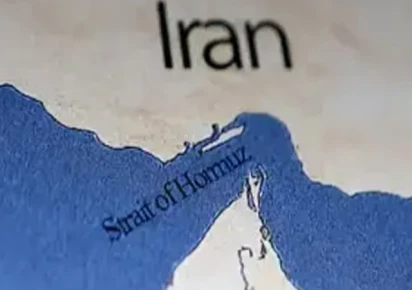
    By  Engr. Saqlain Abid tarrar Political Commentator | MS Power Engineering | NFPA-Certified Electrical Engine President Donald Trump, addressing a public rally, reportedly announced that the United States would soon “free” the Strait of Hormuz from what he described as Iranian captivity and suggested that it could effectively become American territory. The rhetoric immediately evokes his earlier statements about acquiring Greenland. But Hormuz is not Greenland. It is a strategic maritime chokepoint whose international legal status, geography and military consequences make any attempt to seize or control it an entirely different proposition. The question is whether Trump is merely bargaining through maximum pressure—or preparing the political ground for a ground invasion of Iran. Several geopolitical analysts, including a Chinese professor and commentator who has repeatedly warned that Trump could eventually choose ground intervention, now see such a possibility as increasingly rational from Washington’s perspective, even if strategically dangerous. The political clock is also ticking. With the US midterm elections approaching in November, a weak Republican performance could cost Trump control of the House. Having already signed the June 17 MoU, while Iran appears to have rejected or resisted key conditions, Trump may calculate that allowing Tehran to emerge claiming victory would carry a domestic political price. Yet this is precisely where strategic calculation can become strategic miscalculation. The Netanyahu government has also indicated that Israel could continue fighting even if Washington decides to stop. That creates an uncomfortable dilemma for Washington. The initial air campaign apparently exposed serious questions about the assumptions behind the war. If American planners underestimated Iran’s endurance, missile inventory and drone-interceptor economics, the conflict could become dramatically more expensive than anticipated. Even senior American military voices have reportedly debated whether continuing the war is necessary for credibility and deterrence. The USS Abraham Lincoln’s prolonged deployment, alongside reports of severe psychological strain among personnel, illustrates another hidden price of extended warfare. Meanwhile, Washington faces the enormous projected cost of the Golden Dome missile-defence programme, potentially requiring resources approaching $1.5 trillion. The central question is therefore simple: can America afford another open-ended adventure when it already needs enormous resources to compete with China and Russia? Iran, meanwhile, appears to be raising the price of any settlement. Its reported demands include lifting the naval blockade so that it can sell oil and gas freely, withdrawal of American forces from West Asia, release of roughly $12 billion in frozen or seized assets, an end to Israeli attacks on Yemen and Hezbollah, and substantial war reparations. Reports of command changes within the IRGC, including the appointment of hard-line figures, suggest that Tehran wants to signal a transition from a purely defensive posture towards greater offensive preparedness. Iran has also kept some capabilities, including submarines, underwater drones and long-range missile systems, relatively restrained. Whether all these claims are accurate or not, the message is unmistakable: Tehran wants Washington to understand that the next round could be more costly. The third actor is the Gulf. Saudi Arabia, under Mohammed bin Salman, has powerful economic reasons to prevent another escalation. A major American-Iranian war could threaten Saudi infrastructure, Vision 2030 projects and the enormous investments being built around them. Riyadh therefore has an incentive to use its relationship with Trump to discourage another military adventure. The UAE has likewise pursued back-channel diplomacy aimed at reducing the risk of Iranian retaliation. For the Gulf monarchies, the lesson is increasingly clear: money, investment and economic stability are more valuable than ideological confrontation. They may cooperate with Washington, but they do not want to become the battlefield. Pakistan has an opportunity—and a responsibility. With Iranian officials, including Mohammad Bagher Ghalibaf and Abbas Araghchi, expected to engage Islamabad again, Pakistan can provide a diplomatic channel between Tehran, Washington and the Gulf. The visit should not be treated merely as ceremonial diplomacy. Islamabad should push for a ceasefire mechanism, maritime de-escalation, protection of Gulf shipping, and a negotiated framework for American and Iranian security concerns. Trump now faces a historic choice: a safe exit that preserves American power, or another costly adventure that could transform Hormuz into the graveyard of his political calculations. Controlling the Strait by force is not the same as controlling the consequences. The real test of “America First” is knowing when not to fight.

  • Reforming the Security Council Without Entrenching…

    The United Nations was founded in 1945 after the League of Nations had failed to preserve peace. Its Security Council was designed for the world that emerged from the Second World War, with five permanent members holding the veto and a small number of elected seats. That basic architecture has scarcely changed since 1965, when the non-permanent membership rose from six to ten. The veto was meant to keep the great powers inside the system and to prevent open conflict among them. Eight decades later the organisation still carries the imprint of 1945 while the membership of the United Nations has grown to 193 states and the global population exceeds eight billion. The Council’s composition therefore no longer reflects the international community it is supposed to serve. In 2008 the General Assembly launched the Intergovernmental Negotiations to consider reform. The discussions have centred on five linked questions: categories of membership, the veto, regional representation, the size of the Council and its working methods. Africa still has no permanent seat. Latin America, South Asia and large parts of the Muslim world remain under-represented. The present arrangement is widely seen as a remnant of the colonial order that concentrates power among a few states. Many argue that emerging powers and significant regional actors—Pakistan, Brazil, Egypt, South Africa, Nigeria, Indonesia, Türkiye, Saudi Arabia, Mexico and India among them—ought to enjoy greater weight if the Council is to regain legitimacy and effectiveness. Yet the debate is locked. The Group of Four seeks permanent seats for itself and two for Africa. The African Group demands two permanent seats with full veto rights. France and Mexico urge the permanent members to refrain voluntarily from using the veto in cases of mass atrocity. The Uniting for Consensus group, led by Pakistan and supported by Italy, Mexico, Argentina, Canada and South Korea, rejects any enlargement of the permanent category. It proposes instead an expansion of elected seats that would be longer-term and renewable. The rival camps cancel one another’s majorities, leaving the process stalled. Enlarging permanent membership would not reform the Council so much as entrench new privileges. Additional veto-holders would multiply the occasions on which national interests can block action. The repeated American vetoes that have shielded Israel and allowed the destruction of Gaza to continue illustrate how a single permanent member can nullify the will of the rest. More permanent members would introduce further competing interests and raise the risk of paralysis. Once granted, permanent status is effectively irreversible; the new members would be free to obstruct any future attempt to revise the arrangement. India’s claim to a permanent seat invites particular scrutiny. Permanent membership requires sustained confidence in a state’s fidelity to the Charter. India’s refusal to implement successive Security Council resolutions on Jammu and Kashmir, its rejection of a United Nations-supervised plebiscite and its unilateral constitutional changes in the territory sit uneasily with that standard. Concerns about human-rights practices in the disputed region and elsewhere, the suspension of the Indus Waters Treaty, reports of transnational repression, the Citizenship Amendment Act, the treatment of Rohingya refugees and a foreign policy that has offered strategic comfort to Israel all raise legitimate questions. India’s status outside the Non-Proliferation Treaty and the Comprehensive Test Ban Treaty adds a further layer of unease. Germany’s candidature faces different objections. Europe already holds two permanent seats. Adding a third would deepen regional imbalance. Recent German positions on Gaza have been criticised as inconsistent with the very humanitarian principles permanent members are expected to uphold. The country’s failure to secure even a non-permanent seat in a recent election suggests that its aspirations do not command the necessary breadth of support. The Uniting for Consensus proposal offers a more measured path. Expanding the elected membership from ten to twenty would open opportunities for Africa, Asia-Pacific, Latin America and the Caribbean without creating new permanent centres of power. Periodic elections would keep members accountable to the wider membership. Rotation would allow more states to contribute to the maintenance of peace and security. Broader participation could improve the quality of deliberation on intractable questions such as Palestine, Ukraine and other long-standing disputes, without multiplying vetoes that have so often produced deadlock. Reform should strengthen the Council’s legitimacy without sacrificing its capacity to act. Expanding permanent membership would create additional privileged seats, heighten the risk of institutional paralysis and make subsequent change more difficult still. Wider geographical representation is better achieved by enlarging the elected ranks. The Uniting for Consensus approach preserves the existing institutional framework, enhances inclusivity, promotes accountability through regular elections and reflects the interests of the membership as a whole. Sustainable reform therefore lies in widening participation and reinforcing regional balance rather than in extending permanent privilege and the veto.

  • Where We Stand: Reflections on Governance and Resp…

    In the long chronicle of human affairs, few pursuits have more clearly revealed the character of a people than the search for good governance. Our predecessors, whether the wise administrators of earlier ages or those who laid the foundations of our own constitutional order, grasped this truth with a seriousness that still commands reflection. They understood that the art of governing is not a mere technique of power, but a moral undertaking. Authority, they held, is a trust held on behalf of the community, to be discharged with restraint, justice, and an eye to the welfare of generations yet unborn. Their systems, though shaped by the limitations of their times, were animated by principles of accountability, the supremacy of law over personal will, and the conviction that public office is a burden rather than a prize. Courts were expected to stand as impartial arbiters; civil servants were trained to place duty above favour; and rulers, at their best, recognised that their legitimacy rested upon the consent and confidence of the governed. We received from them a framework of institutions—representative assemblies, independent judiciaries, administrative services, and a body of laws intended to curb arbitrary power. These were not perfect creations, yet they embodied an aspiration toward order tempered by fairness. Public life retained, for considerable periods, a measure of dignity. Corruption existed, as it has in every age, but it was more often regarded as a shameful departure from the norm rather than an accepted condition of advancement. The methods of our predecessors rested upon a shared moral vocabulary; honour in public dealing, frugality in the use of common resources, and a sense that the strong bore a particular responsibility toward the weak. Where, then, do we stand today when measured against that inheritance? The forms of good governance remain visible—constitutions are still sworn to, elections are still held, statutes continue to be enacted—yet the substance has in many places grown thin. Trust between the people and the state appears to be fading. Justice is frequently perceived as uneven, accessible more readily to those of means or influence than to the ordinary person. Administrative machinery, designed to serve, is too often entangled in delay, patronage, and self-interest. Political discourse has become coarse and transactional, with loyalty to party or person frequently eclipsing loyalty to principle or the public good. The gap between proclaimed ideals and daily practice has widened, leaving many citizens disillusioned and inclined to withdraw from civic responsibility altogether. If failure must be acknowledged—and candour requires that it should—the causes are several and interwoven. Foremost among them is a progressive weakening of personal character in public life. Ambition has too often been severed from a corresponding sense of duty. The pursuit of power and material advantage has overshadowed the older ideal of service. Political culture has drifted toward clientelism, wherein positions and favours are distributed as rewards rather than earned through merit. Institutions that ought to act as checks upon excess have themselves become vulnerable to capture, their independence eroded by pressure, inducement, or the quiet fear of consequence. Education, which should have formed citizens capable of discerning right from expedient, has frequently neglected the cultivation of ethical judgement in favour of technical competence or mere qualification. Economic pressures and rapid social change have compounded these weaknesses, fostering a climate in which short-term gain appears more urgent than long-term integrity. Over all has settled a collective habit of blame; each segment of society is ready to indict the others while absolving itself. Have we, then, discharged our responsibilities as individuals, as institutions, and as a nation? The record is sobering. As individuals, many of us have grown content to lament the state of affairs while participating, in small ways or large, in the very practices we condemn—evading obligations, seeking special treatment, remaining silent when honesty would exact a cost. Institutions have too often placed institutional survival or the interests of their leaders above the purpose for which they were created. In prima facia, courts drag their feet, legislatures focus on partisan gain, and administrative bodies forget about the citizens they’re meant to serve. As a nation, we have allowed divisions of interest, region, and allegiance to weaken the sense of a shared destiny. Necessary reforms have been postponed; uncomfortable truths have been left unspoken; and the common good has been subordinated to immediate political calculation. Yet history is not an irreversible descent. Peoples have recovered from moral and administrative decline when they recovered first the will to examine themselves without illusion. Correction of direction remains possible, though it will demand more than rhetoric or the rearrangement of outward forms. It begins with the recovery of personal integrity in ordinary dealings, for no system can long remain honest if those who operate it and those who live under it are themselves careless of truth. It requires institutions to reclaim their independence and to remember that their authority derives from the public trust, not from the favour of transient power. It calls for a renewed national conversation about the ends of government—not merely the distribution of resources or the winning of elections, but the creation of conditions in which citizens may live with dignity, security, and hope. Education must once more address the formation of character as seriously as the acquisition of skill. Civic engagement must cease to be regarded as the province of a few and become again the ordinary duty of many. The task is arduous and will meet resistance from those who profit by the present disorder. Yet the alternative is a continuing erosion of confidence, a further coarsening of public life, and the gradual loss of that cohesion without which no society can endure. Our predecessors bequeathed us not a completed structure but a charge and an example. Whether we prove equal to that charge depends upon choices that are still ours to make. If we summon the courage to prefer principle to expediency, duty to advantage, and the long view to the immediate reward, the

  • No to the Division of Punjab

    Once again, the debate over the creation of new provinces has surfaced in Pakistan. In every political era, the issue is revived in one form or another. This time, however, there appears to be a growing push for creating additional provinces out of almost every major province in the country. The strongest argument being put forward is that Pakistan’s population was around 70 million in 1972, whereas it has now grown to more than three times that figure. Therefore, it is argued, new provinces have become necessary for administrative convenience. At first glance, this argument may sound convincing. But the real question is: can all of Pakistan’s problems be solved simply by creating new provinces? If population growth alone is a sufficient reason for creating new provinces, then why have all major countries in the world not followed the same path? The real issue is not the number of provinces but the quality of governance, equitable distribution of resources, an empowered local government system, transparent accountability and an effective administrative structure. When the basic system is weak, changing the map does not make the problems disappear. What is particularly concerning is that Punjab appears to be the main target of this debate. At different times, proposals have emerged for a separate South Punjab, Central Punjab and even further divisions. It seems that with every political season, Punjab becomes the centre of the debate over provincial division. This has understandably created a feeling among many Punjabis that the issue may not be merely about administrative reform, but could also weaken Punjab’s historical, cultural and political identity. Punjab is not merely another province. It is one of the strong pillars of Pakistan’s ideological, historical and economic foundations. The land played an important role in the Pakistan Movement, made enormous sacrifices for the defence of the country, strengthened Pakistan’s agriculture and industry, and has always played a key role in the national economy. Repeatedly dragging such a province into a debate over division is neither appropriate nor in the national interest. Those advocating new provinces speak extensively about administrative convenience, but remain largely silent about the financial consequences. Has anyone explained to the public that every new province would require a new governor, chief minister, cabinet, provincial assembly, speaker, deputy speaker, secretariat and numerous government departments? There would also be hundreds of new government positions, official residences, vehicle fleets, security arrangements, protocol and countless other administrative expenses. All of this would require billions of rupees. And ultimately, that money would not come from some separate source. It would come from the taxpayers and the public exchequer. Pakistan is already facing one of the most serious economic challenges in its history. The burden of domestic and external debt remains enormous, while a substantial portion of the national budget is spent every year on debt servicing and interest payments. The country continues to rely on programmes supported by the IMF and other international financial institutions, while ordinary citizens struggle with inflation, unemployment and rising electricity, gas and petrol prices. In such circumstances, would creating new provinces and expanding the size of the ruling and administrative machinery really be an act of national wisdom? Or would it simply place another burden on already stretched national resources? If the genuine objective is to serve the people, the existing system should first be made more effective. Local governments must be empowered, district administrations should be given adequate financial and administrative authority, bureaucratic reforms should be introduced, corruption must be tackled and the equitable distribution of resources must be ensured. If the existing system is not functioning to its full potential, how can simply drawing new boundaries across the map transform the lives of ordinary citizens? The issue of dividing Punjab is not merely administrative. It is also a question of identity. Punjab’s language, culture and heritage have already not received the level of official patronage and protection they deserve. If the geographical unity of Punjab is repeatedly subjected to calls for division, it could further weaken its cultural and historical identity. There is another important question: if population is to be the basis for creating new provinces, why should the same principle not be applied uniformly across the country? Will this criterion apply equally to every province, or is Punjab being singled out? National decisions should not be driven by political expediency. They should be based on constitutional requirements, the national interest and broad public consensus. In my view, Pakistan needs a new economic vision, stronger institutions, a fairer system of justice, quality education, better healthcare, greater employment opportunities and effective local governments far more urgently than it needs new provinces. People do not want more rulers; they want better governance. They do not need more official protocol; they need affordable food, quality healthcare, good education and decent employment. As a Pakistani, a journalist and a Punjabi, I believe that dividing Punjab is not in the national interest. Its unity, historical importance and cultural identity should be protected. If we genuinely want to strengthen Pakistan, we should strengthen the system rather than divide provinces, improve governance rather than expand administrative structures, and reduce the problems faced by ordinary citizens instead of placing an additional financial burden on them. The division of Punjab is, in my view, unacceptable. A strong Punjab contributes to a strong Pakistan, and a strong Pakistan should be our shared destination.

  • Privatization of DICSOs. Why Pakistan Should Hand …

    Pakistan is about to privatise three of its distribution companies — FESCO, GEPCO and IESCO — and call it reform. It is not reform. It is triage, dressed up by three institutions that have run out of the credibility to call it anything else. The government picked these three not because they are the future of Pakistan’s grid, but because they are the only ones healthy enough to survive being sold. Their transmission and distribution losses sit around 9–10 percent, low by Pakistani standards, and their books are clean enough to attract a buyer. That is not a privatisation strategy. That is a garage sale of the family’s least broken furniture while the roof still leaks — supervised by the very carpenters who let the roof rot. And look who is showing up to bid. Expressions of interest have come from a handful of Pakistani business houses — conglomerates looking for a new asset class. Not one of them has run a national distribution network at scale, with the theft, the political interference, and the feeder-level rot that defines an ex-WAPDA DISCO. We have seen this film before. It was called K-Electric. At the time of its 2005 privatisation, KE was drawing a subsidy of roughly Rs 8 billion. Two decades later, it needed a Rs163 billion tariff differential subsidy in the FY2026–27 federal budget just to keep its consumers’ bills from reflecting its own inefficiency. Twenty-fold growth in the subsidy bill is not what privatisation was sold as. If that is what “successful” privatisation looks like, Pakistan should be terrified of doing it two, or eleven, more times. The rot is institutional, and it has three addresses. NEPRA has spent years rubber-stamping tariff hikes, capitulating to circular debt, and failing to enforce performance standards on the DISCOs it already regulates — a ceremonial regulator that confuses notifying a tariff with governing a sector. CPPA-G, sitting at the centre of the power purchase and settlement system, has presided over a circular debt mountain that keeps climbing regardless of who is nominally in charge, and has never been made to answer for it. And the Ministry of Power itself has spent a decade approving capacity contracts, rejecting cheaper foreign offers, and rotating leadership through the same small circle of appointees who preside over one crisis and then the next. None of these three institutions has the standing left to supervise a privatisation of this scale. Handing FESCO, GEPCO and IESCO to private buyers while NEPRA still writes the tariff rules, CPPA-G still runs settlement, and the Ministry still calls the shots is not privatisation — it is a death sentence dressed in a share-purchase agreement, executed slowly, one quarterly tariff adjustment at a time, on the very consumers this reform claims to protect. A regulator that could not discipline a state-owned utility is not going to discipline a private one with dollar-indexed tariff protections and lawyers on retainer. Investors bidding for FESCO, GEPCO and IESCO are already demanding exactly that: payment guarantees in US dollars, contractual protection against future renegotiation, and freedom to slash staff. Pakistan is not privatising its grid. It is handing three of its most valuable state assets to whoever negotiates the toughest exit clause, under a regulator, a market operator, and a ministry with no track record of holding anyone to account. There was a better road, and Pakistan turned it down. In 2016, Chinese Smart Grid firms — brought to the table personally (Engineer Arshad H Abbasi) in that effort — offered to bring smart grid technology into Pakistan’s distribution network, the same technology that helped State Grid Corporation of China push national transmission and distribution losses down to roughly the mid-single digits in recent years. The proposal on the table was a shared-risk model: China would modernise the DISCOs into smart grids over a decade, splitting recovered losses fifty-fifty with the state. It would have cost Pakistan almost nothing upfront and aligned China’s incentives directly with reducing theft and technical loss — the two diseases actually killing Pakistan’s grid. The Ministry of Power and the Planning Commission rejected it. A parallel 2015 pitch to interconnect Pakistan’s grid with China’s has sat on the drawing board for over a decade. Meanwhile Pakistan built its way into the LNG and imported-coal trap that now drives the very capacity payments crushing consumers and taxpayers alike — a trap Chinese engineers, who have spent thirty years wiring one of the largest and most loss-efficient grids on earth, would likely have steered Pakistan away from. Compare the region. India already exports power to Nepal, Bhutan and Bangladesh and is deepening links with Sri Lanka and Myanmar. Bhutan alone hosts roughly 3,156 MW of Indian-financed hydropower capacity across five major projects — a model of a regional power partner investing in generation rather than merely trading finished electricity. Pakistan, by contrast, cannot even get its own national grid properly connected into Gilgit-Baltistan or Gwadar, a port city that still runs short of reliable power despite sitting at the centre of a multi-billion-dollar Chinese economic corridor. China already has more than 5,000 MW of committed CPEC power capacity inside Pakistan, selected and negotiated by the Planning Commission, and a demonstrated willingness to build hydropower in difficult terrain. It is time to stop pretending Pakistan can manage this alone. Invite China to finance and build the hydropower across GB, AJK and KPK the way India financed Bhutan, and let Pakistan’s surplus eventually be wheeled toward Afghanistan, toward India, even toward China itself — which still needs to retire coal capacity and would gladly take clean power off a friend’s grid. Because that is what China has been, in a relationship most Pakistanis do not need convincing about: a friend when the ledger was empty, a builder when nobody else would build, a partner sweeter than honey and, on the balance sheet of sixty years of cooperation, standing taller than Everest over every other option on the table. NEPRA and CPPA-G have failed

Leave a Reply

Your email address will not be published. Required fields are marked *