nab chairman grilled
| |

NAB chairman grilled over bureau’s performance

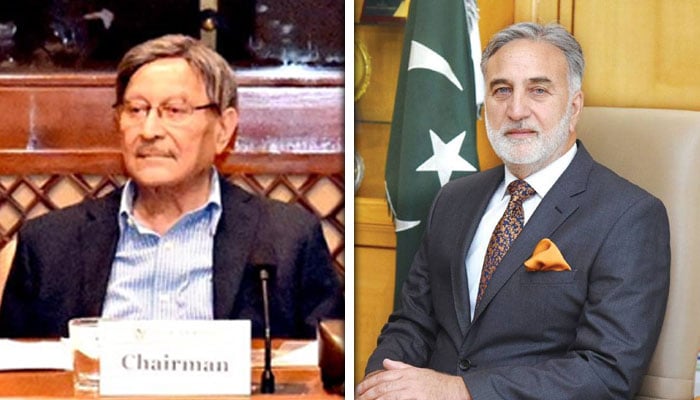
A meeting of the Senate Standing Committee on Law and Justice was held under the chairmanship of Senator Farooq H Naek, where National Accountability Bureau (NAB) Chairman Nazir Ahmed Butt appeared before the committee on its instructions.

During the meeting, Senator Farooq H Naek remarked that the NAB chairman had perhaps appeared before the committee for the first time.

In response, Nazir Ahmed Butt said that it was his first appearance before the committee as NAB chairman. He added that he had appeared before the committee several times while performing his previous responsibilities.

The NAB chairman said he had been assigned the responsibility in 2023. He recalled that ministers he met during his tenure repeatedly complained that the bureaucracy was afraid to make decisions and was therefore reluctant to work.

During the meeting, NAB Director General Operations briefed the committee on the bureau’s powers and performance.

The official said NAB had received 505,799 complaints since its establishment.

He said NAB also operates as an investigative agency under the Anti-Money Laundering Act, 2010.

According to the briefing, NAB has so far completed 12,147 inquiries, conducted 7,339 investigations and filed 4,105 references.

The DG Operations further told the committee that NAB had been allocated Rs22.556 billion over the past three-and-a-half years.

Despite the expenditure, the bureau reported significantly higher recoveries during the same period.

The committee was informed that NAB had recovered Rs1.069 trillion over the past three-and-a-half years.

The briefing highlighted the bureau’s role in investigating corruption, financial crimes and other cases falling under its legal mandate.

The committee members discussed NAB’s powers, investigations, recoveries and its overall performance during the meeting.

The NAB chairman and officials responded to questions from the committee and provided details about the bureau’s operations and financial performance.

Similar Posts

  • | |

    Anya Taylor-Joy shares unfiltered take on method a…

    Anya Taylor-Joy is sparking fresh conversation about one of Hollywood’s most debated acting techniques. During a recent interview with Complex News, the acclaimed actress shared her candid thoughts on method acting, explaining why she believes many women approach the craft differently from their male counterparts. Rather than staying in character around the clock, Taylor-Joy said she prefers maintaining a healthy balance between her work and personal life.  The Queen’s Gambit and Furiosa star argued that women often have responsibilities outside of work that make it difficult to fully immerse themselves in a role 24 hours a day. “If you’ll notice, women don’t method act because we have things to take care of. We can’t completely lose our minds,” she explained during the interview. Her comments quickly gained attention online, with many fans praising her practical perspective on the demanding acting technique.  Although Taylor-Joy acknowledged that acting requires deep emotional commitment, she described it as a form of “controlled psychosis” rather than a lifestyle that should continue once filming stops. She believes actors must fully understand their characters while still remaining grounded in reality. According to the actress, maintaining that balance helps performers deliver authentic performances without allowing their roles to consume their everyday lives.  Taylor-Joy also stressed the importance of professionalism on set. She said actors have a responsibility to create a positive working environment for everyone involved in a production. Staying in character between takes, she suggested, should never come at the expense of treating fellow cast and crew members with kindness and respect. She added that becoming too invested in difficult characters could make collaboration far more challenging.  Her remarks arrive as method acting continues to divide opinion across the entertainment industry. While some performers believe the technique helps them deliver unforgettable performances, others argue that it has occasionally been used to justify disruptive behavior on set. Taylor-Joy’s perspective adds another voice to the ongoing discussion about whether complete immersion is truly necessary to create compelling performances.  The actress has built a reputation for portraying emotionally complex characters in projects such as The Witch, The Queen’s Gambit, Last Night in Soho, and Furiosa: A Mad Max Saga. Despite taking on psychologically demanding roles, she says she relies on self-awareness and support from those around her to stay emotionally healthy throughout the filmmaking process.  As Taylor-Joy prepares for future projects, including The Lord of the Rings: The Hunt for Gollum and Dune: Part Three, her latest comments offer fans a revealing look into her creative philosophy. Rather than embracing extreme methods, she believes great performances come from empathy, discipline, and emotional control. Her thoughtful approach suggests that, for her, the best acting happens when talent and professionalism work hand in hand. 

  • Thailand Administers Contraceptive Vaccine to Wild Elephants for Population Management

    TRAT – For the first time, Thai wildlife authorities have administered contraceptive vaccines to female wild elephants as part of a new initiative to manage population growth and reduce human-elephant conflict. Park Rangers Search for Elephant Injured in Khao Yai Road Collision The Department of National Parks, Wildlife and Plant Conservation, in collaboration with Chiang […]

  • US Secretary of State Marco Rubio Sends Songkran Greetings to Thailand

    BANGKOK — United States Secretary of State Marco Rubio has issued an official greeting to the people of Thailand, marking the commencement of the Songkran Festival and the Thai New Year with a pledge of closer ties and a reaffirmation of the enduring alliance between the two nations. Thai PM Anutin Wishes Nation a Happy […]

  • |

    Kashmir solidarity protest held outside Indian High Commission in London on Youm-e-Istehsal

    A large number of Pakistanis and Kashmiris gathered outside the Indian High Commission in London on Wednesday to mark Youm-e-Istehsal-e-Kashmir, protesting against India’s August 5, 2019 decision to revoke the special constitutional status of Jammu and Kashmir. The demonstrators raised slogans in support of the right to self-determination for the people of Kashmir and expressed opposition to the policies implemented in the region following the 2019 decision. Participants also chanted slogans in support of Pakistan and the Pakistan Armed Forces, while carrying banners and placards highlighting their concerns over the Kashmir issue. Addressing the gathering, speakers said that the August 5, 2019 move had affected the political identity and rights of the Kashmiri people. They urged the international community to pay attention to the situation in Kashmir and play a role in addressing the long-standing dispute. The protesters called for a peaceful and lasting resolution of the Kashmir issue and reiterated their commitment to continuing support for what they described as the Kashmiri people’s right to self-determination. The demonstration concluded peacefully, with participants reaffirming solidarity with the people of Kashmir.

  • | |

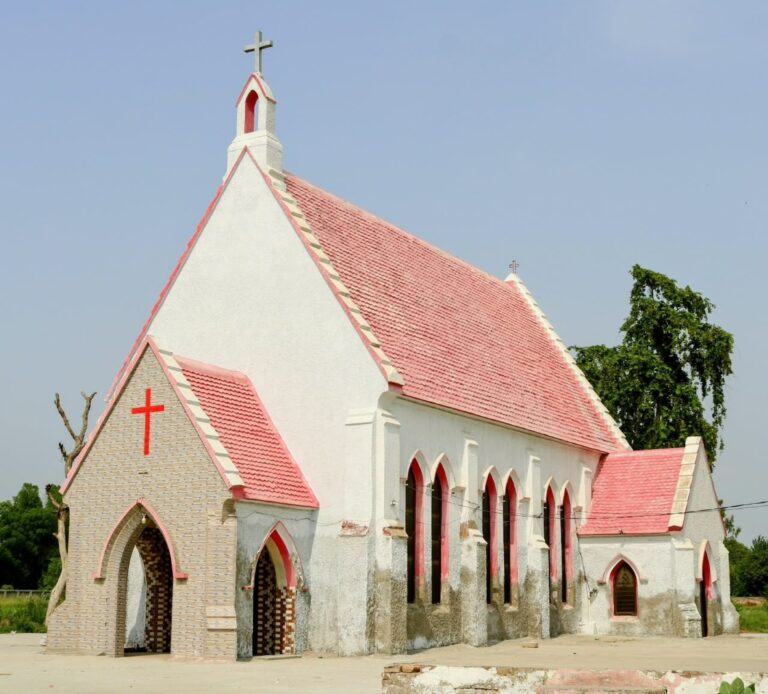
    DI Khan church still guards colonial memories

    There are some places we pass every day without realising how much history they hold. They remain untapped until some visitors put their eyes on them. During summer vacations, I travelled to Dera Ismail Khan, a district situated in southern Khyber Pakhtunkhwa. It takes six hours from Lahore to arrive in this historic city. During my stay there, I came across one such place that immediately captured my attention, and I thought to write about it. It was St Thomas Church, sacred place of worship for Christian community. A large cross standing at the entrance, old rusty walls, and an ambience of spiritualism. But the Church showcased more than that. Its walls contain historical accounts of colonial past, the military campaigns led by British soldiers in this area and a grave of one Lieutenant Governor of Punjab.   St Thomas Church was built in 1856 during British rule in the Indian subcontinent. It is one of the oldest churches in present-day Pakistan. It has survived political changes, the Partition of 1947, and the passing of time. Even today it stands as a symbol of the rich and diverse heritage of Dera Ismail Khan. The church is not only a place of worship but also a reminder that different faiths and communities have long been part of the history of this region. As we walked inside, we met the old priest and caretaker of the church named Chand. He welcomed us warmly and narrated the remarkable history of this place. There are memorials of British soldiers who lost their lives in this region during military campaigns. The priest stood in front of each tablet inscribed on the church wall and briefed about it. One memorial narrates the names, ranks and units of one hundred and 69 British military officers and other ranks who were killed or died due to injuries or disease in Waziristan military campaigns launched between 1919 to 1921.     Another memorial lists details of sixty-eight officers and other ranks who met a similar fate during the 1936-1938 Waziristan military campaigns. Similarly, one tablet erected by friends and fellow officers mourns the death of Herbert Walter Gee, ICS, deputy commissioner of Dera Ismail Khan, who died in 1901. There are other memorials as well, erected by colleagues in memory of the fallen officers. I thought that these names contain historical accounts year by year about what happened in this part of the world at that time. Every sentence of the Priest carried a new story, such as how the church has witnessed a lot of happenings through generations and that it still serves the small Christian community living in Dera Ismail Khan. As we stepped outside, believing our visit had come to an end, the priest said, “Wait. I have to show you one more thing.” He took me to the back of the building, where I saw a large white grave standing quietly among the dusty bushes. Here rests Lieutenant General Sir Henry Marion Durand (1812-1871). Durdand – a quite familiar name for the people of Pakistan and Afghanistan. Sir Durand was a career British military officer, diplomat, and administrator. He served in the East India Company Army, took part in several military campaigns, and later became the Lieutenant Governor of Punjab from 1870 to 1871. His son Sir Mortimer Durand is the one who drew the contours of the border between British India and Afghanistan in 1893. A man who once held such an important position now lies in silence behind an old church, while many people living nearby are unaware that his grave even exists. Henry Marion Durand died in 1871 at the age of 58 from a tragic accident. He was visiting Nawab of Tank Shahnawaz Khan along with his daughter when he fell from an elephant. The elephant was passing through the gateway by the town of Tank with the Nawab on the same elephant and an official (Chaprassy). The gate was too low to cross an elephant with howdah. The howdah struck the walls of crossing and the elephant got frightened resulting in the fall of Durand. He remained unconscious for a few days and never recovered. He was buried beside St. Thomas’ Church in Dera Ismail Khan. The British suspected some conspiracy into this incident. One of descendent of Nawab Shahnawaz Khan says that The British launched an enquiry into it. But the daughter of Durand gave testimony in favour of the Nawab that it was just an accident and there was no fault on his part. However, as a punishment, the British authorities stripped the powers of Nawab Shahnawaz Khan in 1875 and sent him to Lahore under strict watch. He passed away in 1881 while under surveillance. Standing beside the grave of Sir Henry Durand, I felt as if I had stepped into a forgotten chapter of history. The name engraved on the stone reminded me that many important events and personalities of the past remain connected to places that we often overlook. How easily history can fade from people’s memories, even when it is standing right in front of us. As I left St Thomas Church, I felt that I had walked through a chapter of history that few people ever get to read. Sir Henry Durand ruled Punjab from this soil, and his son later sat across a table in Kabul and drew the line that still separates Afghanistan and Pakistan today. That line appears in newspapers and political debates all the time. Yet the grave of the man whose name it carries lies quietly behind a church in Dera Ismail Khan.

  • Thai Government Pushes Plan to Get 300,000 EVs on the Road

    BANGKOK — The Ministry of Transport is preparing an action plan to boost electric vehicle adoption by 300,000 vehicles, supported by tax incentives and a car trade-in scheme aimed at accelerating the shift away from petrol-powered transportation. Thailand pushes to put electric cars on the road Deputy Transport Minister Siripong Angkasakulkiat outlined two key measures […]

Leave a Reply

Your email address will not be published. Required fields are marked *