riyadh8217s strategic triangle

Riyadh’s Strategic Triangle: Security, Stabi…

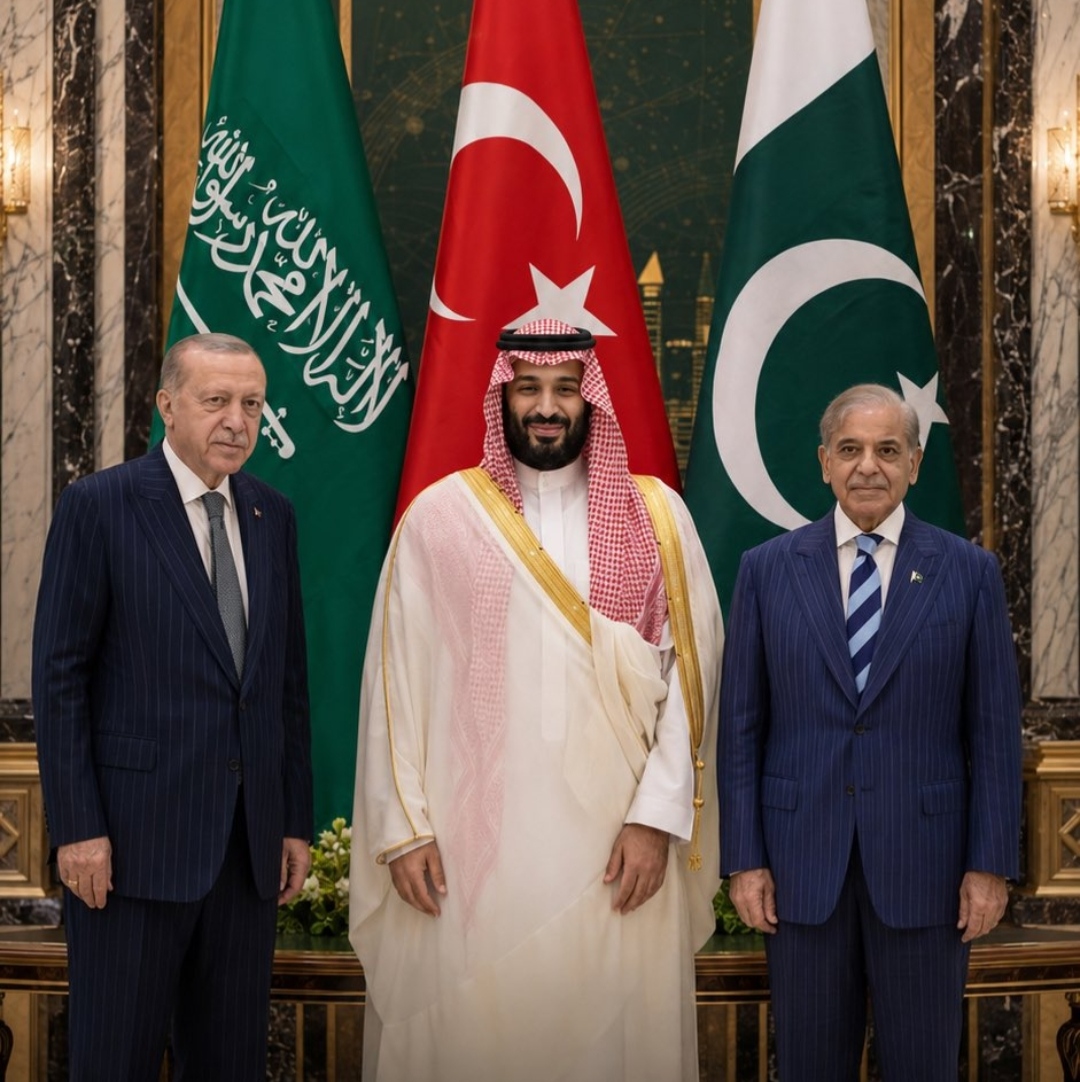
The visit of Pakistan’s Prime Minister and Chief of Defence Staff to the Kingdom of Saudi Arabia on 6–7 August 2026 was officially presented as a meeting with Crown Prince Mohammed bin Salman (MBS), accompanied by the performance of religious rituals in Islam’s holy cities. Yet, diplomacy is often conducted between the lines rather than in official communiqués. French newspapers, Indian news agencies, and Israeli media all reported that Pakistan, Türkiye, and Saudi Arabia were working toward a defence agreement expected to be signed on Friday. While no official confirmation has emerged, the reports have generated an important strategic debate. If such an agreement is indeed under discussion, what is its real agenda? Would it amount to a military alliance, and if so, against whom would it operate? More fundamentally, why would Pakistan and Türkiye, both facing considerable economic pressures, seek to enter such an arrangement? Or are we witnessing the gradual birth of a new regional security architecture in the vacuum created by the declining American military footprint in the Middle East, with Pakistan assuming an anchoring role?


The first narrative comes from Pakistan. Political analyst Parveen Sawamy argues that Pakistan is gradually emerging as the principal anchor of a broader Muslim strategic framework. According to this view, Islamabad has evolved from being merely a facilitator of dialogue to becoming a mediator and now potentially a guarantor of regional security. Among the members of the OIC, Pakistan enjoys a unique diplomatic position. It maintains working relations with almost every important regional actor, consistently supports the Palestinian cause, and remains outside the circle of states that have normalized relations with Israel. This balanced diplomacy provides Islamabad with credibility across the Muslim world.


Pakistan also possesses one of the most experienced armed forces in the Islamic world, capable of contributing to Gulf security should regional circumstances demand it. At the same time, Washington may not necessarily oppose such a role, particularly given the perception that General Asim Munir enjoys constructive relations with the Trump administration. Pakistan’s geographic proximity to Iran further strengthens its credentials, allowing it to maintain channels of communication with Tehran while preserving strategic partnerships with Gulf monarchies. If Islamabad succeeds in converting this diplomatic leverage into economic opportunity, a defence understanding with Riyadh and Ankara could mark the beginning of a new Muslim security framework based on deterrence, mediation, and regional peace rather than confrontation.


The second narrative revolves around Türkiye. President Recep Tayyip Erdoğan, despite facing domestic economic challenges, brings decades of NATO experience, an advanced defence industry, and diplomatic flexibility. Türkiye remains a NATO member, maintains dialogue with the United States, preserves working relations with Israel, and simultaneously engages actively with Asian and Muslim nations. Such strategic diversity enables Ankara to serve as a bridge between competing geopolitical camps.


From Türkiye’s perspective, participation in a trilateral framework would capitalize on its military technology and defence manufacturing capabilities while expanding economic cooperation with Pakistan and Saudi Arabia. Ankara also offers valuable diplomatic experience and could serve as a neutral venue for negotiations during future regional crises. If such cooperation enjoys quiet support from Washington, Türkiye would strengthen both its strategic autonomy and its influence across the Muslim world.


The third and perhaps most decisive narrative belongs to Saudi Arabia. Crown Prince Mohammed bin Salman (MBS) seeks durable security guarantees to preserve investor confidence in Vision 2030 and mega-projects such as NEOM. Economic transformation cannot succeed without regional stability. Recent conflicts have exposed the vulnerability of Gulf infrastructure to missile and drone attacks, prompting Riyadh to reassess its long-term security strategy. MBS increasingly recognizes that American military bases alone cannot guarantee the Kingdom’s security in an era of rapidly changing regional dynamics.


Pakistan and Türkiye therefore emerge as relatively affordable yet credible strategic partners. Saudi energy sustains both economies, while Islamabad and Ankara can provide military expertise, training, and strategic reassurance. More importantly, MBS appears less interested in confronting Iran through perpetual military rivalry than in managing competition through diplomacy backed by credible deterrence. If this approach succeeds, it could reduce regional tensions while safeguarding Saudi Arabia’s ambitious economic transformation.


Whether the reported defence agreement materializes or remains diplomatic speculation, the convergence of Pakistan, Türkiye, and Saudi Arabia reflects an important geopolitical trend. All three states require economic stability, strategic autonomy, and a more reliable regional security framework. Their interests intersect around the need to protect trade, investment, energy infrastructure, and political stability. If this strategic triangle evolves into a formal partnership, its true success will not be measured by the strength of its military capabilities but by its ability to prevent conflict, encourage dialogue, and foster prosperity. In a region long defined by rivalry, the most enduring alliance may ultimately be the one built not for war, but for peace.

Similar Posts

  • A Nation in Focus: The Social Contract and the Mak…

    (When the water rises, who shows up and who is left waiting?) ‎I live in Sabzazar, a neighborhood in Lahore, Pakistan, but part of my heart is always sitting along the banks of the Moxahala Creek back home in Southeast Ohio. When the water rises in Muskingum County or the Punjab plains, who shows up, and who is left waiting? I live in Sabzazar, a neighborhood in Lahore, Pakistan, but part of my heart is always sitting along the banks of the Moxahala Creek back home in Southeast Ohio. ‎ ‎My mother and brother still live right near South Zanesville, just a stone’s throw from Crooksville. When heavy rains hit Perry and Muskingum counties, I don’t need to be there to know what it looks like. I can picture the heavy, chocolate-brown water backing up into the low spots, the damp chill that settles into a basement, the fears of what if the waters reach a house trailer, and that specific, exhausting smell of river mud that takes weeks to scrub out of porch boards and carpet. The worries of if the home has structural damage.. Halfway across the world in Pakistan, the landscape couldn’t look more different. But when monsoon season swells the rivers across the Punjab, the view from the ground is hauntingly identical. ‎ ‎Standing in a flooded doorway feels the same whether you are in Ohio or Lahore. The quiet shock is the same. The ruin of things you worked years to buy is the same. And the very first instinct is to grab your coat, shovel, a chainsaw and a pair of boots and go check on the elderly woman next door.. Start hauling wet furniture, debris to the curb and giving comfort, food and basics to those in need is entirely universal. Watching both worlds at once makes you look at governance differently. It strips away abstract political jargon and leaves you asking one fundamental question: When a community is hit with a crisis, does its system build capable people who can act, or does it leave them sitting on their hands, waiting for permission to survive? ‎ ‎What a Small Ohio Village Taught Me About Governance ‎ ‎Growing up around South Zanesville and Crooksville, you learn pretty early that small-town life relies on a very specific kind of quiet, distributed agency. ‎Crooksville isn’t a rich town. It’s a hard-working Appalachian village of under 1,500 people. But when the creek overflows, nobody sits around waiting for a press conference out of Washington, D.C., or a mandate from the state capital in Columbus. ‎ ‎The response moves in waves because the connections are already wired: ‎On the local levels we see neighbor checks on neighbor. The volunteer fire department turns on the sirens, pulls out the high-water gear, and starts the door to door knocks. At the County level we have the Perry County 911 dispatch and Emergency Management Agency (EMA) start tracking water levels and routing equipment where it’s needed most. At the State level, If the county gets overwhelmed, pre set legal triggers immediately call in the Ohio EMA or the National Guard. ‎ ‎Government here doesn’t replace the community’s instinct to help itself; it validates it, organizes it, and backs it up with real resources. The system trusts the people on the ground to know their own roads. Here in Pakistan, the human spirit is just as generous, if not more so. The impulse toward hospitality, neighborly charity, and mutual support runs incredibly deep. When disaster strikes, ordinary citizens open their wallets and their homes without a second thought. It’s just what they do… ‎ ‎And Pakistan’s has one of the world’s top class military engineering, a massive national disaster agency (the NDMA), and incredible private charities. The raw capacity is immense. Yet, too often, there is a however a very heartbreaking disconnect between that high-level power and the family standing in ankle deep water in a local neighborhood. An ordinary citizen here once described the country to me using a metaphor I’ve never forgotten: a child that was never allowed to stand on its own feet. An infant isn’t helpless because it lacks potential. It’s helpless because it hasn’t been given the space to build muscle, fall over, adjust its balance, and try again. If an authority figure picks the child up every single time it tries to pull itself up, the child never learns to walk—not from a lack of ability, but because the environment denied it the chance to build strength. ‎ ‎That is how systemic learned dependency takes root: Central authorities assume total control, bypassing local municipal councils. Neighborhoods are given no real budget or authority to fix their own drainage or organize local response teams. And when a flood comes, citizens have no choice but to wait for distant, top-down relief. The authorities look at the waiting crowd and say, “See? The people can’t manage without us.” ‎We witness power centralized even further, deepening the exact helplessness it claims to fix. Over generations, people adapt to the system they are given. If a system rewards waiting for a political patron, people learn to wait for patrons. If it rewards local initiative, communities build habits of self-reliance. It is very easy to blame culture or public apathy for civic passivity, but that misses the point entirely. Culture simply reflects the structural incentives people are given to survive and adapt. It is nature vs nurture and we have a break down when these two things fail to promote a cohesiveness and inclusion of what is a community and what that actually means. ‎ ‎Across the globe, the relationship between state control and citizen participation varies wildly, proving that central authority does not have to mean public powerlessness. In China, a deeply centralized state framework actively structures and expects local neighborhood committees and civil volunteer groups to manage community-level crises. Across much of Europe, comprehensive state safety nets exist alongside highly empowered municipal councils and professionalized local volunteer forces.

  • Ecolinguistics and the Role of Media

    The role of media should not be confined to disseminating news and information but must also highlight public awareness regarding climate change. The media, in its reporting, is required to use appropriate terminology and diction to raise awareness, highlight the causes, and provide a way forward. The media, in its reporting, is expected to project the environment not as a resource to be used by humans but as a living environmental and ecological process that must not be disturbed by humans. For example, while writing such reports, if the media says that natural resources are diminishing or facing extinction, it must similarly highlight that the environmental system is being affected or impacted negatively . Recent studies have also reinforced this perspective. Penz and Fill (2022) observe that ecolinguistics promotes and fosters environmental awareness while supporting and strengthening the connection between humans and nature for sustainable development. In this context, Alexander and Stibbe (2014) argue that ecolinguistics plays a key role in highlighting the relationship between humans and the environment, as well as its impact on addressing environmental challenges and shaping a sustainable future. It is pertinent to highlight that while reporting any incident about environmental degradation or natural disasters, the media, apart from reporting, is also expected to provide solutions and a way forward to help face such incidents in the future. In reports about floods, wildfires, and rising temperatures, the media is also required to provide guidance and suggestions on how to combat or lessen the impacts of such environmental changes. The reporting must not be based only on presenting news and subsequently creating fear or chaos but must also give a sense of hope among people that through various techniques and the use of technology, such natural disasters can be managed effectively. The media must not consider floods, droughts, fires, or other environmental disasters merely as natural disasters but should link such impacts with environmental changes, industrial pollution, deforestation, human intervention with nature, and so on. Fairclough (1995), in his study, states that media should cover and highlight the areas that , on the other hand, are ignored and not given consideration by the masses. Therefore, the media is expected to sensitize the masses regarding such disasters and create a way forward to combat or tackle such environmental change disasters and their impacts on people and society as a whole. On the other hand, equally important is environmental equity or justice in society. It has been widely observed and noted that in floods, droughts, disasters, and environmental changes, the major impacts are faced by the underprivileged in society. It is the role and responsibility of the media to highlight and become a voice for such voiceless people, representing them and creating a sense of ownership among the poor and marginalized sections of society. The media is also required to highlight and create awareness among people about science and technology related to the environment and provide them with knowledge that through the use of such technology, they can tackle the horrors of disasters. The study of ecolinguistics reminds the media that humans are, in no way, different from society and can never be detached from society and vice versa. Hence, media reports are also expected to discuss humans, rivers, oceans, flora, fauna, biodiversity, and the ecosystem as a whole to give them significance and bring them into the limelight of the coverage. Media reporting is also required to use environment related terminology and diction, such as environmental war, ecological emergency, and other relevant terms, in its reports to highlight environment related information. Recent studies highlight that similes and metaphors have a significant impact on human thinking. Hence, the media is encouraged to resort to this method to mould public opinion towards environmental conservation and protection. Moreover, media personnel are required to engage in investigative journalism and cover incidents and events from different angles , examining their pros and cons deeply. If there are frequent flash floods in any area, the media is expected to discuss the causes and the role of concerned authorities in handling the incidents . Media houses, along with environmental protection organizations and other stakeholders, are required to impart knowledge and training to journalists. There is also a significant role for environmental funding organizations in sensitizing media personnel. In training sessions, they are expected to invite environmental experts, scientists, and scholars who have made significant contributions in this area. Media reports and the diction used therein have great significance. They must highlight a green and stable future through sustainable development initiatives and become partners in facing the challenges and effects of environmental degradation. They must give hope to people that the media stands with them and will continue contributing its responsible and positive role. This is the major objective of ecolinguistics. Societies such as ours widely need the use of ecolinguistics in the media.

  • From steel to semiconductors and back

    It is widely believed that the more things change, the more they remain the same. For nations to stand on their own feet, the basics have to be covered; it is the lesson of history which must never be ignored. Steel has always been considered the basic building block of advancement. Pakistan started off well in producing its metals. In the decade of the sixties, the Kalabagh Iron deposit was upgraded by the German Krupp Wrenn process to be later converted into steel. Germans are known for thoroughness; they produced VW cars with the local metal. The powerful import lobby prevailed and the Pilot Plant was shut down. Precious time was lost. Finally, in the decade of the seventies the Soviet Union came to our help. The Pakistan Steel Mills project was started outside Karachi at Port Qasim. In the decade of the eighties Pakistan started producing its own steel based on imported ore and coal. The plan was to gradually replace the imported raw materials with the indigenous. At its peak the mill produced about 3 MTPY ( Million Tons per year ) against a national demand of 5 MTPY. Instead of increasing capacity, the plant was shut down in the year 2015. Coming from a family of technologists, I opted for Metallurgical Engineering. I wanted to join Pakistan Steel Mills ( PSM ) which was recruiting students for education and training in USSR. But instead, I landed in the USA where I completed my masters study from the College of Mines University of Arizona ( U of A ). Arizona was considered the world Copper Capital with several mines around. In the decade of the seventies an organization was established at the federal level called Resource Development Corporation ( RDC ) with its head office in Karachi while PUNJMIN ( Punjab Mineral Company ) covered Punjab where Kalabagh and Chiniot Iron deposits were located. It was RDC that launched the first Copper-Gold project at Saindak through its subsidiary SML ( Saindak Metals Limited ) in the year 1992. I was closely associated with this project as the bench studies were conducted in Tucson by a consulting firm by the name of MSME ( Mountain States Mineral Enterprise ). Till my master’s level, mining remained my focus. After graduating in 1981 when I returned in 1983 to start my doctoral program in Arizona, mining had been replaced by high-tech Silicon based Semiconductors. Research was focused on electronic materials. Silicon was produced from Silica Sand on which Integrated Circuits ( ICs ) were built. Metals like Aluminum, Titanium, Gold and Copper were being used. Then came the Solar Cells which Pakistan had produced in the decade of the seventies but missed opportunity due to lack of commercial linkages. While the Semiconductors and Solar batteries are in great demand, the material needs have increased manifold. Mining is back with a bang. Without basic raw materials, the technological advancements are not possible. I have gone full circle in my own career, and so have the technological advancements. From Steel to Copper, then Silicon based Semiconductors followed by mining and gasification of Coal. As a nation, we have missed several opportunities. Catch-up is possible through Leap-Frogging which is widely used by late entrants. China and India have adopted this approach effectively. The crusade should start with a Minerals Development roadmap. PMDC ( Pakistan Mineral Development Corporation ) and PUNJMIN can take the lead. Most of our mineral deposits remain un-tapped which can be developed to meet our needs. Self-sufficiency in Steel and Copper is achievable. Even lithium is available to produce batteries. Minerals are the basic building blocks of the nation which have been ignored. High grade Silica Sand is available in the north to produce Solar Cells and Semiconductors. India has made major investments in the high-tech Semiconductor sector. In the recently held Mining Conference in Karachi, it was agreed to expand the operations at Thar to meet our energy and fertilizer needs after gasification of the Black Gold. Basics have to be covered; advancement cannot be achieved through imports and borrowing. The party should finally come to an end for nation building to start.

  • Justice Begins with the Well-being of Judges

    When we talk about justice, we usually think about independent courts, fair and speedy decisions, and honest judges. But we often forget one important question: What about the justice-sector people behind all this? Judges have one of the most demanding jobs in society. Every day, they decide cases that affect people’s lives, freedom, families, businesses, property, and rights. They are expected to remain fair, independent, and impartial, no matter how difficult or ‘high profile’ the case may be. To recognize the importance of supporting judges, the United Nations General Assembly declared 25 July as the International Day for Judicial Well-being in March 2025. Judges also need healthy and supportive working conditions to perform their duties effectively. Being a judge is not easy. Many judges face heavy workloads, long working hours, difficult and emotionally charged cases, public criticism, security risks, and administrative responsibilities. These challenges can affect their physical and mental health. When judges are under constant stress, it can also affect the quality and speed of justice. Looking after judges is therefore not a personal favour; it helps the entire justice system. Healthy and motivated judges are better able to make fair decisions, uphold the rule of law, and maintain public confidence in the courts. The idea of judicial well-being gained international attention with the adoption of the Nauru Declaration on Judicial Well-being on 25 July 2024. The Nauru Declaration on Judicial Well-being is founded on seven guiding principles: (1) judicial well-being is essential to judicial independence and the effective administration of justice; (2) judicial stress should be recognized without stigma; (3) promoting judicial well-being is a shared responsibility of judges and judicial institutions; (4) courts should foster an ethical, respectful, and inclusive judicial culture; (5) awareness, education, prevention, and support measures should be encouraged; (6) each jurisdiction should develop well-being initiatives suited to its own needs and circumstances; and (7) all efforts to promote judicial well-being should respect human rights and fundamental freedoms. A 2021 survey by the Global Judicial Integrity Network of the United Nations Office on Drugs and Crime (UNODC), involving judges from more than 100 countries, highlights the growing importance of judicial well-being. The survey found that 76% of judges lack enough time to care for their physical and mental health, 92% experience work-related stress, 89% know colleagues suffering from stress or anxiety, 69% believe mental health remains a taboo subject in the judiciary, 83% say their court systems provide insufficient support, and 97% believe judicial well-being deserves greater attention. Judges also reported that poor well-being affects the efficiency of courts, the quality of judicial decisions, public confidence in the judiciary, access to justice, judicial integrity, and procedural fairness. These findings show that judges around the world face similar challenges. When judges receive proper support, they are better able to make fair and balanced decisions; work more efficiently; maintain high ethical standards; resist outside pressure; and strengthen public confidence in the courts. Supporting judges means strengthening the rule of law and improving the delivery of justice. Governments and judicial institutions should take practical steps to improve judicial well-being. These include reducing excessive workloads; providing confidential counselling and mental health services; creating peer-support programmes; offering leadership and well-being training; protecting judges from harassment and intimidation; and ensuring safe and healthy working environments. It is also important to create a culture where judges feel comfortable seeking support when they need it. In Pakistan, judges work under immense psychological pressure. The rapid growth of social media has changed the environment in which justice is delivered. Cases that are still pending before the courts are frequently debated online, with people openly expressing opinions and expecting decisions that match their own views. Such public discussion creates pressure on judges, even if it does not influence their legal reasoning or final decisions. Many judges are also present on social media or are more visible in public life than in the past. Their participation in public events and increased interaction with society have reduced the professional distance that traditionally existed between judges and the public. While greater engagement has its benefits, it also exposes judges to public criticism, expectations, and scrutiny, which can affect their psychological well-being. For a judge, there should be no distinction between an ordinary case and a so-called ‘high-profile case.’ Article 25 of the Constitution of Pakistan guarantees that all citizens are equal before the law. Every case deserves the same attention, fairness, and impartiality. However, media coverage and public opinion often create the perception that certain cases are more important than others. Even where judges remain completely independent, such external attention can create significant psychological pressure. Another challenge is public perception of the justice system. Justice is delivered by many institutions, including the police, prosecution, lawyers, prison authorities, investigators, and the courts. Delays and weaknesses often result from failures across the entire justice sector. Yet, when justice is delayed, or public confidence declines, the criticism is directed mainly at the judiciary. Judges become the visible face of the justice system and bear the burden of public dissatisfaction, even when the causes lie beyond the courts. This constant scrutiny, criticism, and pressure can affect judges’ morale and well-being. Pakistan has recently taken an important step by placing judicial well-being on the national agenda. To mark the International Day for Judicial Wellbeing, the Law and Justice Commission of Pakistan will organize the country’s first National Conference on Judicial Wellbeing at the Supreme Court of Pakistan on 25 July 2026. This initiative is a welcome beginning. However, promoting judicial well-being should become a permanent part of judicial reform rather than a one-day observance. Protecting judges’ well-being ultimately strengthens the rule of law and improves public confidence in the administration of justice. Justice is delivered by people. Judges are expected to remain fair, calm, independent, and ethical while making decisions that can change people’s lives. They can perform this important role best when their own well-being is protected.

  • Political Dynasties: A Silent Threat to Democratic…

    By Misbah Naz   Democracy derives its legitimacy from the principle that political power belongs to the people. Every citizen, regardless of family background, wealth, or social status, should have an equal opportunity to participate in governance and compete for public office. Yet, across many democracies, political power often remains concentrated within a handful of influential families. This phenomenon, commonly known as dynastic politics, raises an important question: can democracy truly flourish when leadership becomes a family inheritance? Political dynasties are not unique to one country or region. They exist in established and emerging democracies alike. From South Asia to North America, prominent political families have shaped electoral politics for decades. While family members have every democratic right to contest elections, democracy suffers when political succession depends more on lineage than merit. One of the greatest strengths of democracy is political equality. Elections are intended to provide a level playing field where ideas, competence, and public service determine electoral success. Dynastic politics undermines this principle by granting inherited political advantages. Established family names often enjoy greater access to party leadership, campaign financing, media exposure, and political networks than ordinary citizens. Consequently, capable individuals without influential backgrounds frequently struggle to enter mainstream politics. Dynastic politics also weakens internal democracy within political parties. Instead of selecting candidates through transparent and competitive processes, leadership positions may be concentrated within a single family or close associates. This discourages talented young leaders, limits political innovation, and reduces accountability. Political parties become personality-driven rather than institution-driven, making leadership transitions more dependent on family succession than democratic competition. Another concern is the weakening of public trust. Citizens expect elected representatives to prioritize national interests over personal or family influence. When political office appears to be inherited across generations, many voters begin to question whether democratic institutions genuinely offer equal opportunities. Declining trust in political institutions can reduce electoral participation, increase political polarization, and create public frustration with democratic governance. Political dynasties may also influence policymaking. Long-standing political families often develop extensive patronage networks that reward loyal supporters through appointments, contracts, or political favors. Such systems can encourage nepotism and undermine merit-based governance. Public institutions function most effectively when appointments are based on competence rather than political loyalty or family connections. Young people are particularly affected by dynastic politics. Across many developing democracies, youth constitute a significant proportion of the population, yet they remain underrepresented in political leadership. When political pathways are dominated by established families, emerging leaders with innovative ideas face structural barriers to participation. This disconnect between political leadership and demographic realities limits democratic renewal and policy innovation. However, it is equally important to avoid oversimplification. Belonging to a political family does not automatically make an individual an ineffective leader. Democratic principles do not prohibit relatives of politicians from contesting elections. The fundamental issue is whether they compete under fair conditions and remain accountable to voters. If political success is achieved through transparent elections, strong institutions, and genuine public support, democratic legitimacy remains intact. Problems arise when inherited influence consistently outweighs merit and competition. Strengthening democracy therefore requires institutional reforms rather than targeting individuals. Political parties should adopt transparent candidate selection procedures, encourage internal elections, and provide opportunities for grassroots leadership. Independent election commissions, campaign finance regulations, and stronger parliamentary oversight can further reduce undue political concentration. Equally important is an informed electorate that evaluates candidates on integrity, competence, policy vision, and public service instead of family legacy alone. Democracy is sustained not merely by regular elections but by equal political opportunity. Societies flourish when leadership emerges through merit, accountability, and public confidence rather than inheritance. Political dynasties may continue to exist in democratic systems, but they should never become substitutes for democratic competition. Ultimately, the health of any democracy depends on whether every citizen—not just those born into influential families—has a genuine chance to lead.

  • Who Owns Your Digital Self? The Emerging Market fo…

    For years, people uploaded photographs, videos and voice recordings believing they were sharing moments or building audiences. What many did not realise was that public material could become training data for artificial intelligence. Large AI systems may be developed using datasets containing personal information collected from websites and platforms. European regulators acknowledge that AI models can be trained on personal data, while the UK Information Commissioner says developers still need a lawful basis even when information comes from the open web. Training a general model and cloning a person are not identical. The first learns patterns across datasets; the second uses targeted samples to reproduce an identifiable voice or appearance. Yet both raise the same question: who authorised the use? A new proposition is emerging: instead of companies quietly collecting human material, people may knowingly license their faces, voices and movements for AI development or commercial digital replicas. In return, they could receive a one-time payment, royalties or a fee whenever their synthetic identity is used. This is beginning. Shutterstock operates a contributor fund that compensates contributors when material from its library is licensed for AI model development. SAG-AFTRA has negotiated protections for digital replicas. The voice platform Narrativ allows performers to set prices and advertising preferences for AI-generated versions of their voices, with payment for approved uses. At first glance, this is progress. People’s data has already been feeding digital systems, often without their knowledge, meaningful choice or financial benefit. A transparent marketplace could be fairer. At least individuals would know that a voice sample or facial scan was being collected. There would be a contract, and some value created from human identity could return to the human being. It could also create work. A person might license a recorded voice for educational narration in several languages. A model could approve a digital replica for advertisements without attending repeated shoots. People far from production centres might gain opportunities previously unavailable to them. But payment is not the same as protection. A person offered a modest amount may sign away far more than they understand. A broadly written agreement could allow a company to reproduce a face or voice for years, transfer it to other businesses, train additional models and place the replica in contexts the person would never endorse. The human receives one payment; the synthetic version may generate revenue indefinitely. Faces and voices are not ordinary digital products. A password can be changed after a breach. A face cannot. A cloned voice can imitate a family member, support a fraudulent request or manufacture a statement that was never made. The US Federal Trade Commission has warned that scammers can create convincing voice clones from short audio clips found online. The answer is not to ban every voluntary AI licence. It is to establish non-negotiable human protections. Consent must be specific, informed and renewable. Companies should state whether material will be used for training, identity replication or both. Agreements must define the product, audience, country, platform and time period. Permission for an educational video must not silently become permission for political advertising, gambling, medical claims, intimate material or religious messaging. Compensation should continue when the replica continues earning. Where a digital identity is repeatedly used, the person should receive royalties or per-use payments, not merely a small initial fee. Individuals should be able to set minimum prices, reject industries and see where their replica appeared. There must also be a genuine right to stop future use. Companies should delete source files, block new generations and notify third parties when a licence ends. Independent audits should test compliance. Strong security and penalties for leaks are essential because biometric material cannot simply be replaced. Every synthetic performance should carry visible disclosure and a machine-readable marker. The European Union’s transparency rules, applicable from 2 August 2026, require certain AI-generated or manipulated material to be identifiable and deepfakes to be disclosed. Labels will not prevent every abuse, but they help preserve the distinction between human action and machine-generated imitation. Children need stronger protection. Parents should not be able to permanently commercialise a child’s future identity. Any limited agreement should expire and require the individual’s fresh consent upon adulthood. Pakistan should treat this as urgent. As of 2026, the country still lacks a comprehensive enacted personal data protection law. This creates vulnerability just as international companies may seek diverse and comparatively inexpensive populations for AI training.  The greatest risk is not that humans will earn from AI. Fairly sharing value could correct years of silent extraction. The danger is that people will exchange permanent control for temporary payment. As AI advances, societies must recognise the face, voice and digital personality as extensions of the human person, not raw material waiting to be harvested. Without consent, continuing compensation, traceability and the power to say no, we may lose more than jobs or privacy. We may lose the trust that allows us to believe what we see, hear and recognise. AI should expand human possibility, not gradually replace human ownership of the self.

Leave a Reply

Your email address will not be published. Required fields are marked *