keep your laptop

Keep your laptop cool

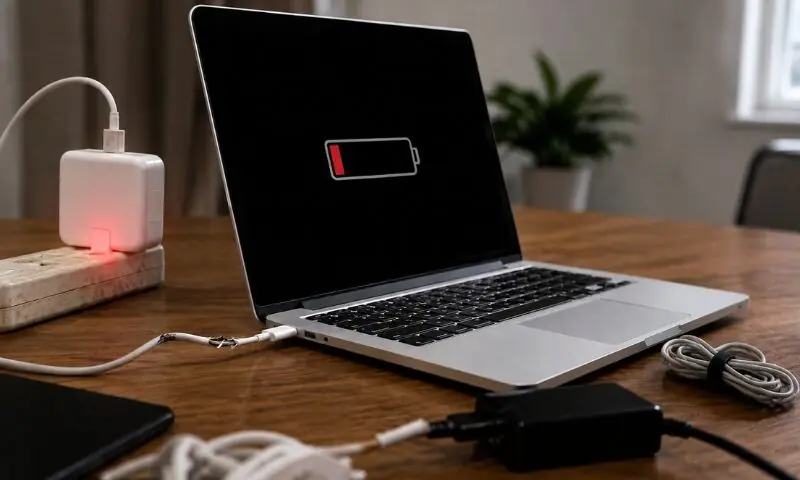
A charger should not be chosen only because its connector fits your laptop. Its voltage, current and power rating must also match the laptop’s requirements.

Using a cheap or poor quality charger can cause charging problems and may damage the battery or other components.  In some cases faulty chargers can also create electrical or fire hazards.

Do not ignore excessive heat

If your laptop becomes unusually hot while charging do not ignore it. High temperatures can reduce battery health and may affect other internal components. Stop demanding tasks for a while, move the laptop to a cooler place and make sure its vents are not blocked.  A good cooling pad may also help in some situations.

Avoid heavy work while charging

Using a laptop while it is charging is not automatically harmful.  Normal activities such as browsing the internet writing documents or watching videos are usually fine. However heavy gaming 4K video editing or running demanding software can put a lot of load on the processor and cooling system.  If the vents are blocked or full of dust the laptop may become even hotter.

Do not regularly drain the battery to zero

Repeatedly allowing a modern lithium-ion or lithium polymer battery to reach 0% is generally not the best everyday habit. Try to charge the laptop before the battery becomes completely empty. If the battery percentage seems inaccurate follow the manufacturer’s instructions for battery calibration if that feature or procedure is recommended.

Be careful with public charging

Avoid using unknown chargers power banks or cables in public places.  Poor quality charging equipment can damage your device while unfamiliar USB connections may also create security and data risks.

Keep the laptop clean

dust can build up around cooling fans and air vents over time. This can reduce airflow and cause the laptop to heat up. Clean the vents regularly using a suitable cleaning method recommended for your laptop.  Avoid forcing dust deeper into the device.

Use a Proper battery and Charger

A laptop battery is more than a simple power source. It includes safety features and charging controls designed for a specific device.

If the original battery needs replacement choose a compatible good-quality battery from a reliable source rather than using an unverified replacement.

If the battery becomes swollen the bottom of the laptop starts to bulge the device suddenly shuts down or it becomes unusually hot stop using it and have it checked by a qualified technician.  Do not try to open or remove a swollen battery yourself.

Check the Charging cable

The charging cable is just as important as the charger. Do not use a cable that is cut burned damaged unusually hot or has a loose connection.

A damaged cable can cause unstable charging and may create electrical or safety risks.

Small habits can protect your laptop

Charging a laptop is simple but careless habits can slowly affect its battery and overall performance. Using the right charger keeping the device cool avoiding blocked vents and taking care of the battery can help your laptop stay in good condition for longer.

Similar Posts

  • Scientists discover mysterious black hole star in deep space

    Scientists claim to have discovered a fascinating cosmic mystery. According to them, it is a “black hole star” about the size of our solar system and glowing with extremely bright red light. An international team of researchers made the discovery using images captured by NASA’s James Webb Space Telescope (JWST) which revealed the mysterious red glow. The black hole star is located in the constellation Cetus, billions of light-years away from Earth. Scientists believe it may have formed around 660 million years after the Big Bang. It appears similar to a massive star but is estimated to release 100 billion times more energy than an ordinary star. Such enormous energy output has previously been associated with black holes rather than stars. Scientist Rohan Naidu of the Massachusetts Institute of Technology (MIT) who was part of the research team said that they had discovered an entirely new type of cosmic phenomenon. He explained that the object is shining with an amount of energy normally associated with black holes while at the same time displaying characteristics typically linked to stars. First observed by James Webb Space Telescope Scientists have been using the James Webb Space Telescope to study distant galaxies in the universe. Their interest in this phenomenon increased after the discovery of the galaxy Maisie’s Galaxy (CEERS 1) and other early-universe objects. In a study published in the journal Nature, researchers named the red-light phenomenon MAM-BH1. They said its completely red appearance and disappearance at specific wavelengths are so dramatic that it cannot easily be compared with other known cosmic objects. Computer simulations suggested that rather than being an extremely massive star, the object is actually a black hole that shines like a star. If the scientists’ interpretation is confirmed, it could indicate that many of the mysterious red dots observed across the universe may also be black hole stars. Rohan Naidu believes that these types of black hole stars could play an important role in the evolution of galaxies.

  • Human Capital Is Superior to Other Resources

    By Dr. Naveeda Katper Human beings live in a world of countless needs and wants, but the resources available to meet those needs are limited. Food, shelter, education, health and a sense of belonging are among the basic requirements of life. Because resources are scarce, individuals, organizations and governments have to set priorities, make choices and use available resources wisely. Resources can broadly be divided into natural and human-made resources. Natural resources such as land, water, forests, minerals and energy come from nature. Human-made resources, including machines, buildings, technology and infrastructure, are developed by people using natural resources. Natural resources can be depleted, while human-made resources can depreciate through use and time. Human beings, however, are different from other resources. A person is not simply a consumer of resources. With education, training, health and appropriate opportunities, a person can develop knowledge and skills and become an important form of human capital. This is why human capital is often considered more valuable than other resources. Human beings discover, develop and manage resources. They create technology, improve production, solve problems and generate new ideas. Among the traditional factors of production—land, labour, capital and entrepreneurship—human effort remains central because it activates and combines the others. Education and skills are therefore essential for economic and social development. A person without education or employable skills may have limited opportunities to earn a stable income. A skilled person, on the other hand, can use available resources productively and create value for both themselves and society. Skills can take different forms. Hard skills include technical and professional abilities. Soft skills include communication, teamwork, discipline and problem-solving. Transferable skills can be applied across different occupations and workplaces. All of these can improve a person’s ability to participate productively in the economy. Developed economies provide useful examples of how investment in people can contribute to national development. Countries such as Finland, Norway, Singapore, Switzerland, Japan and South Korea have invested substantially in education, vocational training, technology and workforce development. Their experience shows that economic progress is not based only on natural resources or physical infrastructure. The knowledge, skills and productivity of people are equally important. Skills development should begin early in life. Children should not be taught only to memorise information. They should also be encouraged to ask questions, solve problems, make things, experiment and learn from mistakes. An education system that allows children to try, fail and try again can help develop confidence, creativity and practical thinking. Schools, vocational institutions and workplaces all have a role in this process. Young people need opportunities to connect education with practical skills. They should be able to understand how knowledge can be applied to real problems and employment opportunities. The challenge is particularly serious in developing and least-developed countries, where many people have limited access to quality education, technical training and decent employment. Weak educational systems, inadequate infrastructure and limited opportunities for formal employment can prevent large sections of the population from developing their full potential. The problem is not simply unemployment. It is also the gap between what people know and what the economy needs. Many young people complete some level of education but do not acquire the practical or technical skills required by employers. At the same time, businesses often struggle to find workers with the right skills. Pakistan faces a similar challenge. The country has a large and relatively young population, which can become an important economic advantage if the right investments are made. But population size alone does not create economic growth. A large population becomes an asset when people are healthy, educated, skilled and productively employed. The World Bank’s Human Capital Index has repeatedly highlighted the importance of investments in education, health and skills for Pakistan’s long-term economic prospects. Pakistan’s human-capital performance remains below that of many countries that have made stronger and more sustained investments in these areas. Improving the quality of education, expanding vocational training and increasing opportunities for productive employment should therefore be treated as national priorities. Formal education, however, should not be considered the only route to developing human capital. Many adults who did not receive adequate schooling can still acquire useful skills through vocational and technical training. Short courses in areas such as construction, agriculture, livestock, tailoring, information technology, electrical work, plumbing, mechanics, hospitality and other trades can provide people with opportunities to earn a livelihood. Such training should not remain concentrated in major cities. Local training centres and mobile skill programmes can take practical education to towns and villages. Community-level training can help women, young people and adults who cannot easily access conventional educational institutions. Pakistan can also benefit from stronger links between education and the labour market. Training programmes should be designed after identifying the skills actually demanded by local and national economies. Employers, educational institutions and government departments should work together to ensure that training leads to real opportunities rather than certificates alone. The private sector also has an important role. Businesses can provide apprenticeships, internships and on-the-job training. Young people can gain valuable experience when they are given opportunities to learn directly in workplaces. Human capital development should also include lifelong learning. Technology and the nature of work are changing rapidly. Skills that are valuable today may become less relevant tomorrow. Workers therefore need opportunities to update their knowledge and acquire new skills throughout their careers. The central lesson is simple: people should not be viewed merely as consumers of a country’s resources. With proper investment, they become producers, innovators, entrepreneurs, teachers, technicians, researchers and problem-solvers. They create value from resources that might otherwise remain underused. For Pakistan, this is both a challenge and an opportunity. The country’s young population can become a powerful economic resource if it receives quality education, healthcare, practical skills and meaningful employment opportunities. But if these needs are ignored, population growth can increase pressure on already limited resources. Human capital is therefore not a secondary concern. It is one of the foundations of sustainable development. Roads, buildings, machines, technology and natural

  • | |

    DI Khan church still guards colonial memories

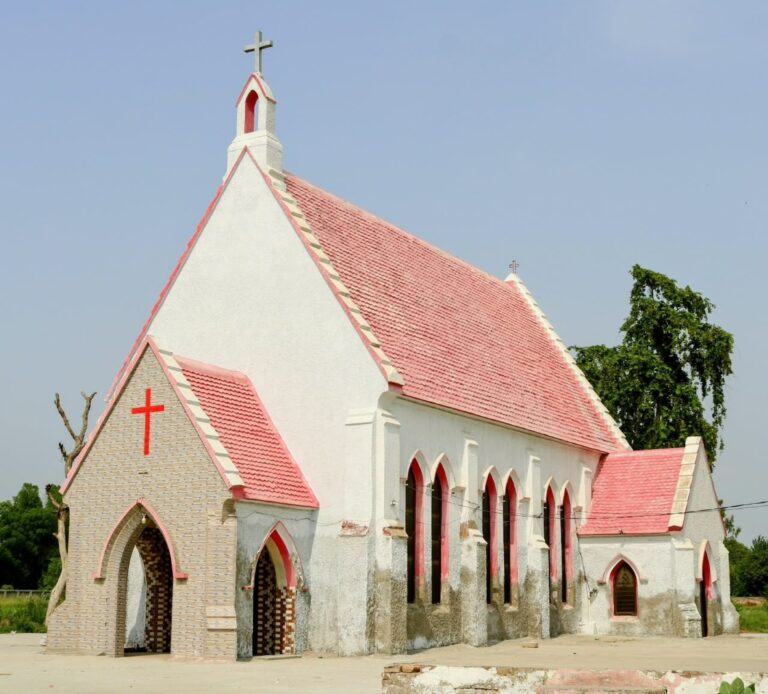
    There are some places we pass every day without realising how much history they hold. They remain untapped until some visitors put their eyes on them. During summer vacations, I travelled to Dera Ismail Khan, a district situated in southern Khyber Pakhtunkhwa. It takes six hours from Lahore to arrive in this historic city. During my stay there, I came across one such place that immediately captured my attention, and I thought to write about it. It was St Thomas Church, sacred place of worship for Christian community. A large cross standing at the entrance, old rusty walls, and an ambience of spiritualism. But the Church showcased more than that. Its walls contain historical accounts of colonial past, the military campaigns led by British soldiers in this area and a grave of one Lieutenant Governor of Punjab.   St Thomas Church was built in 1856 during British rule in the Indian subcontinent. It is one of the oldest churches in present-day Pakistan. It has survived political changes, the Partition of 1947, and the passing of time. Even today it stands as a symbol of the rich and diverse heritage of Dera Ismail Khan. The church is not only a place of worship but also a reminder that different faiths and communities have long been part of the history of this region. As we walked inside, we met the old priest and caretaker of the church named Chand. He welcomed us warmly and narrated the remarkable history of this place. There are memorials of British soldiers who lost their lives in this region during military campaigns. The priest stood in front of each tablet inscribed on the church wall and briefed about it. One memorial narrates the names, ranks and units of one hundred and 69 British military officers and other ranks who were killed or died due to injuries or disease in Waziristan military campaigns launched between 1919 to 1921.     Another memorial lists details of sixty-eight officers and other ranks who met a similar fate during the 1936-1938 Waziristan military campaigns. Similarly, one tablet erected by friends and fellow officers mourns the death of Herbert Walter Gee, ICS, deputy commissioner of Dera Ismail Khan, who died in 1901. There are other memorials as well, erected by colleagues in memory of the fallen officers. I thought that these names contain historical accounts year by year about what happened in this part of the world at that time. Every sentence of the Priest carried a new story, such as how the church has witnessed a lot of happenings through generations and that it still serves the small Christian community living in Dera Ismail Khan. As we stepped outside, believing our visit had come to an end, the priest said, “Wait. I have to show you one more thing.” He took me to the back of the building, where I saw a large white grave standing quietly among the dusty bushes. Here rests Lieutenant General Sir Henry Marion Durand (1812-1871). Durdand – a quite familiar name for the people of Pakistan and Afghanistan. Sir Durand was a career British military officer, diplomat, and administrator. He served in the East India Company Army, took part in several military campaigns, and later became the Lieutenant Governor of Punjab from 1870 to 1871. His son Sir Mortimer Durand is the one who drew the contours of the border between British India and Afghanistan in 1893. A man who once held such an important position now lies in silence behind an old church, while many people living nearby are unaware that his grave even exists. Henry Marion Durand died in 1871 at the age of 58 from a tragic accident. He was visiting Nawab of Tank Shahnawaz Khan along with his daughter when he fell from an elephant. The elephant was passing through the gateway by the town of Tank with the Nawab on the same elephant and an official (Chaprassy). The gate was too low to cross an elephant with howdah. The howdah struck the walls of crossing and the elephant got frightened resulting in the fall of Durand. He remained unconscious for a few days and never recovered. He was buried beside St. Thomas’ Church in Dera Ismail Khan. The British suspected some conspiracy into this incident. One of descendent of Nawab Shahnawaz Khan says that The British launched an enquiry into it. But the daughter of Durand gave testimony in favour of the Nawab that it was just an accident and there was no fault on his part. However, as a punishment, the British authorities stripped the powers of Nawab Shahnawaz Khan in 1875 and sent him to Lahore under strict watch. He passed away in 1881 while under surveillance. Standing beside the grave of Sir Henry Durand, I felt as if I had stepped into a forgotten chapter of history. The name engraved on the stone reminded me that many important events and personalities of the past remain connected to places that we often overlook. How easily history can fade from people’s memories, even when it is standing right in front of us. As I left St Thomas Church, I felt that I had walked through a chapter of history that few people ever get to read. Sir Henry Durand ruled Punjab from this soil, and his son later sat across a table in Kabul and drew the line that still separates Afghanistan and Pakistan today. That line appears in newspapers and political debates all the time. Yet the grave of the man whose name it carries lies quietly behind a church in Dera Ismail Khan.

  • Why do car turn signals click?

    When you turn your car left or right you hear the familiar click-click sound from the turn signal. At the same time the arrow on the dashboard flashes to show the signal is working. Even though cars have become much more advanced this sound has stayed the same for many years. But have you ever wondered why? Turn signals first appeared in cars in the late 1930s. In older vehicles the clicking sound came from a thermal flasher. When the driver switched on the turn signal electricity heated a small metal strip.  As it bent from the heat it completed an electrical circuit and turned the signal lights on. The metal quickly cooled returned to its original shape and broke the circuit turning the lights off. This heating and cooling cycle repeated over and over making the lights flash. The movement of the metal strip created the well known clicking sound. As technology improved car makers replaced the old thermal system with electromagnetic and later electronic systems controlled by computer chips.  These newer systems no longer need moving metal parts to flash the lights. However most modern cars still play the click click sound on purpose. Manufacturers keep it because drivers are used to hearing it and the sound reassures them that the turn signal is working correctly even though it is no longer mechanically necessary.

  • Airplane IQ Puzzle

    Do you enjoy solving puzzles? If yes here is a fun brain teaser that will test your observation skills. Look carefully at the picture and try to figure out which person is poor. The image shows three people traveling on an airplane. One person is reading a newspaper a woman in the middle is holding a smartphone and another person is using a laptop. This is more than just a simple puzzle. It is designed as a small IQ test that checks how well you notice tiny details. Try to find the answer within 30 seconds. Take a close look before making your choice.  The clue is visible in the picture but you need sharp eyes to spot it. •Have you guessed the answer? If not the puzzle says the man reading the newspaper is the poor person. The clue is on the jacket resting on his lap. A label on the jacket suggests it is made from polyester which the puzzle presents as a cheap imitation leading to the conclusion that he is poor. Keep in mind that this is only the intended answer to the puzzle. In real life a person’s clothing or belongings do not determine whether they are wealthy or poor.

  • Why do people talk in their sleep

    Sleep talking is quite common. People who talk while sleeping usually do not know what they are saying.  Their words may sound unclear or random making it difficult for others to understand them. Some people only mumble a few words while others may speak in full sentences.  It can sometimes be confusing or surprising for anyone sleeping nearby. What is sleep talking? Sleep talking also known as somniloquy is a type of sleep behavior called a parasomnia. Parasomnias are unusual actions that can happen while we are asleep such as walking moving around or talking. Sleep talking can happen during different stages of sleep including deep sleep and REM sleep. It may also occur when the brain is moving from one sleep stage to another. This means that what a person says while sleeping may not always have a clear connection to their dreams or real life thoughts. Why do people talk in their sleep? Experts believe that sleep talking can sometimes run in families. However several other factors may also play a role. Stress anxiety emotional experiences and certain mental health conditions may increase the chances of sleep talking.  In some cases poor sleep or major changes in a person’s routine may also contribute. Can sleep talking be linked to dreams? Sometimes a person may suddenly speak while sleeping and say something that seems related to what they were thinking about during the day. The brain continues to process information while we sleep. It may replay memories emotions and events from the day. As a result, some sleep talking may sound like random pieces of thoughts or conversations. However sleep talk does not always tell us exactly what someone is dreaming about.  The words may be unclear incomplete or completely unrelated to what the person remembers after waking up. For most people occasional sleep talking is harmless. However if it happens very often or comes with other unusual sleep behaviors it may be worth discussing with a sleep specialist.

Leave a Reply

Your email address will not be published. Required fields are marked *