love dissolves boundaries
|

Love dissolves the boundaries of the self

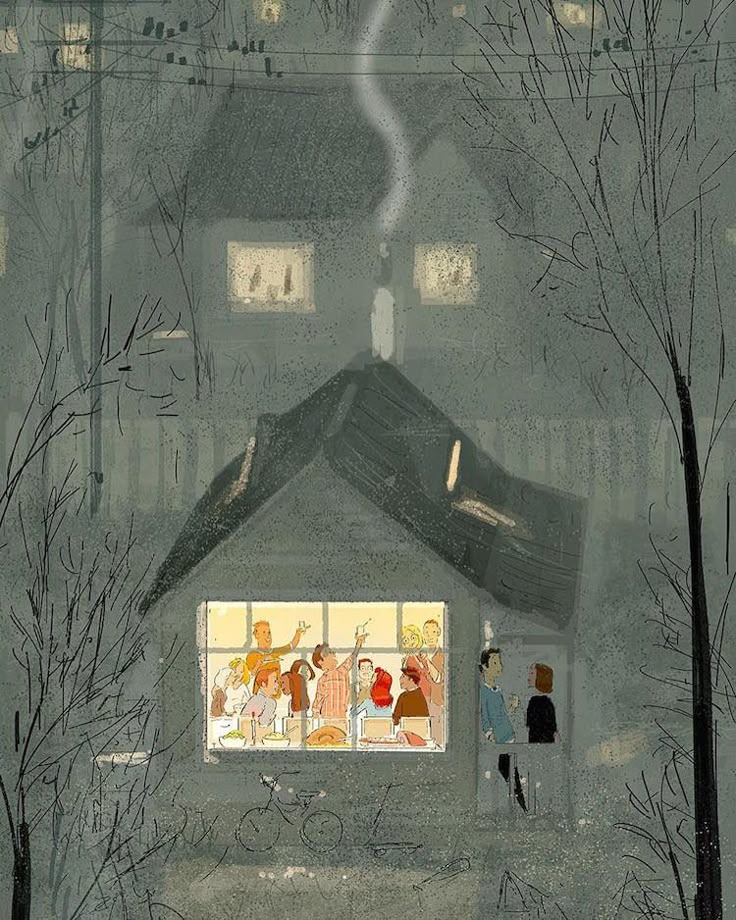
It is as if love, by its fluid nature, its riverine force, is all about the melding of markers, to the extent that you can no longer tell where your being ends and another’s begins.


We live in a world defined by borders. We map our territories, build physical walls and establish rigid psychological boundaries to guard our individuality. Humanity spends a lifetime declaring where the self ends and the rest of the universe starts. The distinct identities we project to the quiet solitude of our internal thoughts. Yet, when love enters the human experience, it acts as an irresistible force of nature. Love becomes an element that disregards every boundary we carefully construct. It operates not as a static landscape, but as a continuous flow to reshape who we are.

To describe love as having a riverine force captures its essence with poetic accuracy. A river does not ask permission before carving through stone, nor does it pause at artificial borders. It moves with a quiet, relentless momentum, smoothing hard edges, carrying fragments of memory and reshaping the land over time. In much the same way, genuine affection whether rooted in romance, deep kinship or profound friendship refuses to be contained within the individual. It surges through the intellect, the memory and the physical body, altering the very anatomy of our everyday existence.

Consider how affection gradually rewires our daily reality. We begin with distinct lives, separate routines, and isolated inner worlds. But as devotion takes root, those distinct individual markers begin to blend. A breath becomes synchronized with your own resting state. Their joys lift your spirit, and their anxieties weigh heavily upon your stomach and mind. The line between yours and mine fades into a shared space. You find yourself adopting their idiosyncratic phrases, intuitively anticipating their unexpressed emotions and carrying their burdens as though they were instinctively your own.

This blending is not a loss of sovereignty, but an expansion of identity. Human connection demands a gentle surrendering of ego. In a culture that heavily praises hyper-independence and self-reliance, opening oneself to such fluid intimacy can feel remarkably terrifying. To love deeply is to allow another person access your vulnerability. It’s to permit their experiences to ripple through your heart, liver and soul. It requires accepting that your emotional state will no longer exist in a vacuum.


Ultimately, this melting of markers reveals a profound truth about human existence: we are not meant to remain isolated islands. We are dynamic, porous beings constantly seeking connection. When the riverine force of love sweeps through a life, it washes away the illusions of rigid separateness. It leaves behind a unified current where two distinct journeys merge, forever changing the landscape of the self. In that quiet convergence, we discover that losing track of where we end and another begins is not a loss of selfhood at all, but its ultimate fulfillment.

Similar Posts

  • | |

    Theories behind Shakespeare’s true identity

    For centuries, William Shakespeare has been indicated as the undisputed genius of Western literature. His masterworks, ranging from the tragedy of Hamlet to the romantic drama of Romeo and Juliet, form the bedrock of English theater. Yet, beneath the reverence lies one of the most persistent controversies in literary history. Did a provincial actor from Stratford-upon-Avon actually pen these legendary plays? Was Shakespeare merely a convenient alias for another genius working in the shadows? The Paradox of the Bard’s Background Doubts surrounding Shakespeare’s authorship stem largely from the sharp contrast between his known biography and the astonishing depth of his literary canon. Born in 1564, Shakespeare attended the local grammar school where he learned Latin and basic rhetoric. He never pursued higher education at a university, nor did he ever leave England. In contrast, the plays attributed to him demonstrate an extraordinary mastery of complex subjects. They reveal intimate familiarity with international geography, continental languages, high-stakes royal politics, aristocratic court etiquette, and intricate legal doctrines. In an era before public libraries and widespread travel, skeptic scholars often called Anti-Stratfordians question how a man with limited schooling and exposure to foreign cultures could possess such erudition. This discrepancy has led many to speculate that the real Shakespeare acted primarily as a public frontman. As an actor and shareholder in the Lord Chamberlain’s Men, Shakespeare was well-positioned in London’s theatrical community. High-born courtiers or politically vulnerable figures who wished to write plays may have utilized Shakespeare’s name to publish their works safely. The Leading Candidates Over years, prominent figures from Tudor and Jacobean society have emerged as alternatives for the true authorship. Sir Francis Bacon: A brilliant philosopher, statesman, and pioneer of the scientific method. Bacon possessed the intellectual rigor and courtly insight required to craft the plays. Proponents argue that he’s Lord Chancellor and a government insider. So, Bacon couldn’t openly associate with public theater. It would’ve definitely ruined his political standing and risking royal disapproval. Edward de Vere, Earl of Oxford: Educated at Cambridge, well-traveled throughout Europe, and a celebrated poet in his own right, de Vere fits the profile of an elite playwright. However, a major hurdle for the Oxfordian theory is that de Vere passed away in 1604 several years before iconic plays like The Tempest and Macbeth were produced. Christopher Marlowe: Perhaps the most dramatic theory involves Shakespeare’s contemporary, Christopher Marlowe. A gifted Cambridge graduate and spy for the Tudor government, Marlowe officially died in a tavern brawl in 1593. Skeptics suggest he faked his death to escape charges of heresy and treason, subsequently continuing to write under the pen name William Shakespeare. Notably, the first publications under Shakespeare’s name appeared just weeks after Marlowe’s reported demise. Was the Genius a Woman? The authorship debate extends beyond male nobles to include extraordinary women of the Elizabethan court. Shakespeare’s plays are remarkable for their nuanced, highly capable female characters who defy traditional stereotypes of the era. Two prominent women are frequently cited in authorship theories. Mary Sidney, Countess of Pembroke: An accomplished writer, classical scholar, and major patron of the arts, Sidney hosted a renowned literary salon and authored closet dramas meant for private performance. Emilia Bassano: Born to a family of Venetian court musicians believed to have Jewish heritage, Bassano possessed both international ties and formal education. Her background offers a compelling explanation for the Italian settings and Jewish themes present in works such as The Merchant of Venice. An Enduring Literary Mystery Mainstream academic consensus remains firmly with the man from Stratford-upon-Avon. They pointed to contemporary records, theatrical tributes and historical references. The debate surrounding the Bard’s identity continues to fascinate scholars and theater lovers alike. Whether created by a single self-made dramatist or a hidden collective of noble minds, the plays continue to inspire readers across the globe.

  • | |

    Shakespeare’s sorcery and silicon valley

    For over four centuries, William Shakespeare’s plays have served for understanding human nature, politics, psychology, and empire. Yet, as scholars Xin Chen Chai and Xin Ying Lim argue, his work offers surprising insights into a decidedly modern phenomenon. The hidden human and physical infrastructure driving artificial intelligence. When millions of users enter prompts into generative AI chatbots every day, the experience feels weightless, instantaneous and virtual. However, behind every generated sentence lies a physical network of high-powered data centers. These facilities consume massive volumes of electricity and millions of gallons of water to cool servers. This illusion of effortless command reflects the dynamic in Shakespeare’s The Tempest. In the play, the exiled duke Prospero rules a remote island through sorcery. He forces the spirit Ariel and the native inhabitant Caliban into servitude. Prospero’s magical feats appear grand and detached from the labor and coercion required to maintain his power. Modern AI systems operate on a similar logic. The seamless magic of AI algorithms obscures the extractive resource demands and physical labor that sustain them. Prospero’s dominance depended on usurping Caliban’s land and subjugating its inhabitants. Similarly, the expansion of tech infrastructure often targets marginalized or rural territories. The reasons are land and natural resources that can be acquired with minimal resistance. A real-world example unfolded within the Mvskoke Nation in Oklahoma. A proposed legislative bill, NCA 25-077, sought to establish the Mvskoke Technology and Innovation Park. The bill was put on the table to bring major data centers to tribal lands. However, Indigenous citizens, including Jordan Harmon and Mackenzie Roberts, showed strong opposition. They highlighted the facilities’ ravenous water and energy consumption. They raised concerns regarding digital surveillance.  Framing the development as a continuation of historical colonial exploitation. Due to community pressure and concerns, the tribal council ultimately rejected the proposal. Postcolonial scholars have long viewed The Tempest as a critique of colonial dynamics. They have  drawn direct parallels between Prospero’s rule and imperial subjugation. In the play, Prospero surrenders his magical powers only after securing his own political goals. It demonstrates that rulers rarely give up power purely out of goodwill.   The successful resistance within the Mvskoke Nation highlights an essential difference between literature and real-life action. Unlike Shakespeare’s characters, real communities are actively demanding accountability from corporate giants. Their resistance demonstrates that the unchecked expansion of data centers is not an inevitable trajectory. By pushing back against resource-extractive technology models, Indigenous and local communities are forcing a necessary public conversation about who truly benefits from artificial intelligence and who pays the hidden costs.

  • |

    Pashtun identity in modern South Asia

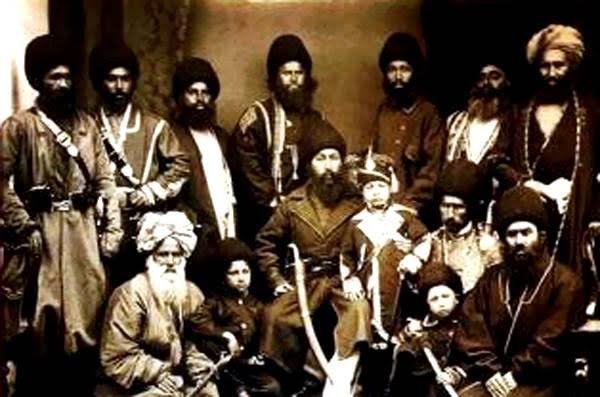
    The Pashtuns represent one of the most populous indigenous groups across South and Central Asia, predominantly in Afghanistan and Pakistan. Their social backbone relies on interconnected lineages, extended families, clans, and tribal alliances rather than a centralized political authority. From major confederations like the Durrani and Ghilzai to influential communities such as the Yusufzai, Afridi, Mohmand, Khattak, Wazir, and Mahsud, Pashtun society is a rich tapestry of overlapping regional, religious, and civic loyalties. At the core of their culture is Pashtunwali, an ancient honor code governing daily life through principles of hospitality, courage, asylum, and restorative justice. Historically, community issues and disputes were negotiated collectively through jirgas, or assemblies of local elders, maintaining order through consensus. Empire Builders and Cultural Crossroads Beyond tribal structure, Pashtuns have repeatedly reshaped the political landscape of the Indian subcontinent and Central Asia. Sultanate Dynasties: The Lodi dynasty established its rule over the Delhi Sultanate, paving the way for intricate South Asian governance structures. Administrative Reforms: Imperial leader Sher Shah Suri founded the Sur Empire in North India, pioneering sweeping reforms in taxation, infrastructure development, and currency. Empire Founding: In the 18th century, Mirwais Hotak challenged Safavid Persian dominance, while Ahmad Shah Durrani established the Durrani Empire in 1747, laying the groundwork for modern Afghanistan. This history is far more than military conquest. Pashtun territories served as vital crossroads where Persian, Turkic, Indian, and Islamic traditions converged. Consequently, their heritage spans beyond warrior traditions. It thrives in rich oral poetry, musical compositions, complex embroidery, craftsmanship, and trade networks. The Borderlands and Modern Challenges The 19th century brought prolonged conflict with British imperial forces along the northwestern frontier. A pivotal turning point arrived with the demarcation of the Durand Line in 1893. By drawing an artificial boundary between Afghanistan and British India (now Pakistan), the British divided ancestral Pashtun communities, establishing a geopolitically sensitive frontier that continues to spark debate and shape regional politics today.   In recent weeks, administrative re-alignments and border disputes in provinces like Balochistan and Khyber Pakhtunkhwa have reignited local debate. Prominent political and tribal leaders have voiced strong resistance to state restructuring, asserting that top-down administrative decisions risk erasing historical identities. Through renewed calls for broad political dialogue rather than bureaucratic divisions, modern Pashtun communities continue to rely on unified assemblies to safeguard their cultural heritage, self-determination, and historical voice in a changing region.

  • |

    The quiet trade between maturity and pure joy

    Grown-ups are not good at masking their concerns, although they can hide their delight and curiosity surprisingly well. Whereas with children it is the other way round. Children can tactfully mute their anxiety and conceal their sorrow, but will struggle not to express their excitement. That is what growing up means, in some simple way: learning to repress all expressions of pure happiness and joy. This quote exposes a subtle tragedy embedded within the journey to maturity. To become an adult, the passage suggests, is not merely to gain years or acquire responsibilities. Rather, it is to master the delicate art of emotional inversion. We trade the radiant honesty of childhood for a guarded composure. We learn to keep our wonder under lock and key while allowing our worries to spill openly across our brows. In recent cultural discourse and ongoing public health conversations surrounding wellness, psychologists have increasingly noted a pervasive phenomenon. The modern adult’s profound struggle with joy anxiety and burnout. Recent reports on workplace psychology and mental health trends reveal that adults frequently censor their enthusiasm to maintain a professional facade of stoicism and control. Society rewards composure and treats exuberance with suspicion, equating solemnity with competence. As a result, millions of people navigate their daily lives wearing a heavy armor of stress while systematically burying their moments of genuine awe, playfulness, and delight. When we observe children, their emotional mechanics operate in reverse. A child facing uncertainty or sorrow often swallows their tears to fit into the mysterious world around them. Yet, when confronted with something marvelous like a beetle on a leaf, a splash of rain, or an unexpected gift, their joy erupts without permission. It dances in their eyes and bursts into unfiltered laughter. Their happiness is an open room with no doors. For adults, however, delight becomes a secret kept strictly within. We learn to suppress the gasp of wonder, to filter our laughter into a polite smile and to temper our excitement lest we appear naïve or unprofessional. Meanwhile, our anxieties: the constant calculus of bills, schedules, deadlines, and social expectations leak out uncontrollably through furrowed brows, sighing lips, and taut shoulders. We become masters at channeling our burdens while keeping our light hidden in the shadows. This loss of expressive freedom raises a crucial question about the true cost of maturity. Must growing up inevitably mean muting our light? Reclaiming our capacity for uninhibited joy requires an intentional unlearning of the rules we spent decades acquiring. It demands that we grant ourselves permission to be thrilled without reservation, to wonder without apology, and to let our happiest moments spill freely into the open world. True maturity might not be the complete suppression of enthusiasm. It’s the courage to let unfiltered delight break through the cracks of our daily routine once more.

  • | | |

    Rabindranath Tagore’s statue in Edinburgh

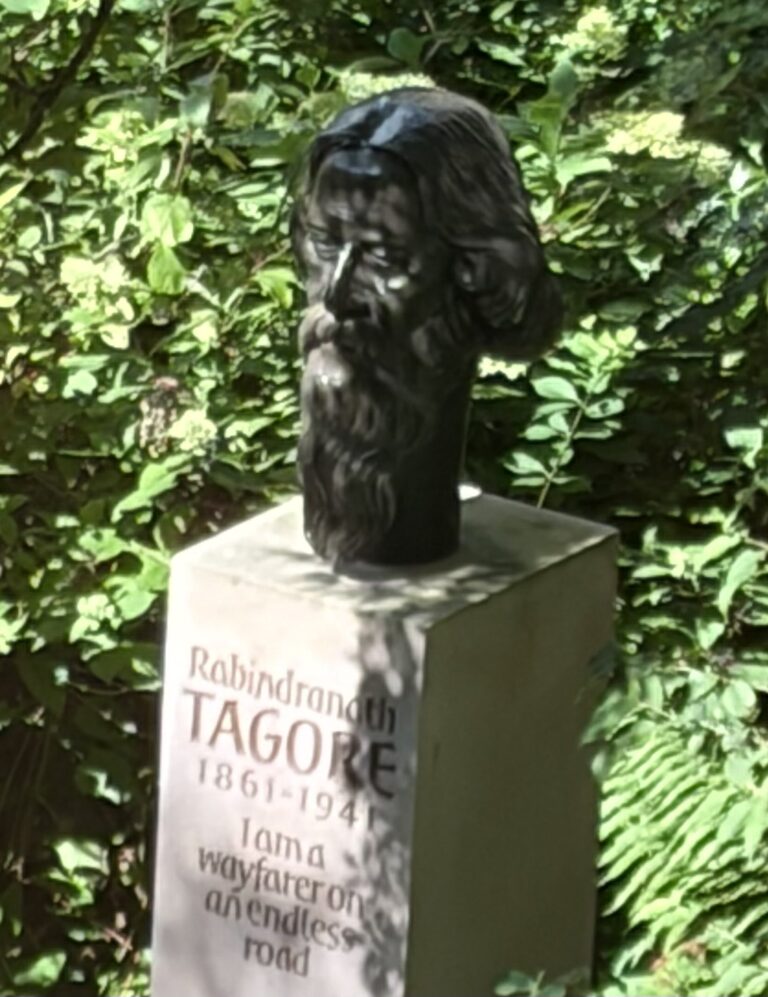
    The Sandeman House garden in Edinburgh holds a bronze statue of Asia’s first Nobel laureate in Literature, Rabindranath Tagore. Inscribed upon the pedestal supporting his likeness are his famous words, “I am a wayfarer on an endless road.” A Cross-Cultural Bridge Travelers often seek out Scotland’s capital for its ancient castles, gothic architecture, and literary heritage tied to the likes of Sir Walter Scott or Robert Louis Stevenson. However, discovering Tagore’s presence in this peaceful courtyard offers a cross-cultural bridge. The statue, unveiled to commemorate the deep-seated connections between Scotland and India. It is particularly the intellectual dialogue between Scottish polymath Patrick Geddes and Tagore himself. This monument serves as a physical testament to a global humanism that transcends geographic boundaries. Tagore’s India Tagore was far more than a celebrated poet and author. He was an uncompromising philosopher, musician, visual artist, and social reformer whose thoughts shaped modern South Asia and beyond. At the heart of his vast body of literature lies a profound critique of borders, nationalism, and sectarian division. Tagore envisioned an India, and indeed a world, defined by radical openness. In his mind, India is a sanctuary where diverse faiths, ethnicities, and cultures could coexist in mutual respect. He rejected narrow chauvinism in favor of an inclusive internationalism, advocating for a world where the mind is without fear and the head is held high. Tagore’s Literary Legacy In the contemporary geopolitical landscape, Tagore’s ideals feel relevant. Across the globe, modern youth face a climate marked by rising social polarization, cultural fracturing, and ideological echo chambers. In response, a growing movement of young activists, writers, thinkers, and students are turning back to Tagore’s literary legacy as a blueprint for unity. They are rediscovering his essays and poetry not merely as historical artifacts, but as active tools to reclaim a society rooted in pluralism and dialogue. By reimagining Tagore’s vision for a modern era, today’s generation is fighting to restore an environment where freedom of thought, artistic expression, and inclusivity thrive over division. His stance on education emphasized learning in harmony with nature and breaking down rigid academic and social silos. Young scholars and community organizers are channeling this exact ethos, utilizing art, literature, and grassroots civic engagement to rebuild cross-cultural bridges in an increasingly fragmented world. Message of Universal Brotherhood   Standing before Tagore’s statue in Edinburgh’s quiet garden, one is reminded that his journey as a “wayfarer” was never meant to be walked alone. His message of universal brotherhood, preserved in stone far from his native Bengal, serves as a timeless compass. For the youth striving to cultivate a more empathetic and open world, Tagore’s endless road remains wide open, inviting everyone to walk forward together.

  • | |

    The pure joy of private writing

    Recent archival developments in the literary world have reignited a timeless debate about the nature of creation. When the personal archives, diaries, and private notebooks of legendary literary figures are cataloged and opened to the public, readers gain an intimate glimpse into a process entirely free from external expectation. Raw Honesty In an era dominated by social media algorithms, content metrics, and immediate digital validation, the contemporary act of writing has become increasingly public. Writers are frequently urged to build personal brands, cultivate audiences before completing a single chapter, and measure the value of their thoughts by engagement metrics. Yet, a look across literary history suggests that forcing self-expression through the filter of public consumption often strips writing of its essential power: raw honesty. The Freedom of the Unseen Page When Franz Kafka famously instructed his close friend Max Brod to burn all his unpublished manuscripts and private journals upon his death, he was asserting a radical boundary. Though Brod ultimately defied those wishes giving the world masterpieces like The Trial and The Castle, Kafka’s mandate highlighted a fundamental truth about his relationship with the written word. For Kafka, writing was not a trade, a performance, or a search for acclaim. Rather, it was a urgent, internal necessity. He wrote to process his existential anxiety and negotiate his place in a confusing world. Revolutionary Contribution to Modern Poetry Similarly, Emily Dickinson spent her life in relative reclusion in Amherst, Massachusetts, quietly composing over 1,700 poems. She bound them carefully with thread and tucked them away in a wooden chest, largely indifferent to the literary establishment of her era. Freed from the pressure of publisher deadlines, critical reviews, or popular trends, Dickinson invented an entirely original poetic structure. Unconventional in its punctuation, bold in its metaphors, and uncompromising in its vision. she didn’t customise her voice to suit 19th-century publishing standards. That’s her revolutionary contribution to modern poetry is still there. Why Private Writing Rescues Creativity Writing for an audience activates self-censorship. When you write exclusively for yourself, the fear of judgment vanishes. This phenomenon allows uncomfortable truths and unrefined ideas to flow onto the page. Modern culture fixates on output. For instance, the finished book, the polished essay, the published post. Writing privately restores focus to the immediate sensation of thinking on paper. It is transforming the craft from a task into a sanctuary. A writer’s authentic voice is rarely found by attempting to match market trends. It emerges in the quiet margins of private journals, where syntax and thought patterns develop naturally without external influence. Reclaiming the Personal Journal in a Public World Reclaiming the joy of private writing does not require abandoning public work altogether. Instead, it requires establishing a sacred space where performance is forbidden. Writing for an audience of one remains one of the most effective ways to sharpen thought and restore mental clarity.   The enduring fascination with published literary archives proves an intriguing paradox. The writing that captivates us most deeply is often the very writing that was never meant for our eyes. We unlock the true alchemy of the written word by letting go of the need for an audience. A private conversation between the self and the page.

Leave a Reply

Your email address will not be published. Required fields are marked *