cost carelessness

The Cost of Carelessness

Through the columns of your newspaper, I would like to draw attention to the growing problem of carelessness in our society. Many accidents and difficulties could be prevented if people and authorities took their responsibilities seriously.

Careless driving, ignoring traffic rules, poor road conditions, and negligence by concerned departments are putting innocent lives at risk. People often drive at high speed, use mobile phones while driving, or ignore traffic signals. At the same time, damaged roads and a lack of proper safety measures make the situation worse.

The cost of such carelessness is very high. Families lose their loved ones, people suffer injuries, and society faces unnecessary financial and emotional burdens. These problems cannot be solved unless everyone understands their responsibility.

I urge the authorities to strictly enforce traffic rules, improve road conditions, and take action against negligence. Citizens should also follow safety rules and act responsibly.

Similar Posts

  • Monsoon may raise stroke risk

    The rainy season brings relief from extreme heat and makes the weather pleasant but it can also create health challenges for some people. Health experts say sudden weather changes high humidity and increased chances of infections during the monsoon season may be risky for people who already have conditions like high blood pressure diabetes high cholesterol or heart problems. Neurology experts explain that changes in temperature and humidity can affect the body’s natural system and may cause blood pressure levels to become unstable. This can increase the risk of stroke, especially among people with existing heart or blood vessel problems. During the rainy season cases of viral infections cold cough stomach problems and dehydration often increase. These conditions can put extra stress on the body and disturb blood sugar and blood pressure control. Reduced physical activity poor sleep and improper use of medicines can also increase health risks. Doctors advise people to remember the BE FAST rule to identify early signs of stroke. B – Balance: Sudden loss of balance or coordination E – Eyes: Sudden vision problems F – Face: One side of the face becomes weak or droops A – Arms: Weakness in one arm or leg S – Speech: Difficulty speaking or understanding words T – Time: Get emergency medical help immediately Experts say quick treatment can save lives and reduce the chances of long term disability. Health professionals recommend that high risk people regularly check their blood pressure and blood sugar take medicines on time stay physically active eat a balanced diet reduce salt intake avoid smoking and drink enough water. Experts also highlight that the monsoon season itself is not dangerous. The real risk comes from ignoring existing health conditions. Keeping blood pressure diabetes cholesterol and heart diseases under control throughout the year can greatly reduce the risk of stroke and other complications.

  • |

    How intentional attention can transform the ordinary

    The human mind often defaults to a posture of constant vigilance in the world dominated by endless news, digital noise, and social anxiety. We scan our environments for threat, hardship, and dysfunction. We maintain psychological defense mechanism sharpened by evolution and modern technology. The poet and educator Ross Gay demonstrated in his literary project, The Book of Delights that there exists a quiet, radical counter-practice. It’s the deliberate development of wonder on daily basis. It all began as a personal experiment on his forty-second birthday and turned into a meditation on how we inhabit time, space, and community. This educator wrote a short essay every single day for a year. He would capture a specific moment or observation that brought him joy. The resulting body of work reveals that gladness is something that simply happens to us even if it’s rare. When we think of joy or delight, we frequently imagine grand milestones. We suppose a long-awaited promotion, a dream vacation, or a monumental life event. Gay’s yearlong experiment turns this perspective upside down. His essayettes focus on the fleeting occurrences that populate everyday existence. For instance, the taste of fresh fruit picked directly from a vine. It can be warmth of two strangers sharing a brief smile on a crowded bus. We can’t neglect the simple relief of taking off uncomfortable shoes after a long walk. Gay discovered a psychological shift that he likened to developing a delight radar. When you know you must document joy before the day ends, your mind begins to actively search for it throughout your waking hours. You stop treating small encounters as background noise and start recognizing them as vital happenings. Attention itself becomes an act of appreciation. Crucially, this practice does not require ignoring life’s harsh realities. True gladness is not toxic positivity or the denial of suffering. Gay’s reflections frequently touch upon systemic injustice, racial prejudice, grief, aging, and personal loss. What makes his work so resonant is its insistence that delight and sorrow exist side by side. Noticing beauty amidst difficulty is not an act of escapism; it is a form of emotional resilience that sustains us through hard times. Another significant insight from Gay’s experiment is that delight is inherently contagious. Unlike physical resources that diminish when shared, human gladness expands when communicated. Gay illustrates how pointing out a pleasant detail to someone else creates a sweet bond of togetherness whether it’s about a casual interaction with local vendor or an unexpected moment of humor with neighbor. In a world that frequently feels fragmented and polarized, taking note of small wonders acts as a bridge. It reminds us of our shared vulnerability and our common capacity for appreciation. When we point to pastel sunset, a blooming flower breaking through sidewalk concrete or a delicious cup of coffee, we are essentially saying: Look, isn’t it incredible that we get to experience this together? You do not need to publish a book of essays to incorporate this mindset into your daily routine. Small, consistent habits can rewire how you perceive your day-to-day environment. You need two minutes before bed to write down one specific, physical thing that brought you comfort or pleasure during the day. Specificity matters instead of writing good lunch, detail the aroma of the spices or the crunch of fresh bread. Shift your focus away from digital screens periodically to notice physical textures, sounds, and scents around you. Acknowledge the feel of sunlight on your skin or the rhythm of rain against a windowpane. Tell someone when they make your day slightly better. A genuine compliment or a warm word of thanks multiplies the delight for both giver and receiver. Allow yourself to pause for ten seconds when something pleasant happens. Savoring a moment briefly allows the brain to encode positive experiences more deeply. Ultimately, practicing willful gladness is a choice to honor the gift of being alive.  

  • 5 Makeup secrets used by pro artists

    Professional makeup artists know how to bring out natural beauty and create a polished look. Their techniques can make makeup look smoother brighter and last longer. Here are five easy makeup tips you can try at home. Never skip primer Makeup artists often use primer before foundation. It creates a smooth base by helping blur the look of pores and fine lines. Choose a primer according to your skin type. For example, an oil-control primer can be useful for oily skin. Use concealer smartly Concealer is great for covering dark circles spots and uneven areas. But it can also be used to brighten and shape the face. Apply a small amount under the eyes along the bridge of the nose and on other high points of the face for a fresh brighter look.  Master your blending Good blending can make a big difference. Makeup artists carefully blend different shades and textures so there are no harsh lines. Whether you are blending eyeshadow or smoothing out foundation take your time for a more natural and professional finish. Try multi use products Makeup artists often choose products that can do more than one job. For example a cream blush can sometimes be used on the cheeks and lips. Using multi purpose products can save time reduce the number of products you need and make your makeup routine easier. Set your makeup properly Setting your makeup helps it stay in place for longer. Makeup artists may use setting powder setting spray or both depending on the look. For extra staying power lightly apply powder under the eyes and leave it for a few minutes before gently brushing away the excess. With these simple techniques you can make your everyday makeup look smoother fresher and more polished.

  • |

    How the art of Tsundoku quietly transforms our minds

    Walk into the home of almost any avid reader, and you are bound to encounter the unread shelf. The uncracked spines perched on nightstands, overflowing from crowded bookshelves, or quietly gathering dust in living room corners. For years, Western cultural narratives have framed these unread collections as evidence of poor self-discipline, financial wastefulness, or half-baked literary ambitions. However, behavioral psychology and cultural reporting offer a far richer perspective. This habit is known in Japanese as tsundoku. It is not an intellectual failure. It is passionately human. It is rather psychologically beneficial relationship with knowledge, identity, and curiosity. The word tsundoku dates back to Japan’s Meiji era in the late nineteenth century. It cleverly fuses tsunde-oku (to pile things up for later) with dokusho (reading). This habit is unlike hoarding, which carries clinical connotations of distress and emotional attachment to clutter. tsundoku is characterized by a playful, optimistic spirit. It describes the act of gathering books with every intention of absorbing them, even if time inevitably falls short of ambition. In order to understand why so many people practice tsundoku, psychologists look at how the human brain processes reward and anticipation. When you pick up an intriguing volume in a bookstore, your brain’s neural circuits trigger a sudden release of dopamine. Interestingly, this neurochemical hit does not wait for you to actually finish the final chapter. The simple act of purchasing a book acts as a pivot for the learning experience itself. In that single moment of acquisition, your brain projects a vivid future self. One that’s sitting quietly by a window, sipping tea, and expanding their wisdom. The purchase satisfies a psychological longing for growth, even before page one is turned. Furthermore, an unread collection creates what essayists and thinkers call an antilibrary. The read books truthfully represent the territory of knowledge you have already conquered. In contrast, unread books serve as a physical map of your own ignorance. Surrounding yourself with stories you have yet to explore harbours intellectual humility. It keeps you constantly aware that the world is far larger, richer, and more complex than your current understanding. In a fast-paced modern culture obsessed with optimization, tracking goals and productivity metrics, an unread stack stands as a testament of pure potential. There is also immense emotional comfort in physical books. Unlike endless, urgent digital feeds or unread emails, physical volumes sit silently without making demands. They anchor a home, offering a tactile, grounding presence that reflects who you were when you bought them and who you hope to become in the future. So, if your personal library continues to consume your available free time, resist the urge to feel guilty. Those unread pages are not a monument to broken promises. They are a physical testament to a hungry mind that refuses to stop asking questions.  

  • How screens can harm your neck and back

    In today’s digital world many people spend hours looking down at their phones working on computers or watching videos. While screens are now an important part of daily life spending too much time in the wrong position can put extra pressure on the neck shoulders and back. This can lead to more than tired eyes. Sitting with your head bent forward for long periods may cause neck pain, stiffness muscle tension and back problems. Why does looking down cause pain? An adult’s head weighs around 10 to 12 pounds. When you bend your head forward for a long time the muscles in your neck and upper back have to work harder to support it. Over time this extra pressure can cause pain stiffness and muscle fatigue. Poor sitting posture can also affect your movement and balance and may contribute to headaches.  People who spend many hours at a desk attend online meetings or frequently use laptops and phones may be more likely to experience these problems. Common warning signs Some common symptoms include. •Neck and shoulder stiffness •Tired or sore muscles •Frequent headaches •Ongoing neck or back pain •Pain spreading into the arms •Numbness or a pins and needles feeling •Weakness in the hands or arms If these symptoms continue or become worse it is important to speak with a healthcare professional. Keep your screen at eye level When working on a laptop try to keep the screen close to eye level.  This can reduce the need to bend your neck downward. A laptop stand along with a separate keyboard and mouse can make this easier. The same idea applies to smartphones. Instead of constantly looking down hold your phone closer to eye level to reduce strain on your neck. Improve your sitting posture Try to sit with your back straight and shoulders relaxed and slightly back. Avoid pushing your head forward while using a phone or computer. Small changes in posture can make a big difference when you spend many hours in front of a screen. Follow the 20-20-20 Rule For screen users the 20-20-20 rule can be helpful every 20 minutes, look at something about 20 feet away for 20 seconds. This mainly helps reduce eye strain and also gives you a short break from your usual sitting position. Keep your body moving Avoid staying in the same position for hours. Stand up walk around and stretch regularly. Regular exercise and activities such as yoga can also help improve flexibility strength and overall body movement. Don’t ignore persistent pain Technology is difficult to avoid in modern life but using it in a healthier way can help reduce unnecessary strain on your neck and back. If pain keeps returning becomes severe or is accompanied by numbness or weakness do not simply ignore it.  Consider getting checked by a qualified healthcare professional.

  • When global recognition becomes a local burden

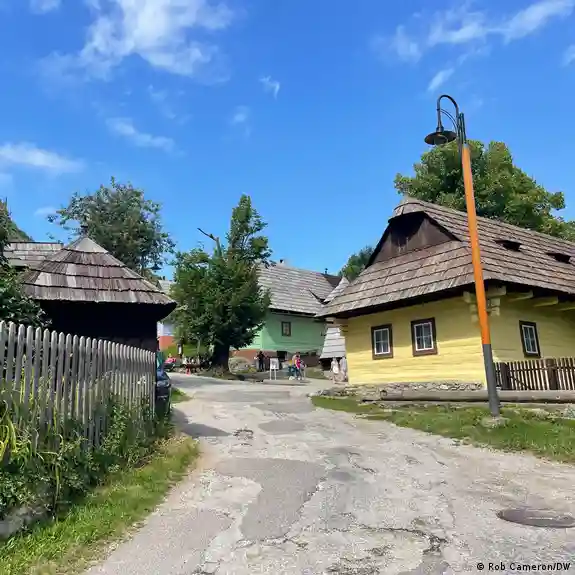
    In the Carpathian Mountains of central Slovakia lies Vlkolínec, a preserved settlement. This village is renowned for its pastel-painted timber cottages and traditional 19th-century folk architecture. It was inscribed as a UNESCO World Heritage site in 1993. Vlkolínec was celebrated not merely as a set of historical buildings, but as a living community. A rare surviving traditional rural life in Central Europe. However, three decades after receiving this prestigious designation, the small mountain is struggling with an existential dilemma. What was meant to be a cultural preservation has transformed into a challenge for the few villagers who still call Vlkolínec home. Now, frustration among permanent residents has reached a boiling point. There are calls to have the village removed from the UNESCO list altogether. When UNESCO designated Vlkolínec as a World Heritage site, one of the criteria was that it remained an inhabited settlement. At the time of inscription, the village was home to around 200 residents. Today, that permanent population has declined to just 14 to 17 people spread across four core families. In contrast to this dwindling resident count, Vlkolínec receives approximately 100,000 tourists every year. For the remaining inhabitants, the ratio of over 7,000 visitors per resident has basically altered the daily life. Locals report feeling as though they live inside a tourist zoo. The boundaries between public spaces and private homes are routinely ignored. Despite signs requesting privacy, visitors frequently wander into private yards, peer through kitchen windows, and treat active properties as open-access museum displays. The loss of privacy is compounded by anti-social tourist behavior. This conduct has been leaving locals feeling alienated in their own hometown. Overtourism is only one side of the coin. Residents also voice deep frustration over the rigid conservation framework that accompanies World Heritage status. Under national protection laws and strict UNESCO guidelines, historic homes face tight restrictions on modern modifications and physical alterations. Elderly villagers point out that these preservation rules have made customary rural activities increasingly difficult. Small-scale farming, livestock keeping, and land cultivation have gradually vanished. Surrounding agricultural terraces have become overgrown. Traditional meadow mowing has largely ceased as older generations pass away and younger generations move away. Furthermore, many of the village’s timber cottages have been bought up by outside buyers to serve as weekend holiday retreats. This phenomenon has increased the loss of a permanent, cohesive community. Some residents argue that revoking UNESCO status would reduce tourist pressure and ease regulatory burdens. However, municipal officials and heritage experts contend that delisting is neither practical nor the right solution. Local administrators in the nearby town of Ružomberok emphasize that UNESCO status brings significant heritage recognition and funding opportunities. Rather than abandoning the title, officials advocate for smarter tourism management. From a procedural standpoint, voluntary delisting at the request of a local community is virtually unprecedented in UNESCO’s history. The organization typically removes properties only when they lose their outstanding universal value due to severe destruction or irreversible development. The debate unfolding in Vlkolínec highlights a broader issue facing protected historic sites around the globe. How to balance global recognition and economic benefits with the rights and wellbeing of local inhabitants! Small historic communities across Europe and beyond battle with overcrowding and demographic decline. Vlkolínec serves as a reminder that preserving physical architecture alone is not enough. Without protecting the living social fabric of a community, world heritage sites risk turning into empty shells of their former selves.  

Leave a Reply

Your email address will not be published. Required fields are marked *