global recognition becomes

When global recognition becomes a local burden

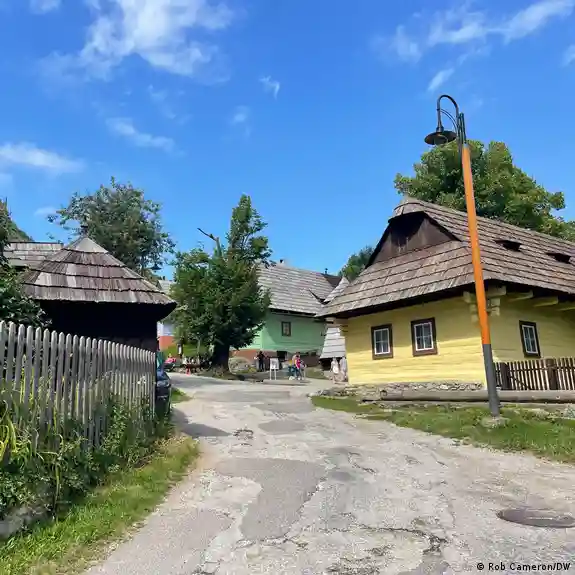
In the Carpathian Mountains of central Slovakia lies Vlkolínec, a preserved settlement. This village is renowned for its pastel-painted timber cottages and traditional 19th-century folk architecture. It was inscribed as a UNESCO World Heritage site in 1993. Vlkolínec was celebrated not merely as a set of historical buildings, but as a living community. A rare surviving traditional rural life in Central Europe.

However, three decades after receiving this prestigious designation, the small mountain is struggling with an existential dilemma. What was meant to be a cultural preservation has transformed into a challenge for the few villagers who still call Vlkolínec home. Now, frustration among permanent residents has reached a boiling point. There are calls to have the village removed from the UNESCO list altogether.

When UNESCO designated Vlkolínec as a World Heritage site, one of the criteria was that it remained an inhabited settlement. At the time of inscription, the village was home to around 200 residents. Today, that permanent population has declined to just 14 to 17 people spread across four core families.

In contrast to this dwindling resident count, Vlkolínec receives approximately 100,000 tourists every year. For the remaining inhabitants, the ratio of over 7,000 visitors per resident has basically altered the daily life. Locals report feeling as though they live inside a tourist zoo. The boundaries between public spaces and private homes are routinely ignored.

Despite signs requesting privacy, visitors frequently wander into private yards, peer through kitchen windows, and treat active properties as open-access museum displays. The loss of privacy is compounded by anti-social tourist behavior. This conduct has been leaving locals feeling alienated in their own hometown.

Overtourism is only one side of the coin. Residents also voice deep frustration over the rigid conservation framework that accompanies World Heritage status. Under national protection laws and strict UNESCO guidelines, historic homes face tight restrictions on modern modifications and physical alterations.

Elderly villagers point out that these preservation rules have made customary rural activities increasingly difficult. Small-scale farming, livestock keeping, and land cultivation have gradually vanished. Surrounding agricultural terraces have become overgrown. Traditional meadow mowing has largely ceased as older generations pass away and younger generations move away. Furthermore, many of the village’s timber cottages have been bought up by outside buyers to serve as weekend holiday retreats. This phenomenon has increased the loss of a permanent, cohesive community.

Some residents argue that revoking UNESCO status would reduce tourist pressure and ease regulatory burdens. However, municipal officials and heritage experts contend that delisting is neither practical nor the right solution.

Local administrators in the nearby town of Ružomberok emphasize that UNESCO status brings significant heritage recognition and funding opportunities. Rather than abandoning the title, officials advocate for smarter tourism management. From a procedural standpoint, voluntary delisting at the request of a local community is virtually unprecedented in UNESCO’s history. The organization typically removes properties only when they lose their outstanding universal value due to severe destruction or irreversible development.

The debate unfolding in Vlkolínec highlights a broader issue facing protected historic sites around the globe. How to balance global recognition and economic benefits with the rights and wellbeing of local inhabitants!

Small historic communities across Europe and beyond battle with overcrowding and demographic decline. Vlkolínec serves as a reminder that preserving physical architecture alone is not enough. Without protecting the living social fabric of a community, world heritage sites risk turning into empty shells of their former selves.


 

Similar Posts

  • | |

    Multimedia pioneer Cao Fei captures the human heart

    Among contemporary Asian creators, Beijing-based multimedia artist Cao Fei stands out as a defining narrative voice. Working across video, virtual reality, installation, and photography, her globally acclaimed career centers on a simple yet profound premise: amidst the whirlwind of rapid industrial advancement, hyper-capitalism, and sweeping technological change, art must always return to the core of the human condition. Born in 1978 in Guangzhou, Cao Fei grew up on the frontlines of staggering societal evolution. Watching the countryside surrender to megacities, factory complexes, and high-tech infrastructure gave her a unique point on the modern world. Rather than viewing this rapid transition with nostalgia or pessimism, her works connect reality and imaginative fantasy. A hallmark of Cao’s career is her fascination with the workplace, particularly automated logistics hubs and manufacturing floors. In iconic pieces like Whose Utopia and Asia One, she embeds her cameras inside functioning industrial facilities from textile plants to highly automated e-commerce distribution centers. Yet, instead of focusing solely on the cold efficiency of machinery or output metrics, she shifts her lens toward the individual laborers maneuvering through these vast, mechanized systems. Her films document the quiet desires, personal dreams, and unspoken emotional bonds of workers who navigate a world increasingly driven by algorithms and quotas. Parallel to her exploration of physical industry, Cao Fei has consistently operated on the cutting edge of digital frontiers. Long before the concept of the metaverse entered mainstream vocabulary, she was constructing RMB City within online platforms like Second Life, exploring how virtual avatars allow people to seek identity, escape, and community in digital environments. Her projects often feature young people engaging in subcultures like cosplay, stepping out of suburban construction sites and into elaborate alter egos. For Cao, these virtual realms are not merely frivolous distractions; they represent vital spaces of self-expression where individuals reclaim agency against the pressure of uniform urban life. Despite her focus on futuristic landscapes, automated networks, and virtual platforms, Cao Fei maintains that rootedness in heritage remains essential. Traditional culture, memory, and personal history act as indispensable anchors in a world constantly shifting beneath our feet. Whether reflecting on regional Cantonese roots, exploring local neighborhood history in Beijing, or depicting surreal futures, her work grounds high-tech environments in real human memory and emotion.   Ultimately, Cao Fei’s artistic vision offers a thoughtful, multi-layered reflection on modern life. By balancing documentation with surreal storytelling, her art reminds us that no matter how complex our machines, algorithms, or cities become, the central narrative of our time remains fundamentally human.

  • |

    The comfort of familiar stories

    In a world that constantly demands novelty, the act of re-reading can feel like a radical act of slowing down. The digital feeds update every second and endless streams of new books hit shelves each month. In this case, opening a novel whose plot twists you already know by heart, whose characters are familiar companions, and whose ending holds no surprises might seem inefficient to an outsider. Yet, psychologists and literary scholars recognize that re-reading is not a passive repetition. It is a claimed psychological profound and an essential dimension of human storytelling. At its core, returning to a beloved text satisfies a deep need for emotional regulation. Life is unpredictable, chaotic, and frequently overwhelming. When we navigate complex personal challenges or heightened anxiety, processing entirely new information requires significant cognitive effort. Re-reading, by contrast, lowers the mental load. It offers what psychologists call predictable comfort. Knowing exactly how a narrative conflict resolves provides a soothing sense of control and stability. In the pages of a familiar book, the universe behaves according to rules we already understand. The phenomenon offers a safe harbor when the real world feels chaotic. However, the appeal of re-reading goes far beyond simple comfort. It also acts as a mirror reflecting our own internal growth. Heraclitus famously remarked that you cannot step into the same river twice, for it is not the same river, and you are not the same person. The same principle applies to literature. The physical words printed on the page do not change over time, but we do. When you re-read a book after five, ten, or twenty years, you bring a completely different set of life experiences, heartbreaks, victories, and insights to the text. A passage that meant little to you as a teenager might suddenly strike depth in adulthood. A character you once viewed as an antagonist might reveal subtle vulnerabilities that evoke your empathy today. In this way, re-reading becomes an intimate dialogue between your past and present selves. It is a clear timeline of your emotional and intellectual evolution. Additionally, re-reading changes our focus from what happens next to how the story is constructed. Our brains are liberated to appreciate the finer nuances of literary craft. We begin to notice subtle foreshadowing, thematic motifs, delicate sentence rhythms, and character moments that flew past us during our breathless initial read. Ultimately, re-reading reminds us that literature is not a checklist of titles to be consumed and discarded. The greatest books are living spaces. The places we can inhabit again and again, finding new rooms every time we cross the threshold.  

  • The hallucination trap – information convincing but factually incorrect

    By Syeda Samar Zahra Zaidi When you ask an AI chatbot a question it does not know the answer to, an odd thing can happen: instead of hesitating or saying, “I am not sure!” it confidently delivers a tidy, well-structured, completely fabricated response—often with fake citations, fictional figures, and an authoritative tone. This phenomenon is known as the ‘hallucination trap ’, and it may be the most significant barrier between trust and artificial intelligence. I was introduced to the term “AI hallucination” for the first time in the workshop under the project titled “Digital Trust and Free Expression in the AI Era” at Department of Media and Development Communication, University of the Punjab, supported by the U.S. Mission to Pakistan in partnership with the Pakistan-U.S. Alumni Network (PUAN). I learned that a “hallucination” occurs when a language model produces information that sounds convincing but is factually incorrect or completely made up. Examples include inventing a legal case that never existed, citing a research paper that doesn’t exist or boldly misrepresenting a historical date. What is disturbing is not merely that AI can be wrong-humans make mistake too- but rather the way it presents that incorrect information with clearly, confidence and without a trace of doubt. Large language models are essentially highly complex pattern predictors trained to produce the most likely next word in a sequence. As a result, when a model has encountered a topic thousands of times in its training data, the predictors are typically accurate. However, when it comes across a gap, an unidentified fact or a question at the outer edge of its knowledge, it doesn’t shift into a hesitant mode. Instead, it continues doing exactly what it was trained to do: generate a logical, fluent piece of writing, producing a response that is structurally sound and grammatically correct but based on nothing. In human communication, confidence is generally perceived as a sign of strength which is important. We naturally prefer to trust a calm, reliable voice over a hesitant one. AI systems unintentionally exploit the tendency because their language remains confident whether they are right or wrong. The risks increase with the use of AI, as students may unintentionally include false information into their work and journalists have published articles citing artificially created sources and quotes, negatively affecting the credibility of their publications. Such inaccuracies influence what millions of people see, believe or share, thereby amplifying fabricated content. The reason AI does not simply say “I don’t know” is partly due to the way these systems are trained. Many models are designed to provide helpful, comprehensive-sounding answers and are rarely rewarded for expressing doubt during training. This means that a model that frequently acknowledges uncertainty may be judged as less helpful than one that consistently provides an answer, even when that confidence is occasionally misplaced. Such incorrectly aligned incentives arise when the training process gradually teaches the model that sounding confident is more valuable than being accuracy. Retrieval-augmented generation, which relies on responses in actual, verifiable records rather than internal memory alone, improved training techniques that explicitly account for uncertainty; and systems built to simply cite sources. So, users can independently verify claims are just a few of the ways developers are using to addresses this problem. While none of these solutions fully eliminate hallucination yet, taken together they represent a major shift from blind confidence toward earned trust. The most dangerous outcome is not an AI that makes mistakes but a culture of users who stop questioning because the system always sounds so sure of itself.   Therefore, until AI becomes more reliably aware of it own limitation, part of the responsibility falls on the people who use it: treating AI-generated output as a starting point rather than an endpoint, cross checking important facts against credible sources. In the end, the hallucination trap serves as a reminder that illusion is not the same as truth. As AI becomes increasingly common in education, digital media and everyday life, understanding why it occasionally lies with confidence is not only a technical curiosity but also a fundamental aspect of digital literacy. We must strengthen our ability to verify the information provided by AI as they become more persuasive. The views, thoughts, and opinions expressed in this blog are solely those of the author and do not necessarily reflect the official policy or position of the U.S. Mission to Pakistan or USEFP. The writer, Syeda Samar Zahra Zaidi, is a student of Media and Development Communication at  University of the Punjab, Lahore and can be reached at samarzahra456@gmail.com.  

  • Woman dies after anti aging injection in New York

    A 27 year old woman in New York has died after receiving an anti aging injection at a private medical clinic raising serious concerns about unlicensed cosmetic treatments. According to foreign media reports the woman became critically ill shortly after the injection. An ambulance was called to take her to the hospital but she died before arriving. Police arrested 55 year old Luis Rojas Cabrera the man who gave the injection.  During questioning he admitted that he did not have a valid New York medical license to practice medicine. Authorities have charged him with practicing medicine without a license and putting another person’s life at risk through reckless actions. The suspect later appeared in a Bronx court. A judge allowed his temporary release but ordered him to surrender his passport until the post mortem report is completed. In court Cabrera said he is a licensed doctor in the Dominican Republic and also holds a medical assistant license in Puerto Rico.  He added that his application for a New York medical license is still under review. He also confirmed that the only license he currently holds in New York is as a cosmetologist not as a licensed physician.

  • Monsoon may raise stroke risk

    The rainy season brings relief from extreme heat and makes the weather pleasant but it can also create health challenges for some people. Health experts say sudden weather changes high humidity and increased chances of infections during the monsoon season may be risky for people who already have conditions like high blood pressure diabetes high cholesterol or heart problems. Neurology experts explain that changes in temperature and humidity can affect the body’s natural system and may cause blood pressure levels to become unstable. This can increase the risk of stroke, especially among people with existing heart or blood vessel problems. During the rainy season cases of viral infections cold cough stomach problems and dehydration often increase. These conditions can put extra stress on the body and disturb blood sugar and blood pressure control. Reduced physical activity poor sleep and improper use of medicines can also increase health risks. Doctors advise people to remember the BE FAST rule to identify early signs of stroke. B – Balance: Sudden loss of balance or coordination E – Eyes: Sudden vision problems F – Face: One side of the face becomes weak or droops A – Arms: Weakness in one arm or leg S – Speech: Difficulty speaking or understanding words T – Time: Get emergency medical help immediately Experts say quick treatment can save lives and reduce the chances of long term disability. Health professionals recommend that high risk people regularly check their blood pressure and blood sugar take medicines on time stay physically active eat a balanced diet reduce salt intake avoid smoking and drink enough water. Experts also highlight that the monsoon season itself is not dangerous. The real risk comes from ignoring existing health conditions. Keeping blood pressure diabetes cholesterol and heart diseases under control throughout the year can greatly reduce the risk of stroke and other complications.

  • |

    Favoritism at Civil Hospital Turbat

    Patients visiting Civil Hospital Turbat deserve equal treatment, but many complain that this is not always the case. Poor patients often wait for hours to see a doctor, while the relatives or acquaintances of doctors are allowed to enter directly without waiting their turn. Such favoritism is unfair and causes great hardship to those who have no influence or connections. A public hospital should serve every patient equally, regardless of their social status or personal relationships. The hospital administration should ensure that all patients are examined according to a fair queue system and take action against any practice that gives unjust preference to certain individuals. Equal treatment is a basic right. Fairness and accountability are essential to restore public trust in Civil Hospital Turbat.

Leave a Reply

Your email address will not be published. Required fields are marked *