another fuel price
| |

Another fuel price rollback set for August 11

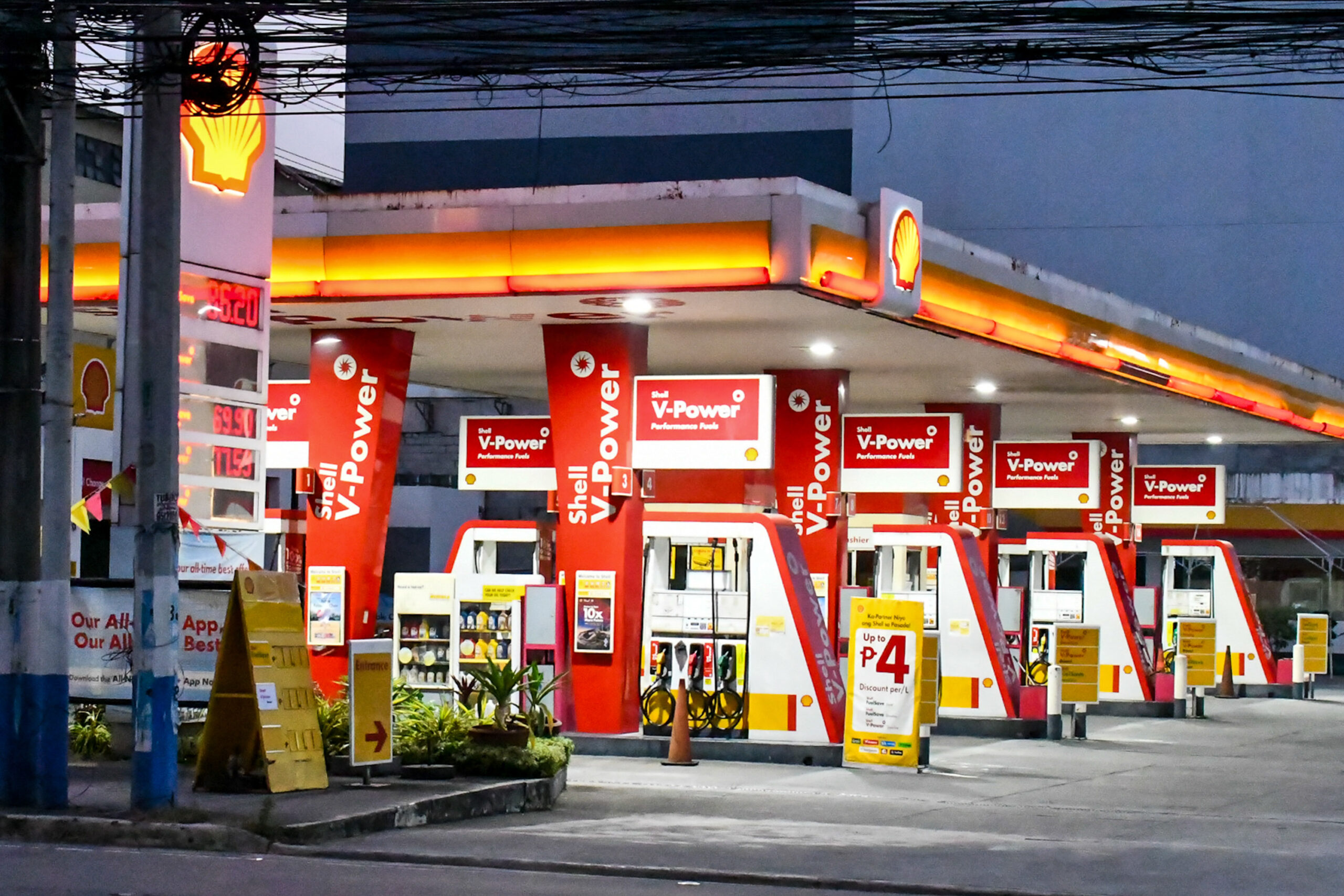
MANILA, Philippines – Fuel prices are going down again starting Tuesday, August 11, giving motorists a second straight week of relief after the big fuel price hikes in late July.

In a press conference on Monday, August 10, Energy Secretary Sharon Garin announced the following price rollbacks for the week of August 11 to 17:

  • Gasoline – rollback of at least P4.70 per liter
  • Diesel – rollback of at least P4.30 per liter
  • Kerosene – rollback of at least P4.88 per liter
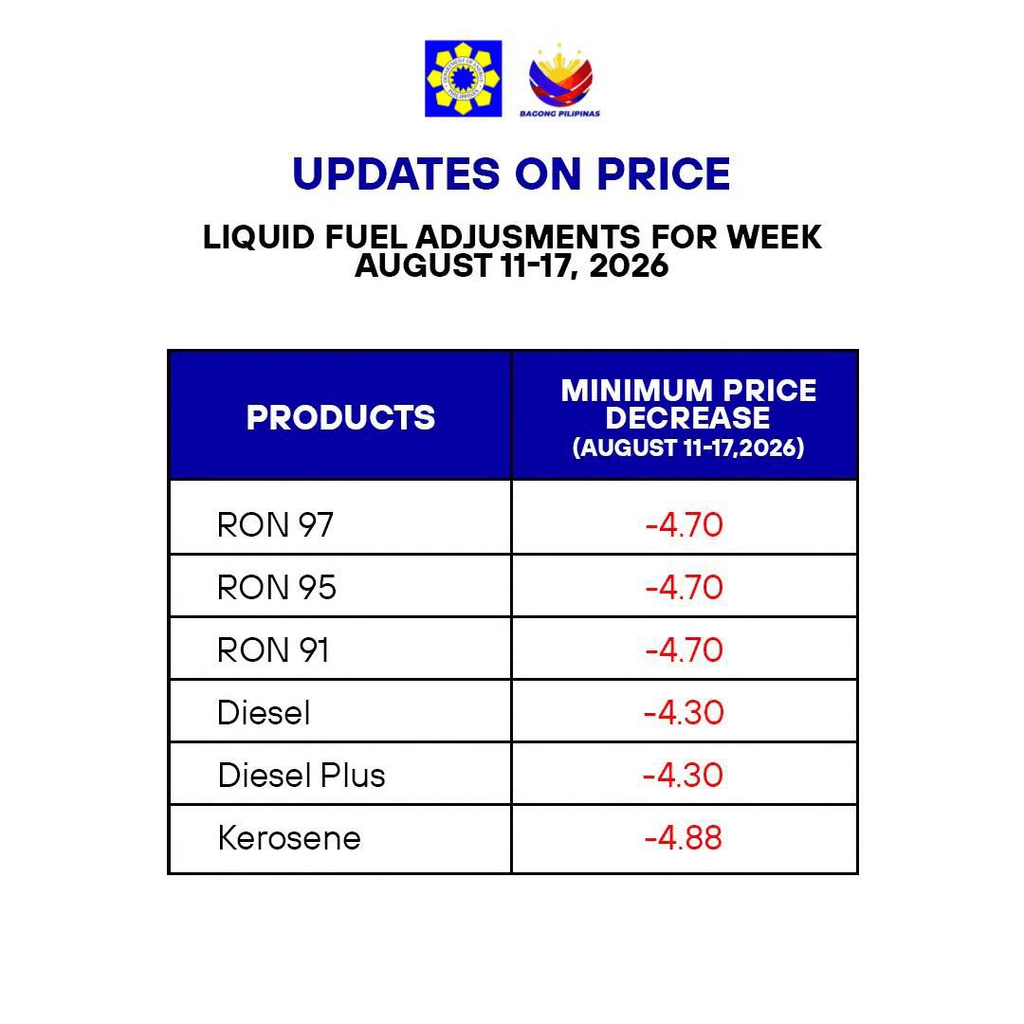
The adjustments will take effect on Tuesday, August 11.

The Department of Energy’s (DOE) price monitoring for August 4 to 10 showed the following common prices:

  • Gasoline RON97 – P89.40
  • Gasoline RON95 – P78.80
  • Gasoline RON91 – P78.20
  • Diesel – P88.80
  • Kerosene – P117.00

The rollback follows last week’s price cuts, when the DOE announced minimum rollbacks of P0.73 per liter for gasoline, P0.60 per liter for diesel, and P2.09 per liter for kerosene.

Those rollbacks were modest compared with the steep increases seen in late July. On July 28, pump prices rose by P6.80 per liter for gasoline, P7.32 per liter for diesel, and P4.22 per liter for kerosene. A week earlier, on July 21, gasoline rose by P3.65 per liter, diesel by P10.68 per liter, and kerosene by P11.77 per liter.

The latest rollback suggests easing pressure in global oil and refined fuel markets after weeks of volatility tied to the Middle East conflict. Market concerns have eased somewhat on renewed hopes for a possible US-Iran deal, although risks remain from continuing uncertainty in the region and disruptions affecting key shipping routes. (READ: Iran says deal on Strait of Hormuz is close but not enough to open the waterway)

The Strait of Hormuz, the narrow waterway between Iran and Oman, remains one of the world’s most important oil shipping routes. Any disruption to tanker traffic can quickly affect global crude and refined product prices.

That matters for the Philippines because the country imports much of its fuel as finished petroleum products, including diesel and gasoline. This means local pump prices are more directly influenced by regional traded prices of finished fuels, especially the Mean of Platts Singapore, or MOPS, rather than Dubai crude alone.

Despite the latest rollback, local pump prices remain above levels seen before fighting involving Iran and US-Israeli forces broke out on February 28. In the last full week before the conflict, DOE data showed common retail prices in Metro Manila at P56 per liter for gasoline RON95, P54.70 per liter for gasoline RON91, P55 per liter for diesel, and P83.47 per liter for kerosene. – Rappler.com

Similar Posts

  • | | | |

    Double bottom line: Edgar Saavedra’s blueprint for Megawide’s sustainable growth

    For the general public, Megawide builds essential transit hubs, clean communal facilities, and affordable housing. For institutional investors, it offers a diversified, highly transparent, and well-capitalized company optimized for long-term growth. 

  • | | |

    SECP registers record 5,438 new companies in July

    The Securities and Exchange Commission of Pakistan (SECP) recorded its highest-ever monthly company registrations, with 5,438 new companies incorporated during July, reflecting growing business activity and investor confidence in the country’s corporate sector. According to the SECP, five international companies established offices in Pakistan during the month. The foreign firms are from Malaysia, the United Arab Emirates (UAE), and China, highlighting continued overseas interest in Pakistan’s business environment. The commission said 112 newly registered companies include foreign directors, indicating increasing international participation in the local corporate sector. Of the total registrations, 3,148 were private limited companies, while 2,117 were single-member companies. In addition, 127 limited liability partnerships (LLPs) were incorporated during the month. The SECP also registered 28 non-profit organisations and 18 public companies. Provincially, Punjab accounted for the largest share of registrations, with 2,756 companies, representing 51% of the total. Islamabad followed with 1,053 companies, while Sindh registered 864, Khyber Pakhtunkhwa 450, Gilgit-Baltistan 180, and Balochistan 135 new companies. The information technology (IT) sector recorded the highest number of new incorporations, with 1,008 companies registered during July. Other major sectors included trading with 845 new companies, services with 638, and construction with 348 registrations. The SECP also reported significant growth in other industries, with 256 companies registered in the food and beverages sector, 207 in tourism, 181 in e-commerce, 165 in education, 162 in real estate development, and 145 in corporate agriculture. The record number of company registrations reflects continued expansion across multiple sectors of Pakistan’s economy and increasing formalisation of businesses under the country’s corporate regulatory framework

  • |

    ICCI awards in Istanbul highlight new opportunities for Pakistan-Turkiye economic partnership

    ISLAMABAD: The Islamabad Chamber of Commerce and Industry (ICCI) has used a series of high-level engagements in Istanbul to promote Pakistan’s private sector, recognise leading entrepreneurs and strengthen commercial ties between Pakistan and Turkiye. The ICCI International Excellence Awards 2026 brought together Turkish government representatives, diplomats, business leaders and members of the Pakistani and Turkish business communities, providing a platform to highlight the contribution of Pakistani entrepreneurs while exploring opportunities for greater bilateral trade and investment. Around 40 Pakistani business leaders representing a range of sectors were honoured at the awards ceremony for their contributions to the country’s economy and private-sector development, according to a press release issued on Saturday. The event also provided an opportunity for business representatives from both countries to discuss the potential for expanded commercial cooperation, investment partnerships and joint ventures. Turkish officials stress stronger business links Addressing the ceremony, Istanbul Deputy Governor Mehmet Sulun said initiatives bringing together business communities from Pakistan and Turkiye could play an important role in expanding people-to-people and business-to-business contacts. He said stronger interaction between entrepreneurs could create fresh opportunities in trade, investment and joint ventures while contributing to deeper ties between the two countries. Sulun observed that business leaders played a role beyond commercial activity, describing them as important contributors to friendship and mutual understanding between the two nations. He expressed confidence that the longstanding relationship between Pakistan and Turkiye would continue to develop and remain strong for future generations. Pakistan’s Consul General in Istanbul Khawaja Khurram Naeem also emphasised the importance of expanding direct links between the private sectors of the two countries. He said political and fraternal relations needed to be complemented by stronger commercial engagement if Pakistan and Turkiye were to significantly increase bilateral trade and investment. Naeem assured Pakistani business representatives that Pakistan’s diplomatic mission would continue supporting initiatives aimed at improving commercial cooperation and facilitating interaction between entrepreneurs from both countries. ICCI seeks expansion in trade and investment In his opening remarks, ICCI President Sardar Tahir Mehmood highlighted the longstanding historical, cultural and fraternal relationship between Pakistan and Turkiye. He said the two countries had strong political and people-to-people relations, but the economic relationship had considerable room for further expansion. Mehmood reaffirmed the ICCI’s commitment to supporting efforts aimed at increasing bilateral trade and investment in line with the ambitions of the leadership of both countries. He said the chamber was working to establish itself as an international platform connecting Pakistani businesses with global markets and partners. According to Mehmood, the ICCI is focusing on promoting Pakistani exports, attracting investment and developing international business partnerships while coordinating with government departments and other relevant institutions to improve the business environment. He stressed that greater ease of doing business and stronger institutional support would help Pakistani companies compete more effectively in international markets. Turkish chamber backs institutional cooperation Munir Ustun, a member of the Executive Board of the Istanbul Chamber of Commerce, welcomed efforts to bring the Pakistani and Turkish business communities closer. He stressed the importance of stronger institutional relationships between chambers and private-sector organisations in both countries. Ustun said regular business delegations, business-to-business meetings and joint commercial initiatives could help identify areas where cooperation could be expanded. He noted that significant untapped potential existed in bilateral trade and investment and that closer engagement between businesses could help turn that potential into concrete commercial projects. Faisal Town Group Director Zohair Majeed said the international recognition given to Pakistani entrepreneurs demonstrated the capability and resilience of the country’s private sector. He said Pakistani companies had the potential to compete in international markets and argued that stronger partnerships with Turkish businesses could create opportunities in investment, technology transfer and exports. According to Majeed, greater cooperation between businesses could also contribute to sustainable economic growth and help Pakistani companies gain access to new markets and technologies. Pakistan-Turkiye economic ties discussed at Independence Day event The ICCI delegation also participated in a separate event in Istanbul to mark Pakistan’s 79th Independence Day, where Pakistani and Turkish business representatives reaffirmed their commitment to strengthening bilateral economic cooperation. Speaking at the gathering, Mehmood said Pakistan’s independence had been achieved after enormous sacrifices by the country’s founding generation. He called on citizens and the business community to contribute to national development by promoting economic growth, investment and entrepreneurship. Mehmood said Pakistan and Turkiye shared decades of historical, cultural and fraternal ties, adding that the longstanding relationship should increasingly be reflected in stronger economic cooperation. He called for greater participation by the private sectors of both countries in trade, investment and joint ventures. The ICCI president said the chamber would continue to provide platforms where Pakistani and Turkish entrepreneurs could meet, explore commercial opportunities and develop long-term partnerships. Turkish business representatives also reiterated their commitment to deepening the relationship with Pakistan, particularly through increased trade, investment and direct business-to-business engagement. Business conference explores investment opportunities The economic engagement was further strengthened through a Business Opportunity Conference in Istanbul, which brought together business leaders from both countries to examine potential areas for cooperation. Participants discussed opportunities for expanding bilateral trade, establishing joint ventures, attracting investment and creating stronger business-to-business connections. Pakistan’s Consul General in Istanbul Khawaja Khurram Naeem participated actively in the discussions, responding to questions from Turkish business representatives and outlining Pakistan’s trade and investment potential. He also highlighted developments in the country’s business and investment environment and encouraged Turkish companies to examine opportunities in Pakistan. A significant number of Turkish companies participated in the conference and expressed interest in exploring commercial and investment prospects in Pakistan. During an interactive session, ICCI President Sardar Tahir Mehmood, along with former ICCI presidents Aamir Waheed Sheikh and Mohammad Ejaz Abbasi, and Dr Adeel Sami, Founder and President of the Pakistan-Turkiye Investment & Development Council, responded to questions from Turkish entrepreneurs. The discussion focused on practical mechanisms for strengthening commercial links and identifying sectors where Pakistani and Turkish companies could work together. Focus shifts from friendship to economic partnership The events in Istanbul underscored a

  • |

    Gold prices in Pakistan today – 26 August , 2026

    Gold prices in Pakistan today on 26 August 2026, of 24k gold stands at Rs. 484,000 per tola, while the rate for 10 grams is Rs. 414,960. The gold rate for 22k gold today is Rs. 443,789 per tola and Rs.380,380 per 10 grams in Pakistan. These fluctuations are closely linked to changes in the value of the US Dollar, underscoring the intricate relationship between currency values and gold prices. It is important to note that the gold rate in Pakistan today can experience significant variations throughout the day, influenced by trends in the global market. Gold Prices in Pakistan following cities: City 24k Gold per tola (PKR) 24k Gold 10 grams (PKR) 22k Gold per tola (PKR) Lahore 484,000 414,960 443,789 Islamabad 484,000 414,960 443,789 Karachi 484,000 414,960 443,789 Peshawar 484,000 414,960 443,789

  • |

    Senate questions $387 million ADB water project allocation

    Islamabad: The Senate Standing Committee on Economic Affairs raised serious concerns over inequities in the allocation of foreign funded development projects across Khyber Pakhtunkhwa, revealing that flood affected districts have been largely bypassed while relatively unaffected areas received more infrastructure funding. The meeting, chaired by Senator Saifullah Abro, highlighted discrepancies in road and irrigation project implementation, questioned external pressures from international lenders, and warned that mismanagement could exacerbate Pakistan’s mounting national debt, which has soared from Rs40 trillion in 2022 to approximately Rs90 trillion today. During the session, committee members expressed alarm that districts most devastated by floods, including Upper Dir, Lower Dir, and Chitral, received fewer road reconstruction projects compared to Mardan, which saw 16 roads built despite experiencing minimal flood damage. In Dir, only 12 kilometres of road were reconstructed despite extensive damage. Similarly, nine roads were completed in Peshawar, a city that did not face flood related destruction. Senator Rubina Khalid termed this “inequitable allocation” and warned that such disparities hinder balanced regional development, while Senator Waqar Mehdi questioned whether donor agencies were being misled about project priorities. The committee also scrutinized the financial management of foreign funded schemes. Officials reported that 770 kilometres of roads were constructed at a total cost of Rs69 billion, with an additional Rs43 billion spent on bridges and related infrastructure. Each kilometre of road cost approximately Rs70 million. The Asian Development Bank supported KP Road Rehabilitation and Upgradation Project, covering 249.5 kilometres, was completed ahead of schedule at a cost of $146.2 million. Similarly, $387 million in ADB funded water projects and $295 million from the World Bank are being implemented in irrigation and flood protection schemes across Khyber Pakhtunkhwa. While project completion rates were impressive, reaching 100 percent for most schemes, the committee raised concerns about undue interference by external entities. Chairman Saifullah Abro questioned the role of the World Bank’s local representative in the Sindh Water and Agriculture Transmission Project, noting that the lender should only finance and recover loans, not dictate project execution. He estimated that resisting unnecessary external pressures could save Sindh around Rs14 billion and cited previous instances where committee intervention prevented $890 million in unwarranted costs on the Peshawar Torkham project. The committee underscored the need for transparency, calling for a clear distinction between grants and loans and insisting that provincial authorities ensure funds are spent only for their approved purposes. Senator Hidayatullah stressed that provinces receiving loans must allocate them to the intended projects to benefit local populations, while Senator Kamil Ali Agha urged planning for infrastructure that accounts for emerging climatic challenges, including improved stormwater drainage systems. Senator Abro also criticized the concentration of contracts among a few large construction firms in Khyber Pakhtunkhwa, directing officials to provide detailed information on the Notice Inviting Tender process to ensure competitive bidding. While district road projects were reportedly nearing completion across Swat, Peshawar, Mardan, and Nowshera, the committee emphasized that project selection criteria and equitable distribution remained critical issues. The meeting concluded with a clear warning that Pakistan’s growing reliance on foreign loans, coupled with misallocated resources, could have serious economic repercussions. Senator Abro noted that while international assistance is vital, the country must maintain ownership and control over project execution to ensure accountability, prevent cost escalation, and deliver tangible benefits to the communities most in need.

  • | | |

    PSX gains nearly 1,380 points in early Friday trad…

    The Pakistan Stock Exchange (PSX) staged a strong recovery during the first half of trading on Friday, with the benchmark KSE-100 Index climbing nearly 1,380 points before trading was temporarily suspended for the weekly Friday prayer break. The market opened on a positive note, extending gains throughout the morning session as investors returned to selective buying following recent losses driven by regional geopolitical tensions. By midday, the KSE-100 Index had risen 1,378 points, or 0.79%, to reach 176,926. During intraday trading, the benchmark touched a high of 177,108.66 before easing slightly. The index also found support around 176,405.33, indicating sustained buying interest across key sectors. Trading activity remained steady, with more than 101.8 million shares changing hands during the morning session. The total value of traded shares reached approximately Rs6.96 billion, reflecting healthy market participation despite the shortened trading period. Trading was suspended at midday in line with the Pakistan Stock Exchange’s routine Friday prayer break and was scheduled to resume later in the afternoon. The market’s rebound followed a volatile trading week shaped by uncertainty in the Middle East and fluctuations in global oil prices. Investors appeared to set aside concerns over rising regional tensions and instead focused on attractive valuations in selected stocks. On Thursday, the benchmark index had closed at 175,547.98 after selling pressure weighed on investor sentiment. Friday’s recovery helped the market regain a significant portion of those losses. Broader market performance also remained positive, with the All-Share Index and several sectoral indices posting gains during the morning session. Market participants are expected to closely monitor both domestic economic developments and geopolitical events in the Middle East as trading resumes, with investors assessing their potential impact on market sentiment in the coming sessions.

Leave a Reply

Your email address will not be published. Required fields are marked *