global oil prices
|

Global oil prices edge higher amid incertainty over Strait of Hormuz

Global crude oil prices moved higher on Monday as uncertainty surrounding the reopening of the Strait of Hormuz continued to influence market sentiment and raise concerns about potential disruptions to international energy supplies.

According to media reports, oil prices gained during Asian trading, with investors closely monitoring developments related to the strategic waterway and the ongoing discussions over shipping arrangements.

Brent crude futures climbed by more than 1%, moving above the $84-per-barrel mark. US crude oil also recorded a gain of more than 1% during the session, reflecting renewed concerns over the stability of oil shipments through the region.

The Strait of Hormuz remains a major focus for global energy markets because of its importance to international oil transportation. Any prolonged disruption to shipping through the waterway could put upward pressure on crude prices and raise concerns about supplies to major importing countries.

Market participants are therefore keeping a close watch on diplomatic efforts aimed at restoring normal maritime traffic. Uncertainty over when and under what conditions the waterway will fully reopen has added to volatility in crude oil markets.

Iran has said that an understanding with Oman regarding the establishment of new shipping routes is nearing completion. However, Tehran has also maintained that the Strait of Hormuz will not fully reopen until additional conditions involving the United States are addressed.

The conflicting positions have left traders uncertain about the timing of a broader resolution. As a result, oil markets remain sensitive to any fresh developments involving Iran, Oman, the United States and maritime traffic through the strait.

A sustained increase in crude prices could have wider economic implications, particularly for countries that rely heavily on imported petroleum. Higher international oil prices can increase import bills, put pressure on foreign exchange reserves and contribute to higher domestic fuel costs.

Similar Posts

  • | |

    Seven law enforcement personnel martyred during re…

    Azad Jammu and Kashmir (AJK) Information Secretary Muhammad Rashid Hanif has said that seven law enforcement personnel, including police and Rangers officials, were martyred during the recent unrest in the region. In a televised address on Monday, Hanif said the casualties occurred during clashes linked to ongoing protests by the now-proscribed Joint Awami Action Committee (JAAC). The committee has been demonstrating in the region for several weeks over its demand to abolish 12 seats in the AJK Legislative Assembly reserved for refugees from Indian-held Kashmir. The unrest intensified after clashes between protesters and security personnel in Rawalakot and Mirpur last week. The incidents reportedly resulted in multiple casualties and increased tensions across the region. Hanif stated that weapons allegedly recovered from JAAC members were presented during a previous press conference by a police official on July 27. He claimed that seven law enforcement personnel were killed using similar weapons, while 45 personnel suffered serious injuries and several others sustained minor injuries. The AJK information secretary also alleged that police and Rangers vehicles were damaged and burned during the unrest. He claimed that the incidents indicated the presence of armed elements within the banned organization and accused them of attempting to challenge the state’s authority and disrupt peace. Responding to allegations made by JAAC regarding events in Rawalakot and surrounding areas between July 27 and July 31, Hanif rejected the claims and described them as part of a misinformation campaign. He said the security institutions of AJK had shown restraint and professionalism while handling the law and order situation. Hanif denied allegations of unprovoked firing by security forces and rejected claims that bodies were being withheld. He stated that the government currently had no bodies in its custody and accused the organization of spreading misleading information through social media. He further alleged that JAAC activists had been involved in blocking and damaging vehicles carrying essential supplies and food items. The information secretary also highlighted previous incidents involving casualties among law enforcement personnel, claiming that one police official was martyred in 2024 and three others in October 2025 during unrest-related incidents. Meanwhile, the AJK government criticized international media reports regarding the clashes, describing some coverage as biased and incomplete. Officials said reports should have included the government’s position and verified information before publication. The Ministry of Information and Broadcasting also criticized coverage of the AJK elections by some media outlets, alleging selective reporting from specific polling locations. The situation in AJK remains tense as authorities continue security measures while political and public disputes over electoral representation and governance issues continue. The government and protest groups have presented conflicting accounts of the events, and further developments are expected as investigations proceed.

  • |

    Bank of Punjab Board approves Up to Rs30bn equity injection by Punjab government

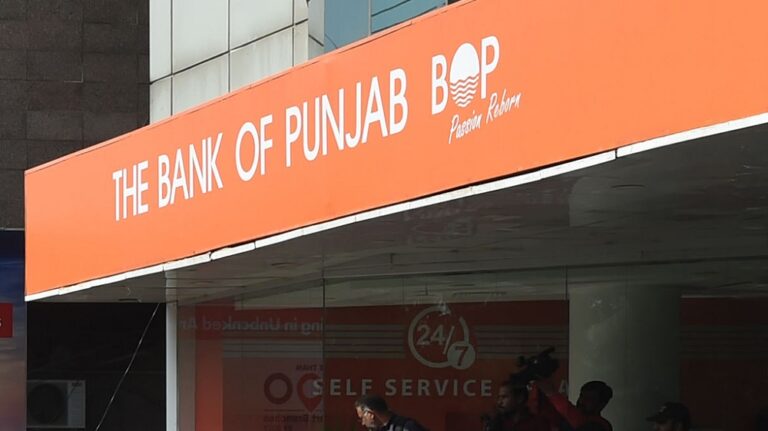
    LAHORE: The Board of Directors of The Bank of Punjab (BOP) has approved a proposal for an equity injection of up to Rs30 billion by the Government of Punjab, a move aimed at strengthening the bank’s capital position and supporting its next phase of expansion. The decision was taken at a board meeting held on August 7, 2026. Under the proposal, the Punjab government will subscribe to ordinary shares to be issued by the bank through a mechanism other than a rights issue. The proposed transaction will not take effect immediately and remains conditional on obtaining all required statutory, corporate, shareholder and regulatory approvals. According to the bank, the planned capital injection is an important step in its broader transformation strategy and will provide additional financial capacity to support sustainable growth across its key business segments. Share issuance price The ordinary shares will initially be issued at Rs38.20 per share. However, if the market price of BOP shares is higher than this amount at the time of issuance, the shares will be issued at the prevailing market price plus a premium of 5 percent. As a result, Rs38.20 will serve as the minimum or floor price for the proposed share issuance. The transaction is expected to reinforce the bank’s capital base and provide greater flexibility to manage balance-sheet expansion while maintaining prudent financial and risk-management standards. BOP expands its market presence The Bank of Punjab has undergone significant changes in recent years, with the institution expanding its balance sheet, improving financial performance and strengthening its position across several sectors of Pakistan’s economy. The bank has developed a strong presence in areas including small and medium-sized enterprise (SME) financing, agricultural lending, affordable housing, digital banking and credit cards. It has also increased its focus on women’s participation and leadership in banking and financial services. BOP is further expanding its activities in commercial and corporate banking, particularly in areas linked to export-oriented businesses. The bank said these business segments have positioned it as an important participant in supporting economic activity, employment creation and financial inclusion across the country. Capital requirements rise with expansion Despite the bank’s growth, the rapid expansion of its operations has increased pressure on its existing capital base. BOP said its capital position has historically remained relatively limited compared with the size of its operations and the growth opportunities available to the institution. The proposed Rs30 billion injection is therefore expected to provide the bank with additional capacity to expand its core businesses while maintaining financial resilience. The additional capital could also enable BOP to increase its low-cost deposit base and grow lending operations without facing the same level of capital constraints. The bank said strengthening its capital position would allow it to pursue growth while maintaining a balanced and prudent approach to balance-sheet management. Strong financial performance The proposed capital injection comes as BOP continues to report strong underlying financial performance. During 2025, the bank recorded revenue growth of around 29 percent, while its earnings increased by more than 40 percent year on year. The bank also witnessed significant appreciation in the value of its shares during the period. According to the bank, the proposed capital raise should therefore be viewed primarily as growth capital rather than a measure aimed at addressing immediate financial weakness. The additional equity is expected to provide the financial foundation required for BOP to continue expanding its operations and investing in new business opportunities. International expansion in focus Another important component of the bank’s future strategy is its international expansion. The capital injection is expected to support the next phase of BOP’s growth, including an international venture that has recently received approval from the State Bank of Pakistan. The move could provide the bank with an opportunity to broaden its geographical footprint and develop new sources of business and revenue. With the proposed equity injection, BOP aims to strengthen its financial position, support expansion in priority sectors and improve its ability to serve businesses, consumers and other customers as demand for banking and financial services continues to grow.

  • |

    Nasir Iqbal storms into international squash final

    KARACHI: Pakistan’s Nasir Iqbal advanced to the final of the PN Fleet Club Open International Squash Championship after a commanding semifinal victory, while fellow Pakistani Asim Khan bowed out of the tournament following a loss to Egypt’s Salman Khalil. Competing at the Pakistan Navy Roshan Khan-Jahangir Khan Squash Complex in Karachi, Nasir Iqbal delivered a dominant display against Egypt’s Yasee El Shafey, securing a straight-games victory in just 24 minutes. He won the match 11-5, 11-7, 11-5 to book his place in the final. Earlier, Asim Khan’s campaign ended after he was defeated 3-1 by Egypt’s Salman Khalil in the other semifinal. The Egyptian progressed to the title clash with the win. The $41,000 prize-money tournament, organized by the Sindh Squash Association, will conclude with the final on Tuesday at 4:00 pm, where Nasir Iqbal will take on Salman Khalil for the championship title. Nasir’s impressive performance has kept Pakistan’s title hopes alive, with the experienced squash player producing consistent displays throughout the tournament.

  • | | |

    Pakistan seeks to revive Iran-US mediation efforts

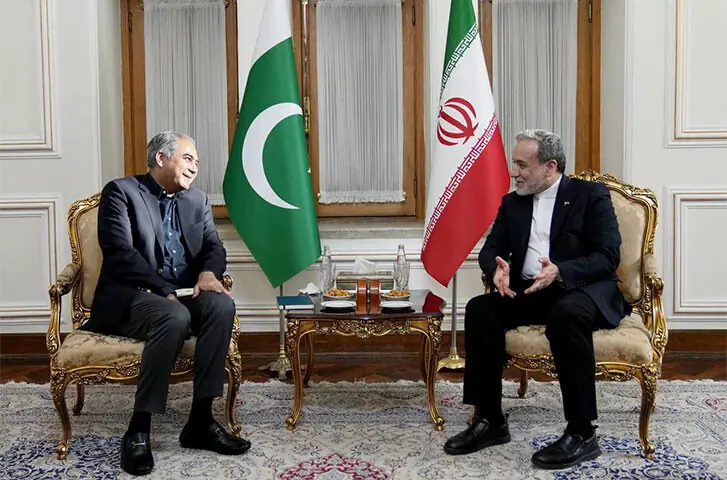
    ISLAMABAD: Pakistan is making fresh diplomatic efforts to revive its role as a mediator between Iran and the United States. Interior Minister Mohsin Naqvi travelled to Tehran on Tuesday for talks with senior Iranian officials. During his visit, he met Iranian Foreign Minister Abbas Araghchi and President Masoud Pezeshkian. The visit is aimed at keeping Pakistan’s mediation channel active. Islamabad is seeking progress on the Islamabad Memorandum of Understanding (MoU), which emerged from earlier efforts to ease tensions between Iran and the United States. Naqvi was received in Tehran by Iranian Interior Minister Eskandar Momeni. He later held discussions with Araghchi on bilateral relations and regional developments. Pakistan’s diplomatic efforts had slowed after Oman became more directly involved in talks concerning arrangements for navigation through the Strait of Hormuz. However, recent contacts between Oman and Iran appear to have created an opportunity for Islamabad to renew its broader mediation initiative. A diplomatic source said Pakistan wants to follow up on the Islamabad MoU and encourage both sides to return to a wider diplomatic process. The situation around the Strait of Hormuz remains particularly sensitive. The waterway is vital for international energy and trade routes. Iran has maintained that the Islamabad MoU remains the key framework for resolving the wider dispute. Tehran has also linked the full reopening of the Strait of Hormuz to implementation of the commitments contained in the agreement. Iran and Oman have been discussing arrangements for safer passage through the strategic waterway. Their discussions include possible shipping routes and mechanisms for managing navigation. However, Tehran has indicated that any understanding with Oman would initially address technical matters. It would not necessarily represent a complete resolution of the wider dispute. Iran has also called for concrete assurances from Washington before moving towards the next stage of negotiations. Tehran wants guarantees that can be verified rather than verbal commitments. Pakistan has continued to encourage dialogue between the two sides. Defence Minister Khawaja Asif also indicated that Washington and Tehran could be moving closer to an understanding. He said recent signals suggested that the two countries were again moving towards a possible peace arrangement or deal. Meanwhile, Pakistan has invited Iranian Foreign Minister Araghchi and Iranian Parliament Speaker Bagher Ghalibaf to visit Islamabad. Iranian officials have said the visit would take place at an appropriate time. Naqvi’s trip to Tehran is therefore significant because Islamabad is maintaining direct engagement instead of waiting for the Iranian delegation to visit Pakistan. During his meeting with President Pezeshkian, Naqvi described Pakistan-Iran relations as strong and longstanding. He conveyed Islamabad’s intention to further strengthen ties with Tehran. Pezeshkian also stressed the importance of bilateral relations. He said stronger cooperation between Pakistan and Iran could serve their national interests and contribute to regional stability. The discussions come amid broader diplomatic and security developments in the region. Pakistan recently signed a trilateral defence agreement with Saudi Arabia and Turkiye. Islamabad has maintained that the arrangement is defensive and is not directed against any country. Deputy Prime Minister and Foreign Minister Ishaq Dar also discussed the agreement with his Iranian counterpart. He briefed Araghchi on its objectives and stressed its focus on strategic cooperation and regional peace. At the same time, US President Donald Trump has adopted a tougher tone towards Iran’s negotiating team. Trump described Iranian negotiators as difficult and accused them of making commitments privately and later presenting them differently in public. He also warned that Iran’s economic problems and inflation were becoming increasingly difficult to sustain. Trump said Washington could continue applying economic pressure on Tehran. He also suggested that the United States could take stronger measures if necessary. The contrasting positions underline the difficulties facing diplomatic efforts. Pakistan is now attempting to keep communication channels open with Tehran while encouraging a broader political process involving Iran and the United States.

  • | |

    Islamiat tops Grade 9, 10 failure list

    The Board of Intermediate and Secondary Education (BISE) Peshawar has released the results of the 2026 annual examinations for Grades 9 and 10. The results show that Islamiat was the subject in which the highest number of students failed in both classes. According to the official statistics, a total of 97,950 students appeared in the Grade 9 annual examinations. Out of these, 57,847 students successfully passed and were promoted to Grade 10. The remaining students could not qualify for promotion after failing to meet the required passing criteria. The examination data also highlighted students’ performance across different subjects. Among all the subjects, Islamiat recorded the highest failure rate, making it the most challenging subject for students in both Grade 9 and Grade 10 this year. The results have drawn attention to the need for improved teaching methods and better academic support in the subject. Education experts believe schools, teachers, and parents should work together to identify the reasons behind the poor performance and help students strengthen their understanding of Islamiat before future examinations. The BISE Peshawar annual examination results provide an overview of students’ academic performance across the province and are expected to help education authorities assess areas where additional support and reforms may be required to improve overall learning outcomes.

  • | | |

    Trump criticizes oil companies over high profits a…

    US President Donald Trump has criticized major oil companies over their growing profits, saying that energy firms are earning excessive amounts of money amid rising fuel prices. His remarks come as global oil markets face uncertainty due to geopolitical tensions and disruptions affecting energy supplies. Speaking to reporters at the White House, Trump said he supports free markets but expressed dissatisfaction with what he described as unusually high earnings by oil companies. He stated that while businesses have the right to operate freely, current market conditions have allowed some energy companies to generate profits beyond what he considers reasonable. The increase in crude oil prices has significantly boosted the revenues of several major energy companies worldwide. Market uncertainty linked to tensions between the United States and Iran has contributed to higher oil prices, creating favorable conditions for large oil producers and companies. Saudi Arabia’s state-owned oil giant Saudi Aramco reported a significant increase in quarterly profit, announcing earnings of $33.4 billion, compared with $25.2 billion during the same period last year. This represents a substantial rise in profits. US-based energy companies have also recorded strong financial results. ExxonMobil reported quarterly earnings of $14.5 billion, more than double compared with the previous year. Meanwhile, Chevron posted a profit of $12.1 billion, marking a significant increase from the same period previously. British energy company Shell also reported nearly $10 billion in quarterly profits, making it one of the company’s strongest financial performances in recent years. While energy companies benefit from higher crude oil prices, consumers in the United States have faced increased fuel costs. Average petrol prices have risen significantly since the beginning of the conflict-related market disruptions, adding further pressure on households already dealing with inflation. Fuel prices have become a major political issue ahead of the upcoming midterm elections. Lowering petrol costs has emerged as a key priority for the Trump administration, as high energy prices often influence public opinion and economic sentiment. A major factor behind the rise in oil prices has been disruption in key shipping routes, including the Strait of Hormuz, one of the world’s most important energy corridors. Reduced oil transportation through the region has affected global supply and contributed to market volatility. Although diplomatic efforts have reportedly aimed at reducing tensions and improving shipping access, uncertainty remains in global energy markets. Security concerns in the Red Sea and Bab el-Mandeb Strait have also affected oil transportation routes. Energy analysts believe that major oil companies may continue benefiting from elevated prices in the short term. However, they suggest that increased global supply or improved conditions in strategic waterways could eventually push crude oil prices lower. The ongoing debate highlights the challenge faced by governments worldwide: balancing energy company profits, market stability, and the need to provide affordable fuel for consumers.

Leave a Reply

Your email address will not be published. Required fields are marked *