ultrasound patch may

Ultrasound patch may help improve sleep without medication

Scientists at the University of Texas in the United States have developed an advanced wearable patch that may help people enter REM (Rapid Eye Movement) sleep more quickly and remain in this stage for longer without surgery or medication.

According to scientists, the device called NEUSLeeP combines electrodes that monitor brain activity in real time. Researchers say the technology can target deeper areas of the brain associated with REM sleep while simultaneously monitoring the brain’s response.

Scientists tested the patch on 28 people and the findings were published in the scientific journal Nature Communications.

According to the study, people using the device entered REM sleep an average of 43 minutes earlier and spent approximately 16 additional minutes in this stage. The effect was observed both in healthy individuals and in people experiencing sleep problems.

Participants reported that the patch was comfortable to wear while only minimal side effects were observed during the study. Researchers also found that ultrasound treatment caused certain changes in the body associated with stress regulation.

Among healthy participants, a significant increase in heart-rate variability was observed which is generally associated with the body’s ability to cope with and respond to stress. Changes were also observed in brain circuits involved in emotional processing during brain imaging.

According to researchers, these findings are important because disruptions in REM sleep have been linked to mental health conditions such as depression, anxiety and post-traumatic stress disorder (PTSD).

Scientists emphasized that further large-scale research is needed before NEUSLeeP can be used as a standard treatment. Future studies are planned to determine whether the technology could also be effective for people experiencing chronic insomnia, depression and PTSD.
Similar Posts

  • |

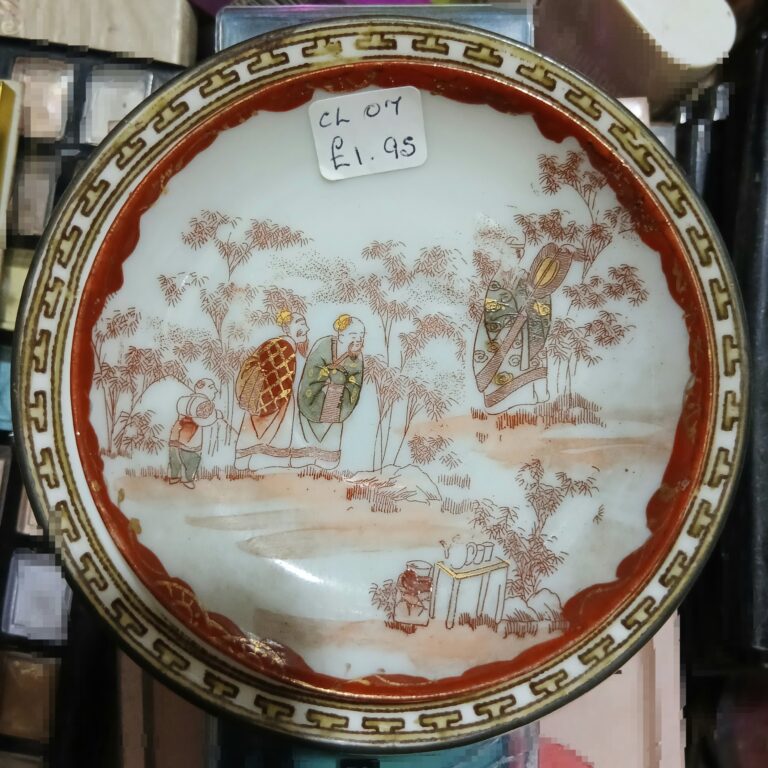
     Why collectors pay millions for fractured porcelain

    There is a low-frequency hum inside an antique shop, an acoustic hush from dust and centuries of quiet survival. It is often the wounded object that commands the most reverence amidst the polished mahogany and gleaming silver. A spiderweb hairline fractured across the belly of a Qing dynasty jar; a cobalt Blue Willow plate stitched together with iron staples; a tea bowl held in delicate cohesion by golden veins of lacquer. In a modern economy obsessed with pristine surfaces and factory precision, these fractured ceramics defy logic. They do retain value despite their damage. Often, they derive their singular majesty precisely because they broke. The art market regularly bears witness to this quiet paradox. At major auction houses in London and New York, porcelain pieces bearing dramatic structural fractures, historic restorations or visible fractures routinely sell for astronomical sums. When a cracked 18th-century Chinese brush washer or a chipped Song Dynasty bowl is launched, purists do not turn away. Instead, connoisseurs see a vessel that has successfully negotiated with time. A pristine artifact can feel like an untouched relic in a glass museum case. A cracked ceramic, however, carries the irreplaceable friction of human history. This romantic obsession with fracture finds its deepest philosophical roots in the Japanese tradition of Kintsugi: literally, golden joinery. In 15th-century Japan, legend holds that the shogun Ashikaga Yoshimasa sent a damaged Chinese tea bowl back to China for repair. It returned bound by heavy and unsightly metal staples. Japanese craftsmen was displeased and sought a more poetic solution. He bonded the porcelain shards with Japanese lacquer dusting it with powdered gold. Rather than disguising the trauma, Kintsugi illuminated the break. This technique transformed a domestic accident into a radiant architecture of resilience. When collectors haunt dim antique parlors today for cracked celadon or worn earthenware, they are participating in a quiet rebellion against the disposable. We live in an era of engineered obsolescence where a small fracture on a smartphone screen renders the entire device wasted. Antique ceramics represent the opposite: fired earth that withstands centuries, absorbing the touch of generations, bearing scars as badges of longevity. A crack proves that the vessel was used, held, washed, dropped, mourned and salvaged. It shifts the object from a passive decoration to an active survivor. Even the historical methods of repair have become prized antiques in their own right. Before gold lacquer was widely available, 18th and 19th-century itinerant tinkerers repaired heirloom china using metal staples. They were drilling tiny holes on either side of a split and hammering in delicate bronze or iron rivets. To a contemporary eye, these industrial-looking stitches might seem like visual vandalism. Yet, to collectors of stapled china, those iron rivets are exquisite evidence of human ingenuity and resourcefulness from an era when nothing precious was ever casually thrown away.   Ultimately, the enduring value of cracked porcelain in antique shops lies in what it reflects about our own human condition. Perfection is intimidating, fragile and ultimately unfeeling. Rupture, on the other hand, is universal. When a buyer pays for a cracked jar, they are purchasing a physical manifestation of survival. They acquire a tangible reminder that broken things can be mended, that wounds can be highlighted with beauty and that time does not diminish value, but rather confers it.

  • Blood treatment removes forever chemicals

    A new study suggests that a blood cleaning treatment used to lower cholesterol may also help remove harmful “forever chemicals” from the body. The treatment called apheresis is mainly used for people whose high cholesterol cannot be controlled with medication.  During the procedure blood is taken from one arm and passed through a special filter that removes excess fats. The cleaned blood is then returned to the body through the other arm. At the Technical University of Dresden in Germany, home to one of the world’s largest apheresis centers around 10,000 of these treatments are performed each year. For the study researchers examined used filter bags from the apheresis machines to see what substances had been removed along with cholesterol. They wanted to find out whether the filters could also remove harmful forever chemicals toxic substances that remain in the environment and the human body for a very long time as well as tiny plastic particles known as microplastics. The researchers say the early findings are promising. If future studies confirm these results apheresis could become a useful way to reduce the amount of certain harmful pollutants in the body in addition to lowering cholesterol.

  • Why Airplane seats must stay upright

    Anyone who has traveled by plane has heard the announcement. “Please return your seat to the full upright position.” Many passengers think it is just a routine instruction but it is actually one of the most important safety rules in aviation. Behind this simple request are years of scientific research safety testing and efforts to save lives. Air travel is one of the safest ways to travel.  However aviation experts say that takeoff and landing are the most critical parts of any flight. Most aircraft accidents happen during these two stages because the plane is close to the ground giving pilots very little time to react if something goes wrong. That is why airlines strictly enforce safety rules during these moments including asking passengers to keep their seats fully upright. Although an airplane seat may look simple it is an important part of the aircraft’s safety system. According to aviation safety standards seats go through tough crash tests before they are approved for use. Engineers place crash test dummies in the seats and simulate accidents to make sure the seats can protect passengers during a strong impact. These safety tests are performed only when the seat is in the upright position. In this position the seat frame locking system and floor attachments work together to provide the best protection. A reclined seat has not been tested to the same safety standard. Seat belts are also designed to work best when passengers are sitting upright. Airplanes use a lap belt that is meant to rest across the strong hip bones. In a sudden stop or impact the force is directed to these bones helping reduce the risk of serious internal injuries. If the seat is reclined the body moves into a different position.  During a crash or heavy turbulence a passenger may slide under the seat belt. This is known as “submarining.” When this happens the belt can press against the stomach instead of the hips increasing the risk of injuries to the abdomen and spine. There is another simple reason as well. When a seat is reclined, the passenger’s head and upper body travel a greater distance before stopping during a sudden impact. This extra movement can increase the force of the collision and lead to more serious injuries. Safety is not only about surviving an accident. It is also about getting everyone out of the aircraft as quickly as possible. International aviation rules require an airplane to be evacuated within 90 seconds even if some emergency exits cannot be used. A reclined seat can block the person sitting behind from leaving quickly. In an emergency even a few seconds of delay can make a big difference. That is why cabin crew always check that every seat is upright before takeoff and landing. Many people wonder why airlines allow passengers to recline their seats during the flight if it is considered a safety issue. The answer is simple. Once the aircraft reaches cruising altitude the risk of an accident becomes much lower. At that stage airlines allow passengers to recline their seats for comfort. However as soon as the plane begins its descent or prepares for takeoff the safety rules come into effect again. Most flights end safely and many passengers may never realize why this rule is so important.  But aviation safety is based on being prepared for unexpected situations. Even small precautions can help save lives. So the next time a flight attendant asks you to return your seat to the upright position remember that it is not just a routine announcement. It is a safety measure backed by years of research testing and real world experience.

  • Millions to witness rare total solar eclipse

    Millions of people Millions of people around the world will have the chance to watch a rare total solar eclipse on August 12. According to astronomers the total eclipse will be visible in Greenland Iceland Spain, parts of the North Atlantic Ocean and northern Russia. In these places the Moon will completely cover the Sun allowing people to see the Sun’s outer atmosphere known as the corona for a short time. The eclipse will not be visible in Arab countries. However several areas in North Africa, especially parts of West Africa will experience a very large partial solar eclipse. In Algeria the Moon is expected to cover about 96% of the Sun making it one of the best places in Africa to view the event. In Rabat, Morocco around 88% of the Sun will be covered. Tunisia is expected to see about 50% coverage while Mauritania could see around 46%. Astronomers have warned people not to look directly at the Sun during the eclipse as it can seriously damage the eyes. They advise using certified solar eclipse glasses or other safe viewing equipment around the world will have the chance to watch a rare total solar eclipse on August 12. According to astronomers the total eclipse will be visible in Greenland, Iceland Spain, parts of the North Atlantic Ocean and northern Russia. In these places the Moon will completely cover the Sun allowing people to see the Sun’s outer atmosphere known as the corona, for a short time. The eclipse will not be visible in Arab countries. However several areas in North Africa especially parts of West Africa will experience a very large partial solar eclipse. In Algeria the Moon is expected to cover about 96% of the Sun making it one of the best places in Africa to view the event. In Rabat, Morocco around 88% of the Sun will be covered. Tunisia is expected to see about 50% coverage while Mauritania could see around 46%. Astronomers have warned people not to look directly at the Sun during the eclipse as it can seriously damage the eyes. They advise using certified solar eclipse glasses or other safe viewing equipment.

  • | |

    Documentary film on the struggle for Joint Elector…

    By Yassar Talib Aiman Zameer Lahore: The Centre for Social Justice (CSJ) held a screening of its documentary film, A Separation Refused, highlighting the Movement for the Restoration of the Joint Electorate in Pakistan, at a local hotel in Lahore. The 20-minute documentary film, by the award-winning the producer and director, CSJ and Dawood Akhtar Murad, traces the culmination of the world unique Separate Electorate system in Pakistan’s history and the movement for the restoration of the Joint Electorate in Pakistan especially during the 1990s to 2001. The film chronicles the efforts of civil society organizations, political leaders, faith communities, and human rights advocates who campaigned for equal citizenship and inclusive democratic participation for religious minorities. Using historical accounts and personal testimonies, the film illustrates how sustained advocacy contributed to democratic reforms and continues to inspire efforts towards equality, pluralism, social cohesion, and the protection of constitutional rights. Featuring over a dozen interviews, it brings together insights from Hina Jilani, Cardinal Joseph Coutts, Dr. Charles Amjad Ali, Dr. Yaqoob Bangash, and other prominent voices offering diverse perspectives youth, clergy and a parliamentarian. The even also premiered a song Hum Juda Nahein (We Are Not Separate) that expressed the The screenings were followed by an interactive panel discussion explored the progress made towards equal citizenship and the continuing challenges to the democratic participation of religious minorities in Pakistan. The panelists, Wajahat Masood a public intellectual and Peter Jacob, answered the questions while the academic Faaria Khan moderated the discussion. While addressing the participants, Wajahat Masood, said that democracy is based on the principle of equal citizenship and that the categorization of citizens into majorities and minorities reflects a constitutional anomaly. Referring to the Separate Electorate system, he noted that institutionalizing such divisions weakened democratic systems and undermined the principle of equal political participation. In response to a question on the rationale behind the documentary, Peter Jacob, Executive Director CSJ, said that the importance of the movement warranted a careful reading of the history. He noted that the film was developed to preserve authentic accounts of the struggle for the restoration of the Joint Electorate and to address competing interpretations of history and misunderstandings. He also emphasized the need for constitutional reforms to strengthen equal citizenship. He called for a review of Articles 41 and 91 of the Constitution, to remove precondition of religious affiliation for the offices of the President and Prime Minister. Moreover, implementation of Article 22(1) of the constitution of Pakistan that guarantees unbiased education. In the open discussion, participants emphasized that the message of documentary film highlighting constitutional rights, democratic inclusion, should be screened more widely through universities, arts councils, mainstream media, and other public platforms to encourage informed dialogue and greater public awareness. They further stressed that equal citizenship is not solely the concern of religious minorities but a shared national responsibility, and called for greater participation and support from the majority community in future advocacy and dialogue. At the end the participants reaffirmed a shared commitment to advancing constitutional rights, equal citizenship, participatory democracy, and peaceful coexistence through collective action.

  • Not all green foods are healthy

    Vegetables and fruits are generally considered an important part of a healthy diet.  Health experts also recommend including them in a balanced meal. However not everything that is green is automatically good for everyone. Some raw undercooked artificial or  rich green foods may cause health problems in  certain people. People with weak immune systems may be more sensitive to some foods and could experience allergies food reactions or other health problems. Green potatoes some green seafood products and foods with artificial green coloring are examples that may require extra care. Some people can also develop an allergy or intolerance to certain green foods. For example spinach may cause skin rashes or other allergic symptoms in sensitive individuals. In rare and serious cases a food allergy can lead to a dangerous reaction called anaphylaxis. Anyone who notices allergy symptoms after eating a particular food should seek medical advice. People with IBS (Irritable Bowel Syndrome) may also need to be careful with certain green vegetables.  Foods such as cabbage broccoli and Brussels sprouts can cause gas bloating stomach discomfort and pain in some people. People with kidney problems should also pay attention to their food choices. Spinach and Swiss chard contain high amounts of potassium. Eating too much of these foods may be risky for people with advanced kidney disease because their kidneys may have difficulty removing extra potassium from the body. This can lead to an unhealthy electrolyte balance. Eating too much of any food can cause problems and green foods are no exception. Large amounts of raw vegetables may cause bloating, constipation stomach pain or digestive discomfort in some people. In certain cases excessive intake of particular foods may also increase the risk of kidney stones electrolyte problems low blood sugar or allergic reactions. Some green fruits and vegetables may also cause digestive problems when eaten raw.  For example raw bananas and papaya may cause gas or stomach discomfort in some people. People who take warfarin a blood thinning medicine also known by the brand name Coumadin should talk to their doctor about eating large amounts of green leafy vegetables. These vegetables are often high in vitamin K, which can affect how warfarin works. The important thing is usually to keep vitamin K intake consistent rather than suddenly changing the amount. Spinach, Swiss chard and beetroot are also high in oxalates.  For some people who are prone to kidney stones, eating large amounts of these foods may increase the chance of developing stones again. Raw or lightly cooked green vegetables can provide many nutrients but they can sometimes be difficult to digest.  Vegetables such as cabbage broccoli and Brussels sprouts contain fiber that may cause digestive discomfort in some people especially when eaten in large amounts. Green potatoes are another important exception. When a potato turns green it may contain higher levels of a natural chemical called solanine.  Eating a large amount of solanine can cause nausea, vomiting, and in severe cases nervous system problems. Green potatoes should therefore be handled with care. Green tea is also not completely harmless in every situation. Poor quality green tea may contain unwanted impurities or low quality ingredients. Drinking very strong or very hot green tea may cause stomach discomfort in some people. Green tea also contains caffeine and too much caffeine can lead to nervousness shaking sleep problems or other side effects. Artificially green foods are not necessarily healthy either. Green colored candies sweet drinks and other processed foods may contain large amounts of sugar and provide little nutritional value.  Eating these foods regularly can contribute to tooth damage high blood sugar and other health problems. The main point is that green color alone does not make a food healthy.  The type of food the amount eaten how it is prepared and a person’s health condition all matter. People with food allergies, IBS, kidney problems or those taking certain medicines should be especially careful and seek medical advice when needed.

Leave a Reply

Your email address will not be published. Required fields are marked *