fuel opens capitalist
|

US fuel opens a capitalist crack in Cuba

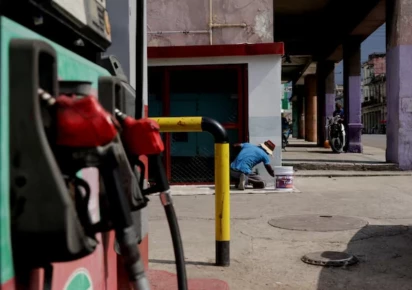
HAVANA: Gasoline selling for as much as $38 a gallon, diesel advertised on social media and fuel stored inside cramped apartments are offering an unusual glimpse of private enterprise in communist Cuba, where the energy sector has long remained firmly under state control.

A US policy allowing American companies to export fuel to private Cuban businesses has triggered an unexpected transformation. As Cuba struggles with shortages, blackouts and a weakened public transport system, imported fuel is creating a growing private market — while also exposing a sharp divide between those who can afford it and millions who cannot.

The change follows the collapse of Cuba’s traditional fuel supplies from Venezuela and Mexico after the United States removed Venezuelan President Nicolas Maduro in January. With sanctions discouraging tankers from sailing toward the island, fuel shortages have increasingly affected transport, hospitals, schools and other essential services.

Under an exception to Washington’s oil restrictions, however, private Cuban restaurants, retailers, taxi operators and other businesses have been allowed to import fuel.

The impact has been striking.

Between February and May, around 900,000 barrels of US fuel entered Cuba — enough to meet only about nine days of the country’s energy requirements. Yet those relatively small shipments have helped create a new network of legal wholesalers, private buyers and illegal resellers.

Gasoline becomes a luxury

For ordinary Cubans, the new fuel market has often brought frustration rather than relief.

On a July afternoon in Havana, 53-year-old Amarilis Sanchez waited for hours at a bus stop after attending her daughter’s birthday celebration. Public buses, which normally cost only two pesos, were unreliable.

Nearby, taxi drivers offered rides in vintage cars, but one driver quoted Sanchez 1,000 pesos for the journey — roughly 500 times the price of a bus ride.

Unable to afford it, Sanchez considered spending the night at her daughter’s home and trying again for a bus the following day.

Her experience illustrates how Cuba’s fuel crisis is creating two very different realities: one for people with access to private vehicles and imported fuel, and another for those dependent on the country’s struggling public transport network.

Black-market gasoline prices reportedly reached $10 per litre, or about $38 per gallon, during the spring before falling as imports increased.

Social media fuels a new market

The emerging trade is increasingly visible online.

WhatsApp groups and Facebook pages advertise gasoline and diesel, while some sellers store fuel in apartments and small shops despite the dangers posed by fire, explosions and toxic fumes.

At one Havana convenience store, a shopkeeper reportedly kept around a dozen 20-litre fuel containers in a backroom, selling gasoline for approximately $5 per litre.

Private companies are also moving into the newly emerging legal wholesale market.

By late July, almost 200 Cuban businesses had received permission to distribute fuel wholesale to other private companies. One company, A Granel, advertises diesel through social media and charges $2.50 per litre for a 940-litre tank.

The promotion reportedly features a model walking through a warehouse of diesel containers while Daddy Yankee’s famous song Gasolina plays in the background — an unusually flashy image for a country where the energy industry has historically been dominated by the state.

Are Cuban gas stations next?

The transformation could go further.

Cuban lawmakers approved a broad package of economic reforms in June aimed at opening the energy sector to private and foreign investment. Prime Minister Manuel Marrero Cruz later announced that Cuba had approved its first foreign investment project focused on importing and selling fuel, although he did not name the company.

The reforms have raised the possibility that private operators could eventually take control of some of Cuba’s familiar state-run Cupet petrol stations.

For now, however, retail fuel sales remain largely under state control.

Some state-owned stations are storing imported fuel but can distribute it only to vehicles belonging to authorised private businesses.

Cuban authorities have defended the reforms while rejecting the idea that they represent a move toward large-scale privatisation. President Miguel Diaz-Canel has accused Washington of imposing a “genocidal siege” on Cuba and said economic changes were not being introduced to satisfy the United States.

A lifeline with a heavy price

The new fuel market has helped prevent some businesses from shutting down completely. During recent power outages, restaurants and shops with generators powered by imported fuel remained illuminated while much of Havana was plunged into darkness.

But experts warn that the emerging system could deepen inequality.

With the average government salary reportedly around $10 a month, imported gasoline remains unaffordable for most of Cuba’s roughly nine million residents.

Cuban sociologist Mayra Espina said the limited fuel supplies had helped prevent “complete paralysis” but warned that the benefits were overwhelmingly concentrated among those able to pay.

The result is an extraordinary contradiction: a small opening toward private enterprise is helping Cuba keep parts of its economy running, while simultaneously making access to basic mobility and energy increasingly dependent on wealth.

For a country that has spent decades keeping fuel firmly within the state system, Cuba’s new gasoline economy may therefore prove to be more than a temporary response to shortage. It could become an early test of how far Havana is prepared to let capitalism into one of its most tightly controlled sectors.

Similar Posts

  • |

    Indian activist held over shocking protest comments

    Indian political commentator and social activist T.G. Mohandas has been detained by police over controversial remarks about students taking part in a protest. Police reportedly took Mohandas into custody from his residence on Sunday evening. A cybercrime police team reached his home with local police officers. He was present when the team arrived. Authorities are investigating remarks made by Mohandas in a video shared on his YouTube channel. Police also collected information about his YouTube account and digital devices allegedly used to record and upload the video. A complaint has reportedly been registered against him. The complaint alleges that the videos published on his channel were capable of disturbing public order. It also accused him of creating fear and unrest through his statements. The controversy began after Mohandas commented on a student protest in Delhi linked to an alleged examination paper leak. In the video, he made offensive remarks about female protesters and claimed that the demonstrations could lead to incidents of sexual violence. He further made a derogatory statement about women participating in the protest. His comments triggered criticism because they appeared to blame or demean potential victims of sexual violence. Mohandas also spoke about how authorities should respond to the demonstrations. He said that if he were in government, he would impose a curfew to disperse the protesters. He further suggested that force could be used if demonstrators refused to leave. His remarks included references to people potentially being killed or permanently injured during a violent crackdown. The comments have drawn attention from law enforcement authorities. Police are now examining the video and other digital material connected to the case. Officials are also questioning Mohandas as part of the investigation. The authorities are expected to determine whether his statements and online content violated laws relating to public order and the spread of fear or unrest. The case has sparked wider discussion over the limits of political commentary and responsibility for statements made on social media. The investigation is continuing, while further details about the allegations and possible legal action are awaited.

  • | |

    Customs seize cameras and electronics worth Rs5.5m…

    Customs officials at Jinnah International Airport in Karachi have seized a large quantity of electronic goods from a passenger arriving from Dubai. According to customs sources, the passenger was intercepted during a routine check at the airport. Officials recovered 29 cameras from the passenger. The seized items also included five camera lenses. The consignment contained 19 digital cameras. Customs officials also found 10 fitness bands among the electronic goods. Other electronic items were also recovered during the inspection. The total value of the seized goods has been estimated at around Rs5.5 million. Customs officials are examining the recovered items as part of the ongoing investigation. The authorities are also checking the passenger’s travel and import details. The action was carried out at Jinnah International Airport, one of the country’s busiest entry points for international passengers. Officials regularly conduct inspections of incoming passengers to prevent the illegal movement of commercial goods and other undeclared items. The latest seizure highlights the continued monitoring of international arrivals at Karachi airport. Customs authorities are taking action when passengers are found carrying goods that require declaration or clearance under applicable rules.

  • Thailand’s Songkran Festival Named World’s Liveliest Festival

    BANGKOK — Thailand’s Songkran festival has been officially named the world’s liveliest festival, a recognition that government officials say reflects the global appeal of the traditional Thai New Year celebrations and their unique blend of cultural heritage and contemporary joy. US Secretary of State Marco Rubio Sends Songkran Greetings to Thailand Government spokeswoman Rachada Dhnadirek […]

  • | | |

    US sees strong potential for agricultural technolo…

    The United States has underscored the potential for expanding agricultural technology cooperation with Pakistan, saying that greater adoption of American innovation could modernise the country’s farming sector while creating new opportunities for bilateral trade and investment. The remarks were made by US Chargé d’Affaires Natalie A. Baker during a Direct Line webinar organised by the Business Council for International Understanding (BCIU) in collaboration with the US Embassy in Islamabad, the US Department of Commerce, and the Government of Pakistan. The virtual event brought together American companies, Pakistani government officials, investors, and representatives from the agriculture industry to discuss future collaboration. Speaking at the webinar, Baker described agriculture as one of Pakistan’s most important economic sectors, contributing nearly one-quarter of the country’s gross domestic product (GDP) and supporting millions of livelihoods. She said Pakistan’s efforts to modernise agriculture present significant opportunities for American businesses to introduce advanced technologies and expertise. According to Baker, US companies can contribute in key areas such as precision agriculture, advanced irrigation systems, digital farm management, cold chain logistics, and modern food processing technologies. She noted that these innovations could help improve agricultural productivity, reduce resource wastage, and strengthen food security while creating commercial opportunities for both countries. The US diplomat also highlighted the growing trade relationship between the two countries, revealing that US exports to Pakistan exceeded $1.5 billion in agricultural and related goods during 2025. She described the webinar as part of the US Mission’s broader strategy to promote stronger economic cooperation and expand commercial ties with Pakistan. During the discussions, Pakistani officials outlined regulatory reforms and policy initiatives designed to facilitate greater imports of American agricultural products, including soybeans, cotton, and high-quality planting seeds. They also encouraged increased US investment in farm mechanisation, biotechnology, seed development, controlled-atmosphere storage, and food processing industries. Baker stressed that American investment offers benefits beyond financial capital by promoting technology transfer, workforce training, and long-term business partnerships. She said such collaboration can strengthen local expertise and contribute to sustainable economic growth in Pakistan’s agriculture sector. The webinar also served as a preview of the US Department of Commerce’s Certified Agricultural Technologies Trade Mission to Pakistan, scheduled for October 26–30. Baker invited American companies to explore investment opportunities in Pakistan’s agricultural technology and food processing sectors, reaffirming that supporting US businesses seeking to invest in Pakistan remains a key priority for the embassy.

  • | |

    Malik Noor Awan hails PML-N’s AJK victory

    Pakistan Muslim League-Nawaz (PML-N) Japan President Malik Noor Awan has congratulated Prime Minister Shehbaz Sharif, party leader Nawaz Sharif, the party leadership, and workers on the Pakistan Muslim League-Nawaz’s victory in the Azad Jammu and Kashmir (AJK) elections. In his congratulatory statement, Malik Noor Awan said the people of Azad Kashmir had expressed their confidence in the PML-N’s agenda of development, stability, and public service by electing the party to power. He said the victory was not only a success for a political party but also a guarantee of a brighter future, a stronger economy, and sustainable development for the people of Azad Kashmir. Malik Noor Awan stated that the PML-N has always centered its politics on public service, development, and the promotion of democratic values. He said this was the reason the people had once again placed their trust in the party’s leadership. He expressed hope that under the leadership of Prime Minister Shehbaz Sharif and PML-N President Nawaz Sharif, new development projects would be launched across Azad Kashmir, employment opportunities would be created, and more effective measures would be taken to improve public welfare. He further said that PML-N workers and the Pakistani community residing in Japan were also delighted with the historic victory and extended their heartfelt congratulations to the party leadership. Reaffirming the commitment of overseas Pakistanis, Malik Noor Awan said they would continue to stand firmly with the Pakistan Muslim League-Nawaz and play their full role in supporting the country’s progress and development.

  • |

    Accused architect of Rohingya persecution Min Aung Hlaing arrives in Thailand for official state visit

    Myanmar’s military leader Min Aung Hlaing has arrived in Thailand for an official state visit, marking his first international trip to a neighbouring democracy since assuming the role of civilian president following highly contested national elections. The visit comes despite international condemnation surrounding Min Aung Hlaing’s role as the chief commander responsible for the 2017 campaign of mass violence and expulsion against Muslim Rohingyas in Rakhine State. Already subject to Western sanctions and target of an International Criminal Court arrest warrant application for crimes against humanity, the former general faces renewed calls for accountability. Human rights organisations, including the Burmese Rohingya Organisation UK, have petitioned international judiciaries to coordinate with Thai authorities to execute active arrest warrants regarding acts of genocide and persecution. Thai Prime Minister Anutin Charnvirakul received Min Aung Hlaing with full diplomatic honours at Government House in Bangkok, including an official guard of honour and a scheduled state dinner. The two leaders are set to preside over a bilateral business forum aimed at bolstering economic ties, cross-border security, and trade infrastructure between the nations. Thailand’s formal reception of Min Aung Hlaing highlights a policy of “calibrated re-engagement” with Naypyidaw, separating Bangkok from several Association of South East Asian Nations (ASEAN) members that continue to exclude Myanmar’s leadership over unfulfilled peace commitments. While Thai officials maintain that direct high-level dialogue is essential to address shared border concerns and transnational crime, rights campaigners argue that hosting the general grants undeserved diplomatic legitimacy to an administration accused of severe human rights violations.

Leave a Reply

Your email address will not be published. Required fields are marked *