senate committee rebukes
| |

Senate Committee rebukes FBR official over failure…


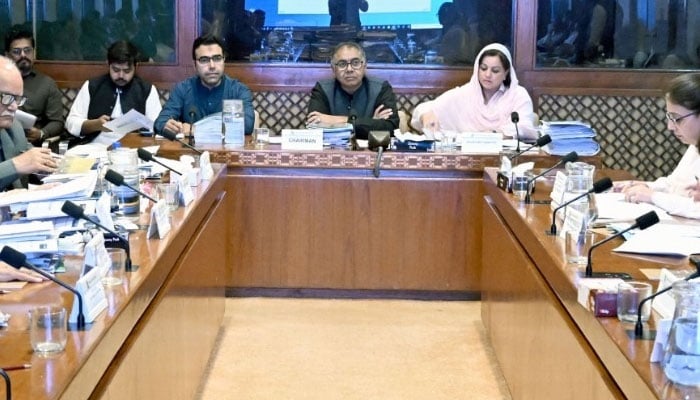
A subcommittee of the Senate Standing Committee on Interior reprimanded a Federal Board of Revenue (FBR) official during a meeting after the official failed to provide the records and details sought by the committee.

During the meeting, Committee Chairman Saifullah Abro expressed strong displeasure over the FBR official’s failure to submit the required information. Questioning the official’s position, Abro asked, “Are you even above the prime minister?” He further warned the official not to attempt to avoid the committee’s questions by giving explanations about the board’s internal procedures.


Abro made it clear that the committee expected the FBR to provide the requested information instead of offering excuses or referring to internal matters. He stressed that parliamentary committees have the authority to seek information from government departments when investigating matters of public importance.

The chairman particularly sought details regarding certificates issued by the FBR to cigarette manufacturing companies. He said the committee should be provided with complete information about the certificates issued by the tax authority and the companies that received them.


“Details of the certificates issued by the FBR to cigarette companies must be provided,” Abro said during the meeting. He indicated that the committee wanted to examine the record and determine the circumstances under which the certificates had been issued.

The matter came under discussion as the committee reviewed information concerning cigarette companies and the relevant government records. The failure to provide the requested documentation prompted the committee leadership to take a tougher stance toward the concerned officials.

During the meeting, the committee also issued directions to officials of the Federal Investigation Agency (FIA). The committee instructed FIA authorities to initially issue notices to 108 companies as part of the proceedings.

The notices are expected to seek information and clarification from the companies regarding matters under investigation by the committee. The move indicates that the committee intends to broaden its examination and obtain information directly from the companies concerned rather than relying solely on government departments.

Abro also warned the officials against forcing the committee to escalate the matter to the highest level of government. Addressing the authorities, the committee convener said, “Do not force us to write to the prime minister.”

His remarks reflected the committee’s frustration over what it considered a lack of cooperation from the relevant authorities. The chairman emphasized that government institutions should respond to parliamentary oversight mechanisms and provide the information requested by lawmakers.

The committee’s proceedings highlight the role of parliamentary oversight in examining the functioning of government departments and ensuring transparency. By seeking details of certificates issued to cigarette companies and directing the FIA to issue notices to 108 companies, the subcommittee appears to be pursuing a broader inquiry into the matter.

The committee is expected to review the information obtained from the FBR, FIA and the companies concerned in subsequent meetings. Further action could be considered after the requested records and responses are submitted.

The strong remarks by Saifullah Abro also signal that the committee may escalate the issue if government departments continue to withhold or delay the provision of information. For now, the FIA has been directed to proceed with notices to the 108 companies, while the FBR is expected to provide details of the certificates issued to cigarette manufacturers.

Similar Posts

  • Lahore High Court issues landmark fair trial ruling in rent cases

    The Lahore High Court has delivered a significant judgment on ex-parte proceedings in rent disputes, setting aside the Rent Tribunal’s ex-parte order against a petitioner and laying down important legal principles to safeguard the right to a fair hearing in tenancy cases. Justice Justice Muzammil Akhtar Shabbir issued a detailed 14-page judgment, declaring that “delay in justice amounts to denial of justice, while undue haste in dispensing justice is equivalent to burying justice.” The ruling has been declared a judicial precedent for future rent litigation. The High Court held that under the relevant tenancy laws, a Rent Tribunal is legally required to allow a period of 10 days before initiating ex-parte proceedings against the opposite party. During this period, the absent party retains the legal right to appear before the tribunal and seek restoration of its right to contest the proceedings. The court further ruled that if ex-parte proceedings are initiated in violation of the prescribed legal procedure, such proceedings become unlawful, and any judgment passed on their basis is also liable to be declared void. Justice Shabbir observed that Rent Tribunals must ensure proper service of notices on the opposite party before proceeding ex-parte. The judgment noted that the Rent Tribunal in the present case had failed to follow the statutory procedure governing ex-parte proceedings under the rent law. The High Court also held that the tribunal’s decision dismissing the petitioner’s application for restoration of proceedings was contrary to law. Consequently, the court set aside the judgments of both the Rent Tribunal and the appellate court. It ordered that the matter be treated as pending before the trial court and directed the trial court to decide the case strictly on its merits within four months. The High Court further instructed that no applications seeking unnecessary adjournments by either party should be entertained, emphasising the need for the expeditious disposal of the tenancy dispute while ensuring compliance with due process and the principles of natural justice.

  • | |

    Karachi-Rohri rail track construction to begin nex…

    Federal Minister for Railways Hanif Abbasi has said construction of a 480-kilometre railway track from Karachi to Rohri will begin next year. He made the remarks during a meeting with Sindh Governor Nihal Hashmi, where Federal Petroleum Minister Ali Pervaiz Malik, Minister of State Kheial Das Kohistani, Fahad Haroon and other officials were also present. During the meeting, Abbasi said Pakistan Railways would soon begin transporting fuel, automobiles, minerals and liquefied petroleum gas (LPG) through its network. He said around 11,000 tonnes of coal was currently being transported from Thar to the national grid every day. Abbasi also remarked that only two or three countries could be considered Pakistan’s enemies. The Sindh governor praised the government for ensuring uninterrupted supplies of petroleum products despite the ongoing challenges. Hashmi particularly appreciated the measures taken by Petroleum Minister Ali Pervaiz Malik to maintain the supply of fuel across the country. Ali Pervaiz Malik said stakeholders had extended full cooperation to ensure the uninterrupted availability of petroleum products. The meeting also discussed measures to strengthen transportation and logistics infrastructure and improve coordination between relevant federal and provincial authorities.

  • | |

    Zoe Saldaña reveals plans to step behind the came…

      Zoe Saldaña has built an impressive career in Hollywood, achieving milestones that only a small number of actors can claim. From becoming an Academy Award winner to appearing in some of the world’s most successful film franchises, the actress has established herself as one of the industry’s most recognisable stars. However, Saldaña now appears ready to explore a completely different side of filmmaking by considering a move into directing. During an appearance at the Locarno Film Festival in Switzerland, Saldaña spoke about her desire to eventually take control behind the camera. Addressing the festival audience, the actress said she believed there would come a point when simply watching other directors work would no longer be enough for her. Saldaña joked that after observing directors for so long, she might eventually feel compelled to take over the camera herself. Her comments reflected her growing interest in expanding her creative role within the film industry and exploring storytelling from a director’s perspective. The actress also expressed confidence in her own instincts, particularly when discussing women and their ability to recognise what they believe is right. With a humorous tone, she suggested that women often feel confident in their opinions because they are correct a significant amount of the time. For Saldaña, directing could provide an opportunity to test those instincts and prove what she can accomplish outside her established acting career. Her remarks came as she was being honoured at the prestigious Locarno Film Festival. Saldaña received a Special Honorary Pardo at the event, recognising her contribution to cinema and her successful career across a wide range of projects. During her appearance, the actress also reflected on her childhood and the experience of growing up between different cultures. Born in the Dominican Republic, Saldaña said her background and experiences of feeling like an outsider have played an important role in shaping the way she approaches acting and develops her characters. She recalled the challenges of being separated from a New York environment where she had been exposed to people from different backgrounds and cultures. According to Saldaña, living in a diverse environment allowed her to encounter different perspectives and understand the world beyond a single cultural identity. She later moved to a much smaller and more culturally homogeneous island, an experience she described as difficult during her formative years. The transition brought significant challenges, particularly because she encountered a society with a more unified religious and cultural identity. Despite the difficulties, Saldaña believes those experiences ultimately became valuable to her as an actor. She explained that the challenges of growing up between different cultural environments helped her develop a broader understanding of people and identities. That perspective, she suggested, became particularly useful when portraying some of her most famous characters, including Neytiri in the Avatar franchise and Gamora in the Guardians of the Galaxy films. For Saldaña, growing up between cultures provided both struggles and opportunities for personal development. She believes being exposed to different ways of life enriched her understanding of human experiences and gave her additional emotional depth as a performer. Now, after years of success in front of the camera, Saldaña appears interested in turning those experiences into a new creative challenge. Her potential move into directing could mark an important new chapter in her career, allowing her to bring her perspective, cultural experiences and storytelling instincts to filmmaking from behind the camera.

  • | |

    Court grants interim bail to business partner’s …

      A Karachi Additional District and Sessions Court has granted interim bail to Abdullah, the brother of the business partner of young trader Mir Raza Ali, in connection with the businessman’s murder case. The court approved Abdullah’s interim pre-arrest bail until September 1, providing him temporary protection from arrest while the investigation into the case continues. Abdullah had approached the court seeking bail before arrest after being allegedly linked to the investigation surrounding Mir Raza Ali’s death. During the hearing, the court also issued notices to the investigating officer and the complainant in the case. The judge directed the applicant to submit surety bonds worth Rs100,000 as part of the conditions attached to the interim bail. According to Abdullah’s lawyer, there was no basis for treating his client as a suspect in the murder. The lawyer informed the court that Abdullah had a business-related connection with Mir Raza and used to supply chocolates to him. The defence further explained that Abdullah had spoken to Mir Raza by telephone on the night when the young trader left his home. According to the lawyer, the phone conversation took place at around 3:30am. The lawyer argued that the late-night phone call should be viewed in the context of their regular business dealings rather than being treated as evidence of involvement in the alleged crime. The defence also accused the police of harassing Abdullah during the investigation. His lawyer told the court that law-enforcement officials were repeatedly troubling the applicant despite the absence of any established evidence connecting him directly to the murder. The lawyer maintained that communication between Abdullah and Mir Raza at around the same time was not unusual. He explained that after completing his work, Mir Raza would generally speak with the applicant around that time. The defence therefore requested the court to provide Abdullah with protection from arrest while the authorities continued investigating the circumstances surrounding Mir Raza Ali’s death. After hearing the arguments, the court granted interim bail until September 1 and directed the relevant parties, including the investigating officer and complainant, to respond to the bail application. The applicant was also ordered to submit the required surety bonds. The court’s decision does not amount to a final determination regarding Abdullah’s involvement in the case. The interim bail merely prevents his immediate arrest while the matter is considered further by the court. The murder investigation remains ongoing, and the police are expected to examine the circumstances surrounding Mir Raza’s death, including his final movements, communications and interactions with people connected to him. The late-night telephone conversation between Mir Raza and Abdullah is among the details that investigators may consider while establishing a timeline of events. However, the defence has maintained that the conversation was consistent with their normal business-related communication. The case has attracted attention because of the young trader’s death and the subsequent investigation into people associated with him. Abdullah’s decision to seek pre-arrest bail indicates that he feared possible arrest during the investigation. The court’s issuance of notices to the investigating officer and complainant means that the prosecution and police will have an opportunity to present their position regarding the allegations and the bail request. For now, Abdullah remains protected by the interim bail order until September 1, subject to the conditions imposed by the court. Further proceedings are expected to determine the next legal steps in the case and whether the investigating authorities have sufficient evidence to proceed against him.

  • | |

    Beyond faith and defense

    The historical partnership between Pakistan and the Kingdom of Saudi Arabia stands as one of the most enduring bilateral relationships in the contemporary Muslim world. This history is anchored in shared Islamic values and a profound spiritual connection to the holy sanctuaries of Makkah and Medina. This alliance predates the modern era of Saudi oil wealth. The bond was formalized through the landmark Treaty of Friendship in 1951. It established an early blueprint for solidarity, ideological alignment and mutual support during crisis. Over the past seven decades, this connection has expanded from religious affinity into strategic collaboration. The Art of Strategic Neutrality Defense cooperation forms a central pivot of the bilateral relationship. Since the 1960s, the Pakistani military has played an instrumental role in advising, training, and building the infrastructure of the Saudi armed forces. Contingents of Pakistani troops have historically been deployed inside the Kingdom for defensive purposes, notably safeguarding the Holy Mosques during regional upheavals such as Operation Desert Storm. Moreover, thousands of Saudi defense personnel have undergone advanced training in Pakistani military institutions over the decades. However, the military relationship has also required careful navigation.  When conflict erupted in Yemen (2015), Pakistan’s parliament adopted a stance of strict neutrality to avoid inter-state Middle Eastern disputes, particularly while its domestic forces were actively engaged in counter-terrorism campaigns like Operation Zarb-e-Azb. Despite initial friction, Riyadh acknowledged Islamabad’s geopolitical constraints. This mature understanding was demonstrated when former Pakistani Army Chief General Raheel Sharif was appointed to lead the Islamic Military Counter Terrorism Coalition (IMCTC), focusing strictly on combating global extremism rather than taking sides in regional power struggles. Economic Interdependence and Human Capital Beyond defense, economic cooperation has provided crucial stability to Pakistan’s financial landscape. Saudi Arabia has repeatedly acted as a financial cushion. The country delivered multi-billion-dollar bailout packages, balance-of-payment assistance and deferred-payment oil supplies during economic hardship. Historically, this financial dynamic was complemented by administrative leadership. Pakistani economist Anwar Ali served as the Governor of the Saudi Arabian Monetary Agency from 1958 to 1974. He played a pivotal role in organizing the Kingdom’s modern financial infrastructure. Human capital remains another essential driver of this relationship. Over 2.7 million Pakistani expatriates reside and work within Saudi Arabia. Spanning critical sectors such as healthcare, engineering, construction, and information technology, these workers contribute directly to Saudi Arabia’s physical and economic development while generating vital remittance flows that sustain Pakistan’s domestic economy. Furthermore, administrative initiatives like the “Road to Makkah” project and reductions in visa fees have significantly streamlined pilgrimage procedures for millions of Pakistani citizens traveling for Hajj and Umrah. Geo-Economics, Vision 2030, and the Future of CPEC As both nations adjust to global realities, the bilateral partnership is changing into modern geo-economic framework. Saudi Crown Prince Mohammed bin Salman’s Vision 2030. The Kingdom aims to diversify its economy away from oil dependency by investing in global supply chains. A key element of this transformation includes multi-billion-dollar investment commitments in Pakistan. Furthermore, a proposed mega-oil refinery at the deep-sea port of Gwadar.   Ultimately, geopolitical challenges occasionally test bilateral diplomatic alignment. However, the strategic, economic and institutional ties between Islamabad and Riyadh continue to adapt. After all, it’s a dynamic future built on mutual survival and shared prosperity.

  • | |

    US lawmakers hold key talks with Field Marshal Asi…

    Two US lawmakers met Pakistan’s Chief of Army Staff and Chief of Defence Forces Field Marshal Syed Asim Munir at General Headquarters (GHQ) in Rawalpindi on Monday. Ryan Keith Zinke, a member of the US House of Representatives from Montana, and Michael James, a member of the House of Representatives from Washington state, held talks with the military leadership. The meeting covered several areas of mutual interest. Regional security, defence cooperation and economic ties between Pakistan and the United States were also discussed. The talks focused on ways to strengthen bilateral relations. Both sides explored opportunities for closer cooperation in the defence and economic sectors. Field Marshal Asim Munir highlighted Pakistan’s economic potential during the meeting. He said long-term regional stability depends heavily on economic growth, increased trade and stronger regional connectivity. The army chief also briefed the visiting lawmakers on Pakistan’s ongoing economic reforms. He said the reforms are aimed at creating a business-friendly environment and encouraging foreign investment. The Pakistani military leadership also stressed the importance of expanding economic cooperation. Greater trade and stronger links between the private sectors of both countries were discussed as potential areas for future collaboration. The US delegation acknowledged Pakistan’s importance in maintaining regional stability. The lawmakers also recognised the country’s role in promoting economic resilience in the region. Both sides discussed opportunities for increasing bilateral trade. They also considered greater private-sector partnerships and broader economic engagement between Pakistan and the United States. The visiting lawmakers thanked Pakistan’s military leadership for the hospitality extended to them during their visit. The meeting concluded with a shared emphasis on strengthening relations between the two countries. Both sides expressed interest in developing deeper economic, commercial and institutional links. The discussions come as Pakistan continues efforts to attract foreign investment and expand international trade. Strengthening economic cooperation with the United States could provide further opportunities for businesses and investors in both countries

Leave a Reply

Your email address will not be published. Required fields are marked *