sindh8217s missing universe

Sindh’s missing universe

Since Ashura, the mothers of Sindh have been sitting in at Babarloi Bypass through suffocating heat and humidity, with one demand: return our missing and abducted children. For a mother, a child is her entire universe — and for years these women have lived in psychological anguish searching for theirs. Fazila Sarki of Thul vanished nearly seventeen years ago; her father named the local Wadero he says orchestrated it, yet she was never recovered. Priya Kumari of Sangrar is entering her fifth year missing — committees formed, updates promised, and still nothing, as if the earth or sky simply swallowed her.

Sindh’s landlords and chieftains have built a parallel state, one that operates above the law. If not, why would fourteen children currently be missing, why would the soil be stained with young blood over trifles, why would mothers go blind from weeping and cemeteries keep expanding? Innocent young women are still declared Kari and honor-killed — denied even a ritual bath, shroud, or funeral prayer, sometimes dumped in rivers. The law exists on paper; hundreds of thousands of officials draw salaries and perks from public taxes to enforce it — yet ordinary people have no protection at any level. The papers are full of these stories daily. The law exists, but it is locked away in books. Are the hands meant to enforce it helpless, or simply indifferent?

Sukkur Civil Hospital — the teaching hospital for Ghulam Muhammad Mahar Medical College, and once a lifeline stretching from Balochistan’s Sibi, Nasirabad, and Bhag Nari to Kandhkot-Kashmore, Shikarpur, and Ghotki — has sunk to the level of Shikarpur’s Rai Bahadur Udhodas Hospital. Department heads sit in name only; real control rests with a handful of favorites who have run these institutions into the ground. Road accidents are a daily occurrence on the highways, and while the Orthopaedic Department stays busy, its facilities inspire only regret. With Nasir Shah and veteran politician Khurshid Shah both present, this hospital ought to be a model for Northern Sindh — instead it is anything but.

Law and order, and justice, are the pillars any civilized society rests on. Where they hold, life, property, and honor are protected, and social harmony follows. Where they fail, fear, distrust, and unrest take their place — and our own society is proof enough of that; little more needs saying.

An educated person lifts not just himself but his society; where ignorance and social ills grow instead, it is education that has failed first. Healthcare here tells the same story: women give birth in Qingqi rickshaws, medicine is scarce, and families buy even a disposable syringe out of pocket — though the budget for it exists. Doctors draw government salaries while absent, some working in Qatar or Saudi Arabia, others running private clinics. A friend recently told me PPHI, on taking over a government health unit, found a stockpile of medicines for heart disease, diabetes, and stomach ailments — worth a fortune, and only months from expiry. What tyranny is greater than this: medicine sitting unused while the needy go without? It is nothing short of an atrocity against the public.

Hunger, disease, unemployment, lawlessness, and ignorance have battered Sindh until its people’s capacity for critical thought is paralyzed. The state, along with conscious citizens, politicians, and the well-off, must turn to this crisis — urgently.

Similar Posts

  • Faculty development: beyond classrooms 

    By Prof. Engr. Dr. Khuram Pervez Amber The persistent weaker linkage between industries and universities in Pakistan requires strategic interventions from all stakeholders. Pakistan cannot expect systemic industrial growth while its higher education institutions and industrial sectors operate in silos. Number of universities in Pakistan has dramatically increased over the past two decades. At current, there are nearly 280 universities in Pakistan which are producing thousands of graduates every year. But the concerns of industries remain valid that the graduates lack the necessary technical knowledge and skills which are required in the industries. These concerns of industries are particularly reported in disciplines such as engineering, computer science and the applied sciences, where employers frequently report a mismatch between academic preparation and industrial requirements. Although there are some valuable initiatives by the HEC, PEC, and NTC which include mandatory industrial internships of six to eight weeks for the engineering and technology students, the impact of such initiatives is limited due to multiple factors. Another initiative of HEC to strengthen university academia linkage is the establishment of the Office of Research, Innovation, and Commercialization (ORICs) in universities. However, the effectiveness of this initiative has not been successful at the desired level as in many universities, ORICs operate with limited staff and resources, while directors of ORICs are usually on additional charges. Expecting a small office alone to build industrial linkages for an entire university is unrealistic. Currently, out of nearly 260 universities, only 95 universities have established ORICs. In the recent ORIC ranking of HEC, only seven of 95 universities achieved the top category, i.e. “W” category. One of the major unexplored reasons behind this fragile linkage between industry and academia is the limited or no industrial exposure of university teachers. Most university teachers move directly from their bachelor’s degrees into master’s and PhD programs. Through this route, such individuals may become academically qualified teachers, but this route does not make them professionals having knowledge of industrial practices, industrial standards, and industry-oriented innovations. In many cases, a teacher teaches an industrial system which he/she has never experienced. This approach may clear theoretical concepts of students, but such students will certainly struggle when they would face real- life industrial problems after their induction in industry. So why do our university teachers require industrial exposure in their field of research? The answer is simple. A teacher with industrial exposure brings his industrial experience into the classrooms, laboratories, projects, and discussions on daily basis. Industrial experience of such teachers would not only improve the technical understanding of students about various industrial systems but also enhance students’ problem-solving skills. It would further help students to understand industrial expectations. So how could universities help their faculty members to get industrial experience? This could be achieved through implementation of structured industrial placement/professional development programs under ORICs for university teachers particularly working in engineering, technology and applied sciences faculties. Under this program, university teachers can spend six months to twelve months in an industry related to their field of interest/research on a turn-by-turn basis. During this period, such faculty members will keep receiving their monthly salaries as usual. So, what will be the major benefits of this model? There will be significant improvement in the pedagogical skills of faculty members as they will be teaching with practical examples, industrial case studies and real-world problem-solving approaches. During their placement in the industry, faculty members would make connections with the industrial experts/managers/engineers which would help them in future to supervise industry-relevant research, secure collaborative projects and contribute to technology transfer. They would identify operational challenges requiring research-based solutions. Upon returning to universities, they can transform these challenges into student projects, postgraduate research topics and consultancy opportunities. This would help create a healthier research culture focused on solving local industrial problems. University graduates will have problem solving skills that are required by industry. Over time, this model would help bridge the trust deficit that exists between academia and industry. Admittedly, implementing such a policy would not be easy. Challenges such as shortage of faculty, and increased teaching workloads are genuine challenges. There are also cultural barriers within academia, where industrial experience is often valued less than traditional academic achievements. However, these barriers are manageable. HEC and professional bodies such as PEC, and universities can jointly develop and implement structured industrial placement programs for faculty members. The industrial experience can be recognized within promotion criteria of faculty members, accreditation frameworks and quality assurance standards. In the nutshell, to produce industry ready graduates, the industrial exposure of university faculty members is indispensable. Their industrial experience will result in a stronger academia-industry linkage which is essential for economic growth, innovation and technological progress. Until universities and industries begin working together more meaningfully, Pakistan will continue producing degrees faster than opportunities. Prof. Engr. Dr. Khuram Pervez Amber (CEng, MEI, PE, FHEA) The writer is serving as Director QEC at Mirpur University of Science and Technology, AJ&K.

  • |

    An alien planet

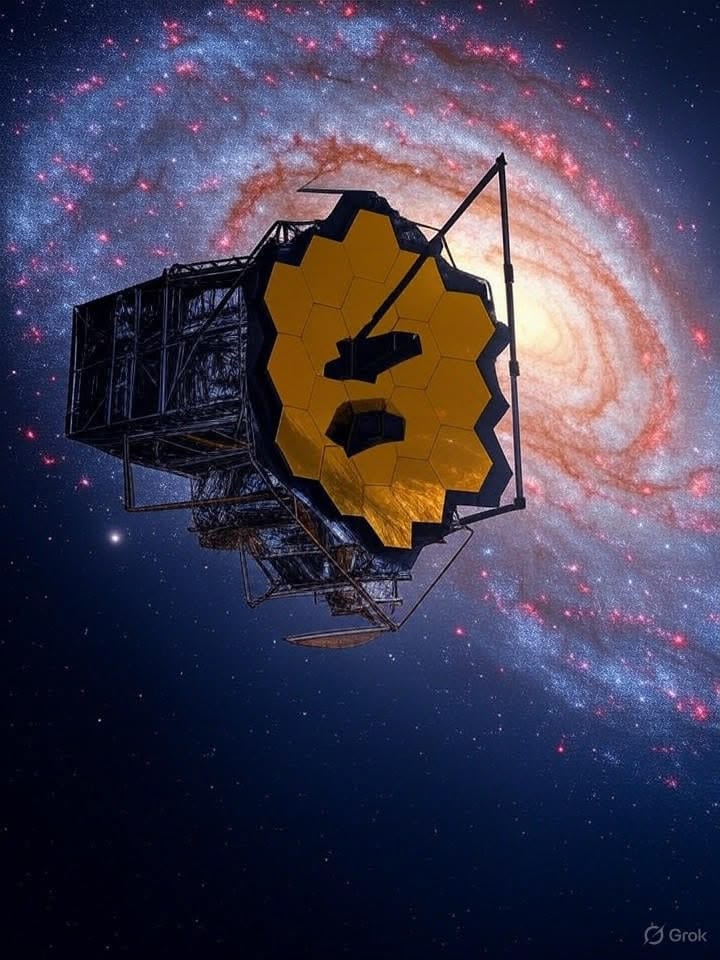
    Imagine living on a world where the start of the day and the end of the day aren’t just different times, but entirely different environments. On one horizon, morning arrives in a chilly mist where vaporized rocks might condense into glittering, mineral clouds. On the opposite horizon, evening sets in as a roaring, hyper-heated furnace hot enough to shred water molecules into raw hydrogen and oxygen. This isn’t sci-fi world-building, it is the reality of WASP-121 b, an extreme exoplanet located roughly 850 light-years from Earth. Astronomers analyzing data from NASA’s James Webb Space Telescope (JWST) have uncovered unprecedented details about this distant world, proving for the first time that its morning and evening twilight zones are fundamentally different from one another. A World Locked in Perpetual Extremes WASP-121 b belongs to a class of cosmic objects known as hot Jupiters: giant gas planets that orbit extraordinarily close to their parent stars. Because of this extreme proximity, the planet is tidally locked. Just as the Moon always presents the same face to Earth, WASP-121 b always presents the exact same hemisphere to its star. One side endures an unrelenting, eternal day with scorching temperatures topping 2,500 degrees Celsius (4,500 degrees Fahrenheit). The opposite side faces permanent night, staring into cold space. For years, astrophysicists hypothesized that the narrow transition zones between day and night. The planet’s terminators might harbor complex, asymmetrical weather patterns. However, confirming this required measuring subtle variations in starlight as the planet passed in front of its star. How Jet Streams Reshape Alien Skies Using JWST’s Near-Infrared Spectrograph (NIRSpec), researchers tracked how starlight filtered through different parts of WASP-121 b’s atmosphere. The findings revealed a dramatic contrast between the morning transition and the evening transition. The driver behind this strange weather is a planetary-scale jet stream. Superheated air on the dayside doesn’t stay still; it rushes toward the cooler nightside at extreme speeds. Because the planet rotates toward the east, these violent winds carry thermal energy around the globe and dump the bulk of that heat directly into the evening region. As a result, WASP-121 b’s evening atmosphere grows significantly hotter than its morning counterpart. Heat causes gases to expand, puffing up the evening sky like a inflated balloon. When starlight filters through this swollen atmospheric layer, it reveals an environment so fierce that water molecules cannot survive intact. Clouds of Metal and Torn Molecules In the searing furnace of the evening sky, chemical bonds break. Water vapor brought in from the dayside is torn apart by the heat, leaving behind a sky depleted of chemical stability. As those same winds continue their journey around the cold nightside, the atmosphere gradually cools down. By the time the air sweeps around to form the morning twilight, the story flips. Here, temperatures drop enough for chemical compounds to reassemble. Scientists suspect that in this cooler morning zone, minerals such as silicates condense out of the gas phase. Instead of water clouds like those on Earth, WASP-121 b’s morning sky likely features reflective clouds made of liquid rock or iron droplets. These metallic clouds block radiation from deeper layers, making the morning side appear even cooler to space observatories. A New Era of Exoplanet Meteorology Until recently, studying alien worlds meant treating entire planets as single, uniform points of light. This discovery demonstrates that modern space telescopes can resolve climate dynamics across distinct regions of a world hundreds of light-years away.   By capturing the contrast between a planet’s morning and evening, astronomers are moving from simply discovering exoplanets to mapping their active weather systems. WASP-121 b may be far too hostile for life as we know it, but understanding its violent atmospheric currents brings us one step closer to reading the skies of smaller, cooler, and potentially habitable worlds in the future.

  • |

    Japan launches cooling shirt with built-in fans

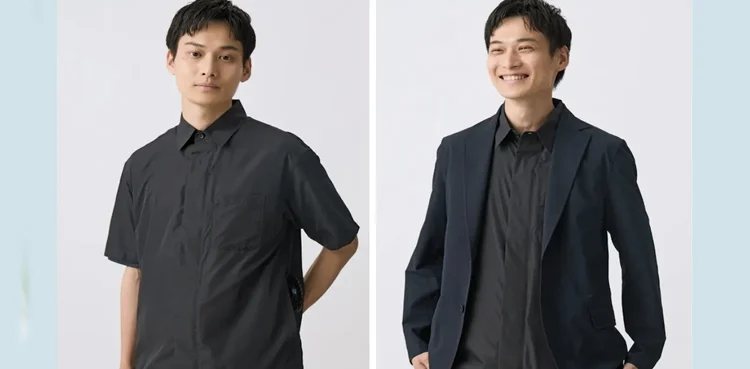
    Tokyo – Due to Japan’s intense summer heat, office wear is now being equipped with modern cooling technology. Japanese people have started wearing clothes with built-in air-conditioning systems. Japanese clothing manufacturer Yofuku no Aoyama has introduced a short-sleeved shirt fitted with two small fans that provide cool air to the wearer while they are on the move. According to media reports, the shirt looks like a simple and elegant office shirt but it actually contains an advanced cooling system. A fan is installed at the back of the shirt near the waist. When switched on, it circulates air inside the shirt and helps keep the body cool. Air-cooled clothing has become increasingly popular in Japan over the past few years. However, it has mainly been used by people working in construction, waste collection and event security. Such clothing is generally designed as jackets or vests and has traditionally been considered protective or workwear rather than office clothing. However, as summer temperatures continue to rise in Japan, demand for cooling clothing is increasing among ordinary citizens and office workers as well. Keeping this growing demand in mind, Yofuku no Aoyama developed the shirt in collaboration with FZN, a company specializing in fan-equipped clothing. The shirt comes with two fans and a rechargeable battery. According to the company, efforts have been made to keep the cooling system as lightweight as possible. According to the report, each of the two fans weighs 95 grams, while the rechargeable battery pack weighs 165 grams. Although the fans are visible when the shirt is viewed from the back, designers have tried to make them less noticeable from other angles so that the shirt remains suitable for an office environment. The company has not provided specific information about the noise level of the fans suggesting that they may not be completely silent. When is cooling shirt most useful? The shirt is considered more useful while travelling rather than during meetings. The company says its main purpose is not necessarily to operate the fans inside an office or during client meetings as such meetings are generally held in air-conditioned rooms. The real benefit of the shirt is for people who travel around the city from one meeting to another. While walking outside in extreme heat or using public transport, the fans can help keep the body cool. It may also reduce the need for employees to change sweat-soaked clothes and put on formal attire again after reaching their destination. What is price? The complete initial package of the Kuchou Wear Short-Sleeve Shirt is being sold for 17,490 Japanese yen. The package includes the shirt, two fans, a rechargeable battery pack and a charging cable. The shirt is available in blue and grey with medium, large and extra-large sizes offered. The product has already gone on sale at the company’s stores and online shop.

  • Smart uses for leftover cooking oil

    After frying puris pakoras, or other foods leftover oil is often thrown away. If the oil has been heated many times it may no longer be safe for cooking, especially if its color smell or taste has changed. Instead of wasting it you can use old cooking oil for some simple household tasks. Remove sticky stickers A few drops of oil can help loosen stubborn stickers and labels from plastic glass or steel items. Apply a little oil to the sticker leave it for a few minutes and then gently peel it off. Loosen rusty nuts and bolts If a rusty nut or bolt is stuck put a few drops of leftover oil around the joint. Wait for a while and then try to loosen it.  The oil can reduce friction and make the job easier. Add shine to wooden furniture You can use a small amount of oil to give old wooden furniture a fresh look. Put a little oil on a soft cloth gently rub the wood and then wipe it with a clean dry cloth. Always test the oil on a small hidden area first to make sure it does not damage the wood. Polish leather items Leftover oil can sometimes be used to add shine to leather shoes bags or decorative items.  Apply only a very small amount and wipe it gently. However, not all types of leather react well to oil, so test it on a hidden spot first. Stop squeaky doors and windows If a door or window makes a squeaky sound put a few drops of oil on its hinges.  This can reduce friction and help make the noise quieter. Store leftover oil safely Before using leftover oil for household tasks strain it to remove food particles. Store it in a clean dry airtight jar. Do not use the oil if it smells bad becomes very dark or shows any unusual changes. It is also better to avoid repeatedly using the same oil for cooking or frying.

  • Artificial Intelligence vs Human Creativity

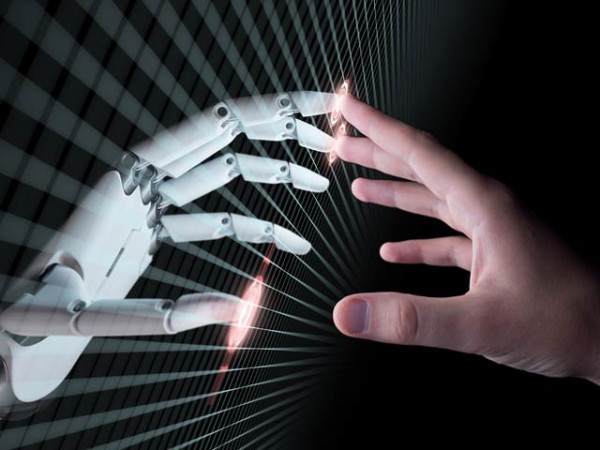
    By Muhammad Talha Karim A workshop under the project titled “Digital Trust and Free Expression in the AI Era” at the Department of Media and Development Communication, University of the Punjab, supported by the U.S. Mission to Pakistan in partnership with the Pakistan-U.S. Alumni Network (PUAN) made me ask myself that: “can a machine create, or does it only create what humans have already imagined?” Creativity has always been a phenomenal ability for human beings, which makes it unique from all other creatures. It helps us solve problems, create art, design new things, think differently, compose music, and write stories. The rapid development of AI has made machines so capable that they can generate music, create art, write essays, and even solve human-related problems. But a very serious question arises here: “Can AI truly be more creative than humans? AI has shown that it can perfectly help humans create new ideas. It simply analyzes the large amount of information, follow the pattern that is previously provided and by combining all the sources, generates content within few seconds. For example, can write an essay, assist you in providing you with the needed material, and make the stories for you. It can also make the process quicker by giving different alternatives. But, if we talk about human creativity, no AI-powered tool can match the detailing, background content and emotional support of a human creativity. AI-powered tools merely scan the information, combine it, rearrange the patterns and give you the required material. It does not use any kind of emotional power, background knowledge to do it. While on the very opposite side, human creativity holds this very significant and unique ability to use emotions, feeling and history with the art. Humans use attach emotions like love, loneliness, sadness, happiness, betrayal and attachment and many more and they are feeling with the art to create it perfectly. For example, if an artist creates a painting, it is not merely the amalgamation of colors, strokes and lines but it experiences the emotion that made the artist create the art. Human beings can physically and mentally feel that specific emotion and a sense of attachment with the art and artist. Creativity has always been deeply linked with emotions and feelings. Certainly, AI powered tools can create content more quickly, but it lacks a major factor “attachment”. It simply rephrases and rearrange the words that are already given and/or uploaded on it. but cannot explain it by using emotions. For instance, if a user commands any AI powered tool to write a story, it will be done in just few seconds, but it will lack the emotional attachment. On the other hand, a story written by a human being will be rich in emotions and feelings. Maybe the writer turned his own experience into the story. As the writer himself experienced that feeling, he can put that in words in such a way that it hits directly in the heart of the reader or any other person. They can feel more attachment to it. They can see themselves in that story, which connects people more strongly.   The second major factor is intention and purpose. Human beings have their purpose and intentions for doing a certain job. It can either be an emotion or a thought. Human beings can challenge the society, write to change the entire perspective of a group of people, and many other reasons while AI does not possess any of this. It writes only because it is being commanded. It does not experience childhood, young age, love, hate, separation, loneliness – nothing at all which makes it merely a content provider while Human beings are the content experiencers. They personally go through those feelings and phases, and they can better explain this!   Despite all these differences, both AI and Human creativity can go together. Humans can provide emotions, feelings, ideas and content while AI can provide speed, more information, new ideas and solutions to different problems. Instead of making AI and humans competitors they can become partners and offer better outcomes. For example, a graphic designer can ask AI to give him various initial concepts and then use his own concepts and creativity to make the best one.  AI may be able to imitate creativity, but human creativity comes from a life that no machine has ever lived. AI has changed the way humans think about creativity. No matter how Fastly AI can generate the content to create pictures, write stories and compose music, it still cannot connect it with emotions. But human beings connect emotions, feelings, thoughts, ideas more creatively. As a human being, it’s the need for us to keep getting the content, art, music and information which emotionally connects us with each other. The views, thoughts, and opinions expressed in this blog are solely those of the author and do not necessarily reflect the official policy or position of the U.S. Mission to Pakistan or  USEFP/PUAN.

  • NASA shares breathtaking full moon photo

    People on Earth see a full Moon almost every month but have you ever wondered what it looks like from space? A NASA astronaut living aboard the International Space Station (ISS) has shared a breathtaking photo showing the full Moon from orbit. The image was released on July 29, when July’s full Moon appeared in the night sky. It was shared on social media by NASA astronaut Anil Menon. While people on Earth watched the full Moon rise above the horizon and shine brightly in the sky astronauts on the ISS enjoyed a completely different view. From space the Moon appears to glow brilliantly against the deep black background of the universe. NASA also shared a message encouraging people to take a moment to look up at the night sky. The space agency said that the full Moon remains one of nature’s most beautiful and timeless sights continuing to inspire people around the world with its beauty.

Leave a Reply

Your email address will not be published. Required fields are marked *