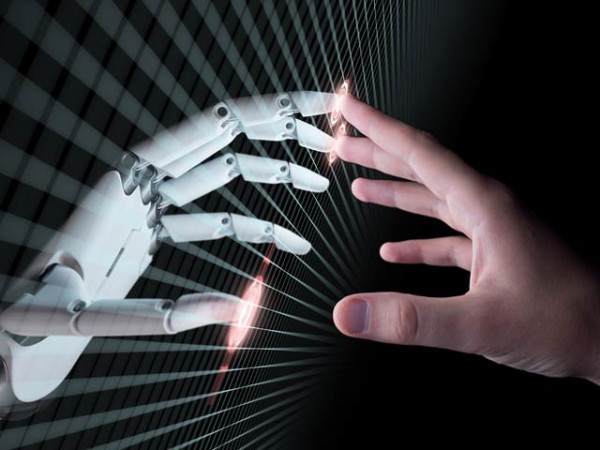
artificial intelligence human

Artificial Intelligence vs Human Creativity

By Muhammad Talha Karim

A workshop under the project titled “Digital Trust and Free Expression in the AI Era” at the Department of Media and Development Communication, University of the Punjab, supported by the U.S. Mission to Pakistan in partnership with the Pakistan-U.S. Alumni Network (PUAN) made me ask myself that: “can a machine create, or does it only create what humans have already imagined?”

Creativity has always been a phenomenal ability for human beings, which makes it unique from all other creatures. It helps us solve problems, create art, design new things, think differently, compose music, and write stories. The rapid development of AI has made machines so capable that they can generate music, create art, write essays, and even solve human-related problems. But a very serious question arises here: “Can AI truly be more creative than humans?

AI has shown that it can perfectly help humans create new ideas. It simply analyzes the large amount of information, follow the pattern that is previously provided and by combining all the sources, generates content within few seconds. For example, can write an essay, assist you in providing you with the needed material, and make the stories for you. It can also make the process quicker by giving different alternatives.

But, if we talk about human creativity, no AI-powered tool can match the detailing, background content and emotional support of a human creativity.

AI-powered tools merely scan the information, combine it, rearrange the patterns and give you the required material. It does not use any kind of emotional power, background knowledge to do it. While on the very opposite side, human creativity holds this very significant and unique ability to use emotions, feeling and history with the art. Humans use attach emotions like love, loneliness, sadness, happiness, betrayal and attachment and many more and they are feeling with the art to create it perfectly.

For example, if an artist creates a painting, it is not merely the amalgamation of colors, strokes and lines but it experiences the emotion that made the artist create the art. Human beings can physically and mentally feel that specific emotion and a sense of attachment with the art and artist.

Creativity has always been deeply linked with emotions and feelings. Certainly, AI powered tools can create content more quickly, but it lacks a major factor “attachment”. It simply rephrases and rearrange the words that are already given and/or uploaded on it. but cannot explain it by using emotions.

For instance, if a user commands any AI powered tool to write a story, it will be done in just few seconds, but it will lack the emotional attachment. On the other hand, a story written by a human being will be rich in emotions and feelings. Maybe the writer turned his own experience into the story. As the writer himself experienced that feeling, he can put that in words in such a

way that it hits directly in the heart of the reader or any other person. They can feel more attachment to it. They can see themselves in that story, which connects people more strongly.


The second major factor is intention and purpose. Human beings have their purpose and intentions for doing a certain job. It can either be an emotion or a thought. Human beings can challenge the society, write to change the entire perspective of a group of people, and many other reasons while AI does not possess any of this. It writes only because it is being commanded. It does not experience childhood, young age, love, hate, separation, loneliness – nothing at all which makes it merely a content provider while Human beings are the content experiencers.

They personally go through those feelings and phases, and they can better explain this!


Despite all these differences, both AI and Human creativity can go together. Humans can provide emotions, feelings, ideas and content while AI can provide speed, more information, new ideas and solutions to different problems. Instead of making AI and humans competitors they can become partners and offer better outcomes. For example, a graphic designer can ask AI to give him various initial concepts and then use his own concepts and creativity to make the best one.  AI may be able to imitate creativity, but human creativity comes from a life that no machine has ever lived.

AI has changed the way humans think about creativity. No matter how Fastly AI can generate the content to create pictures, write stories and compose music, it still cannot connect it with emotions. But human beings connect emotions, feelings, thoughts, ideas more creatively. As a human being, it’s the need for us to keep getting the content, art, music and information which emotionally connects us with each other.

The views, thoughts, and opinions expressed in this blog are solely those of the author and do not necessarily reflect the official policy or position of the U.S. Mission to Pakistan or  USEFP/PUAN.

Similar Posts

  • Pumpkin seeds may support hair growth

    Hair loss is a common concern for many people especially women.  People often try expensive salon treatments and home remedies to reduce hair fall but these methods do not always give the desired results. One simple food that may support hair health is pumpkin seeds. Pumpkin is already known as a nutritious food but its seeds are also packed with important nutrients.  They contain vitamins A, B and C, along with minerals such as magnesium, phosphorus iron and copper.  These nutrients can support healthy hair and scalp. May help strengthen hair Pumpkin seeds contain omega-3 fatty acids which may support hair growth and help keep hair stronger and more flexible. A healthy diet that includes these nutrients can contribute to better overall hair health. May support hair growth Some natural compounds in pumpkin seeds may help reduce the production of DHT, a hormone linked to certain types of hair loss.  This is why pumpkin seeds are sometimes considered a useful addition to a hair friendly diet. However more research is needed to confirm their effects. Good for the Scalp Healthy hair starts with a healthy scalp. Pumpkin seeds contain antioxidants including vitamin E which may help protect the scalp from damage and support its overall health. How to add pumpkin seeds to your diet Adding pumpkin seeds to your daily diet is easy.  You can eat them as a snack or sprinkle them over breakfast salads yogurt or other foods. Like any food they are best enjoyed in a balanced amount. Try Pumpkin seed oil Pumpkin seed oil can also be used as part of a hair care routine.  Some people apply it to their hair and scalp as a simple way to add extra care. Pumpkin seed hair mask Pumpkin seeds can also be used to make a homemade hair mask. This can be added to your regular hair care routine although it should not replace proper treatment for hair problems. When to see a doctor If hair loss is severe sudden or continues for a long time do not rely only on home remedies.  Hair loss can have many causes including nutritional problems and medical conditions.  It is better to consult a dermatologist to find the actual cause and get the right treatment.

  • Living in the Present: Lessons from Alfred

    Shay Qais As one of the leading psychologists of the modern times, Alfred Adler made remarkable contributions to the field, particularly to psychology, education, parenting and counseling. Some of his teachings may have been controversial at the time but he eventually became one of the most popular personalities in these fields as Adlerian Psychology became highly influential in these areas due to the holistic approach of understanding individuals and their social interactions. The most famous concept developed by Adler was the idea of “community feeling” or social interest. The main idea is that an individual can only attain full happiness when they make society around them happy and comfortable as all humans are intrinsically linked with each other. In other words, Adlerian Philosophy states that individuals should strive to contribute to the well being of their communities while being able to successfully interact with other human beings. Interestingly enough the concept described above is very similar to the main message of The Courage to Be Disliked book which promotes an individualistic approach of being true to oneself regardless of what other people think about us.   According to Adler regardless of being disliked or not disliked, a person should not focus on the perceptions of others since those who truly matter will accept them for who they are.   However one should not aim to please everyone as it is impossible to gain the approval of everybody. Instead by contributing to the well being of society and acting morally an individual can feel full happiness since they would be living up to their ideals of being good people regardless of outside criticism. Another important teaching of Adler’s is that he strongly emphasized the need to live “in the now”. According to his philosophy, individuals should not dwell on the past as it can only define a person to a certain degree.   In other words although one cannot deny the effect which past events and personal history have on the current state of an individual a person should not be held hostage by it. Instead a person should live in the present moment and do their best to shape their future because there is nothing else which can define them besides themselves. Adler’s view on problems and struggles is that they mostly stem from poor interpersonal relationships. Therefore a great focus should be on improving relationships with others as well as learning to cooperate and support each other.   Alfred Adler was indeed a genius as his contributions to the field of psychology are very valuable and helped to shape the modern perception of the human psyche. I believe that many people today are influenced by his work and continue to follow his teachings. Therefore, there is nothing better than using the wisdom generated by him to improve the state of the world. After all, many individuals strive to achieve their goals while also trying to help others and have strong social bonds, which ultimately leads to personal fulfillment.

  • Dad’s fake Ultrasound trick goes viral

    A father’s unusual way of helping his young daughter stop eating junk food has gone viral on social media. The video shows a Chinese father who was worried because his daughter loved junk food and would not stop eating it even after he asked her many times. https://www.instagram.com/reel/Dbalh_1AbcP/?igsh=NTV3MGpkcWpkang0 To teach her a lesson the father created a fake ultrasound video. In the video it looked like a worm was growing inside the girl’s stomach because of the junk food she was eating. The animation showed the worm happily eating ice cream and other unhealthy foods becoming bigger each time she ate them. According to the viral story the trick worked and the little girl completely gave up junk food. The video quickly spread across social media and received mixed reactions. Some people praised the father’s creative idea while others said it is better to explain the benefits of healthy eating instead of frightening children.

  • Transforming Governance in Sindh’s Public Schools

    The introduction of FRAMES marks an important milestone in Sindh’s journey towards digital governance. Rather than relying on conventional attendance registers that have long served as the primary means of recording staff attendance, the School Education & Literacy Department (SE&LD) has embraced facial recognition technology to create a more transparent, secure and efficient monitoring system. The initiative reflects a broader vision of leveraging technology to improve governance, enhance institutional performance and ultimately create a better learning environment for students. For decades, education departments across Pakistan have struggled with administrative challenges that extend beyond teaching and learning. Manual attendance systems, paper-based reporting, delayed verification processes and fragmented administrative records have often limited the ability of education authorities to monitor schools effectively. In a province with thousands of public schools and a large teaching workforce, ensuring regular attendance and maintaining accurate records through traditional methods has remained a formidable challenge. Recognising these issues, the Government of Sindh has sought to replace outdated administrative practices with a technology-driven solution. FRAMES enables teaching and non-teaching staff to verify their attendance using facial recognition technology. Once authenticated, attendance records are securely captured and transmitted to a central monitoring platform, allowing authorised education officials to access real-time information regarding staff attendance across schools. Unlike conventional attendance registers that require manual compilation and verification, FRAMES introduces automation into one of the most fundamental administrative functions within the education sector. The result is not merely a change in attendance recording but a transformation in how educational institutions are monitored and managed. One of the distinguishing features of FRAMES is its ability to function both online and offline. This capability addresses one of the most practical challenges facing digital governance in developing regions. Internet connectivity remains inconsistent in several rural and remote areas of Sindh, making continuous online operation difficult for many schools. Recognising this reality, FRAMES has been designed using an offline-first architecture. Even when internet connectivity is unavailable, teachers and school staff can authenticate their attendance through facial recognition. The application securely stores attendance records on the device and automatically synchronises the data with the central server as soon as internet connectivity is restored. This intelligent synchronisation mechanism ensures that schools continue to operate without disruption while maintaining the integrity and reliability of attendance records. By eliminating dependence on uninterrupted internet access, FRAMES becomes a practical solution for schools across diverse geographical regions of the province. The importance of this feature cannot be overstated. Many digital initiatives fail because they assume ideal technological conditions that do not always exist in the field. By accommodating connectivity limitations, FRAMES demonstrates a realistic understanding of the operational environment within Sindh’s public education system. Beyond attendance verification, FRAMES represents a broader shift towards data-driven governance. Modern public administration increasingly depends on accurate, timely and reliable data to formulate effective policies. Every authenticated attendance record contributes to a growing repository of administrative information that can assist education managers in analysing attendance trends, identifying operational challenges and making informed policy decisions. Real-time monitoring significantly enhances administrative responsiveness. Instead of waiting for monthly reports or manual inspections, district and provincial authorities can obtain immediate insights into attendance patterns. Persistent absenteeism, staffing shortages or unusual attendance trends can be identified promptly, enabling faster interventions and more efficient resource allocation. The implementation of FRAMES also strengthens institutional accountability. Public institutions derive credibility from transparency, consistency and fairness. Digital attendance verification substantially reduces opportunities for manipulation associated with manual record keeping while creating an auditable electronic record of attendance. Such transparency not only improves administrative efficiency but also reinforces public confidence in government institutions. Across the world, education systems are increasingly adopting digital governance solutions to improve institutional performance. Countries in Asia, Europe and Africa have introduced biometric attendance systems, electronic education management platforms and digital monitoring tools to strengthen accountability within public education. International organisations, including UNESCO and the World Bank, have repeatedly emphasised that effective education governance depends upon reliable information systems capable of supporting evidence-based policymaking. Sindh’s adoption of FRAMES therefore aligns with broader international trends in educational management. While technology alone cannot resolve every challenge confronting the education sector, it provides administrators with the tools necessary to monitor institutional performance more effectively and allocate resources more strategically. The implementation of FRAMES also complements the Sindh Government’s wider digital transformation agenda within the School Education & Literacy Department. In recent years, the department has introduced several technology-based initiatives aimed at improving governance, financial transparency, administrative efficiency and public service delivery. Collectively, these reforms signal a transition from conventional bureaucratic practices towards modern digital administration. However, technological innovation alone is not sufficient to guarantee institutional success. The effectiveness of FRAMES will depend upon careful implementation, continuous evaluation and sustained capacity building. Teachers, head teachers and district administrators must receive comprehensive training to ensure that the system is used correctly and consistently. Technical support mechanisms must remain readily available to resolve operational issues quickly and minimise disruptions. Equally important is the need to strengthen digital infrastructure. Reliable electricity, functional devices and stable internet connectivity remain essential components of successful digital governance. Although the application’s offline functionality addresses connectivity constraints, long-term sustainability will require continued investment in technological infrastructure across public schools. Another important consideration relates to data privacy and cybersecurity. Because FRAMES utilises facial recognition technology, the protection of biometric information must remain a top priority. Clear policies governing data collection, storage, encryption and authorised access will be essential to maintaining public trust. International experience demonstrates that digital governance initiatives are most successful when supported by robust legal safeguards and transparent data protection frameworks. Some observers have expressed concerns regarding the growing use of artificial intelligence and biometric technologies within public institutions. These concerns deserve thoughtful consideration. Technology should always serve the interests of citizens rather than replace human judgement. Accordingly, FRAMES should be viewed as an administrative support system that strengthens institutional accountability without diminishing the role of educational leadership or professional responsibility. Indeed, educational quality ultimately depends upon far more than attendance alone.

  • Increasing Road Accidents

    Through the pages of your newspaper, I would like to draw attention to the increasing number of road accidents in our area. Road accidents have become a serious problem, causing injuries, deaths and suffering for many families. Overspeeding, careless driving, dangerous overtaking and ignoring traffic rules are some of the major causes of these accidents. Poor road conditions and the lack of proper traffic control make the situation even worse. The authorities should take strict action against those who violate traffic rules. Speed limits should be enforced, roads should be repaired, and traffic awareness campaigns should be organized in schools and communities. Every life is precious. Drivers must understand that a few minutes saved through reckless driving are never worth risking a human life. I hope the concerned authorities will take immediate steps to reduce road accidents and make our roads safer

  • | |

    Decoding the genius of Agatha Christie

    When readers open a detective novel by Agatha Christie, they often expect hidden motives and a dramatic reveal. Yet, behind the elaborate plots and suspenseful twists lies something far deeper. It is a masterclass in human psychology. Christie is celebrated globally as the Queen of Crime. However, her legacy rests on her profound grasp of human nature, emotion, and behavior. Beyond “Who [has] done it?” At first glance, a classic crime novel centers on a simple formula: a crime is committed, evidence is gathered, and a perpetrator is exposed. However, Christie’s narratives stand apart because she recognized that every criminal act is fundamentally driven by internal human conditions. It can be jealousy, greed, fear, desperate love, betrayal or pride. Her stories serve as an investigation into what happens when everyday human emotions turn into extraordinary actions. Christie demonstrated that a person’s surface appearance rarely tells the whole story. In her fictional world, a polite neighbor or a charming gentleman could conceal dark secrets. Christie challenged her readers to look beneath pleasant facades and observe the subtle tension between public personas and private motives. A Tale of Two Detectives Nothing illustrates Christie’s psychological acuity better than her two iconic sleuths. The meticulous Belgian detective Hercule Poirot and the observant villager Miss Jane Marple. Their methods and personal backgrounds could not be more distinct.  Yet, both figures share an uncanny reliance on psychological insight rather than physical evidence alone. Poirot prioritizes method, order, and intellectual analysis. He famously encourages paying attention to the little grey cells of the brain. Poirot understands that people inevitably reveal their true character through body language and small inconsistencies. Poirot allows suspects to expose themselves by asking precise questions and observing subtle emotional shifts. In contrast, Miss Marple operates from the quiet routine of the small English village of St. Mary Mead. Despite her gentle demeanor and knitted shawls, Miss Marple possesses a sharp mind shaped by decades of watching human behavior in a small community. She operates on the principle that human nature is universal. People react to passion, greed, and fear in remarkably similar ways. Her ability to draw parallels between a suspect’s behavior and local village gossip allows her to solve complex murder cases. The Art of Patience In a fast-paced world where hasty judgments and decisions are common, Christie’s stories offer a lesson in the value of patience, active listening, and careful observation. Her detectives succeed precisely because they resist early conclusions. They listen to what is said and  what is left unsaid. This approach reflects many real-world disciplines, including psychotherapy, journalism, and conflict resolution. So, understanding another person requires suspending immediate judgment and noticing subtle nuances. Christie turns her audience into active participants in a process of empathetic inquiry. For generations of fans, revisiting Christie’s novels or watching cinematic adaptations is more than an intellectual exercise. It is a warm, comforting ritual. Many readers recall discovering her books during youth or sharing screen adaptations with family members. The nostalgic atmosphere of early 20th-century trains, country manors, and seaside resorts provides a captivating backdrop for timeless human dramas. Decades after her death, Agatha Christie remains one of the most widely read authors in human history. Her popularity persists not because audiences simply enjoy detective stories, but because the complexity of human nature never grows old. Her work continues to remind us that behind every smile, silence, or stray comment lies a story waiting to be understood.  

Leave a Reply

Your email address will not be published. Required fields are marked *