nasa shares breathtaking

NASA shares breathtaking full moon photo

People on Earth see a full Moon almost every month but have you ever wondered what it looks like from space?

A NASA astronaut living aboard the International Space Station (ISS) has shared a breathtaking photo showing the full Moon from orbit.

The image was released on July 29, when July’s full Moon appeared in the night sky. It was shared on social media by NASA astronaut Anil Menon.

While people on Earth watched the full Moon rise above the horizon and shine brightly in the sky astronauts on the ISS enjoyed a completely different view.

From space the Moon appears to glow brilliantly against the deep black background of the universe.

NASA also shared a message encouraging people to take a moment to look up at the night sky.

The space agency said that the full Moon remains one of nature’s most beautiful and timeless sights continuing to inspire people around the world with its beauty.

Similar Posts

  • Online Harassment and Cybercrime in Pakistan: High Court Strengthens Protection of Digital Rights

    By Syeda Shehar Bano Bukhari Introduction: The rapid growth of social media and digital communication has transformed how people interact, work, and share information. Platforms such as Facebook, Instagram, TikTok, WhatsApp, and other online services have become an important part of everyday life. However, the expansion of digital spaces has also created new forms of crime, including cyber harassment, online blackmail, identity theft, unauthorized sharing of private information, and the misuse of digital content. In Pakistan, cybercrime has become an increasingly important legal issue. Courts are now required to balance the protection of individuals from online abuse with fundamental rights such as freedom of expression and privacy. Recent judicial rulings have highlighted the need for effective investigation, proper use of digital evidence, and protection of victims of online harassment. Background of the Legal Issue: Online harassment can take many forms. It may involve sending threatening messages, repeatedly contacting a person against their wishes, creating fake social media accounts, spreading private photographs, or publishing false information to damage someone’s reputation.  Women are particularly vulnerable to certain forms of online harassment. In some cases, social media platforms are used to threaten women with the publication of private photographs or videos. Such conduct can cause serious psychological distress and may affect a person’s family relationships, education, employment, and social reputation. The problem becomes more complicated when victims hesitate to report such incidents because of social pressure or fear of further harassment. As a result, many cases of online abuse may remain unreported. Role of the Prevention of Electronic Crimes Act: Pakistan’s main legal framework for dealing with cybercrime is the Prevention of Electronic Crimes Act, 2016 (PECA). The law provides criminal penalties for several forms of unlawful activity carried out through information technology and electronic communication. The law covers offences relating to unauthorized access, interference with information systems, cyberstalking, harassment, identity-related offences, and the misuse of electronic information. Under the legal framework, victims of cyber harassment can approach the relevant authorities and provide evidence such as screenshots, messages, emails, social media links, recordings, and other digital material. Such evidence may assist investigators in identifying the accused and establishing the circumstances of the alleged offence. Importance of Digital Evidence: One of the most important aspects of cybercrime cases is the collection and preservation of digital evidence. Unlike traditional crimes, online offences often leave electronic traces. For example, if an individual repeatedly threatens another person through WhatsApp messages, the victim may preserve screenshots, message records, telephone numbers, and other relevant information. Similarly, if a fake social media account is created to impersonate someone, the account link and associated digital information may become important evidence. However, digital evidence must be properly collected and authenticated. Courts must ensure that evidence presented before them is reliable and has not been manipulated by the offenders in connivance with the authorities. This makes forensic investigation an important part of modern criminal justice. Freedom of Expression and Online Abuse: The regulation of online content also raises questions concerning freedom of expression. Freedom of expression is a fundamental right, provided by the Constitution of Pakistan, 1973, but it is not unlimited and is also restricted. The law may impose reasonable restrictions in certain circumstances, including where speech involves threats, harassment, incitement to violence, or other unlawful conduct. The challenge for courts and law-enforcement authorities is to distinguish between legitimate criticism and unlawful online abuse. For example, a person criticizing a public official’s policies may be exercising freedom of expression. However, repeatedly threatening that official with violence or publishing private information with the intention of causing harm may cross the boundary between protected expression and unlawful conduct. Therefore, effective cybercrime laws must protect both individual safety and legitimate freedom of expression. A Real-Life Example: Consider a situation in which a woman receives repeated threatening messages from an unknown social media account. The person behind the account threatens to publish her private photographs unless she follows certain demands. Such conduct may create fear and psychological pressure. The victim can preserve the messages, take screenshots, record relevant account information, and report the matter to the appropriate authorities. The case demonstrates why awareness of digital rights and legal remedies is important. Victims should know that online harassment is not simply a personal disagreement; depending on the circumstances, it may constitute a criminal offence. Challenges in Cybercrime Investigations: Despite the existence of cybercrime laws, several challenges can affect the investigation and prosecution of online offences. First, offenders may use fake identities or anonymous accounts. Second, digital evidence can be deleted or altered quickly. Third, cybercrime investigations often require specialized technical expertise.  Another challenge is the international nature of the internet. An offender may operate from another country while targeting a victim in Pakistan. In such circumstances, obtaining evidence and identifying the person responsible may require international cooperation. These challenges demonstrate the need for trained investigators, modern forensic laboratories, effective cooperation between institutions, and public awareness. Protection of Victims: Victim protection is an important part of the response to cybercrime. Victims of online harassment may experience anxiety, fear, depression, and social pressure. In cases involving private images or blackmail, the psychological consequences can be particularly severe and damaging. Legal institutions should therefore ensure that victims can report complaints safely and confidentially. Investigations should be conducted professionally, and unnecessary exposure of victims’ private information should be avoided. The justice system should also recognize that victims of cyber harassment may require psychological and social support in addition to legal remedies. Broader Legal Significance: The increasing number of cybercrime cases demonstrates that traditional concepts of criminal law must adapt to technological developments. Crimes committed through digital platforms can cause real-world harm, even when the offender and victim never meet physically. The legal system must therefore develop effective methods for dealing with electronic evidence, online anonymity, cross-border offences, and rapidly changing technology. At the same time, laws should be applied carefully so that legitimate criticism, journalism, and freedom of expression are not unnecessarily restricted. A balanced legal approach is necessary to

  • Humans may live up to 194 Years

    How long can a human live? No one knows the exact answer but scientists believe there is a natural limit to the human lifespan. According to a study a person could possibly live as long as 194 years although reaching that age would be extremely rare. Researchers say living forever is not possible. Even if science discovers new ways to slow aging the body cannot avoid the natural damage that builds up over time. The study published in the journal Nature looked at how our DNA and genes change throughout life. Scientists found that many genetic changes are harmless but some damage cells and reduce how well they work. Over time this damage increases the risk of age related diseases. The researchers explained that these genetic changes cannot be completely prevented.  They happen naturally when cells divide and can also be caused by viruses certain chemicals and ultraviolet (UV) rays from sunlight. To estimate the maximum human lifespan the team created a scientific model that included reversible signs of aging while keeping permanent genetic changes in place. The results suggested that even if future technology slows the aging process the longest a human could live would likely be between 146 and 194 years. Scientists also noted that some organs such as the skin and liver regularly replace old cells helping repair some damage. However the heart and brain do not replace most of their cells making genetic damage in these organs much harder to reverse. The researchers stressed that genetic changes are not always harmful but as they build up over time they may gradually shorten a person’s lifespan. They also believe that other biological processes may affect aging and more research is needed to better understand them. At present the longest confirmed human lifespan belongs to Jeanne Calment of France who died in 1997 at the age of 122 years making her the oldest verified person in recorded history.

  • Danger signs your air conditioner needs repair

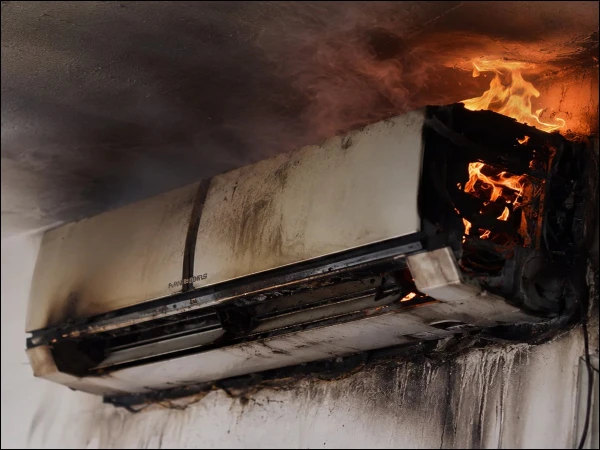
    As temperatures rise many people buy old or low cost air conditioners to save money. However experts warn that aging AC units can become dangerous if problems are ignored.  Small faults may turn into serious issues including electrical short circuits fires or costly damage. According to experts older air conditioners often develop worn out wiring damaged electrical parts faulty motors and overheating. These problems may seem minor at first but can become dangerous if they are not repaired in time. One of the biggest warning signs is a burning smell or the odor of melted plastic when the AC is switched on. Experts say this could mean the internal wiring motor or insulation has been damaged increasing the risk of fire.  If this happens turn off the unit immediately and have it checked by a qualified technician. Unusual sounds such as rattling grinding or loud noises are also signs that something is wrong. These noises may be caused by a loose part a damaged fan or a compressor problem.  Ignoring them could lead to a complete system failure. If the air conditioner becomes unusually hot while running it may indicate an electrical fault inside the unit.  Overheating can increase the risk of a short circuit or fire making immediate inspection and repair important. Experts also advise not to ignore weak cooling. Reduced cooling may be caused by low refrigerant a faulty compressor or a clogged air filter.  These issues usually mean the AC needs servicing or repairs. Another serious warning sign is seeing sparks near the voltage stabilizer or electrical wires. This may indicate loose connections or damaged wiring, which can quickly become a fire hazard if not fixed. Experts recommend turning off the air conditioner immediately if you notice any of these warning signs and contacting a qualified technician for a full inspection. Timely repairs can help prevent bigger damage and keep your home and family safe. They also advise that if an air conditioner keeps breaking down and needs frequent repairs replacing it with a newer safer and more energy efficient model may be a smarter and more cost effective choice.

  • Best way to mix henna for rich hair color

    Henna has been used for centuries as a natural way to color and condition hair. Many people mix henna with either tea water or coffee but which one works better? The answer depends on the type of color you want. Tea and coffee can give henna a slightly different result. Using tea water with henna Tea water is a popular choice for preparing henna. Many people traditionally use strong tea instead of plain water because it can help make the henna color appear deeper. If you want a deeper red or brown shade strong tea water may be a good option. It can also leave the hair looking soft and shiny. To prepare it boil the required amount of water and add two to three teaspoons of tea leaves. Let it cook until the water becomes dark. Allow it to cool then slowly add it to the henna powder to make a smooth paste. For a richer color some people leave the henna mixture covered for several hours or overnight before applying it. Adding coffee to henna Coffee is another common ingredient used with henna. It may help create a warmer brown tone and can add a darker look to the final color. You can mix one or two teaspoons of coffee powder directly into the henna. Another option is to make strong coffee let it cool and use it instead of plain water when preparing the paste. Tea or coffee which one should you choose? If you want a deeper red brown shade tea water may be the better choice. If you prefer a warmer brown look coffee can be added to your henna mixture. You can also use a small amount of coffee along with strong tea water.  This combination may give the hair a deeper looking color and extra shine. However, avoid adding too much coffee as it can affect the texture of the henna paste. A simple safety tip Henna is a natural hair-coloring method but natural does not always mean risk free. Before applying any homemade mixture to your hair or scalp do a small patch test first especially if you have sensitive skin. Stop using it if you notice irritation or an allergic reaction.

  • Immature Minds Need Nourishment, Not Punishment

    By Tuba Khan A nation’s commitment to justice is not judged by the way it treats its powerful citizens, but the way it treats its vulnerable members of society. One of the most fragile creations of God are the children who need love and care, but when they are punished for their mistakes, abused or exploited for their mischievous acts and left unheard in their hour of need, they tend to become juvenile delinquents. They require guidance and encouragement to learn from their mistakes, so that they can grow into responsible and confident individuals. But unfortunately, in Pakistan, children are the most neglected group in terms of justice. Though Pakistan has juvenile justice laws and is a signatory to several international commitments. However, it fails to honor these obligations. According to the KidsRights Index 2020, Pakistan ranks 147th out of 182 nations in access to justice for children. Juvenile delinquency is not inherent; rather, it is often fueled by social, familial, psychological and environmental conditions. Children being observant and curious by nature are highly adaptable to their surroundings. Family, mentors and the community instill values in a child, shaping children’s behavior. However, factors that lead to juvenile delinquency include parental conflicts or separation, peer pressure, exposure to negative, aggressive and violent environments, deprivation of education, financial resources, affection and other basic necessities, impaired cognitive development, poor reasoning skills and psychological issues, such as impulsiveness, antisocial traits and mental disorders. Moreover, drug addiction, access to harmful content on social media, the dark web and illegal means also exacerbate the growing evil of youth delinquency. Together, these factors shape a child’s social and moral development and provoke delinquent behavior. The United Nations Convention on the Rights of the Child (CRC) defines a child as one under the age of eighteen. Below this age, children should not be treated with brutality or strict laws. Critics often argue that crime is crime whether it is committed by a child or an adult. However, the philosophy of juvenile justice acknowledges that cognitive development is not yet mature and children have an immense capacity for rehabilitation. A study indicates that the children between 16 and 18 years of age are more likely to commit offences as compared to the younger ones There is always hope for and from every child. Recognizing these realities, the global community embraced a child-centered approach to juvenile justice and adopted basic principles to deal with young offenders. First, it must be made clear that when a child comes into conflict with the law, alternatives should be offered instead of processing him/her through the formal justice system. Second, there needs to be an exclusive juvenile justice system. Third, during the investigation, a juvenile should not be kept in a regular police station and the judicial process needs to be quick. Lastly, it must be ensured that the state gives a message to juveniles that it believes in their potential for reform. International laws promote the reintegration of children into society, but sadly, this approach is missing in the juvenile justice system of Pakistan. Punjab has only two Borstal Institutes & Juvenile Jails at Bahawalpur and Faisalabad, while Sindh has five Youthful Offenders Industrial Schools in Karachi, Hyderabad, Sukkur, Larkana and Dadu, although the facility in Dadu is non-operational. The KPK has one Borstal in Bannu, whereas Balochistan does not have even a single functional Borstal Institute or juvenile jail. This lack of physical infrastructure causes a considerable number of juveniles to be imprisoned in regular prisons. Placing children in such an overcrowded environment exposes them in proximity to criminals and causes psychological distress, which undermines the rehabilitation capacity of prisoners. No less troubling is the lack of juvenile courts across the country. As a result, most children have continued to go through regular courts that cannot cater to their developmental needs. A joint report by UNICEF and the Commissioner for Children’s Complaint Office of Pakistan has found that as of November 2023, 81% of the total juvenile offenders in Punjab were detained in ordinary jails, and only 144 prisoners were housed in Borstal Institutes. In January 2026, Punjab Prison Department released a report, according to which there are 718 juvenile prisoners in Punjab, while the total capacity is 658 prisoners. The shortage of juvenile institutions further highlights the flaws in the juvenile justice system of Pakistan. It is the state’s responsibility to transform vulnerable children into responsible citizens. Therefore, the Government of Pakistan must move beyond merely passing laws that remain largely unimplemented and instead take concrete and pragmatic steps. The country should develop an implementation plan for the juvenile justice system, allocate adequate financial resources, strengthen the diversion mechanism to resolve minor juvenile cases outside the formal justice system, establish child-friendly rehabilitation centers that promote a sense of responsibility towards society, develop specialized juvenile police units to replace the use of police lock-ups for children, protect juveniles from torture and capital punishment while in detention, recruit trained staff, address the root causes of juvenile delinquency, such as poverty, illiteracy, unemployment, unsafe neighborhoods and the growing number of street children through social welfare programs and introduce a real-time Prison Management Information System (PMIS) to monitor juvenile offenders and support evidence-based decision-making. Every child lost to crime symbolizes not merely an individual failure but a social breakdown and failure of state governance. Invest in the rehabilitation of juvenile offenders to build a safer and stable Pakistan tomorrow. Immature minds need nourishment, not punishment.

  • Why Cockroaches are hard to remove

    Finding cockroaches in the kitchen can be unpleasant. Because they multiply quickly a small problem can soon spread to other parts of the house.  Cockroaches can survive in difficult conditions which makes them hard to remove once they settle in. Cockroaches can survive for a long time without food or water and can live in dark damp places such as kitchens cupboards and under sinks.  Their body parts and droppings can also become part of household dust. This may trigger allergies and can make asthma symptoms worse especially in children and people who already have asthma. There are many sprays and pest control products available in stores. However some people also try simple home methods for a small infestation. Boric acid and sugar A mixture of sugar and boric acid is sometimes used to control cockroaches. Sugar attracts them while boric acid can help kill them.  If used it should be placed only in areas that children and pets cannot reach. Cinnamon Cinnamon is another common home remedy. Its strong smell may help keep cockroaches away from certain areas. However it should not be considered a complete solution for a serious infestation. Mint or lavender oil The smell of peppermint or lavender oil may also help discourage cockroaches. A properly diluted mixture can be sprayed around cupboards and other areas where cockroaches are often seen. For a bigger or repeated infestation home remedies alone may not be enough. Keeping the kitchen clean storing food properly fixing leaks reducing moisture and sealing cracks can help.  If the problem continues professional pest control may be the most effective option.

Leave a Reply

Your email address will not be published. Required fields are marked *