taiwan condemns 8216dangerous8217
|

Taiwan condemns ‘dangerous’ planned Chinese navy drill with Indonesia to its east

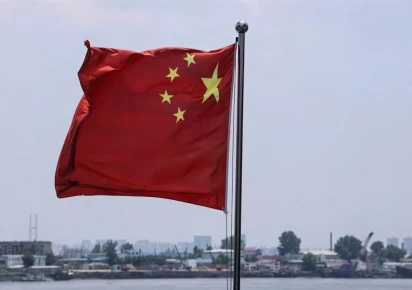
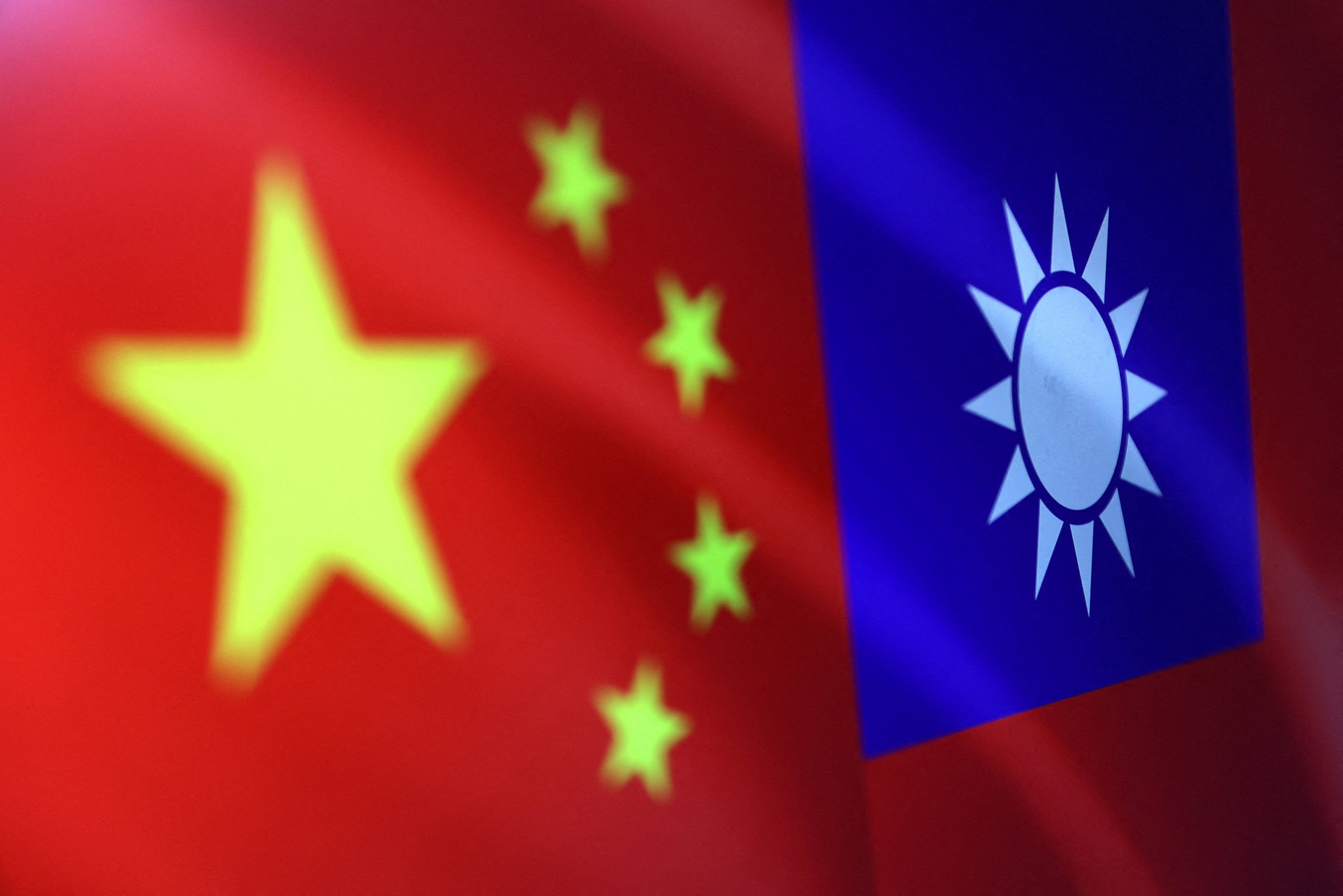
TAIPEI, Taiwan – Taiwan‘s government has condemned “dangerous” planned Chinese navy drills with an Indonesian warship off the island’s east coast, saying Beijing was trying to create a false impression to the international community that it controls those waters.

China views democratically governed Taiwan as its own territory, and in June began coast guard patrols off the island’s east coast, causing anger in Taipei and concern in Washington and some other Western capitals.

China’s defense ministry said on Tuesday the drill, to take place in mid-August at a location east of Taiwan it did not detail, would be a “navigation exercise” with an Indonesian navy ship, a highly unusual move given China does not generally hold exercises with foreign militaries near Taiwan.

The Indonesian navy and defense ministry did not respond to requests for comment.

Late on Tuesday, Taiwan’s China-policy-making Mainland Affairs Council said the drill was a “military provocation” and Beijing should “immediately stop this dangerous behaviour that undermines the status quo.”

Following a recent series of Chinese actions, including so-called “routine law-enforcement patrols” to the east of Taiwan, China is now attempting to conduct military exercises with “relevant countries” in waters east of Taiwan, it said in a statement.

“This is, in reality, political manipulation, ‘exercises in name, expansion in fact’, aimed at creating a false impression before the international community that the Chinese communists have jurisdiction over waters east of Taiwan,” it added.

Taking lawmaker questions at parliament in Taipei on Wednesday, Wu Tien-jen, assistant deputy chief of the general staff for intelligence, said the Indonesian warship China said would take part was on its way back from Japan rather than coming specifically to drill with the Chinese navy.

The ship was some 70 to 80 nautical miles off Taiwan’s east, in the Pacific, he added.

“Militarily this does not have a direct impact on Taiwan,” he said. “It has a geopolitical significance.”

Taiwan’s foreign ministry said separately that it had asked for a “clarification” from Indonesia on its taking part in the drill.

Taiwan holding annual war games

Taiwan is in the midst of its annual Han Kuang war games, where it simulates how to beat back an attempted Chinese attack.

China’s announcement came as US Under Secretary of War for Policy Elbridge Colby met with Indonesian Defense Minister Sjafrie Sjamsoeddin at his Jakarta office on Tuesday.

Sjafrie told Colby that expanding defense cooperation with the United States is not intended to establish a US military base in Indonesia, his office cited him as saying.

China recognizes no sovereignty claims by Taiwan’s government and its military operates around the island on an almost daily basis.

Like most countries, Indonesia has no formal diplomatic ties with Taiwan, but the island is home to more than 300,000 Indonesian migrant workers.

Taiwan’s government says only the Taiwanese people can decide their future and has repeatedly denounced Chinese military pressure. – Rappler.com
Similar Posts

  • |

    Coal drops below half of China’s power mix for first time ever

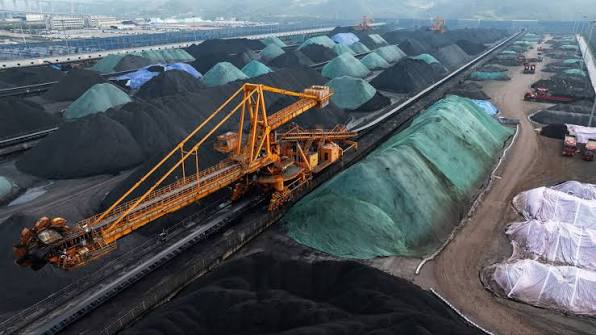
    China has reached a turning point in its energy story. For the very first time, coal supplied less than half the country’s electricity over a six-month stretch, according to officials who spoke on Thursday. Between January and June, coal made up 49.7 percent of total power generation. That figure came from Xing Yiteng, a senior official at the energy administration’s planning office. It marks a steep fall from 65.5 percent back in 2016, based on earlier government data. Clean energy sources picked up the slack. Renewables reached 41.2 percent of the total mix, crossing the 40 percent line for the first time ever. Wind and solar alone made up nearly a quarter of all power generated, a huge leap from just under 10 percent in 2020. The remaining share came from natural gas and nuclear plants. Despite this progress, experts warn that coal use in raw terms might actually increase this year. Electricity demand across China is rising quickly, driven by more electric vehicles on the road, a boom in AI-related data centers, and steady growth in exports. Beijing has pledged that coal use will peak no later than 2030, with wind and solar expected to reach 30 percent of the power mix by then. Gao Yuhe, who works as a project manager at Greenpeace East Asia, thinks that milestone might actually arrive two years early, by 2028. She credited this to the rapid spread of home solar systems paired with battery storage, along with more flexible electricity markets that make better use of renewable supply. China still burns far more coal than most major economies, mainly because it has large domestic reserves and limited natural gas access. For comparison, coal accounted for just 17 percent of America’s utility-scale power output last year, with natural gas covering 41 percent. China’s coal reliance, though, remains lower than India’s, where coal and lignite made up 69 percent of electricity generation last year. Interestingly, China still imported close to 500 million metric tons of coal last year, even with domestic output reaching 4.83 billion tons, mostly to supply power plants along the coast. If coal consumption keeps falling, major exporters like Indonesia, Mongolia, Australia, and Russia could feel the impact, depending on global price trends. Meanwhile, coal remains central to China’s coal-to-chemicals industry, where many facilities continue relying on cheap, locally produced coal to stay competitive.

  • |

    Deadly explosion near Moscow restaurant leaves several dead

      A homemade explosive device carried by a woman detonated near a high-end restaurant in central Moscow on Saturday evening, killing at least three people and injuring 21 others, according to Russian authorities. The incident has triggered speculation on social media about a possible connection to the ongoing war between Russia and Ukraine, although no official evidence has been presented linking the blast to the conflict. The explosion took place shortly before 8 p.m. near an Italian restaurant located inside one of Moscow’s famous Stalin-era skyscrapers at Kudrinskaya Square. Police said the blast occurred after a woman carrying an improvised explosive device attempted to enter the restaurant but was stopped by a security guard. Russia’s National Anti-Terrorism Committee (NAK) reported that the woman, the security guard, and a customer inside the Balzi Rossi restaurant were killed immediately following the explosion. Authorities said several other individuals were injured in the attack and emergency services were dispatched to the scene. The two additional victims who had been hospitalized died from their injuries, potentially raising the death toll to five. However, officials had not formally confirmed those additional deaths. The report also stated that six injured people remained in serious condition. Moscow Mayor Sergei Sobyanin expressed condolences to the families of those killed and injured, describing the incident as a serious terrorist attack. He promised that those responsible would face punishment. However, authorities did not immediately release the identities of the victims, name any suspects, or provide details about who may have been behind the explosion. Unconfirmed reports circulating on social media suggested that the attack may have been aimed at a senior Russian military figure. According to these claims, the alleged target survived the incident, although officials have not verified this information. The attack comes more than four years after Russia launched its full-scale invasion of Ukraine. In recent months, Russian authorities have increased security measures around senior military officials following several assassinations and attempted attacks that Moscow has blamed on Kyiv. Ukraine has not claimed responsibility for the Moscow explosion and had not issued an immediate response. Some Russian military bloggers quickly accused Ukraine of involvement, but those claims were made without publicly available evidence. The Ukrainian government has not commented on the allegations. Russian newspaper Kommersant raised the possibility that the woman carrying the explosive device may not have been aware of its presence or purpose. The publication suggested that the bomb could have been remotely activated by another person rather than being intentionally detonated by the woman herself. The restaurant’s official website stated that the venue had been closed on Saturday due to a private event, although details about the gathering were not immediately available. The incident has drawn comparisons with a previous high-profile bombing in 2023 that killed Vladlen Tatarsky, a well-known Russian pro-war blogger. In that case, a bomb hidden inside a small statue exploded while Tatarsky was holding it during an event in St. Petersburg. A young woman, Darya Trepova, was later sentenced to 27 years in prison for delivering the explosive device. She claimed that she had been following instructions from a man based in Ukraine who had provided her with money. Ukrainian officials did not accept responsibility for the attack but also did not directly deny involvement at the time. The latest Moscow explosion is now under investigation as authorities work to determine the identity of those responsible and establish the motive behind the attack.

  • |

    US Navy begins testing 2,000-nautical-mile underwa…

    WASHINGTON: The US Navy has begun testing a new low-cost unmanned underwater vehicle designed to travel more than 2,000 nautical miles, marking another step in the development of long-endurance autonomous maritime technology. According to US media reports, the new underwater drone, known as HADALUS, has been developed for missions that require long periods of operation without a crew on board. Its developers say the system could offer a lower-cost alternative to other vehicles in the same category. The 34-foot-long vehicle features a carbon-fibre outer structure and has a cross-section of about six feet. It is equipped with sonar and other electronic systems intended to support underwater operations and data collection. The reported range of more than 2,000 nautical miles is among the system’s most notable features. Such endurance could allow an unmanned vehicle to operate over considerable distances before returning to its launch area or requiring further support. The US Navy has increasingly explored unmanned maritime systems as a way to expand underwater surveillance and other capabilities while reducing the need to place personnel directly in potentially hazardous environments. The HADALUS trials will help assess how the vehicle performs in real-world conditions, including its endurance, navigation, communications and onboard systems. Developers say keeping the platform relatively inexpensive is another key objective. If testing proves successful, the technology could become part of a broader effort to deploy larger numbers of autonomous underwater vehicles for extended maritime missions. The latest trial highlights the growing competition among major military powers to develop longer-range, more capable and cost-effective unmanned systems beneath the sea.

  • |

    Systemic coronial delays finally end as remains of Bikram Lama are repatriated from Sydney

    Eight months after his tragic death, the remains of thirty-two-year-old former international student Bikram Lama are finally being prepared for repatriation to his family in Makwanpur, Nepal. Bikram, who had been sleeping rough near Sydney’s Hyde Park, passed away unobserved in December, prompting widespread public outrage and intense scrutiny over the systemic failures that leave non-residents trapped in homelessness. Following months of agonising waiting for his grieving seventy-one-year-old mother, Seti Maya Lama, the New South Wales coroner has released his body to a Sydney funeral service, allowing the family the opportunity to perform his final rites. The prolonged delay in returning Bikram’s body was initially prolonged by mandatory DNA verification procedures, but persistent backlogs within the New South Wales coronial system extended the ordeal for months after testing was completed. Legal experts and former judicial officials have highlighted the incident as evidence of flaws within the state’s coronial framework, citing a lack of dedicated police investigative units and poor inter-agency coordination. With financial assistance provided by community organisations, international students, and the Nepalese government, Bikram’s family is preparing to receive his remains, while frontline advocates continue to push for a formal inquest to address the underlying homelessness crisis.

  • |

    China rejects US sanctions on research institutions

    China has strongly opposed a US decision to place several Chinese research institutions on a sanctions list. Beijing criticised the move on Wednesday. It accused Washington of using national security concerns to restrict scientific and technological cooperation between the two countries. A spokesperson for China’s Ministry of Commerce said Beijing would take necessary steps to protect the legitimate rights and interests of its research institutions. The spokesperson also said China wanted to maintain a stable environment for normal scientific exchanges and cooperation with international partners. Beijing accused the United States of repeatedly expanding the definition of national security. It said Washington had created discriminatory barriers against Chinese institutions. China also criticised what it described as the politicisation and weaponisation of scientific research. According to Beijing, such policies could damage cooperation between researchers and universities in both countries. The Chinese government said the US measures were against the broader global trend of international cooperation in science and technological innovation. Beijing urged Washington to withdraw what it called unjustified accusations against Chinese research institutions. China also called on the United States to correct its policies as soon as possible. It demanded fair, just and non-discriminatory treatment for Chinese research organisations. The dispute comes amid wider tensions between Washington and Beijing over technology, trade and national security. The United States has increasingly tightened restrictions on Chinese access to advanced technologies. Semiconductor manufacturing has become a major area of competition between the two countries. China is also working to expand its domestic semiconductor industry. Beijing aims to reduce its dependence on advanced foreign chips affected by US export restrictions. Last week, the US Department of Defence updated a list of foreign institutions it considers involved in “problematic activities”. The updated list included Chinese defence-related academies and several universities. Shanghai-based Fudan University was also among the institutions added to the list. The latest move is likely to add another point of tension to already strained US-China relations. Beijing has repeatedly opposed US measures targeting Chinese companies, universities and research organisations. Washington, meanwhile, has maintained that its restrictions are linked to national security and technology concerns.

Leave a Reply

Your email address will not be published. Required fields are marked *