deadly explosion near
|

Deadly explosion near Moscow restaurant leaves several dead


A homemade explosive device carried by a woman detonated near a high-end restaurant in central Moscow on Saturday evening, killing at least three people and injuring 21 others, according to Russian authorities. The incident has triggered speculation on social media about a possible connection to the ongoing war between Russia and Ukraine, although no official evidence has been presented linking the blast to the conflict.

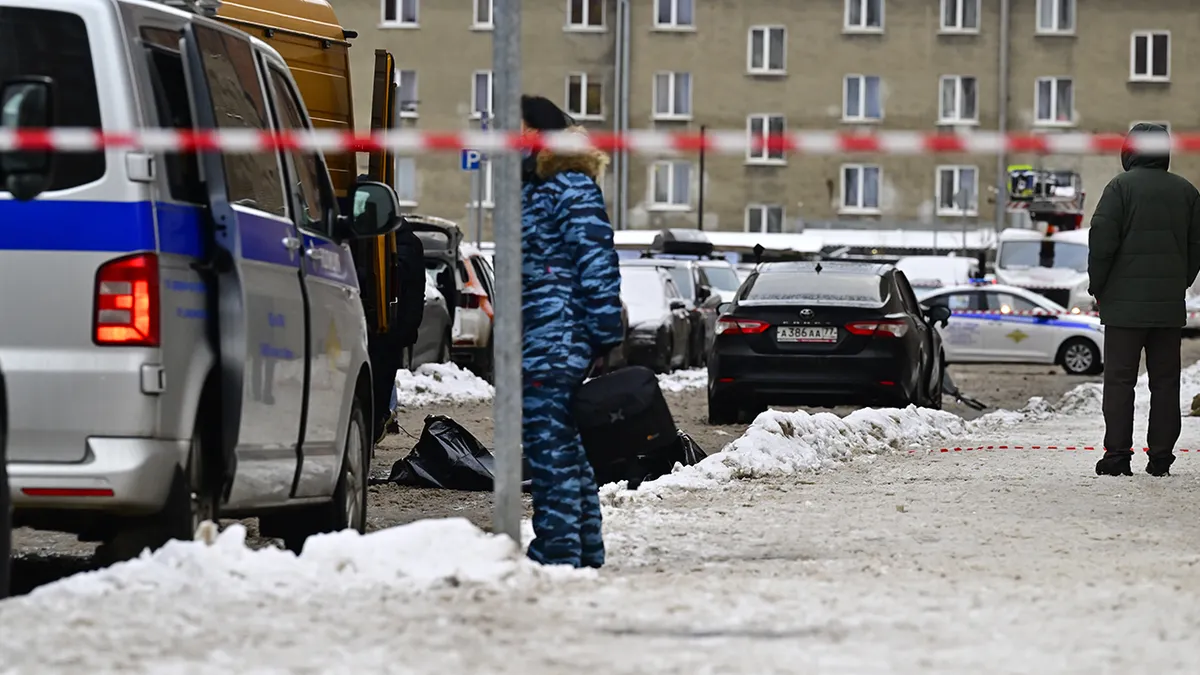
The explosion took place shortly before 8 p.m. near an Italian restaurant located inside one of Moscow’s famous Stalin-era skyscrapers at Kudrinskaya Square. Police said the blast occurred after a woman carrying an improvised explosive device attempted to enter the restaurant but was stopped by a security guard.

Russia’s National Anti-Terrorism Committee (NAK) reported that the woman, the security guard, and a customer inside the Balzi Rossi restaurant were killed immediately following the explosion. Authorities said several other individuals were injured in the attack and emergency services were dispatched to the scene.

The two additional victims who had been hospitalized died from their injuries, potentially raising the death toll to five. However, officials had not formally confirmed those additional deaths. The report also stated that six injured people remained in serious condition.

Moscow Mayor Sergei Sobyanin expressed condolences to the families of those killed and injured, describing the incident as a serious terrorist attack. He promised that those responsible would face punishment. However, authorities did not immediately release the identities of the victims, name any suspects, or provide details about who may have been behind the explosion.

Unconfirmed reports circulating on social media suggested that the attack may have been aimed at a senior Russian military figure. According to these claims, the alleged target survived the incident, although officials have not verified this information.

The attack comes more than four years after Russia launched its full-scale invasion of Ukraine. In recent months, Russian authorities have increased security measures around senior military officials following several assassinations and attempted attacks that Moscow has blamed on Kyiv. Ukraine has not claimed responsibility for the Moscow explosion and had not issued an immediate response.

Some Russian military bloggers quickly accused Ukraine of involvement, but those claims were made without publicly available evidence. The Ukrainian government has not commented on the allegations.

Russian newspaper Kommersant raised the possibility that the woman carrying the explosive device may not have been aware of its presence or purpose. The publication suggested that the bomb could have been remotely activated by another person rather than being intentionally detonated by the woman herself.

The restaurant’s official website stated that the venue had been closed on Saturday due to a private event, although details about the gathering were not immediately available.

The incident has drawn comparisons with a previous high-profile bombing in 2023 that killed Vladlen Tatarsky, a well-known Russian pro-war blogger. In that case, a bomb hidden inside a small statue exploded while Tatarsky was holding it during an event in St. Petersburg.

A young woman, Darya Trepova, was later sentenced to 27 years in prison for delivering the explosive device. She claimed that she had been following instructions from a man based in Ukraine who had provided her with money. Ukrainian officials did not accept responsibility for the attack but also did not directly deny involvement at the time.

The latest Moscow explosion is now under investigation as authorities work to determine the identity of those responsible and establish the motive behind the attack.

Similar Posts

  • |

    Iran prepares for possible major war as tensions with US and Israel escalate

        WASHINGTON: Iran’s hardline leadership has reportedly spent the past two months preparing for a possible major war. The preparations allegedly began after the signing of an Islamabad memorandum of understanding in mid-June. According to the report, Iran’s Islamic Revolutionary Guard Corps (IRGC) was given greater control over the country’s regular military, while officers with experience in the Iran-Iraq War and previous domestic crackdowns were appointed to key positions.   At the same time, Iran expanded its internal counterintelligence operations and accelerated the production of missiles and drones. Iranian leaders also reportedly moved quickly to strengthen their control over the Strait of Hormuz by targeting ships and expanding the potential battlefield toward the Red Sea.   US officials said Arab intelligence agencies had obtained evidence suggesting that Iran’s hardline leadership was pursuing a strategy aimed at expanding the conflict and creating greater difficulties for the United States.   The developments have reportedly caused concern among Gulf countries such as Kuwait. Iranian leaders have increasingly spoken about offensive operations against enemy territory, with the stated objective of inflicting significant damage and preventing a repeat of the attacks Iran experienced during last year’s 12-day war and the current conflict. Mohammad Hassan Sangtarash, a defense analyst considered close to the Iranian government, said there is a widespread view in Iran that “the real war has not started yet.” He described the events so far as limited and gradual escalation intended to weaken the enemy’s capabilities before a potentially larger attack.   Israeli officials are concerned that Iran is rebuilding its infrastructure and restoring access to missile bases much faster than expected. The report claimed that Iran has successfully targeted US bases and retains enough firepower to threaten commercial shipping and energy infrastructure in the Gulf. Iran had been pursuing a dual-track policy. While its diplomats were attempting to negotiate a peace agreement with the United States, Supreme Leader Mojtaba Khamenei was reportedly taking steps to prepare security institutions for a major confrontation that Tehran itself could potentially initiate. Arab intelligence reports cited by the newspaper reportedly indicated that, during the period following the signing of the memorandum, the IRGC sent advisers to allied groups in Iraq, Yemen and Lebanon to help prepare for potentially intensified attacks. The IRGC also allegedly supervised the deployment of missiles, naval weapons and drone launchers at locations overlooking the Red Sea. Officials claimed that Iranian forces provided Yemeni militants with intelligence and lists of potential targets, including Saudi ports and energy facilities, while also offering advice on avoiding Saudi retaliation. The newspaper further reported that the IRGC had warned Gulf states that if the United States attacked Iranian energy facilities, Iran could retaliate against their energy infrastructure. Iranian officials allegedly provided Arab counterparts with detailed lists of individual potential targets. IRGC spokesman Brigadier General Hossein Mohebbi reportedly acknowledged in a July interview with Tasnim News Agency that Iran had used the ceasefire period to strengthen its capabilities, accelerate missile production and improve missile accuracy. Meanwhile, sources close to senior Iranian negotiators reportedly warned that the current peace talks could merely represent a temporary pause before a larger conflict. Mehdi Mohammadi, a strategic adviser to Iran’s chief negotiator, described the current stalemate as the “calm before the storm.” In an earlier statement, Mohammadi also said that Iran still had many scores to settle with US President Donald Trump and claimed that the country was fully prepared for a major confrontation.

  • | | | | |

    UN urges evacuation of 6,000 sailors stranded in S…

    GENEVA: The United Nations has called for the immediate evacuation and repatriation of nearly 6,000 sailors stranded in the Strait of Hormuz, warning that the escalating conflict in the Middle East is placing thousands of civilian seafarers in increasing danger. Speaking in Geneva, UN High Commissioner for Human Rights Volker Türk, through his spokesperson Shabia Mantoo, urged all parties involved in the conflict to prioritize the safety of commercial shipping crews caught in the crisis. “Parties to the conflict should urgently work to facilitate safe passage for stranded seafarers to safely evacuate and disembark, as well as ensure the delivery of critical supplies,” Mantoo told reporters, highlighting the growing humanitarian concerns in one of the world’s most strategically important waterways. The Strait of Hormuz serves as a vital global shipping route, handling a significant portion of the world’s oil exports. However, escalating military tensions have disrupted maritime traffic, leaving thousands of sailors aboard commercial vessels unable to safely continue their journeys or return home. The UN warned that many crews have remained at sea for extended periods, facing uncertainty over security conditions while access to food, medical assistance, and other essential supplies becomes increasingly challenging. Human rights officials stressed that civilian seafarers should not become casualties of geopolitical conflicts and called on all sides to respect international humanitarian and maritime law by ensuring safe navigation and humanitarian access. Maritime experts say prolonged disruptions in the Strait of Hormuz could have far-reaching consequences beyond the humanitarian crisis, affecting global energy supplies, international trade, and shipping costs. The UN’s appeal comes as diplomatic efforts continue to prevent further escalation in the region. While governments work to ease tensions, the world body has urged immediate action to protect the thousands of sailors still stranded at sea, emphasizing that humanitarian needs must remain a priority regardless of the ongoing conflict.

  • |

    BJP lawmaker alleges son-in-law married 25 women

    An Indian politician has accused his son-in-law of fraud after allegedly discovering that the man had married around 25 women using different identities. Bharatiya Janata Party (BJP) lawmaker Gyan Tiwari, who represents the Sevata constituency in Uttar Pradesh, filed a complaint against his son-in-law’s family. He alleged that his daughter was deceived into marrying a man who had concealed his alleged criminal background and previous relationships. According to the complaint, Tiwari’s daughter Pragya married Prakhar Trivedi in 2024. Prakhar is the son of Anuj Trivedi, a resident of Chandrawal. Tiwari alleged that Anuj presented himself during the marriage arrangements as a well-known real estate businessman based in Mumbai. He claimed that the family had also received positive information about the prospective groom from local sources and influential people before approving the marriage. However, the lawmaker said his family later learned about Prakhar’s alleged activities through social media and other sources. Tiwari alleged that Prakhar had used fake identities to establish relationships with women in different Indian states, particularly Maharashtra. He further accused him of allegedly obtaining large sums of money from several women. The politician claimed that Prakhar had entered into around 25 marriages. The allegations have not been independently established. Tiwari said the revelations caused severe emotional distress to his family. He also said that the incident affected his reputation as a public representative. Following the allegations, Tiwari said he had severed social and personal ties with the accused family and brought his daughter back home. Police said a case had been registered following Tiwari’s complaint at the Reusa police station. Anuj Trivedi and his son Prakhar Trivedi have reportedly been arrested as the investigation continues. Authorities are now investigating the allegations of fraud, the alleged use of multiple identities and the claims involving several marriages.

  • | | |

    Israel launches second strike in Syria within a we…

    DAMASCUS: Tensions in the region rose again after an Israeli drone strike near the Syrian capital Damascus injured several people, prompting Kuwait to strongly condemn the attack and call for international action to prevent further Israeli operations on Syrian territory. The strike reportedly targeted a civilian vehicle near a village southwest of Damascus. Several people were injured in the attack, according to reports, although the full extent of the casualties was not immediately clear. Kuwait’s Foreign Ministry condemned what it described as repeated Israeli aggression against Syrian territory and urged the international community, particularly the United Nations Security Council, to fulfil its responsibilities and work to stop further attacks. In a statement, the ministry said the targeting of a civilian vehicle had resulted in injuries among civilians. Kuwait called for an effective international response to what it described as continuing violations of Syria’s sovereignty. The incident is particularly significant because it marks the second Israeli attack in Syria within a week, raising concerns that the cycle of strikes could further aggravate tensions in an already volatile region. Israel, however, defended the latest operation. Israeli officials said the strike targeted what they described as “terrorists” and was carried out in response to an immediate threat faced by Israeli troops. The competing accounts highlight the broader security dispute surrounding Israel’s military operations in Syria. Israel has repeatedly said that its forces act to prevent threats from armed groups and to protect Israeli personnel and territory. Syrian and Arab officials, meanwhile, have frequently condemned such operations as violations of Syrian sovereignty. The latest strike comes at a time when the wider Middle East remains under intense pressure from overlapping conflicts and security crises. Any further escalation inside Syria could complicate efforts to maintain regional stability and increase diplomatic pressure on neighbouring countries. Kuwait’s appeal to the UN Security Council reflects growing calls from Arab states for greater international scrutiny of military operations on Syrian soil. The Kuwaiti ministry urged global powers to take concrete steps rather than allowing repeated attacks to continue unchecked. For residents near Damascus, the latest incident adds to concerns over the possibility of renewed violence. Although the immediate strike caused injuries rather than a large-scale loss of life, the frequency of military operations has raised fears that a wider confrontation could develop. With Israel maintaining that its actions are necessary for security and Arab governments calling for an end to attacks, Syria remains caught at the centre of a tense regional confrontation. The latest strike could therefore become another flashpoint in an increasingly fragile security environment.

  • | |

    Cross border strikes kill at least fourteen as Ukr…

    At least seven people died in Russia following what officials described as Ukraine’s largest scale attack of the year, while separate Russian strikes on Ukraine killed at least seven more people and injured over 39 others. Ukraine launched roughly 822 drones in the assault, with 600 of them targeting Moscow, according to the region’s governor, who called it one of the most massive drone attacks the Russian capital has faced in recent memory. The strikes hit a warehouse belonging to online retailer Wildberries among other targets. In Russia’s southwestern Rostov region, five people died following overnight strikes, the regional governor said. In Belgorod, which borders Ukraine, officials said a woman died after a civilian bus was hit, while Moscow region governor Andrey Vorobyov reported that an 83 year old man died in a separate drone attack. Moscow Mayor Sergei Sobyanin said a Wildberries warehouse in Koledino, about 25 kilometers, or 15.5 miles, from central Moscow, was struck and left three people injured, with video footage showing fire and heavy smoke rising above the facility. Wildberries, often compared to Amazon, has faced repeated attacks since July, when Kyiv said it was deliberately targeting logistics hubs Russians use to acquire military equipment as part of a broader effort to disrupt supply lines feeding the Russian army. In Ukraine, officials said a 66 year old man and a 64 year old woman died after a guided aerial bomb struck a private home in the Zaporizhzhia region. Two additional deaths were reported in Kryvyi Rih, a city in the Dnipropetrovsk region, while officials in Sumy, Donetsk and Kherson each reported one fatality, including a 51 year old killed in a drone strike in Sumy. Air raid sirens sounded four times overnight in Kyiv as Russian forces struck the capital. Mayor Vitali Klitschko said at least six people, including a child, were injured in the attacks. Russian officials said their strikes on Kyiv Saturday night targeted a FirePoint facility that produces components for Ukraine’s Flamingo missiles, along with a factory manufacturing drone parts. The strikes also damaged a book market in the city’s Pochayna district, leaving charred books scattered across the ground as firefighters worked to extinguish the remaining flames. Valentina, 69, whose husband ran a stall at the market, described searching through the debris and recognizing books that had belonged to his stall lying scattered on the ground. She said she never imagined something like this would happen to her family. Luba, 42, who owns a vinyl record store nearby, said she lost stock worth roughly 500,000 hryvnias, or about £8,262, in the strikes. She called the shop her life’s work and said many of the destroyed records were rare and could not be replaced. Ukrainian President Volodymyr Zelensky said 13 regions across the country came under attack this week, with Russia launching more than 1,550 attack drones, nearly 1,560 guided aerial bombs and 62 missiles during that period. He said Russian forces strike civilian infrastructure wherever their ballistic missiles can reach. Russia launched its full scale invasion of Ukraine in February 2022 and currently controls roughly a fifth of Ukrainian territory. With neither side making significant progress along the lengthy front line in recent months, the war has increasingly shifted toward an aerial contest, with both countries trading missile and drone strikes aimed at degrading the other’s capacity to keep fighting.

Leave a Reply

Your email address will not be published. Required fields are marked *