pakistans major general
| | |

Pakistan’s Major General Qazi appointed as new U…

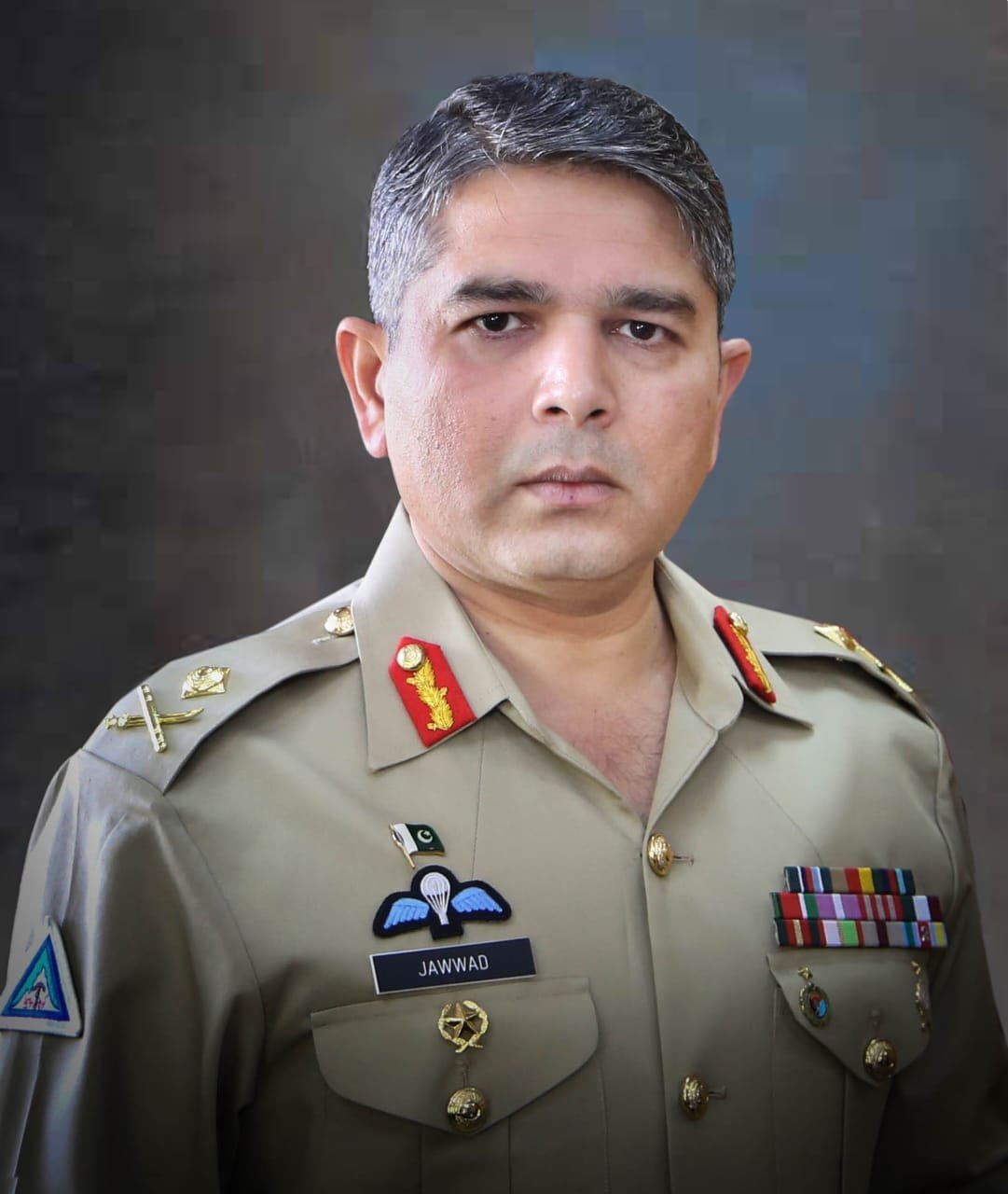
UN Secretary-General António Guterres has appointed Pakistan Army Major General Jawwad Ahmed Qazi as the new Force Commander of the United Nations Mission for the Referendum in Western Sahara (MINURSO).

Major General Qazi, who has been awarded with the Hilal-e-Imtiaz (Military), brings more than 35 years of military leadership, operational command and international peacekeeping experience to his new assignment. His appointment reflects Pakistan’s longstanding contribution to United Nations peacekeeping operations.

During his military career, Major General Qazi has held several senior command, staff and instructional positions in Pakistan and abroad. His previous appointments include serving as General Officer Commanding of an Infantry Division, Force Commander Northern Areas and Director General at the Ministry of Defence.

He has also gained direct experience in UN peacekeeping, having served with the United Nations Transitional Administration in Eastern Slavonia, Baranja and Western Sirmium (UNTAES) in Croatia earlier in his career.

Pakistan has welcomed the appointment, describing it as another significant contribution to international peace and stability. The country continues to support UN peacekeeping efforts by providing trained contingents and experienced military leaders for missions around the world.

Major General Qazi’s appointment further highlights Pakistan’s extensive experience and continued commitment to global peacekeeping and international security.
Similar Posts

  • | |

    PTI rally sparks clashes, gridlock in Karachi

    A protest organized by Pakistan Tehreek-e-Insaf (PTI) in Karachi turned violent on Tuesday after party workers gathered near Fountain Chowk to express solidarity with PTI founder Imran Khan, leading to clashes with police, multiple arrests, and widespread traffic disruption. Hundreds of PTI supporters assembled at the protest site, chanting slogans and demanding the release of the party’s founder. The situation escalated when some protesters allegedly pelted police with stones as law enforcement attempted to prevent the gathering from moving forward. Police responded by firing tear gas shells and launching a baton charge to disperse the crowd and regain control of the area. The confrontation created panic among protesters and passersby, while security personnel moved in to clear the protest site and restore order. During the crackdown, police detained several PTI leaders and workers, including PTI Sindh Secretary General Dr. Masroor Siyal. Authorities have yet to confirm the total number of arrests or provide details about any injuries sustained during the clashes. The demonstration also brought traffic in parts of Karachi to a standstill. Roads surrounding Governor House, Metropole, Shaheen Complex, and nearby commercial areas witnessed severe congestion as police blocked several routes and diverted traffic. Long queues of vehicles formed across the city center, leaving commuters stranded for hours and disrupting routine business activity. The protest formed part of PTI’s ongoing campaign to show support for its jailed founder, with party workers continuing to hold demonstrations in different parts of the country despite heightened security measures and police action.

  • |

    4.5-magnitude quake jolts Pakistan’s coast

      A 4.5-magnitude earthquake jolted Pakistan’s coastal region on Monday morning, with tremors recorded near Keti Bandar, according to the Pakistan Meteorological Department (PMD). The seismic activity occurred at around 8:31am, with the earthquake originating at a depth of approximately 40 kilometres beneath the surface. The PMD located the epicentre in the sea, around 156 kilometres southwest of Keti Bandar. The tremors were felt in parts of the coastal belt, prompting residents to remain alert. However, there were no immediate reports of casualties, injuries or significant damage to buildings and other infrastructure following the earthquake. The depth and offshore location of the earthquake likely reduced its impact on populated areas compared with a shallower quake occurring closer to land. Nevertheless, residents in coastal communities may have felt noticeable shaking depending on their distance from the epicentre. Seismic activity is not unusual in and around Pakistan’s coastal belt, which lies near tectonically active zones. Earthquakes in the region can occur beneath the Arabian Sea and along nearby fault systems. The meteorological department continues to monitor seismic activity and may issue further information if additional tremors or related developments are recorded. Authorities have also advised people to remain calm and follow official updates in the event of further seismic activity. No tsunami warning or major coastal emergency was reported in connection with the earthquake at the time of the initial report.

  • |

    Amber heat-health alert issued across England

    An Amber Heat-Health Alert has been issued across affected parts of England as hot weather continues, with the alert remaining in place until 9am on Friday, August 14. Health authorities are urging people to take precautions during the heat, particularly those who may be more vulnerable to high temperatures. People are advised to drink plenty of water, avoid the hottest part of the day where possible and take steps to keep cool. Authorities have also urged the public to check on family members, friends and neighbours who may struggle to cope with the heat. Those considered particularly vulnerable include older people, young children and babies, as well as people living with existing health conditions. The alert is intended to raise awareness of the potential health impacts of sustained high temperatures and encourage people to take preventative measures. People are advised to keep indoor spaces as cool as possible, stay out of direct sunlight during the hottest periods and seek medical advice if they become seriously unwell because of the heat. The Amber Heat-Health Alert will remain in force until 9am on Friday, August 14, unless conditions change earlier. Authorities are continuing to monitor the weather situation and are urging the public to take the heat seriously, particularly as temperatures remain elevated across parts of the country.

  • | |

    DIG East Dr. Farrukh: A model of public-friendly p…

    Karachi: While addressing ABAD — the Association of Builders and Developers of Pakistan — on Wednesday, Inspector General Sindh Mr. Javed Alam Odho once again reaffirmed the commitment to resolve the Mir Raza murder case on merit and without pressure. He admitted mistakes had been made by the police department, but reassured that all measures would be taken to correct them. He also claimed that the crime rate in Karachi had dropped by 14 percent. He also urged for reforms and need of more professional training in Medico-legal system of police. But all those numbers and all those assurances fall flat in the face of one unresolved case. The fact that a builders’ association felt compelled to raise the Mir Raza issue speaks volumes. It is not ABAD’s mandate, yet its leaders did it anyway — because the mistrust between citizens and Karachi Police has grown too deep to ignore. That mistrust exists not because of a lack of competent leadership at the top, but because subordinate SSPs failed to deliver where it mattered most. A Meeting That Set the Standard  I saw this gap first-hand in my initial meeting with DIG East, Dr. Farrukh Ali Lanjhar. He came across as accessible, direct, and willing to listen — the kind of officer who says, “call me when you need me.” When I requested time from DIG East Dr. Farrukh Lanjhar for an interview, I expected a formal reply or a future date. Instead, he politely asked me to walk into his office and join him for a cup of tea. I was pleasantly surprised by the cordiality. I walked in expecting bureaucracy. What I found was courtesy, and a senior officer who was ready to resolve the issue of a female journalist without making her feel like a petitioner. Does the Police Force Lack Role Models?  The meeting was also a wake-up call. At the ASP/SP level, many officers still treat citizens as subjects of a colony and themselves as masters, not servants. I often wonder what fuels this snobbery and arrogance. Is it clearing the CSS? But given our quota system and an exam that has been reduced to testing memory and English rather than intellect or judgment, that in itself is no great achievement. If it were, every government department would be running like a multinational — either making huge profit or excelling in service delivery. Is it the training we inherited from the British Raj, designed to produce a ruling elite? Or is it the culture of imitating seniors who remain inaccessible and aloof? Yet we do have exceptions. DIG East Dr. Farrukh Lanjhar, DIG Traffic Pir Mohammad Shah, DIG CTD Capt. (R) Azfar Mahesar, DIG RRF Usman Ghani Siddiqui, DIG Amir Farooqui, SSP Qamar Jiskani, SSP Saud Magsi, SSP Zeeshan Siddiqui, and above all IG Sindh Javed Alam Odho. Within the same flawed system that all of us are part of, they choose to serve as public servants. The impression they leave is exactly what I witnessed the other day. Can’t they be role models? Because the legacy you leave either lives on or haunts you. We still remember good officers long after they retire, like former ADIG Hyderabad Range, Dr. Jameel. AIG Ameer Sheikh will be spoken of in those terms. Ten years from now, who else will be remembered with the same respect? There were many who were pharaohs of their time, but no one now remembers them with respect after they leave office. A Glimpse of Reforms in East  During our discussion, Mr. Lanjhar also spoke about the reforms he has pushed in East Zone. He said more than 1,000 personnel have been pulled out of desk pools and deployed in the field where they are actually needed. To enforce accountability, he has introduced biometric attendance to eliminate ghost employees. The zone is also moving toward an advanced facial recognition system to ensure that no one can mark false attendance and every officer on the roster is truly on duty. The Mir Raza Murder Case  When asked to comment on the Mir Raza murder case, which falls under his jurisdiction, he responded softly: “A new committee has been constituted,” he said, “and I do not wish to comment before its findings are made public.” However, he assured that he would address all queries once the committee submits its report. As we wrapped up a meeting that ran longer than expected, Dr. Farrukh Lanjhar spoke openly — about the shortcomings of the media, about his personal experiences across different districts and roles, and about the reforms needed to make police more public-friendly. Especially Thana culture, which he called the main “interface” of the police force. Before I left, he said simply: “Don’t you worry, Madam. We will remain in touch. You can call me whenever and wherever needed to resolve your issue.” It left me thinking. Often, just listening with patience to the complaint of the aggrieved party can bring down the temperature of frustration and distrust toward police. That is exactly what was missing in the initial handling of the Mir Raza murder case. The first inquiry committee, in which SSP East Zubair Sheikh was allegedly accused of incompetence and of pushing a suicide theory (by the family), failed on that count. He did not take into account the point of view of the victim’s parents. Neither he nor SSP SIU Samiullah Soomro were able to convey to the grieving family that the police were with them, and that they would do everything to ensure they got the justice they deserved. It was that simple. Had SSP East, Zubair Sheikh, treated it with the same seriousness that DIG East showed toward my complaint — on a far smaller scale — perhaps IG Sindh, Javed Alam Odho would not have had to stand before the media and accept mistakes on behalf of his force. That is why we have a full hierarchy in place. If every SSP did his job, including answering the

  • | |

    BTS star V reveals two-year hearing loss struggle

    BTS member V, whose real name is Kim Tae-hyung, has revealed that he has been undergoing treatment for hearing loss in his right ear for more than two years. The 30-year-old singer shared the information during a livestream on Wednesday, telling fans that this was the first time he had publicly spoken about the condition. V explained that his hearing in the affected ear is significantly weaker than in his left ear. He said that if his hearing in the left ear is considered 100%, the level in his right ear is around 30%. The singer said the problem became more noticeable during his mandatory military service in South Korea. However, he initially did not consider the issue serious and believed he could overcome it through mental strength. V said he is now receiving medical treatment, taking medication and visiting hospital regularly to manage the condition. His revelation comes as BTS is undertaking its first major world tour since all seven members reunited following their mandatory military service. BTS members began taking breaks from their group activities in 2022 as they prepared to fulfil their military obligations. V enlisted in 2023 and completed his service in June 2025. The group’s Arirang World Tour began in South Korea in April and has marked a highly anticipated return of the full seven-member lineup. The latest livestream came after BTS completed its concerts in Baltimore, Maryland. During the livestream, V was joined by fellow BTS member Jungkook, who also spoke about an injury affecting his shin during the tour. Jungkook revealed that he was concerned about the injury developing into a stress fracture and said he would need to manage it carefully to continue performing throughout the tour. BTS is scheduled to travel to several major international destinations in the coming months, including Los Angeles, Buenos Aires, Bangkok, Sydney and Hong Kong.

  • | |

    Jenna Ortega reveals the hidden pressure she faced…

    Jenna Ortega is reflecting on an uncomfortable part of growing up in Hollywood, revealing that her determination to succeed sometimes led her to ignore basic needs while working on set. The Wednesday and Beetlejuice Beetlejuice actress recently spoke with Esquire about her childhood career and the pressure she placed on herself to avoid becoming a burden to anyone around her. Ortega began acting professionally as a child and said she was so grateful for every opportunity that she wanted to make sure she was always easy to work with. (EW.com⁠) Ortega wanted to stay out of the way Looking back at her early years, Ortega said she struggled to think of mistakes she had made as a young performer. She explained that she was extremely focused on maintaining her “game face” because she was excited to be working. That mindset came with an unexpected cost. Ortega recalled that she would avoid asking for things on set, including food and water, because she did not want to interrupt anyone or appear demanding. She explained that there were days when she would go without eating or drinking because she was determined not to be “in the way.” Ortega now sees that behavior differently, suggesting that failing to look after herself may have been the mistake she overlooked at the time. (EW.com⁠) The pressure of childhood stardom Ortega’s experience highlights a less visible side of being a young performer. Child actors can face long working days, unfamiliar environments and pressure to perform professionally despite still being children. For Ortega, the desire to prove herself appears to have been particularly strong. She had wanted to act from a young age after being inspired by Dakota Fanning’s performance in Man on Fire. Her mother eventually helped her pursue auditions, including long drives between their California home and Los Angeles. (Vanity Fair⁠) Her career eventually grew through projects including Jane the Virgin and Disney Channel’s Stuck in the Middle before she became a global star through Wednesday. Learning to care for herself Ortega’s comments show how her perspective has changed with age. What once felt like dedication now looks more like an example of how badly she wanted to avoid disappointing people. Her story also serves as a reminder that young performers should not have to sacrifice their basic needs to prove they deserve opportunities. Adults responsible for productions have an important role in making sure children are supported and cared for while working. Today, Ortega is in a very different position professionally. With major projects including Klara and the Sun and The Great Beyond ahead, she has the experience to approach her career with a greater understanding of her own boundaries and needs. (people.com⁠)i

Leave a Reply

Your email address will not be published. Required fields are marked *