
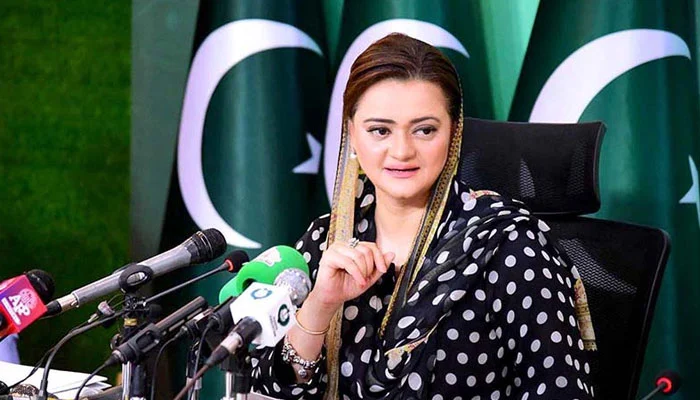
maryam aurangzeb rejects
| |

Maryam Aurangzeb rejects PPP’s rigging claim…


Pakistan Muslim League (Nawaz) (PML-N) leader and Senior Minister of Punjab, Maryam Aurangzeb, strongly rejected allegations of election rigging made by the Pakistan Peoples Party (PPP), questioning the credibility of such claims by pointing to the PPP’s own government in Azad Jammu and Kashmir (AJK).

Speaking to the media in Rawalpindi, Maryam Aurangzeb said that the PPP’s accusations of electoral fraud were baseless and contradictory. Referring to PPP leader Nayyar Bukhari’s remarks, she said it was unreasonable to claim widespread rigging on the basis of only two ballot papers when the election involved thousands of votes. According to her, isolated incidents cannot be used to undermine the credibility of an entire electoral process.

She further argued that since the Pakistan Peoples Party is in power in Azad Kashmir, its allegations of election manipulation effectively amount to accusing its own administration of wrongdoing. “If you insist that rigging took place in Azad Kashmir, then you are accusing your own government of conducting fraudulent elections,” she remarked. Aurangzeb added that the people of both Punjab and Azad Kashmir had exercised their democratic right and chosen not to vote for the PPP, and that the party should accept the public verdict instead of making unfounded allegations.

Maryam Aurangzeb also criticized the timing of the PPP’s accusations, noting that claims of rigging were being made as soon as polling began. She argued that elections are won through the support of voters, not through repeated allegations. “You do not win elections by making accusations; you win them by earning the trust and votes of the people,” she said.

Addressing another issue, Aurangzeb questioned attempts to politicize a recent death, stating that the deceased had not died from gunfire. She asked whether political opponents now intended to use even such incidents for political gain, criticizing what she described as the exploitation of sensitive matters for electoral purposes.

Turning her attention to governance, Aurangzeb said the Pakistan Peoples Party should focus on improving its performance in Sindh, where it has governed for years. She argued that better governance would provide meaningful relief to the people of the province. Drawing an analogy, she said that if a student fails to prepare for an examination, they cannot simply lock the examination hall. In the same way, she suggested that political parties cannot blame the electoral process when they fail to secure public support.

Aurangzeb maintained that the Pakistan Muslim League (N) had earned the confidence of the electorate through its performance and public service. She expressed surprise that the PPP was repeatedly raising issues related to gunfire and election rigging, saying such rhetoric reflected an unwillingness to accept the democratic outcome.

She also referred to a speech delivered by PPP Chairman Bilawal Bhutto Zardari the previous day, questioning the tone and substance of his remarks. According to Aurangzeb, the PPP should respect the will of the voters rather than challenging the legitimacy of the election without sufficient evidence.

Concluding her remarks, Maryam Aurangzeb emphasized that Pakistan’s electoral system provides legal mechanisms for addressing disputes. She said that if the PPP genuinely believes irregularities occurred, it should present its evidence before the Election Commission or the relevant election tribunals. Instead of complaining publicly, she urged the party to pursue the appropriate legal channels. She concluded by saying that the PPP’s own voters had rejected its narrative and that the party should contest elections through democratic means while respecting the mandate given by the people.

Similar Posts

  • | |

    Pakistan rejects Imran Khan’s sons’ allegation…

    The Government of Pakistan has categorically rejected allegations by the sons of former Prime Minister Imran Khan that he has been kept under a seven-month communications blackout and denied access to his family, lawyers and doctors, terming the claims “unsubstantiated” and contrary to official prison records. In a detailed response, the government said documented records showed that Imran Khan had continued to receive visitors, legal access and medical care during his imprisonment, rejecting what it described as an attempt to create an international controversy without evidence. According to the government, since the beginning of his conviction, prison records show 198 meetings involving more than 900 visitors, including family members, legal representatives and political associates. It said Khan was also allowed a weekly meeting with his wife, with the latest meeting taking place on 4 August 2026, the same day his sons made allegations of a communications blackout during an appearance on CNN. The government said prison authorities maintain records of approved visits and communications, including WhatsApp and landline calls with family members in Pakistan and abroad. It added that Khan’s last call with his son was recorded on 21 March 2026. The statement said any temporary restrictions were imposed under Pakistan Prison Rules, court orders and security requirements applicable to high-profile prisoners, particularly due to political activities outside the prison. “There is no prohibition on access; it is regulated under the law,” the government said, adding that prison meetings cannot be used as unrestricted political communication channels. Rejecting claims regarding medical treatment, the government said Imran Khan had received regular medical examinations by specialist teams and medical boards from institutions including the Pakistan Institute of Medical Sciences (PIMS), Shifa International Hospital, Shaukat Khanum Memorial Hospital and Al-Shifa Trust Eye Hospital. The government said Khan underwent treatment for a retinal condition, including five intravitreal anti-VEGF injections, specialist examinations and retinal imaging. It added that his latest specialist assessment was carried out in July 2026, with further medication and follow-up care prescribed. According to the official statement, medical records describe Khan as “oriented and stable”, with no reported acute or unmanaged deterioration. The government said disclosure of medical reports remained subject to legal procedures, patient confidentiality and ongoing proceedings before the Supreme Court of Pakistan. Addressing the issue of Khan’s sons’ travel to Pakistan, the government said the matter involved separate processes relating to NICOP and visa requirements. It stated that overseas Pakistanis holding a valid NICOP are eligible for visa-free entry and rejected what it called an attempt to present an administrative matter as political victimisation. The statement also detailed the facilities provided to Imran Khan in prison, saying he was being kept in a separate compound with accommodation and amenities exceeding minimum requirements for prisoners in the same category. The government maintained that Imran Khan was being treated according to constitutional guarantees, prison laws and court directives, while insisting that no individual was entitled to a separate legal framework or exemption from security regulations.

  • | |

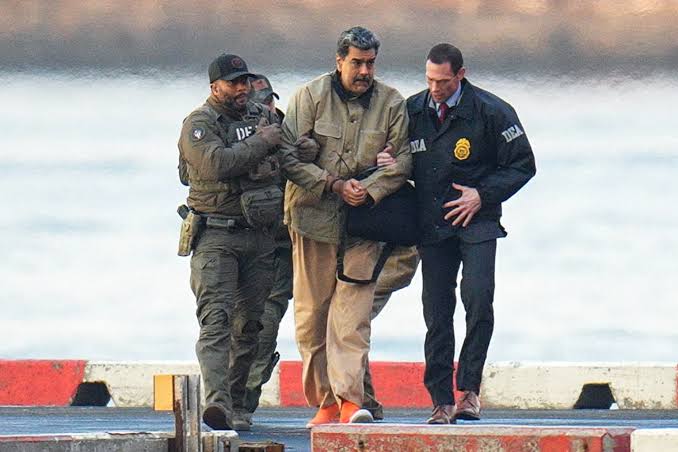
    Maduro set for new US court hearing in trafficking…

    Venezuela’s ousted President Nicolas Maduro and his wife Cilia Flores are scheduled to appear back in a US courtroom Wednesday for a hearing focused on the upcoming schedule in their drug trafficking case, including discussion of a possible trial start date in June 2027. The hearing before US District Judge Alvin Hellerstein is set to begin at noon Eastern time in Manhattan federal court and could offer insight into the next steps in what has become one of the most high profile and consequential criminal cases in recent US history. Lawyers for both sides indicated in a filing that Maduro’s first round of legal motions seeking to have the case dismissed would come due on September 2. Those motions are expected to include an argument that Maduro should be immune from prosecution based on his position as head of a sovereign state. During Maduro’s first court appearance on January 5, his defense attorney Barry Pollack suggested the defense could also challenge the indictment by arguing that Maduro’s capture may not have been carried out legally. Maduro, a socialist leader who maintained an antagonistic relationship with Washington throughout his time leading Venezuela from 2013 until his capture, referred to himself as a prisoner of war during that January appearance. He has long accused the United States of seeking to remove him from power in order to gain greater influence over Venezuela’s substantial oil reserves. The United States describes Maduro as a corrupt dictator whose economic mismanagement led to Venezuela’s economic collapse, and accuses him of rigging reelection victories in 2018 and 2024. Washington stopped recognizing him as Venezuela’s legitimate president in 2019. Ahead of the January operation that led to his capture, the Justice Department’s Office of Legal Counsel issued an advisory opinion stating that it would be lawful for Trump to authorize the operation unilaterally, arguing it served an important national interest without rising to the level of a war requiring congressional approval. According to Tuesday’s filing, lawyers for both sides said Maduro could submit a second round of legal motions by January 11, 2027, following the prosecution’s handover of any classified evidence for defense review. Maduro last appeared in court on March 26 for a hearing concerning a US government restriction that barred Venezuela’s government from covering his legal fees. That dispute was resolved about a month later, when Washington agreed to adjust its financial sanctions on Venezuela to permit the government to pay those fees. Venezuela has been governed since Maduro’s capture by his former vice president, Delcy Rodriguez, who has cultivated closer ties with the Trump administration. Washington has eased sanctions on Venezuela’s oil sector, and foreign companies have expanded oil and gas operations within the country. The US military has also provided relief assistance following two earthquakes that struck Venezuela’s coast last month, killing more than 5,000 people. The case continues to unfold against the backdrop of a broader thaw in relations between Washington and Caracas under Rodriguez’s leadership, even as Maduro’s legal team prepares to mount a defense built partly around questions of sovereign immunity and the legality of the operation that led to his capture.

  • | |

    SC rejects Zahir Jaffer’s plea in Noor Mukadam c…

    ISLAMABAD: The Supreme Court has rejected a review petition filed by Zahir Jaffer challenging his death sentence in the Noor Mukadam murder case, ruling that the severity of the crime did not justify any reduction in punishment. In its detailed 12-page judgment, authored by Justice Ishtiaq Ibrahim, the apex court said Jaffer had sought to have his death sentence commuted to life imprisonment on the basis of alleged mental illness. However, the court found that he had failed to provide evidence sufficient to support his claim or warrant reconsideration of the earlier verdict. The judgment stressed that the material on record established the exceptionally serious nature of the offence. It held that the circumstances of the crime provided no basis for reducing the sentence imposed on the convict. The court also clarified that its powers in a review petition are narrowly defined and that such proceedings cannot be used as a substitute for an appeal against an earlier judgment. The Supreme Court further observed that violence against women and the creation of an atmosphere of fear and insecurity are incompatible with both Islamic principles and established legal norms. It emphasised that Islam guarantees women dignity, protection and respect. Moreover, The Supreme Court has issued its detailed written judgment dismissing the review petition filed by convicted murderer Zahir Jaffer against his death sentence in the Noor Mukadam murder case. The 12-page judgment was authored by Justice Ishtiaq Ibrahim. According to the written judgment, Zahir Jaffer had requested the court to reconsider his death sentence and convert it into life imprisonment on the grounds that he was suffering from a mental illness. However, the Supreme Court observed that the convict had failed to present any evidence that could justify reconsideration of the court’s earlier decision. The judgment stated that the available record clearly established that Zahir Jaffer had committed an extremely serious crime. The court noted that the nature and circumstances of the offence did not warrant any reduction in the punishment awarded to him. The Supreme Court further explained that its jurisdiction in a review petition is extremely limited. A review application cannot be treated as an appeal, nor can the petitioner use the review process simply to seek a fresh examination of the entire case. The written judgment also highlighted the protection and respect afforded to women under Islam. The court observed that subjecting women to violence, abuse and insecurity is contrary to both Islamic principles and the laws of the state. The Supreme Court’s decision means that the death sentence awarded to Zahir Jaffer remains intact. The trial court had previously sentenced him to death for the rape and murder of Noor Mukadam. The Islamabad High Court subsequently upheld the death sentence, and the Supreme Court also maintained the punishment before rejecting his review petition.

  • |

    Trump link to Balogun decision triggers FIFA backlash

    ZURICH: A fresh controversy has erupted around the 2026 FIFA World Cup after Norway’s Football Federation announced it is considering filing a formal complaint with FIFA’s Ethics Committee over the governing body’s decision to reverse the automatic suspension of United States forward Folarin Balogun. The dispute centers on FIFA’s decision to suspend Balogun’s one-match ban for 12 months, allowing him to feature in the United States’ Round of 16 clash against Belgium despite receiving a straight red card in an earlier match against Bosnia and Herzegovina. Under FIFA regulations, the dismissal would normally have ruled the striker out of the knockout fixture. However, the suspension was put on hold, a move that has drawn criticism from several football associations and intensified debate over the integrity of disciplinary procedures. According to international media reports, the decision followed reported intervention by US President Donald Trump, a claim that has fueled accusations of political influence in football governance. Although Balogun was cleared to play, the decision ultimately had little impact on the result, with Belgium defeating the United States 4-1 to advance to the quarter-finals. Norwegian Football Federation President Lise Klaveness said the organization is now examining whether to expand an existing ethics complaint against FIFA by including the Balogun case. Klaveness indicated that the issue could be linked with an earlier complaint concerning FIFA’s decision to award Trump a symbolic “Peace Prize,” arguing that both matters raise broader questions about governance, transparency and independence within world football. The controversy has also attracted criticism from Belgium’s Football Federation and European football governing body UEFA, both of which reportedly expressed serious reservations over FIFA’s handling of the disciplinary process. Belgium had sought clarification regarding the decision to allow Balogun to participate, but FIFA reportedly dismissed the request as inadmissible, further adding to frustration among European football officials. The latest dispute has reignited debate over whether external political influence should have any role in decisions affecting international competitions. While FIFA has not publicly addressed the allegations of political pressure, the governing body maintains that its disciplinary and appeals processes operate under established legal frameworks. The controversy comes at a sensitive time for FIFA following the conclusion of the expanded 2026 World Cup, with calls growing for greater transparency in disciplinary decisions involving players and national teams. If Norway proceeds with its complaint, FIFA’s Ethics Committee could face renewed scrutiny over its governance standards and decision-making process, potentially prolonging one of the tournament’s most talked-about off-field controversies.

  • | | | |

    US strikes Iran for 13th night as Trump escalates threats

    The United States carried out fresh air strikes on Iran for the 13th consecutive night, further intensifying the military confrontation between the two countries. The latest attacks came as US President Donald Trump warned that Washington is prepared to launch even larger military operations if Iran continues targeting American interests and regional allies. According to the US military, the strikes targeted facilities linked to Iran’s Islamic Revolutionary Guard Corps (IRGC). Officials said the operation was intended to reduce Iran’s military capabilities and protect commercial shipping routes and US forces operating in the Middle East. Reports from Iran said explosions were heard in several parts of the country. Blasts were reported on Qeshm Island as well as in Khuzestan province. Missile strikes were also reported in the cities of Andimeshk and Omidiyeh. In the southern port city of Bandar Abbas, local media reported that attacks on a residential neighbourhood injured at least two civilians. Speaking earlier, President Trump said he was considering the largest military operation against Iran since the conflict began. He stated that preparations were complete and that a final decision could be taken soon if Iran continued its attacks on US allies and military assets in the region. The latest American strikes followed another round of Iranian missile and drone attacks on Bahrain, Kuwait and Jordan. Iranian military officials said the attacks targeted US military facilities stationed in those countries. Tehran described the strikes as retaliation for continued US attacks on Iranian territory and infrastructure. Iran also claimed responsibility for striking a telecommunications tower in Kuwait. Iranian officials said the attack was carried out in response to previous US strikes on communication facilities inside Iran. Kuwaiti authorities later confirmed that hostile drones also targeted the Abdali border crossing with Iraq, raising security concerns along the frontier. Iranian Foreign Minister Abbas Araghchi warned that the country would continue responding to every attack under an “eye for an eye” policy. Military officials said Iran’s retaliatory operations would continue for as long as American forces targeted Iranian infrastructure and coastal areas. The conflict has now spread beyond Iran and the United States, increasing fears of a wider regional war. Yemen’s Houthi movement claimed responsibility for attacks on two Saudi oil tankers in the Red Sea. The group warned that additional energy infrastructure could also become a target if the conflict continues. The growing violence has disrupted security across key maritime routes, including the Strait of Hormuz and the Bab al-Mandeb Strait, both of which are among the world’s most important oil shipping corridors. Continued attacks have increased risks to commercial shipping and raised concerns over global energy supplies. The worsening conflict has also pushed international oil prices above $100 per barrel, reflecting fears of prolonged supply disruptions. Analysts warned that further escalation could place additional pressure on the global economy by increasing fuel prices, disrupting trade and creating greater uncertainty in international energy markets.

  • |

    South Africa proposes stricter protocols for former leaders following Jacob Zuma’s controversial India visit

    South Africa’s Department of International Relations and Cooperation has submitted formal recommendations to parliament to establish stricter rules and greater transparency regarding foreign travel undertaken by former heads of state. The legislative push follows intense backlash over a recent visit to India by former President Jacob Zuma, during which the 84-year-old politician was photographed at a temple alongside fugitive businessman Ajay Gupta. The Gupta family remains central to South Africa’s massive “state capture” corruption scandal, which involved allegations of systemic political influence and state asset siphonage that ultimately contributed to Zuma’s resignation in 2018. The incident sparked severe political friction, leading South Africa’s High Commissioner to India, Anil Sooklal, to be recalled after he was also pictured alongside Zuma and Gupta. Foreign Affairs Minister Ronald Lamola confirmed that the proposed protocols would require former presidents to disclose complete details regarding international itineraries prior to departure. The advance documentation would allow government agencies to evaluate security requirements alongside potential diplomatic, political, and reputational risks to the nation. The controversy marks the latest diplomatic dispute involving the former president, who now leads the opposition uMkhonto we Sizwe (MK) party following his expulsion from the ruling African National Congress (ANC). Last year, the South African government issued a formal diplomatic protest to Morocco after Zuma engaged in talks supporting Moroccan sovereignty over the disputed Western Sahara region, directly contradicting official South African foreign policy.

Leave a Reply

Your email address will not be published. Required fields are marked *