36931 students await

36,931 students await degree attestation, Senate questions HEC

Islamabad – Thousands of students facing uncertainty over their degrees came under discussion in the Senate as lawmakers questioned the Higher Education Commission (HEC) over delays in verification and attestation of degrees from three private educational institutions.

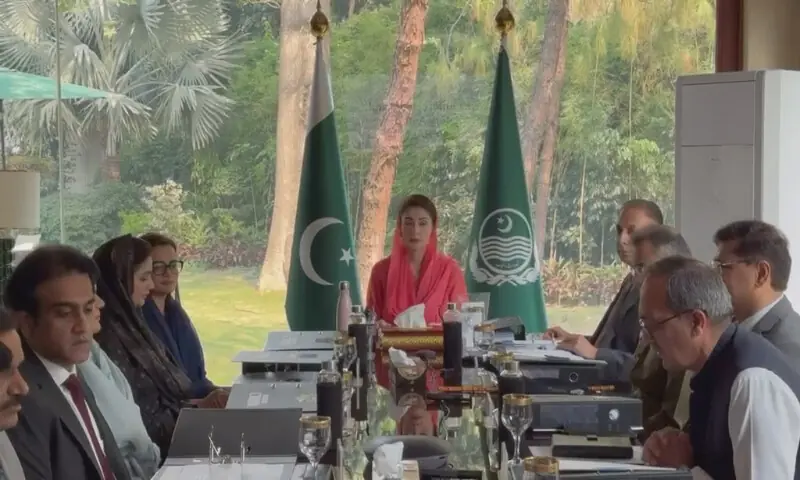
The Senate Standing Committee on Federal Education and Professional Training, chaired by Senator Bushra Anjum Butt, reviewed the progress of degree attestation cases involving the University of South Asia (USA) Lahore, Newport Institute of Communication and Economics (NICE) Karachi and PIMSET campuses in Karachi and Lahore.

The committee was informed that around 36,931 students from these institutions were affected due to issues related to degree recognition and attestation.

According to details presented before the committee, 6,556 students belonged to the University of South Asia Lahore, 5,445 students belonged to NICE Karachi, while 24,930 students were linked with PIMSET campuses in Karachi and Lahore.

During the meeting, the committee asked HEC officials to provide clear updates on the progress made and how many students had actually received degree attestation. The Chairperson questioned the “breakthrough” progress earlier mentioned by HEC officials and sought factual details instead of general statements.

Regarding the University of South Asia Lahore, HEC informed the committee that an external expert committee was formed to review the campus situation. Officials said they divided the students into different categories after evaluation.

HEC informed the committee that Category A and Category B students had been cleared, covering 4,383 students out of the total 6,556 affected students at the university. Officials explained that the overall record had been approved, but individual students still needed to apply for degree attestation.

HEC estimated that the individual attestation process could take around two to three weeks after applications were submitted. However, questions arose regarding HEC’s online attestation system. Senator Masroor Ahsan questioned HEC officials about claims that the attestation process had already become fully online.

He asked how many students from the affected institutions had actually received online processing during the previous month. During the discussion, HEC officials initially could not provide specific figures related to these particular institutions.

The senator pointed out that officials had earlier stated that the online system was operational, but later said students would start applying in the coming week. He demanded written data showing the exact number of degrees processed through the online system for students from USA Lahore, NICE and PIMSET.

HEC officials later informed the committee that around 15,000 degrees in total had been processed through the online system, but lawmakers insisted that separate figures for the affected institutions were necessary. The meeting also included complaints from students who attended the session.

A student from NICE informed the committee that although his case was supposed to be resolved, his complaint on the Pakistan Citizen Portal had remained marked as “In Progress” since June 17. The student said he had not received his verification letter or No Objection Certificate.

HEC officials advised him to apply through the on spot online attestation process. The Chairperson directed the student to visit the HEC office after the meeting, accompanied by the concerned official so that the matter could be resolved quickly.

Another student complained that despite having completed multiple attestations, the HEC portal was not showing the online ticket or verification status. The Chairperson acknowledged that the new online system was facing initial technical problems but directed HEC officials to immediately assist affected students and resolve portal related issues.

The committee directed HEC to stop providing unclear figures and submit complete factual data regarding the number of degrees successfully attested through the online system for USA Lahore, NICE and PIMSET. The Chairperson also directed authorities to provide a detailed progress report on NICE and PIMSET within 15 days, similar to the report prepared for the University of South Asia Lahore.

During further discussion, concerns were also raised regarding the infrastructure of some private campuses. The Chairperson noted that some campuses were operating in residential areas or lacked proper facilities such as laboratories and playgrounds despite charging high fees.

The committee directed that registration criteria for such institutions should be reviewed to ensure students receive quality education and proper facilities. The committee stressed that students should not suffer due to administrative issues and directed relevant authorities to ensure timely resolution of all pending degree verification cases.

Similar Posts

  • | |

    Petrol price cut in Pakistan, diesel gets more exp…

    The government has announced a slight reduction in the price of petrol while increasing the price of high-speed diesel in Pakistan. The new petroleum prices will take effect from August 12, 2026, according to an official notification. Under the latest revision, the price of petrol has been reduced by Rs1.70 per litre. Following the decrease, the new petrol price has been set at Rs325.92 per litre. At the same time, consumers using diesel will face a price increase. The government has raised the price of diesel by Rs1.39 per litre, taking the new rate to Rs382.25 per litre. The notification was issued by the Ministry of Energy following the latest price recommendations under the petroleum pricing mechanism. The Oil and Gas Regulatory Authority (OGRA) determines petroleum price calculations under the mechanism established by the federal government. The latest adjustment means petrol consumers will receive a modest reduction, while diesel users will have to pay more from August 12. Before the latest revision, petrol was priced at Rs327.62 per litre, while diesel was available at Rs380.86 per litre. The new rates therefore represent a Rs1.70 reduction in petrol and a Rs1.39 increase in diesel. New petrol and diesel prices in Pakistan According to the notification, the revised rates are: Petrol: Rs325.92 per litre, down Rs1.70 Diesel: Rs382.25 per litre, up Rs1.39 The revised prices will apply from August 12, 2026, under the government’s petroleum pricing mechanism. Petroleum prices remain closely watched in Pakistan because changes in fuel costs can affect transportation expenses and the prices of goods and services. Diesel prices are particularly important for commercial transport, agriculture and other sectors that depend heavily on diesel-powered machinery and vehicles. The latest decision comes as consumers continue to monitor fuel prices amid changing international oil market conditions and domestic pricing adjustments. For motorists, the petrol reduction provides limited relief at fuel stations, while the diesel increase could add to operating costs for transporters and businesses. The government’s latest notification has therefore resulted in a mixed adjustment for consumers, with petrol becoming slightly cheaper and diesel becoming more expensive. The new Pakistan petrol price of Rs325.92 per litre and diesel price of Rs382.25 per litre will remain applicable from August 12, subject to any subsequent government revision under the petroleum pricing mechanism.

  • | | |

    Asim Munir, Norway FM push regional security coope…

    A high-level Norwegian delegation led by Foreign Minister Espen Barth Eide met Pakistan’s Chief of Army Staff and Chief of Defence Forces, Field Marshal Syed Asim Munir, at General Headquarters (GHQ) in Rawalpindi on Thursday. According to the Inter-Services Public Relations (ISPR), the meeting focused on matters of mutual interest, regional security and Pakistan-Norway bilateral relations. During the meeting, Field Marshal Asim Munir presented Pakistan’s perspective on global peace and regional stability. He stressed the need for greater cooperation and joint efforts to address emerging security challenges. The two sides also discussed the evolving security environment in the region and the importance of strengthening coordination between Pakistan and Norway. The Norwegian foreign minister acknowledged the role of the Pakistan Armed Forces in contributing to regional peace and stability. Both sides expressed their commitment to further strengthening bilateral relations and expanding cooperation, particularly in the fields of defence and security. The meeting comes as Pakistan continues to engage with international partners on regional security, peace and broader strategic issues. The discussions with the Norwegian delegation provided an opportunity for both countries to explore avenues for deeper institutional and defence-related engagement. The two sides reaffirmed their resolve to maintain regular engagement and enhance cooperation in areas of mutual interest.

  • | |

    Rs19,000 billion federal spending sparks Senate de…

    Islamabad: A Senate committee has raised serious questions over the functioning of the Council of Common Interests (CCI), warning that constitutional powers given to provinces after the 18th Amendment are being weakened through the revival of federal ministries on devolved subjects. The Senate Standing Committee on Devolution expressed concern that ministries related to education, health, agriculture, food security, climate change and other provincial matters were recreated at the federal level despite their transfer to provinces under the constitutional process. The committee questioned why federal institutions were continuing to handle matters that were supposed to belong to provinces after the 18th Constitutional Amendment, calling for a review of the entire system. The meeting was held at Parliament House, Islamabad, where Senator Zamir Hussain Ghumro presided over the session. Senators Poonjo Bheel and Jan Muhammad Buledi also attended the meeting. Senator Ghumro said that under the 18th Amendment, a detailed process was completed in 2010 and 2011 to transfer powers from the federal government to provinces. He explained that notifications issued on December 2, 2010, April 15, 2011, and June 29, 2011 resulted in the devolution of 17 ministries dealing with subjects that were shifted to provincial control. According to Senator Ghumro, the recreation of ministries after June 30, 2011, on subjects already transferred to provinces was against the spirit of the Constitution. He specifically pointed towards areas including education, health, national food security, culture, climate change, housing, social initiatives, EOBI, Evacuee Trust matters and Zakat and Ushr related functions. The senator argued that creating federal structures for provincial subjects has increased government expenses at a time when Pakistan is facing financial pressure. He claimed that federal government expenditure has increased to around Rs19,000 billion, while the country’s total tax and non tax revenue stands near Rs20,000 billion. Senator Ghumro said that apart from defence requirements due to security challenges, other federal ministries should have limited budgets according to constitutional responsibilities. He suggested that reducing unnecessary federal administrative structures could save around Rs5,000 to Rs6,000 billion and help reduce dependence on foreign loans. The committee also raised concerns about the ineffective role of the Council of Common Interests, a constitutional body responsible for resolving issues between the federation and provinces. Senator Ghumro said the CCI’s permanent secretariat was not functioning effectively and stressed that the institution must be strengthened to protect provincial rights. The committee decided to form a subcommittee to examine alleged violations related to the implementation of the 18th Amendment, including the revival of ministries and the role of the CCI. Senator Poonjo Bheel said that ministries created on devolved subjects should be abolished because the matter had already been settled through the constitutional process. Senator Jan Muhammad Buledi said the subcommittee should not only review the recreated ministries but also examine why the CCI had become ineffective despite having an important constitutional role. The committee also directed the Establishment Division to avoid making appointments in departments dealing with devolved subjects and ensure that provincial representation is protected in government appointments and promotions. Officials were asked to provide details of appointments in different grades within two weeks and submit a compliance report within 15 days. It emphasized that the federal government should support provinces rather than reduce their constitutional benefits. The committee also reviewed the issue of the Rs46 billion allocation for Quaid-e-Azam’s Mausoleum, which was not released last year and was reportedly transferred to another ministry. The committee directed authorities to provide monthly progress reports regarding the development and maintenance of Mazar-e-Quaid. The committee further sought details about the tenure of federal secretaries and directed the Establishment Division to submit complete records.

  • | |

    JCP recommends 13 judges for Lahore, Balochistan H…

    ISLAMABAD: The Judicial Commission of Pakistan (JCP), headed by Chief Justice of Pakistan, has recommended the appointment and confirmation of 13 judges for the Lahore High Court (LHC) and the Balochistan High Court (BHC), marking a significant step toward addressing judicial vacancies and strengthening the country’s higher judiciary. The recommendations were made during separate meetings of the Commission held at the Supreme Court building in Islamabad under Article 175A(2) of the Constitution. Alongside judicial appointments, the Commission also reviewed proposed amendments to the Judicial Commission of Pakistan (Appointment of Judges) Rules, 2024. According to an official statement, the Commission decided that the proposed amendments to the appointment rules would be circulated among all remaining members of the Commission, including representatives of the Federal Shariat Court and the country’s high courts, for further consideration before final approval. For the Lahore High Court, the Commission, by a majority vote of its members, recommended the confirmation of Justice Tariq Mahmood Bajwa, who has been serving as an additional judge, as a permanent judge of the court. The JCP also approved the appointment of 10 additional judges for the Lahore High Court. The nominees include Amir Ajam Malik, Asad Ali Bajwa, Barrister Muhammad Usman Ghani Rashid Cheema, Ghulam Sarwar Nihang, Khalid Ibn-i-Aziz, Muhammad Ajmal Khan Zahid, Muhammad Amjad Pervaiz, Munawar Iqbal Duggal, Shireen Imran, and Syed Farhad Ali. All are senior advocates of the Supreme Court with extensive legal experience. For the Balochistan High Court, the Commission recommended the appointment of three additional judges against five vacant positions. The nominees are District and Sessions Judge Allah Dad Roshan, Senior Advocate Muhammad Rauf Atta, and District and Sessions Judge Abdul Qayyum Lehri. The Commission decided not to fill the remaining two vacancies at this stage, leaving the positions open for future consideration. The recommendations will now move through the constitutional appointment process before the judges formally assume office. Legal experts say the appointments are expected to help reduce the growing backlog of cases, improve judicial efficiency and strengthen the administration of justice in both Punjab and Balochistan. The JCP’s latest decisions come at a time when Pakistan’s judiciary continues efforts to enhance institutional capacity through timely appointments and procedural reforms. The proposed amendments to the Judicial Commission Rules are also expected to shape future judicial appointments by introducing greater clarity and consistency to the selection process.

  • |

    Pakistan names first lunar rover “Jinnah-1”

    Islamabad: The Space and Upper Atmosphere Research Commission (SUPARCO) has officially announced the name of Pakistan’s first lunar rover. According to SUPARCO, Pakistan’s first lunar rover has been named “Jinnah-1.” The name was selected from suggestions submitted through a nationwide competition. More than 4,000 proposals were received from across the country. SUPARCO stated that seven participants had suggested the name “Jinnah-1.” The winner was selected through a lucky draw and 17-year-old Tayyab Karim from Bahawalnagar was declared the winner for proposing the name. Tribute to Quaid-e-Azam The Chairman of SUPARCO said that “Jinnah-1” is a tribute to Quaid-e-Azam Muhammad Ali Jinnah. He added that the name represents Pakistan’s determination, progress and pursuit of new frontiers in space exploration. It is worth mentioning that Pakistan’s first lunar rover is scheduled to be sent to the Moon in 2029 as part of China’s Chang’e-8 mission. The Jinnah-1 rover will conduct scientific research on the Moon’s south pole.

  • | |

    UAE resumes visit visas for Pakistanis

    The United Arab Emirates (UAE) has resumed issuing visit visas to Pakistani citizens applying through registered travel agents, ending months of uncertainty for travelers and offering fresh hope to families, tourists and business visitors. The move has been confirmed by travel industry representatives and a UAE Embassy official, who said visit visas for holders of ordinary Pakistani passports are once again being processed through authorized travel agencies. The resumption comes after months of delays, stricter scrutiny and a higher rejection rate that had created difficulties for thousands of Pakistani applicants. Although UAE authorities repeatedly maintained that no blanket ban had been imposed on Pakistani nationals, many travelers experienced lengthy processing times and uncertainty over visa approvals. Travel experts say the biggest improvement has been seen in family applications. Pakistani citizens traveling with family members or visiting relatives in the UAE are reportedly receiving faster responses than before, reflecting a more streamlined processing system. Officials from the travel industry also noted that tourism-related bookings have started to recover as confidence returns. Passenger traffic between Pakistan and Dubai, which had dropped significantly during recent regional tensions and stricter visa checks, has begun to increase in recent weeks, although it remains below previous peak levels. Applicants seeking a UAE visit visa are advised to apply only through registered travel agents and ensure all required documents are complete. A valid passport, recent photographs, proof of accommodation or an invitation from a host, return travel arrangements and evidence of sufficient financial resources are among the documents generally required for processing. Industry representatives believe applicants with complete and genuine documentation are more likely to receive approvals, while family applications currently appear to have stronger prospects.

Leave a Reply

Your email address will not be published. Required fields are marked *