barrister saif calls
| |

Barrister Saif calls for new provinces, governance…

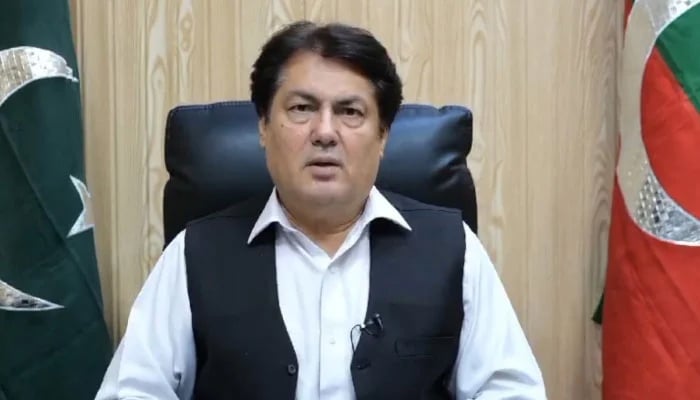
PESHAWAR: Former Khyber Pakhtunkhwa Information Adviser Barrister Muhammad Ali Saif has called for the creation of additional administrative provinces, saying Pakistan needs major structural reforms to improve governance and public service delivery.

In a statement issued on Sunday, Saif said the proposal to establish new provinces should be taken seriously, arguing that the existing administrative framework is no longer capable of addressing the growing needs of the population efficiently.

He said discussions alone would not bring meaningful change and urged the federal government to move beyond proposals by initiating practical measures for administrative restructuring. According to him, governance can only improve if reforms are implemented instead of remaining limited to public debate.

Saif maintained that decision-making authority is concentrated within a small section of the bureaucracy, which limits administrative efficiency and delays the resolution of public issues. He stressed that a more balanced distribution of powers would strengthen governance and improve accountability.

He said Pakistan requires comprehensive administrative reforms that would transfer greater authority to lower levels of government. Establishing new provinces, he added, would bring the government closer to the people, improve access to public services and ensure faster responses to local challenges.

The former adviser also highlighted the importance of an effective local government system, saying empowered local bodies are essential for addressing citizens’ problems at the grassroots level. He argued that decentralisation and stronger local institutions would enhance transparency, improve service delivery and promote sustainable development across the country.

Similar Posts

  • |

    ‘Can’t wait to watch Abdullah Shafique in England’, says Ian Bishop

    Former West Indies fast bowler and renowned cricket commentator Ian Bishop believes Pakistan opener Abdullah Shafique has the temperament and technique to succeed in English conditions, saying he is eager to watch the young batter during the upcoming Test series against England. Shafique has emerged as one of Pakistan’s most dependable red-ball batters following his remarkable performances against the West Indies, and Bishop feels the 26-year-old has all the qualities needed to handle one of cricket’s toughest challenges. Speaking about the Pakistani opener, Bishop described Shafique as a calm and composed batter who remains patient even in difficult situations. “Abdullah Shafique is a composed batter who knows how to build an innings under pressure,” Bishop said, adding that such qualities are crucial for success in England, where swinging conditions and disciplined bowling regularly test even the world’s best players. The former West Indies pacer acknowledged that English pitches present a unique challenge but noted that Shafique already has valuable experience after representing Yorkshire in county cricket. Although that exposure will help him adapt more quickly, Bishop stressed that delivering consistently in England remains a demanding task for any international batter. Shafique’s confidence has soared after his outstanding performance in the recently concluded Test series against the West Indies. Drafted into Pakistan’s squad after Shan Masood suffered an injury, the right-handed opener seized the opportunity in spectacular fashion. He remained unbeaten on 160, producing one of the finest innings of his career and becoming the first Pakistani batter in 49 years to score 150 or more runs in a Test innings in the West Indies. The memorable knock not only strengthened Pakistan’s batting lineup but also reinforced Shafique’s reputation as one of the country’s brightest Test prospects. With Pakistan set to face England in a highly anticipated Test series, fans and cricket experts alike will be watching closely to see whether Abdullah Shafique can carry his superb form into English conditions and establish himself among the world’s elite opening batters.

  • | |

    Court rejects Gohar’s FIR plea against PM

    A district and sessions court in Islamabad has dismissed a petition filed by Pakistan Tehreek-e-Insaf (PTI) Chairman Barrister Gohar Ali Khan, who had sought the registration of a criminal case against Prime Minister Shehbaz Sharif, Interior Minister Mohsin Naqvi, and several other senior government officials over the events of the November 26 protest. The court issued a detailed 17-page written judgment, outlining the reasons for rejecting the application. The verdict was authored by Additional Sessions Judge Afzal Majoka, who concluded that the petitioner had failed to provide sufficient evidence to justify the registration of a first information report (FIR). According to the judgment, Barrister Gohar was given multiple opportunities to appear before the court and record his statement as an eyewitness. However, the court noted that he did not record his testimony despite repeated chances. The ruling further stated that the petitioner neither presented eyewitnesses nor submitted legally admissible evidence in support of his allegations. The court observed that the application relied mainly on claims without providing documentary or forensic material required to initiate criminal proceedings. The petition alleged that 12 people lost their lives and more than 38 PTI supporters were injured during the November 26 protest. However, the court noted that no post-mortem reports, death certificates, medical records, digital videos, photographs or other primary evidence were produced to verify the claims. The judgment emphasized that criminal action cannot be initiated against senior public officeholders solely on the basis of verbal allegations. It said there must be credible and legally admissible evidence before the court can direct the registration of an FIR against high-ranking officials. Among those named in the petition were Prime Minister Shehbaz Sharif, Interior Minister Mohsin Naqvi, Information Minister Atta Tarar, Defence Minister Khawaja Asif, Islamabad Inspector General of Police Ali Nasir, DIG Operations Ali Raza, SSP Operations Zeeshan Haider and other officials. The court also observed that if the petitioner believed that government institutions were not cooperating in the investigation, he had legal options available under Pakistani law. These included approaching the courts for further investigative measures, including exhumation where legally justified. The judgment noted that no such legal remedies were pursued.

  • | |

    Hafiz Naeem calls rising levies ‘petrol bombs’…

    Jamaat-e-Islami Pakistan Ameer Hafiz Naeem-ur-Rehman has strongly criticized the government’s taxation and energy policies, accusing authorities of placing an unbearable financial burden on ordinary citizens. Addressing participants at a sit-in in Lahore, Hafiz Naeem said people were being economically crushed in the name of petroleum levies, describing the frequent increases in fuel costs as “petrol bombs” being dropped on the public. He said the government attributed rising petroleum prices to higher rates in the international market and argued that importing refined petroleum products had become increasingly expensive. However, he maintained that the resulting burden was ultimately transferred to consumers. The JI chief also criticized the condition of Pakistan’s oil-refining sector, saying successive governments had failed to modernize and upgrade refineries. He pointed out that motorcycle users and other ordinary consumers were also paying petroleum levies, while higher petrol prices eventually pushed up the cost of everyday goods. Hafiz Naeem described the petroleum levy as a form of taxation and argued that the existing system had little connection with the welfare of ordinary people. He also criticized the country’s electricity pricing structure, claiming that consumers were being charged heavily despite relatively low generation costs. He further warned that once an effective judicial system was established, those responsible for governance and financial decisions would face scrutiny. He said audits and trials would reveal the assets and financial dealings of those involved. Hafiz Naeem emphasized that the ongoing sit-in was not aimed at advancing the interests of any individual or political personality. He said the movement was being organized to raise the grievances of the public and demand relief from mounting economic pressures.

  • |

    Senior Ghana opposition leader jailed for 20 years over illegal mining

    A Ghanaian court has sentenced senior opposition politician Bernard Antwi Boasiako to 20 years in prison with hard labour after finding him guilty of illegal mining related offences, triggering a strong political reaction and renewed debate over the country’s fight against unlawful mining. Boasiako, widely known as Chairman Wontumi, is the Ashanti regional chairman of the opposition New Patriotic Party and the first high profile politician to be convicted since Ghana launched a nationwide crackdown on illegal mining in 2017. In addition to the prison sentence, the court ordered him to pay fines exceeding 10,000 dollars. Reports from the courtroom said Boasiako appeared visibly stunned as the verdict and sentence were announced. He had denied all charges throughout the trial. The court found him guilty of transferring mineral rights without official approval and facilitating unlicensed mining operations through his company, Akonta Mining. Prosecutors argued that the company allowed two individuals to carry out mining activities on its concession without the required authorisation from the Ministry of Lands and Natural Resources. The ruling has sparked anger within the New Patriotic Party, which described the conviction as politically motivated. Party officials accused the government of selectively targeting opposition figures while ignoring evidence they believe would have cleared Boasiako of wrongdoing. NPP General Secretary Justin Kodua Frimpong criticised the judgement and said the campaign against illegal mining would lose credibility if it focused only on political opponents. He confirmed that the party’s legal team has already started the appeal process in an effort to overturn the conviction. Illegal mining, commonly known in Ghana as galamsey, has remained one of the country’s biggest environmental challenges for years. The activity has polluted rivers, damaged forests and destroyed large areas of farmland despite repeated government efforts to stop it. As Africa’s largest gold producer, Ghana has struggled to balance economic interests with environmental protection. Successive governments have launched military operations and stricter enforcement measures to curb illegal mining, but the practice continues to spread in many parts of the country. Environmental activists welcomed the court’s decision, describing it as a major step towards greater accountability. They argued that the conviction sends a clear message that politicians and influential business figures are not above the law when it comes to environmental crimes. Adib Saani, Executive Director of the Jatikay Centre for Human Security and Peace Building, said the verdict demonstrates the importance of holding powerful individuals accountable if Ghana hopes to protect its forests, rivers and natural resources from further destruction. The case is expected to remain politically sensitive as Boasiako’s legal appeal moves forward. It also places renewed attention on Ghana’s campaign against illegal mining, with many observers watching closely to see whether similar cases involving influential figures will be pursued in the future.

  • |

    Mayor shot dead inside town hall in Central Mexico

    Valentín Lavín Romero, the mayor of Temoac in the central Mexican state of Morelos, was shot dead on Wednesday inside the municipal government headquarters. The politician, affiliated with the Green Party, an ally of the ruling Morena party, was targeted in broad daylight when armed hitmen entered the town hall before escaping on a motorcycle. The fatal attack came six months after Lavín Romero survived a previous attempt on his life in late January, when gunmen opened fire on his vehicle at a highway petrol station. His assassination marks the 14th murder of a mayor in Mexico since President Claudia Sheinbaum took office in October 2024, highlighting the persistent vulnerability of municipal officials in regions contested by organised crime networks. Prior to his death, Lavín Romero faced intense local scrutiny and threats. In May, a criminal group left a warning banner in the town center accusing him of protecting rival syndicates. He was also under pressure from community activists who demanded investigations into his alleged links to the homicides of two local campaigners. The state prosecutor’s office confirmed that initial forensic investigations are underway at the crime scene, though no suspects or official motives have yet been formally identified. The killing coincides with broader federal anti-corruption drives under Operation Swarm, which targets collusion between municipal administration members and regional cartels across multiple states.

  • | |

    Sher Afzal Marwat backs new provinces

    Pakistan Tehreek-e-Insaf (PTI) lawmaker Sher Afzal Marwat has expressed support for the creation of new provinces in the country. Speaking to the media in Multan, Marwat said smaller administrative units were necessary for a fairer distribution of resources. He argued that the existing administrative structure should be reviewed to ensure that people in different regions receive their due share of development resources. According to Marwat, creating additional provinces could also bring governance closer to local communities. He said people living in smaller administrative units would have greater opportunities to participate in decision-making and manage their own affairs. The lawmaker stressed that local representation was important for effective governance. He maintained that smaller provinces could help authorities understand and address the specific needs of different regions. Marwat also called for support for the movement seeking the creation of smaller administrative provinces. He said the proposal should be considered as part of efforts to improve governance and ensure a more balanced distribution of resources. The debate over creating new provinces has remained a longstanding political and administrative issue in Pakistan. Supporters argue that smaller provinces could improve administration, strengthen local representation and reduce regional disparities. Opponents, however, have raised concerns about the political, constitutional and financial implications of creating new administrative units.

Leave a Reply

Your email address will not be published. Required fields are marked *