missile hits ship
| | |

Missile hits ship leaving Strait of Hormuz, UK Mar…

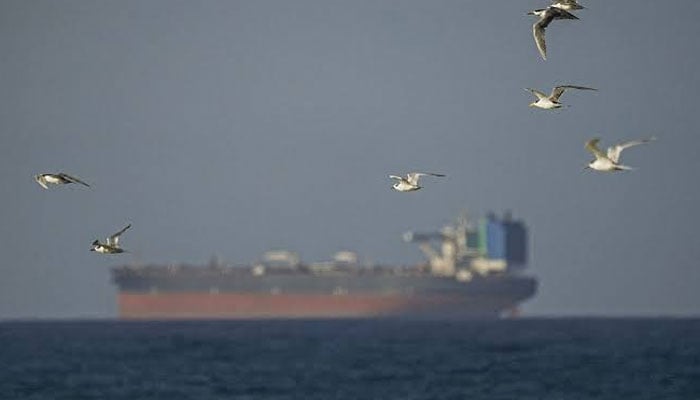
A commercial vessel sailing out of the Strait of Hormuz was struck by a missile, causing damage to its engine and injuring members of its crew, the United Kingdom Maritime Trade Operations (UKMTO) said on Tuesday.

The incident has added to growing concerns over maritime security in one of the world’s most strategically important waterways, where tensions have remained high amid the wider conflict involving Iran and regional powers.

According to UKMTO, the vessel was hit after leaving the Strait of Hormuz. The missile caused damage to the ship’s engine, while members of the crew were also affected in the attack.

Omani coast guard personnel responded to the incident and are providing assistance to the crew, UKMTO said. No further details about the condition of the vessel or the extent of the injuries were immediately available.

The agency did not identify who fired the missile. The circumstances surrounding the attack, including the type of missile used and the exact location of the strike, were also not immediately disclosed.

The Strait of Hormuz is a critical global shipping route through which a substantial share of the world’s oil supplies passes. Any attack on commercial shipping in or around the waterway can raise concerns about the safety of international trade and energy supplies.

The latest incident comes as tensions remain particularly sensitive around the Gulf. Shipping companies and maritime authorities have been closely monitoring developments, with any disruption in the waterway capable of affecting global markets.

Meanwhile, Iranian officials have strongly rejected what they describe as repeated claims and threats concerning the Strait of Hormuz.

Ibrahim Azizi, chairman of Iran’s parliament’s National Security Commission, criticised US President Donald Trump over his remarks regarding the strategic waterway.

In a statement issued from Tehran, Azizi urged Trump to focus on his own security instead of making what he called baseless and endless claims about the Strait of Hormuz.

Azizi also made a provocative reference to Trump’s personal safety, saying the US president should think about ensuring his own security.

The latest missile strike remains under investigation, and the identity of those responsible has yet to be established. Further information from maritime authorities is expected as officials assess the vessel, crew and circumstances surrounding the attack.

For now, the incident has renewed fears that rising regional tensions could spill over into commercial shipping and threaten vessels using one of the world’s busiest energy corridors.

Similar Posts

  • | |

    Chelsea complete £52 million signing of France defender Maxence Lacroix from Crystal Palace

    Chelsea have signed France international defender Maxence Lacroix from Crystal Palace in a deal reported to be worth 52 million pounds, or roughly 69 million dollars. Lacroix has put pen to paper on a six year contract with the Blues and will now join his new teammates for pre season training. The 26 year old has earned seven caps for France and featured for his country at the recent World Cup. Speaking after the move was confirmed, Lacroix said he felt proud to become part of a club with Chelsea’s history and winning tradition. He said his conversation with the club’s manager convinced him they share the same vision and ambition, adding that the quality of the squad and the resources around the club make winning trophies a realistic goal he is eager to help achieve. Lacroix joined Crystal Palace from Wolfsburg in 2024 and went on to make 98 appearances for the club. During his time at Selhurst Park, he helped Palace win the FA Cup, the UEFA Conference League and the Community Shield. The defender becomes the latest addition to new Chelsea manager Xabi Alonso’s rebuilding effort this close season. Alonso has already overseen a British record 117 million pound deal for Aston Villa forward Morgan Rogers and a 47 million pound move for Atalanta right back Marco Palestra. Winger Geovany Quenda and forward Emmanuel Emegha have also joined the club, completing transfers that were initially agreed last year. Chelsea have further been linked with moves for Brighton striker Danny Welbeck and Brentford midfielder Jordan Henderson. Alonso took charge of the club on July 1 and is tasked with reviving a Chelsea side that finished a disappointing 10th in the Premier League last season, a result that left the club without European football for the upcoming campaign.

  • | |

    Israel faces new challenges after Iran conflict

    After years of pushing the United States to confront Iran, Israeli Prime Minister Benjamin Netanyahu saw Washington join Israel in military action against Tehran. However, after six months of inconclusive conflict, Israel could now face a more difficult strategic situation than before the war. Iran has survived the confrontation and appears increasingly confident. Analysts say Israel achieved significant military successes but failed to translate them into a lasting strategic advantage. A major factor behind the uncertainty has been US President Donald Trump’s shifting policy. Trump joined Israel in launching the conflict in late February but called for a ceasefire in April and backed renewed negotiations with Iran amid growing public opposition and rising oil prices. “This is a colossal failure of Israeli strategy regarding Iran,” said Danny Citrinowicz, a former senior Israeli intelligence analyst on Iran who now works at the Institute for National Security Studies in Tel Aviv. He acknowledged Israel’s operational gains but said the country had failed strategically. Israel killed Iranian Supreme Leader Ayatollah Ali Khamenei on the first day of the conflict. Khamenei had suppressed domestic dissent and supported groups hostile to Israel, including Hamas, which carried out the October 7, 2023 attacks. However, his removal could create a new problem for Israel. Khamenei was also viewed as cautious about pursuing a nuclear weapon. Analysts warn that Iran could now reconsider that position if it believes its conventional military deterrents have weakened. Trump has recently threatened further economic pressure and occasionally ordered new strikes against Iran, while also supporting a possible agreement that could provide Tehran with sanctions relief. Netanyahu strongly opposed the 2015 nuclear agreement negotiated under former US President Barack Obama. Citrinowicz said Israel now faces a difficult choice: accept a new nuclear agreement that could strengthen Iran economically, or continue military pressure and risk pushing Tehran toward developing a nuclear weapon. “Israel is trying to do both but it’s not going to work,” he said. Degrading Iran or seeking regime change A June survey by the Hebrew University of Jerusalem and the Agam Institute found that 92% of Israelis believed Iran had either won or gained from the conflict. The findings could create additional political pressure on Netanyahu ahead of the October 27 elections. Netanyahu previously said he wanted to “create conditions for regime change,” although he stopped short of making the overthrow of Iran’s government an official war objective. Some analysts believe Netanyahu may instead be following an Israeli strategy used in Gaza, Lebanon and Syria: inflicting extensive damage on an adversary and maintaining the ability to launch future attacks when necessary. Israel has often referred to this approach as “mowing the grass.” A foreign diplomat based in Israel told AFP that Netanyahu may not view the conflict as a failure, arguing that the United States had been drawn directly into confrontation with Iran while Israel had, for now, stepped back. Iranian counterattacks killed 25 people in Israel and four in the occupied West Bank. In the later stages of the conflict, however, Tehran increasingly focused its attacks on Gulf Arab countries hosting US military bases. Alex Grinberg, a senior Iran-focused fellow at the Turan Research Centre, said the conflict had dealt a serious blow to Iran by destroying parts of its nuclear infrastructure, eliminating key personnel and worsening its economic situation. He argued that Israel had achieved its immediate objective of reducing Iran’s strategic ability to threaten Israel, but questioned whether Washington and Tehran could reach an agreement that would serve Israel’s long-term interests.

  • | |

    Tarar calls for stronger narrative against terrori…

    Information Minister Attaullah Tarar has called for a stronger national effort to counter terrorism, extremism and misinformation, saying Pakistan’s fight against militancy cannot be limited to security operations. Addressing a capacity-building workshop in Islamabad, Tarar said the country also needed to win the battle of narratives by addressing misinformation and reducing the gap between public perception and facts. He said Pakistan had made considerable progress against terrorism through coordinated efforts by the federal and provincial governments, security forces and other state institutions. The National Action Plan, he added, had played an important role in bringing stakeholders together. According to Tarar, Pakistan’s security situation had improved significantly by 2017, allowing economic activity and investment to recover. However, he argued that a subsequent policy shift weakened years of counter-terrorism efforts. The minister stressed that national security policies should have continuity and should not change with changes in government. He called for political parties to develop consensus on major national policies so that long-term strategies could continue regardless of which party was in power. Tarar also highlighted the importance of Pakistan’s international narrative. He said the country had suffered heavily from terrorism and had made significant sacrifices involving security personnel, political figures, professionals and civilians. He said Pakistan had increasingly used international media platforms to present its position and challenge what it described as misleading narratives about terrorism and regional security. Discussing tensions with India following the Pahalgam incident, Tarar questioned the version of events presented by New Delhi. He reiterated Pakistan’s call for a transparent and internationally conducted investigation and said the country had sought to address the issue through diplomatic and media channels. The minister said terrorism had no religion, colour or ethnicity and maintained that the state would not allow violent groups to impose their ideologies on society. He warned that militant organisations were increasingly shifting their focus towards vulnerable and “soft” targets after facing pressure from security forces. He cited the Jaffar Express attack as an example and praised security agencies for their response. Tarar also raised concerns over the role of digital platforms in spreading extremist material and misinformation. He said the government was strengthening its legal and institutional mechanisms to deal with cybercrime and harmful online narratives. He said a Digital Communication Department had been established using modern technologies, including artificial intelligence-based monitoring and speech-to-text systems, to identify emerging narratives in the digital space. According to the minister, provincial governments were also being offered assistance in establishing similar communication structures. Tarar said state institutions also needed to promote Pakistan’s positive image by highlighting its culture, tourism, music, cuisine and arts. He praised Pakistan Television for contributing to efforts aimed at presenting a broader image of the country. He also stressed the need for better communication and timely reporting from Balochistan. The government, he said, was willing to support television networks in establishing bureaux in the province’s southern districts. Speaking about Balochistan, Tarar said development and security remained key government priorities. He highlighted infrastructure and counter-terrorism measures and said political stability and economic development were essential to addressing long-term challenges. The minister also cited Rescue 1122 as an example of a public policy that continued beyond political changes. He argued that successful national programmes should be preserved and expanded rather than discontinued because of political differences.

  • |

    Investigative report reveals new human smuggling network 

      An investigative report has revealed that human smuggling networks have established a new and well-organized operation to transport undocumented migrants from the United Kingdom to mainland Europe. The report highlights how criminal groups are exploiting vulnerable migrants by offering illegal travel services, often presenting them as safe and reliable routes to European countries where migrants believe they have a better chance of obtaining legal residency. According to the investigation, smugglers charge approximately £1,000 per person to transport migrants across the English Channel from the United Kingdom to continental Europe. Those wishing to continue their journey to Spain are reportedly asked to pay an additional £500. Spain has become an attractive destination because of recent immigration policies that are widely perceived as providing greater opportunities for undocumented migrants to regularize their legal status. The report explains that these criminal organizations have adopted sophisticated marketing strategies, using social media platforms to advertise their services. Their promotional posts resemble travel packages rather than illegal migration schemes. The advertisements often feature appealing images of famous European cities such as Berlin, Paris, Rome, and other popular destinations, creating the impression of a safe and exciting journey. By using professional-looking graphics and persuasive language, smugglers attempt to gain the trust of potential clients. The investigation further states that these groups specifically target individuals whose UK visas have expired or whose immigration status is uncertain. Many of these migrants fear deportation or have exhausted legal options to remain in Britain, making them particularly vulnerable to the promises made by smugglers. Criminal networks assure them that they can avoid detection by British immigration authorities and safely reach mainland Europe. According to the report, smugglers often claim that once migrants enter the Schengen Area, they may benefit from the freedom of movement available within many European countries. Although these claims can be misleading and depend on individual legal circumstances, they are frequently used to persuade migrants to undertake dangerous and illegal journeys. In some cases, migrants are transported across different European countries using taxis and privately hired vehicles, allowing smugglers to bypass traditional border checkpoints and reduce the likelihood of interception. A major reason Spain has become a central focus of these smuggling operations is the country’s efforts to address labor shortages. The report notes that the Spanish government has introduced a broad immigration regularization program designed to grant legal status to certain undocumented migrants under specific conditions. As part of this amnesty initiative, approximately 1.2 million applications have reportedly been submitted. Of these, nearly 600,000 individuals have received renewable residence permits, allowing them to live and work legally in Spain. Human smugglers have seized upon these developments as a selling point in their advertising campaigns. They present Spain as a destination where undocumented migrants have a greater chance of securing legal residency after arrival. However, experts caution that such claims are often exaggerated or oversimplified. Eligibility for legal status depends on meeting strict legal requirements, and many migrants may not qualify despite the promises made by smugglers. The report also emphasizes the role of social media in facilitating these illegal activities. Platforms that were originally designed for communication and business promotion are increasingly being exploited by organized crime groups to recruit clients, negotiate payments, and coordinate transportation. The ease of anonymous communication and the global reach of these platforms make it easier for smugglers to expand their operations while making it more difficult for law enforcement agencies to identify and dismantle their networks. Meanwhile, the British government continues to stress that it is intensifying efforts to combat international human smuggling organizations. Officials say that law enforcement agencies on both sides of the English Channel are working closely together to investigate criminal networks, disrupt their operations, and prosecute those responsible. The government has also strengthened border surveillance and tightened immigration enforcement in an effort to discourage irregular migration and reduce opportunities for smugglers to operate. Authorities argue that stronger international cooperation is essential because these criminal organizations often operate across multiple countries, making investigations more complex. Intelligence sharing, joint operations, and improved border security are considered key elements in tackling transnational human trafficking and smuggling. Migration experts, however, believe that enforcement measures alone may not be sufficient. They argue that as long as significant differences remain between the immigration policies of European countries, human smuggling networks will continue to identify new routes and exploit legal loopholes. Criminal groups are highly adaptable and frequently alter their methods in response to changing border controls and government policies. Experts also warn that undocumented migrants remain at serious risk of exploitation throughout their journeys. Many face dangerous travel conditions, financial exploitation, deception, and abuse at the hands of smugglers. Some migrants lose large sums of money, while others become victims of forced labor or other forms of exploitation after reaching their destinations. The investigation concludes that addressing the issue of human smuggling requires a comprehensive international strategy. In addition to stronger law enforcement, governments must improve legal migration pathways, enhance cooperation on immigration policies, and increase public awareness about the risks of relying on criminal smuggling networks. Without coordinated action across Europe, experts fear that these illegal operations will continue to evolve, placing thousands of vulnerable migrants at risk while generating significant profits for organized criminal groups.

  • |

    Natalie Harp tipped as Karoline Leavitt’s likely successor

    White House press secretary Karoline Leavitt announced on Wednesday that she is stepping down from the Trump administration by the end of the month. She cited wanting more time with her family as the reason behind the decision. In a social media post, the 28-year-old explained that returning to the White House after having her daughter left her struggling to balance the demands of the role with being present for her two young children. She called it a bittersweet decision to move into a new chapter of her life. President Trump responded publicly, saying he understood and respected her choice. He added that Leavitt would remain part of his inner circle, describing her as one of his top outside advisors and an influential voice within the Republican Party going forward. The sudden announcement caught many off guard, sparking a wave of speculation online about what actually prompted her exit. No official replacement has been named yet, but multiple reports have pointed to Natalie Harp as a likely contender for the role. The 34-year-old serves as Trump’s executive assistant and is frequently seen by his side at public events. She reportedly manages much of his digital presence, including posting pre-approved content to his social media accounts after hours, according to a Wall Street Journal report from May 2026. Given her closeness to the president, Harp has emerged as one of the more plausible names being floated to take over the press secretary role. Alongside the succession talk, unverified theories have also surfaced online suggesting Harp may have played a role in Leavitt’s exit. Some reports, including one from the Irish Star, claim Harp accompanied Trump during a security-related jet switch amid threat concerns, while Leavitt was left behind, though this remains unconfirmed. A source told the Daily Mail that Harp holds an unusually close position within Trump’s team, describing her as closer to the president than anyone else on his staff. Separately, a widely circulated video appeared to show Leavitt seemingly sidelined during a tense exchange involving Trump and another woster believed to be Harp, shortly before her resignation announcement. None of these claims have been independently verified so far.

  • | | | |

    Iran sets six conditions for reopening Strait of Hormuz

    Iran has set six conditions for the United States to allow the full reopening of the Strait of Hormuz. The demands were presented by Mohammad Bagher Zolghadr, secretary of Iran’s Supreme National Security Council. He warned that Tehran would not reopen the strategic waterway unless Washington changed its policy towards Iran. Zolghadr said the first condition was that the United States must not threaten Iran under any circumstances. He also said Washington must avoid any language or action that insults the dignity of the Iranian people. The second condition calls for a permanent end to what Iran describes as war and aggression against the country and its allies. These include Lebanon, Palestine, Yemen and Iraq. Iran’s third demand is the lifting of the naval blockade imposed on the country. Tehran has also called for the withdrawal of US forces from areas surrounding Iran. The fourth condition concerns compensation for damage caused to Iran during the war. Zolghadr said Iran must receive full compensation for the losses it suffered. The fifth demand is the removal of what Tehran considers unfair and illegal sanctions imposed on the Iranian people. Iran’s sixth condition calls for the unconditional release of Iranian assets that have been seized or frozen abroad. Tehran wants these assets returned to the Iranian people. The Strait of Hormuz is a key international shipping route. It connects the Persian Gulf with the Gulf of Oman and the wider Arabian Sea. A disruption in the waterway could have major consequences for global energy supplies and international trade. Iran has repeatedly stressed the strategic importance of the strait. Any decision regarding its reopening could therefore have wider regional and international implications. Zolghadr also said Iran would maintain its position regardless of whether the situation develops into further conflict or diplomatic negotiations.

Leave a Reply

Your email address will not be published. Required fields are marked *