natalie harp tipped
|

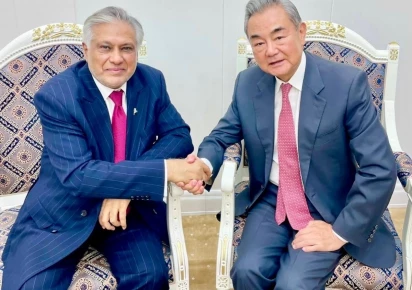
Natalie Harp tipped as Karoline Leavitt’s likely successor

White House press secretary Karoline Leavitt announced on Wednesday that she is stepping down from the Trump administration by the end of the month. She cited wanting more time with her family as the reason behind the decision.

In a social media post, the 28-year-old explained that returning to the White House after having her daughter left her struggling to balance the demands of the role with being present for her two young children. She called it a bittersweet decision to move into a new chapter of her life.

President Trump responded publicly, saying he understood and respected her choice. He added that Leavitt would remain part of his inner circle, describing her as one of his top outside advisors and an influential voice within the Republican Party going forward.

The sudden announcement caught many off guard, sparking a wave of speculation online about what actually prompted her exit. No official replacement has been named yet, but multiple reports have pointed to Natalie Harp as a likely contender for the role.

The 34-year-old serves as Trump’s executive assistant and is frequently seen by his side at public events. She reportedly manages much of his digital presence, including posting pre-approved content to his social media accounts after hours, according to a Wall Street Journal report from May 2026.

Given her closeness to the president, Harp has emerged as one of the more plausible names being floated to take over the press secretary role.

Alongside the succession talk, unverified theories have also surfaced online suggesting Harp may have played a role in Leavitt’s exit. Some reports, including one from the Irish Star, claim Harp accompanied Trump during a security-related jet switch amid threat concerns, while Leavitt was left behind, though this remains unconfirmed.

A source told the Daily Mail that Harp holds an unusually close position within Trump’s team, describing her as closer to the president than anyone else on his staff.

Separately, a widely circulated video appeared to show Leavitt seemingly sidelined during a tense exchange involving Trump and another woster believed to be Harp, shortly before her resignation announcement. None of these claims have been independently verified so far.

Similar Posts

  • |

    Healthy diet out of reach for one in three people globally, UN report reveals

    One in three people worldwide, approximately 2.69 billion individuals, cannot afford a healthy, nutrient-rich diet, according to a joint report by five United Nations agencies. The State of Food Security and Nutrition in the World 2026 calculates the global average cost of a healthy diet at 4.28 purchasing power parity (PPP) dollars per day. This figure significantly exceeds the international extreme poverty line of $3 PPP per person, placing diverse, nutrient-dense foods such as fruits, vegetables, dairy, and lean meats out of economic reach for billions. Public health experts note that historic agricultural subsidies have heavily favoured starchy staples over nutrient-dense options, driving a global surge in adult obesity rates from 12.1 per cent in 2012 to 16.2 per cent in 2024. While global hunger declined for a third consecutive year in 2025, affecting 7.8 per cent of the world’s population compared to 8.1 per cent in 2024, regional disparities remain severe. Africa has become home to the highest absolute number of hungry people for the first time, with roughly 309 million affected. Across the continent, 66.6 per cent of the population was unable to afford a healthy diet in 2025, more than double the rates observed in Asia or Latin America. UN officials warn that ongoing disruptions to maritime trade, alongside potential climate shocks, threaten to reverse recent progress and jeopardise international targets to eliminate global hunger by 2030.

  • | | | |

    Oil nears $110 as US-Iran tensions rise

    Global crude oil prices climbed sharply this week as rising tensions between the United States and Iran increased concerns over energy supplies. The escalation in geopolitical risks, combined with ongoing disruptions linked to the wars involving Iran and Ukraine, has pushed physical crude cargo prices to their highest levels in nearly two months. Crude oil cargoes traded across the Middle East, Europe and Africa have risen significantly in value, with some shipments approaching $110 per barrel. The increase reflects growing uncertainty in global energy markets, where buyers are rushing to secure supplies amid fears of further disruptions. Traders say concerns over supply have become the main driver of the latest price rally. Buyers are seeking immediate deliveries from alternative sources as uncertainty over future exports continues to grow. The stronger demand for prompt cargoes has added further pressure on international oil prices. The global benchmark Dated Brent, which is used to price more than 60 percent of physical crude oil cargoes worldwide, climbed to $105.70 per barrel on Thursday, according to market data. The benchmark reached its highest level since late May and moved above the $100 per barrel mark for the first time since early June. Market analysts believe geopolitical developments are having a direct impact on energy prices. Growing fears that conflicts could disrupt production or shipping routes have increased volatility in the oil market. Investors and traders are closely watching developments in the Middle East as they assess the risk of further supply shortages. Oil broker Tamas Varga said supply concerns have once again become the dominant factor influencing the market. He noted that uncertainty over production and exports is encouraging buyers to secure crude oil before prices rise even further. The market was also affected by developments in Kazakhstan. Authorities there announced that the country’s main export terminal for CPC Blend crude oil on the Black Sea had been forced to suspend operations following reported Ukrainian drone attacks. The disruption affected crude exports and reduced oil production. According to a source familiar with the situation, Kazakhstan’s crude oil output has fallen by nearly half, dropping to around 460,000 barrels per day. The decline has added to global supply concerns at a time when markets are already under pressure from geopolitical tensions.

  • |

    UN warns Afghanistan’s child malnutrition crisis deepens

    Afghanistan is facing a rapidly worsening malnutrition emergency as severe funding cuts leave millions without life-saving assistance, the United Nations has warned. Speaking from Kabul, the World Food Programme’s (WFP) Afghanistan Director John Aylieff said the country’s nutrition crisis is escalating at an alarming pace, with growing numbers of severely malnourished children reaching health facilities too late to receive effective treatment. He said child wasting, the deadliest form of malnutrition, has now reached critical levels in nearly one-third of Afghanistan’s provinces. According to the WFP, ongoing conflict, disruptions to trade, the return of thousands of Afghan migrants from neighbouring countries, and shrinking international aid have combined to create an unprecedented humanitarian emergency. The UN official said last year recorded the sharpest annual increase in malnutrition cases, while the situation has deteriorated even further in 2026. Children under the age of two account for around 80 percent of the most severe cases, highlighting the devastating impact on the country’s youngest and most vulnerable population. Aylieff said the WFP has only enough resources to provide treatment to one out of every seven acutely malnourished women and children this year. The remaining six are forced to leave without assistance because of a severe shortage of funds. He warned that the cries of starving children in Afghan health centres reflect a preventable tragedy that could claim countless more lives if emergency funding is not secured. The humanitarian agency also expressed concern that widespread hunger could fuel migration, instability and extremism, stressing that a stable Afghanistan remains important for regional security. Millions of Afghans have also returned from neighbouring countries, including Pakistan and Iran, over the past three years, placing additional pressure on already overstretched resources. Although this year’s harvest has improved, the gains have been overshadowed by the country’s worsening economic and humanitarian challenges. The WFP estimates that nearly 14 million Afghans are currently experiencing acute hunger. However, funding shortages have limited food assistance to only a small fraction of those in need, while preventive food distribution programmes in high-risk areas have been suspended.

  • | | |

    IHC asked to frame rules for social media use by c…

    ISLAMABAD: The Islamabad High Court has been petitioned to direct the federal government to introduce legislation and a comprehensive regulatory framework governing social media access by children below the age of 16. The petition, filed by advocates Muhammad Jalal Haider and Yahya Farid Khawaja, calls for a reliable age-verification system to prevent minors from creating or operating social media accounts without appropriate safeguards. The petitioners argue that children face growing risks online, including cyberbullying, harassment, exposure to inappropriate material and other forms of digital harm. They have urged the government to establish clear policies covering children’s digital rights, privacy and physical and psychological safety. They have also sought specific legal responsibilities for social media companies, including stronger safeguards for minors and the creation of an institutional mechanism dedicated to protecting children in the digital environment. The petition refers to measures adopted or proposed in countries including Australia, France, Britain, New Zealand and Spain, where authorities have considered age limits, parental consent and age-verification requirements for children’s social media use. Citing the United Nations Convention on the Rights of the Child and General Comment No. 25, the petitioners maintain that protecting children’s best interests is a legal responsibility of the state rather than merely a policy choice. They argue that the absence of an effective age-verification mechanism leaves minors exposed to online dangers and makes it difficult to enforce protections designed specifically for children. The Ministry of Information Technology and Telecommunication, Ministry of Information and Broadcasting, Ministry of Interior, Ministry of Law and Justice, Pakistan Telecommunication Authority and Pakistan Electronic Media Regulatory Authority have been named as respondents. Punjab Assembly Resolution The development follows a resolution submitted to the Punjab Assembly last month calling for restrictions on social media accounts operated by children under 16 without parental consent. The resolution, moved by Punjab lawmaker Sarah Ahmad, urged the provincial government to recommend federal legislation aimed at regulating minors’ access to social media and strengthening online protection. It highlighted concerns over cyberbullying, online exploitation, inappropriate content, digital addiction and psychological distress among children, stressing that safeguarding their physical, mental and moral development is a responsibility of the state. The resolution proposed prohibiting children below 16 from creating or maintaining social media accounts without verified parental or legal guardian consent. It also called on the PTA to develop and enforce effective age-verification mechanisms across platforms operating in Pakistan. It further recommended holding social media companies accountable for child-safety standards, including the timely removal of harmful content and measures to provide a safer online environment for minors.

  • | | |

    Iran defied plan to become ‘Venezuela’, says P…

    TEHRAN: Iranian President Masoud Pezeshkian has said his country is facing a difficult economic and military situation but has remained resilient, arguing that national unity prevented what he described as an attempt by Iran’s enemies to push the country towards a Venezuela-like crisis. Speaking at a ceremony, Pezeshkian said Iran was operating under what he called illegal wartime conditions while continuing efforts to provide services and support to its people. The president portrayed the country as facing simultaneous economic and security challenges, but said the Iranian public had remained united despite the pressure. According to Pezeshkian, Iran’s opponents wanted to see the country weakened and destabilised. He argued that the unity of the Iranian people had instead helped Iran emerge as a stronger force. “Today, we are in a state of economic and military war,” Pezeshkian said, while stressing that the government was continuing to work for citizens despite the difficult circumstances. His comments came as Tehran has faced intense pressure over its economic situation and wider confrontation with the United States and its allies. Pezeshkian said Iran’s adversaries had intended to turn the country into “Venezuela”, apparently referring to the severe economic and political difficulties that have affected Venezuela over the past decade. He claimed that the plan had failed because Iranians had maintained a united position in the face of the challenges. The president also referred to a memorandum of understanding reached amid the difficult circumstances. He said the agreement had been shaped by the country’s determination to protect its interests while seeking a way forward through diplomacy. According to Pezeshkian, experts had described the memorandum as being based on “prudence, dignity and wisdom”. He argued that those criticising the agreement did not fully understand the circumstances surrounding it. The remarks suggest that Iran’s leadership is attempting to present the agreement as a strategic decision rather than a concession under pressure. Pezeshkian’s comments also come against the backdrop of signals that Tehran may be seeking a way to end its confrontation with Washington from a position it considers strong. Iranian officials have repeatedly stressed that any diplomatic arrangement must protect the country’s national interests and sovereignty. For Pezeshkian, domestic unity remains central to navigating the crisis. He argued that despite economic hardship and military pressure, the country had avoided the collapse that its opponents allegedly expected. The president’s message was therefore aimed not only at Iran’s external rivals but also at domestic critics of the memorandum. As pressure on Iran continues, Tehran faces the difficult task of managing economic challenges while maintaining political cohesion and determining whether diplomacy can reduce tensions. Pezeshkian’s latest remarks underline his argument that Iran’s resilience, rather than isolation, will shape the next phase of the country’s confrontation with its adversaries.

  • | | | |

    RLNG prices jump up to 34.6% amid supply disruptio…

    ISLAMABAD: The Oil and Gas Regulatory Authority (OGRA) has increased the prices of re-gasified liquefied natural gas (RLNG) by up to 34.6% for July 2026, as continued disruptions in LNG supplies from Qatar forced Pakistan to rely on expensive spot market imports. According to an official notification, consumers of Sui Southern Gas Company (SSGC) will face the largest increase. The RLNG price for SSGC consumers has been fixed at $25.087 per MMBtu, following an increase of $6.4512 per MMBtu, representing a 34.6% rise. Consumers of Sui Northern Gas Pipelines Limited (SNGPL) will also pay higher rates. The regulator fixed the RLNG price at $25.8388 per MMBtu, an increase of $6.316 per MMBtu, or 32.35%, compared with the previous month. Officials said the latest increase was mainly driven by a sharp decline in LNG imports during July. Pakistan received only five LNG cargoes throughout the month, making it the third-lowest monthly import volume since the country started importing LNG. The reduced supply forced the country to purchase all available LNG cargoes from the international spot market, where prices are generally much higher and more volatile than long-term contractual rates. Energy officials said state-owned Pakistan LNG Limited arranged all five cargoes from the spot market. Meanwhile, Pakistan did not receive any LNG shipments under its long-term agreements with Qatar during the month. The interruption in Qatari supplies has continued since damage to energy infrastructure earlier this year, affecting LNG exports to several countries in Asia and Europe, including Pakistan. Experts said the absence of lower-cost LNG from long-term contracts has significantly increased Pakistan’s import bill and placed additional pressure on the country’s energy sector. Since the regional conflict in the Middle East began earlier this year, RLNG prices in Pakistan have risen by more than 144%, making energy substantially more expensive for industries, businesses and other consumers.

Leave a Reply

Your email address will not be published. Required fields are marked *