kashmir pakistans jugular
| |

Kashmir is Pakistan’s jugular vein: Rana Qasim N…

Chairman of the Parliamentary Kashmir Committee and Federal Minister Rana Qasim Noon has said that Kashmir remains central to Pakistan’s national interests, stressing that the country has already fought wars to defend the region and will continue to stand by the Kashmiri people.

Speaking about the current regional situation, Noon alleged that following India’s defeat in last year’s conflict, New Delhi has been attempting to create instability in Balochistan and Azad Jammu and Kashmir. He warned that Pakistan would not allow any external force to undermine its sovereignty or destabilize the country.

Noon said Azad Kashmir is an integral part of Pakistan and asserted that no power in the world could separate it from the country. He also criticized attacks and abusive behavior directed at the military, police and other state institutions, saying that such conduct would not be tolerated in any country.

The federal minister said the government has previously responded to public demands by providing relief and would continue to address genuine concerns in the future. However, he firmly rejected calls to withdraw the voting rights and political representation of refugees from Indian-administered Kashmir living in Pakistan.

According to Noon, removing the political rights of Kashmiri refugees would amount to betraying the sacrifices made by the Kashmiri people over decades. He maintained that refugees from occupied Kashmir must retain their right to vote and participate in the political process.

The Kashmir Committee chairman also drew attention to the ongoing situation in Indian-administered Kashmir, alleging that Indian authorities continue to suppress the Kashmiri population. He said several Kashmiri leaders have remained imprisoned for decades, with some spending between 30 and 40 years behind bars.

Noon further accused India of altering the demographic landscape of occupied Kashmir by issuing what he described as fraudulent domiciles to Indian citizens and facilitating their settlement in the region.

He argued that those advocating the removal of refugees’ voting rights were, knowingly or unknowingly, supporting an agenda that serves India’s interests. He vowed that such efforts would not succeed and reiterated Pakistan’s commitment to supporting the political and democratic rights of Kashmiri refugees.

The minister called for unity on the Kashmir issue and said Pakistan would continue to raise its voice for the rights of the people of Kashmir at national and international forums.

Similar Posts

  • Strong Baht May Deter Tourist Spending, Impact Forward Bookings

    BANGKOK – The continued strengthening of the Thai baht against the U.S. dollar, recently surpassing 31 baht per dollar for the first time in nearly five years, is raising concerns among tourism operators about reduced visitor spending and forward bookings, especially during the upcoming low season, the Bangkok Post reported. Bank of Thailand to Limit […]

  • | |

    US report urges Pakistan to open up budget and deb…

    WASHINGTON: Pakistan needs to improve transparency in its public finances and give Parliament and citizens earlier access to key budget and debt information, according to a new US State Department assessment. The department’s 2026 Fiscal Transparency Report said Pakistan had made progress in making financial information publicly available but still faced important gaps, particularly in the timely release of its proposed budget and disclosure of government liabilities. The report noted that Pakistan’s approved budget and year-end financial reports were easily accessible to the public, including online. However, it found that the government did not release its executive budget proposal within a reasonable timeframe. According to the assessment, publishing the proposed budget earlier would give lawmakers and the public more time to examine the government’s spending and revenue priorities before the document is formally approved. The report also raised concerns over limited public information about government debt, especially liabilities linked to major state-owned enterprises. Greater disclosure, it said, would help provide a clearer picture of the country’s financial position and allow Parliament to better assess potential fiscal risks. Despite these shortcomings, the US assessment acknowledged that Pakistan’s publicly available budget documents contained substantial information on planned government revenues and expenditures, including income from natural resources. Pakistan’s auditing system also received a largely positive assessment. The report said financial information was generally reliable and subject to review by the country’s supreme audit institution, which it found to have an appropriate level of independence under international standards. Audit findings were also made available to the public within a reasonable period. The report found that Pakistan had established legal procedures for awarding natural resource extraction contracts and licences and appeared to follow those rules in practice. It also noted that information on public procurement contracts was accessible and described the legal framework governing the country’s sovereign wealth fund as sound. The State Department identified three major areas where Pakistan could further strengthen fiscal transparency: releasing the executive budget proposal on time, providing more detailed information about government debt, including state-owned enterprise liabilities, and bringing military and intelligence budgets under adequate parliamentary or civilian oversight. Overall, the report did not portray Pakistan’s financial system as broadly opaque. Instead, it recognised several areas of progress while calling for stronger parliamentary scrutiny and greater disclosure of information that could help lawmakers and the public understand the country’s fiscal risks.

  • | |

    Iqbal Chair at Heidelberg University nears restora…

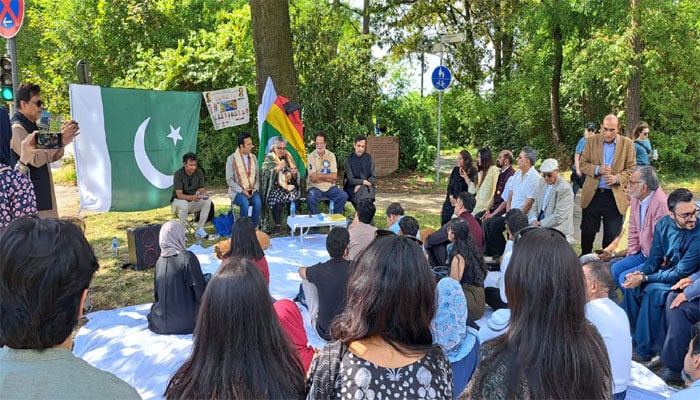
    HEIDELBERG: Pakistan’s Ambassador to Germany, Saqlain Syedah, has announced that the restoration of the Allama Iqbal Chair at Heidelberg University is in its final stages, describing it as a major step towards strengthening academic and cultural ties between Pakistan and Germany. She made the announcement while addressing a literary gathering and mushaira held at Iqbal-Ufer, located on the banks of the River Neckar in the historic German city of Heidelberg. The event brought together members of the Pakistani community, writers, poets, academics and representatives of local organisations. The ceremony was chaired by renowned poet and community leader Syed Iqbal Haider, while Pakistan’s ambassador attended as the chief guest. Among the distinguished participants were Heidelberg City Council member Waseem Butt and German professor Hans Herder, whose speech in Urdu received warm appreciation from the audience. Speaking at the event, Waseem Butt announced that Allama Iqbal’s 150th birth anniversary in 2027 would be celebrated in Heidelberg with special ceremonies and cultural events. In her address, Ambassador Saqlain Syedah highlighted the importance of literary gatherings in promoting the Urdu language and preserving Pakistan’s cultural heritage abroad. She also spoke about the deep historical and intellectual connection between Allama Muhammad Iqbal and the city of Heidelberg, where the philosopher-poet spent part of his academic life. The ambassador praised Syed Iqbal Haider for organising the literary event and thanked all participants for keeping Urdu literature and Pakistani cultural traditions alive in Germany. Syed Iqbal Haider also reflected on Allama Iqbal’s close association with Heidelberg and the River Neckar. He said Iqbal’s message of selfhood, human dignity and intellectual awakening continues to serve as a bridge between Eastern and Western thought. During the ceremony, the ambassador shared the encouraging news that practical steps to restore the Allama Iqbal Chair at Heidelberg University had reached their final phase. She expressed hope that the initiative would further enhance educational cooperation and cultural exchanges between Pakistan and Germany.

  • Energy Minister: No Fuel Crisis for Thailand Despite Mideast War

    BANGKOK — Thailand does not face a fuel crisis as a consequence of the Mideast war, Energy Minister Atthapol Rerkpiboon said on Tuesday, seeking to calm public concerns amid localized shortages and panic-buying in some provinces. Thailand has enough oil for local consumption, but prices will rise: Government Supplies are being delivered gradually, according to […]

  • | |

    Interior Minister Talal Chaudhry says government&#…

      ISLAMABAD: Minister of State for Interior Talal Chaudhry has asserted that the ruling coalition will complete its full five-year constitutional term, even as he acknowledged that political speculation intensifies after the two-and-a-half-year mark. The minister addressed a range of pressing political questions, from the possibility of an opposition alliance to the stability of the current government. Chaudhry began by offering a pragmatic observation about Pakistan’s political rhythm. “After two and a half years, the countdown for any government effectively begins,” he said. However, he quickly dispelled any notion that this countdown implies an early end for the present administration. “The five years will be completed in full,” he emphasized, “and the coalition will continue to function in exactly the same manner as it does today.” He expressed complete confidence that the ruling alliance, led by the Pakistan Muslim League-Nawaz (PML-N), remains cohesive and resilient against any internal or external pressures. When questioned about the Pakistan Peoples Party (PPP) – a key coalition partner – Chaudhry delivered a nuanced response. He acknowledged that the PPP possesses a certain political awareness, or “ehsas”, regarding its current position within the alliance. He went further to state that this awareness will only deepen with time. “The PPP has this feeling today, and more feeling will also come,” he remarked, suggesting that as the government progresses, all partners will increasingly recognize the mutual benefits of remaining united. He framed this evolving consciousness not as a threat, but as a natural part of political maturity within a multi-party democratic setup. One of the most emphatic parts of Chaudhry’s interview was his categorical dismissal of any potential alliance between the PPP and the Pakistan Tehreek-e-Insaf (PTI). He stated, “There is no possibility of an alliance between the PPP and the PTI,” calling such speculation unfounded and politically motivated. He further reassured the public and investors alike that the government faces no existential threat from the opposition. According to the minister, the opposition remains fragmented and lacks the numerical strength or public mandate to destabilize the elected administration. Chaudhry then elevated his argument beyond mere political expediency, framing the continuity of the coalition as a national imperative. “It is in the best interest of Pakistan and the entire political system that the current alliance continues to function as it is,” he declared. He warned that any premature disruption of the government would create a dangerous power vacuum at a time when the country is grappling with economic stabilization, security challenges, and the need for institutional reforms. He called on all political stakeholders to prioritize national unity over partisan scores. The minister also took the opportunity to defend the government’s performance on key issues, including inflation management, anti-terrorism operations, and diplomatic engagements. While conceding that difficulties persist, he argued that the government has set the foundation for long-term recovery and that the opposition’s role should be constructive criticism rather than obstructionism. He urged political parties to rise above personal rivalries and focus on the greater good of the nation. In his concluding remarks, Talal Chaudhry made it clear that while the government is not afraid of early elections, it is also not shirking its responsibilities. “We were elected for five years, and we will serve for five years,” he said firmly. He expressed confidence that the public will ultimately judge this administration on its tangible achievements, not on opposition rhetoric. He dismissed the “two-and-a-half-year countdown” as a political cliché rather than a prophecy, reiterating that the coalition will not only survive but thrive until the very last day of its term. Overall, the interview projected an image of a self-assured government determined to see through its tenure, while subtly reminding its coalition partners – especially the PPP – that their long-term political futures are best secured within the existing fold. Whether this confidence will translate into political reality remains to be seen, but for now, Chaudhry’s message was unambiguous: the alliance is stable, the system is strong, and the government is here to stay.

  • | | |

    CM Punjab Rahmat Card enters digital disbursement …

    LAHORE: Following the successful computerized ballot held on June 23, 2026, the CM Punjab Rahmat Card initiative has entered its next major milestone with JazzCash commencing digital disbursements to selected widows and orphans across Punjab. The launch of digital payments marks the successful transition from beneficiary selection to financial assistance delivery, completing another key phase of one of Punjab’s most technologically advanced social welfare initiatives. The CM Punjab Rahmat Card is a collaborative initiative of the Government of Punjab, Zakat & Ushr Department, Punjab Information Technology Board (PITB), NADRA, Punjab Social Protection Authority (PSPA), Urban Unit, JazzCash, and other stakeholders to digitize the complete lifecycle of welfare assistance from citizen application and eligibility verification to transparent beneficiary selection and digital financial disbursement. During the computerized ballot ceremony, officials acknowledged the successful completion of the project’s technology implementation. Special Assistant to the Chief Minister (SACM) Rashid Iqbal Nasrullah appreciated the PITB team for its continuous technical support throughout the implementation of the initiative within stringent timelines. He also specially acknowledged the prompt guidance and support extended by PITB Chairman Faisal Yousaf at various stages of the project whenever required. Secretary, Zakat & Ushr Department, Irfan Ahmad Sandhu also commended the dedicated efforts of PITB in designing, developing, and operationalizing the comprehensive digital ecosystem supporting the Programme. He appreciated PITB’s commitment to ensuring the timely completion of all assigned deliverables despite challenging timelines. Participants observed that the CM Punjab Rahmat Card is the first initiative of its kind undertaken by the Zakat & Ushr Department in terms of both scale and technological sophistication. By replacing conventional manual processes with integrated digital workflows, the Programme has introduced unprecedented levels of transparency, efficiency, accountability, and speed in the delivery of welfare assistance. As the technology implementation partner, PITB designed, developed, and operationalized the complete digital platform supporting the initiative. The digital ecosystem includes an online citizen application portal, an Android mobile application, a dedicated helpline for application support, inquiries, and complaints, a Beneficiary Management System, a multi-agency digital verification engine integrated with NADRA and Punjab Socio-Economic Registry (PSER) databases, automated scrutiny and eligibility determination workflows, a computerized district-wise balloting mechanism, and real-time monitoring and decision-support administrative dashboards. The end-to-end digital workflow enabled citizens to submit applications online, which were then verified through multiple government databases, assessed against approved eligibility criteria, allocated according to district quotas, and finally selected through a transparent computerized ballot before being transferred for digital disbursement through JazzCash. The CM Punjab Rahmat Card initiative stands as a successful example of how digital public infrastructure can enable multiple government institutions to operate through a unified technology platform, facilitating data-driven decision-making, automated eligibility verification, transparent Programme execution, and secure digital payments. The project reinforces the Government of Punjab’s commitment to delivering technology-enabled, scalable, and accountable citizen services that improve the lives of vulnerable segments of society.

Leave a Reply

Your email address will not be published. Required fields are marked *