record rainfall strands
|

Record rainfall strands thousands at Japan Airport…

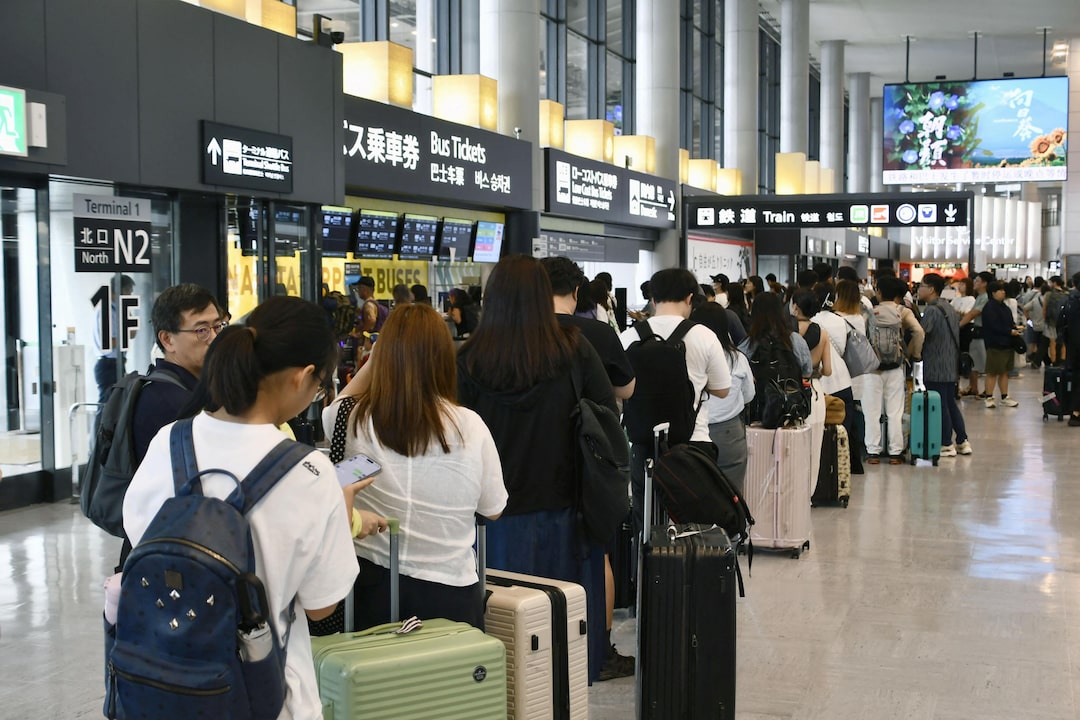
TOKYO: Record-breaking rainfall in Japan’s Chiba prefecture left thousands of travellers stranded at Tokyo’s Narita International Airport, disrupted roads and rail services and claimed at least eight lives, as emergency crews and soldiers joined relief efforts on Friday.

More than 360 millimetres of rain fell within 24 hours in parts of Chiba, an area adjoining Tokyo, triggering widespread flooding during one of Japan’s busiest holiday periods. Authorities said the downpour also disrupted power supplies, leaving more than 20,000 homes without electricity.

The eight fatalities included a person who was reportedly trapped inside a submerged vehicle, according to Japanese public broadcaster NHK, citing local authorities and police.

The unprecedented rainfall caused major disruption at Narita airport, where around 7,000 passengers were stranded after transport services were severely affected. Airport staff provided sleeping bags, drinking water and snacks as travellers spent the night inside terminals.

Minoru Yamasaki, a 48-year-old Chiba resident returning from holiday, described the difficult situation, saying he waited about four hours for a taxi before returning to the airport after a hotel could not accommodate him.

Airport officials said most flights were expected to operate normally on Friday, although transport links remained affected.

Several railway services were suspended, while some trains connecting Narita with Tokyo resumed, helping reduce congestion around the international airport. Major highways in Chiba were also closed, forcing motorists onto alternative routes and creating severe traffic jams.

In Chiba city, among the worst-hit areas, hundreds of residents spent the night at temporary evacuation centres in government buildings.

Tokyo Electric Power reported that flooding at a power substation contributed to widespread outages. Gas supplies to nearly 13,000 households were also temporarily disrupted.

Chiba Governor Toshihito Kumagai described the situation as extremely unusual, saying he had never experienced a disaster of this scale.

Weather authorities said 367mm of rain was recorded over 24 hours, surpassing the previous Chiba record of 309mm set in October 2013.

With further disruption possible, authorities continued rescue and recovery operations while urging residents to remain alert to flooding and other weather-related hazards.
Similar Posts

  • | | | |

    Hezbollah signals major u-turn, seeks talks with S…

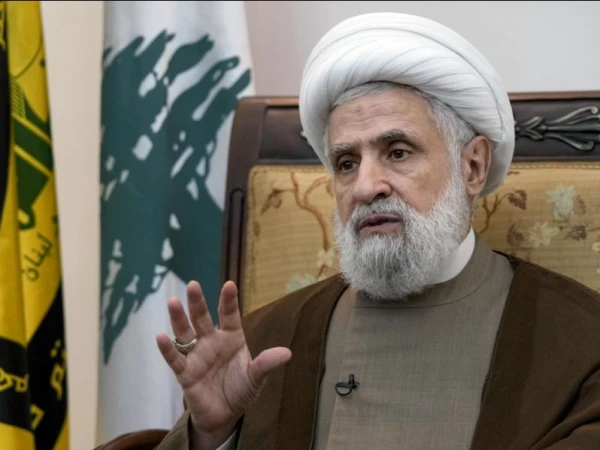
    BEIRUT/DAMASCUS: In what analysts are describing as a significant policy shift, Hezbollah Secretary-General Naim Qassem has expressed readiness to meet Syria’s new leadership, signaling a potential reset in relations after years of political uncertainty following the fall of former president Bashar al-Assad. Speaking during a televised address, Qassem said Hezbollah seeks “positive, brotherly and cooperative” ties with Syria and has no objection to holding an official meeting with the country’s current leadership if both sides consider the timing appropriate. He added that there were no barriers to public engagement once mutual conditions were met. The remarks mark the first time Hezbollah’s chief has openly endorsed the possibility of direct contact with Syria’s post-Assad leadership, a move that could reshape political dynamics across the region. For years, Hezbollah played a key role in supporting Assad’s government during Syria’s prolonged civil war. Throughout the conflict, Syrian territory served as a vital corridor for the movement of weapons and logistical supplies from Iran to Lebanon, making Damascus a strategic partner for the Iran-backed Lebanese group. However, the regional landscape changed dramatically after Syria’s new government assumed power in December 2024. The political transition created uncertainty over the future of relations between Damascus and Hezbollah, with observers questioning whether the alliance forged during the civil war would survive under the country’s new leadership. Political analysts believe Qassem’s latest comments indicate Hezbollah is adapting to the changing realities of the Middle East. By signaling openness to dialogue, the group appears to be seeking a pragmatic relationship with Syria’s new rulers while protecting its broader regional interests. Experts say any formal meeting between Hezbollah and Syrian officials would carry implications extending beyond the two neighbors. Such engagement could influence Iran’s regional strategy, Lebanon’s internal political landscape, and the broader balance of power in the Middle East. While no timetable for talks has been announced, Qassem’s statement is widely viewed as an important diplomatic opening, suggesting that former rivals and long-time allies alike are reassessing their positions as the region enters a new political era.

  • |

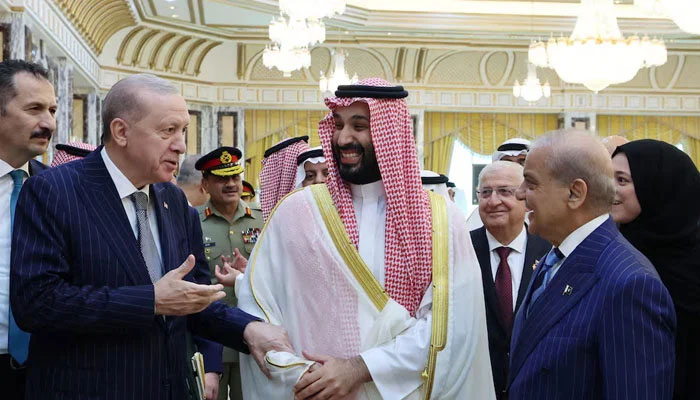
    Bangladesh signals interest in joining Pakistan-Saudi Arabia-Türkiye defence framework

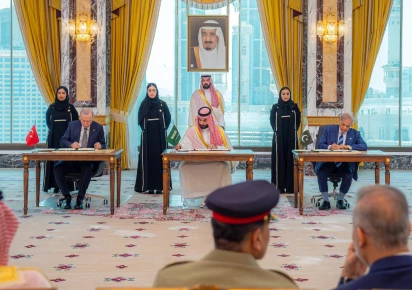
      DHAKA: Bangladesh has indicated that it is open to joining the Makkah Joint Defence Agreement signed by Pakistan, Saudi Arabia and Türkiye, as Dhaka looks to broaden its strategic partnerships while maintaining a foreign policy centred on national interests. According to the state-run Bangladesh Sangbad Sangstha (BSS), Bangladesh Prime Minister’s Adviser for Foreign Affairs Humayun Kobir said the country maintained a positive outlook towards the possibility of becoming part of an economic or defence framework involving Saudi Arabia, Pakistan and Türkiye. Kobir said any decision regarding participation would be considered in light of Bangladesh’s national interests as well as changing global economic and trade dynamics. He stressed that Dhaka was pursuing a balanced foreign policy under its “Bangladesh First”approach, with national priorities remaining at the heart of its international engagement. He said Bangladesh was also working to strengthen its bilateral relationship with Pakistan through normal diplomatic channels. According to Kobir, the two countries were particularly focusing on expanding trade and improving people-to-people contacts and connectivity. The Bangladeshi adviser’s remarks come amid signs of improving diplomatic engagement between Dhaka and Islamabad. He also said Prime Minister Tarique Rahman’s proposed visit to Riyadh, following an invitation from Saudi Crown Prince and Prime Minister Mohammed bin Salman was expected to be finalised after the summer. The possibility of Bangladesh joining the defence framework comes shortly after Pakistan, Saudi Arabia and Türkiye signed the Makkah Joint Defence Agreement in Makkah on August 7. Under the agreement, an armed attack against any one of the three participating countries is to be treated as an attack against all three. The pact also provides a framework for greater defence cooperation, coordination and collective deterrence among the signatories. The agreement has attracted regional and international attention because of its potential to expand security cooperation among key Muslim-majority countries. Turkish Foreign Minister Hakan Fidan has described the arrangement as technically comparable to NATO’s Article 5 principle of collective defence, while emphasising that the agreement is not aimed at Iran or any other specific country. Ankara has also suggested that the framework could potentially be expanded to include additional regional states. Egypt has previously been mentioned as a possible participant in the broader security arrangement. Pakistan has similarly maintained that the agreement is defensive in character and is not directed against any particular country. Islamabad has also indicated that the framework remains open to states that are willing to support its principles and objectives. Deputy Prime Minister and Foreign Minister Ishaq Dar has said the agreement does not seek to replace existing bilateral or multilateral defence and security arrangements. Instead, he said, it provides an additional platform for cooperation based on mutual respect, shared interests and peaceful resolution of disputes. Bangladesh’s latest position suggests that Dhaka is carefully assessing emerging regional partnerships while seeking to preserve strategic flexibility. Its potential participation could further broaden the Makkah agreement’s regional significance and strengthen cooperation among Pakistan, Saudi Arabia, Türkiye and other interested countries. For Bangladesh, however, any decision to join would ultimately depend on how the proposed framework aligns with its national interests, foreign policy priorities and assessment of the evolving regional and global security environment.

  • | |

    Population boom demands governance reset: DG ISPR

    Director General of Inter-Services Public Relations (DG ISPR) Lieutenant General Ahmed Sharif Chaudhry on Friday said Pakistan’s rapid population growth requires a serious review of the country’s governance and administrative structure to ensure it continues to meet the nation’s needs. Speaking at a news conference, the military spokesperson noted that Pakistan’s population had increased from around 70 to 80 million in 1972 to nearly 250 million today, while the country’s administrative framework had largely remained unchanged. He said such a significant rise in population made it necessary to assess whether the existing system was still capable of delivering effective governance and public services. The DG ISPR stressed that improving governance was essential for national security and stability, adding that unresolved issues indicated the need for reforms. However, he emphasized that any changes to the administrative structure must be introduced through constitutional and democratic processes. He said the decision on governance reforms or administrative restructuring should reflect the aspirations of the people rather than individual opinions. Lt Gen Chaudhry also highlighted that Pakistan’s youth now make up the largest segment of the population and urged political leaders to focus on improving governance while guiding the public through constructive political dialogue. He reiterated that lasting solutions to the country’s governance challenges could only be achieved through constitutional means and in accordance with the will of the people.

  • Heavy Rain Warning Issued for Upper Thailand

    BANGKOK, Thailand – Residents in eight Thai provinces have been warned to remain on 24-hour alert for heavy to very heavy rain, flash floods and landslides as authorities step up preparations for severe weather during the rainy season. Thailand Braces for Severe Super El Niño Next Year The Disaster Geohazards Operation Centre announced yesterday that […]

  • | |

    Nawaz Sharif to lead key Murree meeting

    Prime Minister Shehbaz Sharif has arrived in Murree from Islamabad as the Pakistan Muslim League-Nawaz (PML-N) prepares to hold an important consultative meeting on the political situation in Azad Jammu and Kashmir. The meeting will be chaired by PML-N President Nawaz Sharif at the Government House in Murree. Senior party leadership is expected to discuss the formation of the government in Azad Kashmir and finalise the party’s strategy for the next phase of the political process. Hamza Shehbaz has also reached Kashmir Point in Murree to participate in the meeting. Prime Minister Shehbaz Sharif and Punjab Chief Minister Maryam Nawaz are also scheduled to attend, along with federal ministers and other senior PML-N leaders. The newly elected PML-N members of the Azad Jammu and Kashmir Legislative Assembly have also been invited to the session. Their participation is expected to help the party leadership assess the political situation and discuss possible arrangements for forming the next government. The meeting comes as the PML-N moves forward with consultations following the recent political developments in Azad Kashmir. Party leaders are expected to exchange views on government formation, parliamentary coordination and the future political roadmap. Nawaz Sharif is likely to receive briefings from party leaders and elected representatives during the meeting. The leadership will also consider the names and arrangements linked to the formation of the new administration.

  • |

    Bangladesh hints at joining Pakistan-Saudi-Türkiy…

    DHAKA: Bangladesh has signalled that it could consider joining the emerging economic or defence framework involving Pakistan, Saudi Arabia and Türkiye, opening a potentially significant new chapter in regional diplomacy and security cooperation. Bangladesh Prime Minister’s Foreign Affairs Adviser Humayun Kabir said Dhaka was taking a positive view of the possibility of becoming part of a framework involving the three countries. His comments come only weeks after Pakistan, Saudi Arabia and Türkiye signed the Makkah Joint Defence Agreement. The agreement, signed in Makkah on Aug 7, commits the three countries to strengthening collective security and defence cooperation. It also states that an armed attack against any one of the three signatories would be regarded as an attack against all three. Kabir, speaking to Bangladesh’s state news agency, indicated that Dhaka would examine the idea through the lens of its own national interests and the rapidly changing global economic and trade environment. “The government is following a Bangladesh First policy,” Kabir said, according to reports, stressing that national interests remain at the centre of Dhaka’s foreign policy. The remarks are particularly noteworthy because Bangladesh has recently been working to strengthen practical ties with Pakistan. Kabir said the two countries were seeking greater cooperation in trade and people-to-people contacts, suggesting that economic engagement could form an important part of the relationship. For Pakistan, Bangladesh’s interest could give the Makkah framework a wider South Asian dimension. For Saudi Arabia and Türkiye, Dhaka’s possible participation could also expand the reach of an arrangement that the signatories have described as defensive rather than directed against any particular country. Turkish President Recep Tayyip Erdogan has said the agreement is open to other friendly countries seeking peace, prosperity and stability in the region. Turkish officials have also stressed that the pact does not identify a common enemy and is intended to strengthen defence cooperation and collective deterrence. Bangladesh’s possible move comes as Dhaka is also deepening its relationship with Saudi Arabia. Kabir said Prime Minister Tarique Rahman is expected to visit Saudi Arabia following an invitation from Crown Prince Mohammed bin Salman. The visit could provide an opportunity for discussions on economic cooperation, regional security and Bangladesh’s possible role in broader regional frameworks. For now, Dhaka has not announced any formal decision to join the defence agreement. But its positive signal is already attracting attention, particularly because Bangladesh’s participation could reshape the strategic picture across South Asia and the wider Muslim world. The next step will likely depend on how Dhaka assesses the proposed framework against its national interests, economic priorities and wider foreign-policy objectives.

Leave a Reply

Your email address will not be published. Required fields are marked *