pakistan names first
|

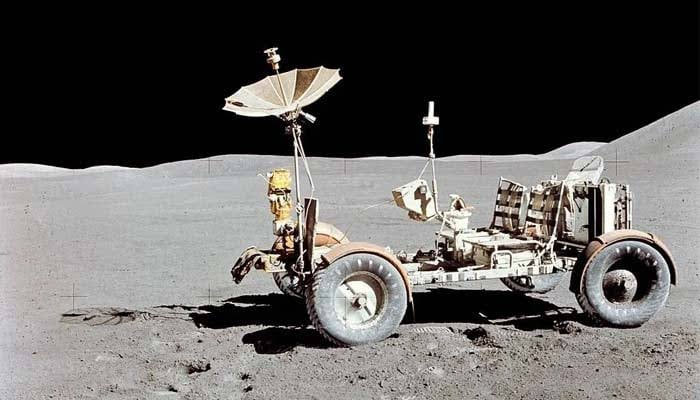
Pakistan names first lunar rover “Jinnah-1”

Islamabad: The Space and Upper Atmosphere Research Commission (SUPARCO) has officially announced the name of Pakistan’s first lunar rover.

According to SUPARCO, Pakistan’s first lunar rover has been named “Jinnah-1.” The name was selected from suggestions submitted through a nationwide competition. More than 4,000 proposals were received from across the country.

SUPARCO stated that seven participants had suggested the name “Jinnah-1.” The winner was selected through a lucky draw and 17-year-old Tayyab Karim from Bahawalnagar was declared the winner for proposing the name.

Tribute to Quaid-e-Azam

The Chairman of SUPARCO said that “Jinnah-1” is a tribute to Quaid-e-Azam Muhammad Ali Jinnah. He added that the name represents Pakistan’s determination, progress and pursuit of new frontiers in space exploration.

It is worth mentioning that Pakistan’s first lunar rover is scheduled to be sent to the Moon in 2029 as part of China’s Chang’e-8 mission. The Jinnah-1 rover will conduct scientific research on the Moon’s south pole.

Similar Posts

  • | | |

    Ministers seek PM’s approval for prices of 52 vi…

    ISLAMABAD: The federal health ministry has sought an urgent meeting with Prime Minister Shehbaz Sharif to obtain approval for the pricing of 52 newly registered life-saving medicines. Health Minister Syed Mustafa Kamal and Finance Minister Senator Muhammad Aurangzeb are expected to attend the meeting along with Federal Health Secretary Muhammad Aslam Ghauri and Drug Regulatory Authority of Pakistan (DRAP) Chief Executive Officer Dr Obaidullah. Officials said the health ministry has contacted the prime minister’s adviser, Tauqeer Shah, requesting an early appointment for the delegation. The Cabinet Committee on Drug Pricing had already approved prices for the 52 medicines during its meeting on July 24. However, the medicines cannot be legally marketed in Pakistan until the federal cabinet gives its final approval. After cabinet approval, DRAP will be able to issue notifications fixing the maximum retail prices of the medicines, allowing pharmaceutical companies to formally launch the products in the regulated market. Health ministry officials said the proposed meeting with the prime minister is aimed at obtaining his support for placing the pricing decision before the federal cabinet at the earliest. The delegation is also expected to raise the issue of hardship cases involving several essential medicines. Manufacturers and importers of these medicines have requested price adjustments, arguing that continued production or imports at the existing prices have become increasingly difficult. A senior health ministry official said the government was concerned because several registered medicines remained unavailable in the regulated market despite their prices having been approved by the drug pricing committee. The official said the delegation would brief the prime minister on the situation and seek immediate action to prevent further shortages. Among the medicines facing supply pressure are essential products such as influenza vaccines and morphine used in cancer treatment, along with other drugs whose manufacturers have reported difficulties in maintaining supplies at existing prices. The Cabinet Committee on Drug Pricing, chaired by Finance Minister Muhammad Aurangzeb, approved the 52 pricing cases after reviewing recommendations submitted by DRAP’s Drug Pricing Committee and Policy Board. All 52 cases forwarded by the Drug Pricing Committee and endorsed by the DRAP Policy Board were approved by the cabinet committee. However, the committee’s decision is not the final step in the process. The federal cabinet must endorse the recommendations before DRAP can officially notify the maximum retail prices. The medicines covered by the proposed pricing decision are used to treat a range of serious and chronic conditions. They include medicines for cancer, diabetes, haemophilia, Parkinson’s disease, autoimmune disorders, blood-clotting conditions and severe infections. Some are also used in intensive-care units and emergency treatment. Officials believe timely approval could help bring the newly registered medicines into the regulated market and improve availability for patients requiring specialised treatment.

  • | |

    Sher Afzal Marwat urges government to rethink deci…

      National Assembly Member Sher Afzal Marwat has said that the government appears to be stuck on an issue that could negatively affect its public image and political standing. Marwat said the government needed to carefully consider its decisions and avoid taking positions that could ultimately damage its reputation among the public. He emphasized that decisions involving ordinary citizens, particularly matters related to healthcare, should be approached with greater understanding and consideration.   Commenting on the issue of medical treatment, Marwat said there was nothing wrong with a patient choosing to receive treatment at a private hospital at their own expense. He argued that if an individual is willing and able to pay for medical services privately, the government should not necessarily object to that choice.   According to Marwat, people should have the freedom to decide where and how they want to receive medical treatment, particularly when they are using their own resources. He suggested that restricting such choices could create unnecessary controversy and may not serve the interests of either the government or the public.   Marwat further stressed that the government must think carefully before making decisions that could have political or social consequences. He said that authorities should assess both the immediate and long-term impact of their policies instead of becoming fixated on a single issue. His comments come amid ongoing public debate over government decisions concerning healthcare and access to medical facilities. The issue has drawn attention because healthcare remains a sensitive matter for citizens, particularly those who seek timely treatment and may prefer private hospitals because of availability, facilities, or personal choice. Marwat’s remarks also highlight the broader question of how governments should balance public-sector policies with individual rights and choices. While governments have a responsibility to regulate healthcare and ensure that citizens have access to affordable and quality treatment, individuals may also want the option of using private healthcare services when they can afford them. The lawmaker maintained that the government should adopt a practical and carefully considered approach rather than allowing political disagreements to influence decisions that directly affect citizens. In his view, policies should be designed in a way that protects public interests while also respecting individual choices. He warned that continuing to remain focused on an issue without considering its wider implications could harm the government’s political standing. According to him, the government needs to recognize how its decisions are perceived by the public and make choices accordingly. Marwat’s statement reflects growing calls for greater flexibility and careful decision-making in matters that affect ordinary people. His comments suggest that governments can avoid unnecessary criticism by taking public concerns into account and ensuring that their policies remain focused on practical solutions. The National Assembly member ultimately urged the government to reconsider its approach and make decisions after carefully examining their possible consequences. He emphasized that thoughtful policymaking is essential to maintaining public confidence and avoiding decisions that could damage the government’s image. The remarks underline the importance of balancing government policy with the rights, needs, and preferences of citizens, particularly in sensitive areas such as healthcare.

  • |

    Government will complete constitutional term, says…

    Prime Minister Shehbaz Sharif’s Special Assistant, Huzaifa Rehman, has dismissed speculation about political instability, insisting that the federal government will complete its constitutional term and that comments made by individual ministers do not determine the future of an administration. Speaking during a television interview, Rehman said Interior Minister Mohsin Naqvi had already clarified his recent remarks, adding that the issue should now be considered settled. He also noted that Naqvi shares a close personal relationship with Prime Minister Shehbaz Sharif, suggesting there was no reason to read more into the controversy. Commenting on recent political statements, Rehman said he had not expected such remarks from Pakistan Peoples Party (PPP) Chairman Bilawal Bhutto Zardari. However, he described Bilawal’s comments as emotional and declined to engage in further criticism. Rehman emphasized that the PPP remains a valued coalition partner of the Pakistan Muslim League-Nawaz (PML-N). At the same time, he asserted that the ruling party has enough parliamentary support to continue governing even without the PPP’s backing. He also responded to political rhetoric about the government’s future, saying that any political “countdown” would not be limited to the PML-N. According to him, the same pressure could also apply to the provincial governments in Sindh and Balochistan. Addressing another claim, Rehman said he did not agree with the suggestion that the government had achieved 30 years’ worth of progress in just three years. He maintained that performance should be judged on measurable results rather than exaggerated comparisons. The prime minister’s aide further revealed that Prime Minister Shehbaz Sharif directed all federal ministries about a month ago to submit detailed performance reports. He said the initiative reflects the government’s focus on reviewing progress, improving governance, and ensuring accountability across ministries.

  • | | | |

    AJK polling postponed in LA-27 after landslides

    MUZAFFARABAD: Polling for the Azad Jammu and Kashmir (AJK) Legislative Assembly constituency LA-27 Muzaffarabad-I was postponed on Sunday after heavy monsoon rains and landslides cut off key roads, preventing election officials and polling materials from reaching voting stations on time. According to the AJK Election Commission, severe weather disrupted transportation routes across parts of the constituency, making it impossible for polling staff and election equipment to arrive before the scheduled start of voting. As a result, polling in the constituency was suspended for the day. The commission said the decision was taken after assessing the situation on the ground and consulting the district administration, which had been working to reopen blocked roads since early morning. However, despite continued efforts, several affected routes remained inaccessible due to landslides and debris caused by the intense rainfall. Election authorities announced that a new polling date for LA-27 Muzaffarabad-I would be declared later in the day, with an official announcement expected at 2pm. The Election Commission expressed regret over the inconvenience caused to voters and appealed for public cooperation, stressing that the postponement was necessary to ensure the safety of election personnel and to conduct the electoral process in a fair and orderly manner. While polling was halted in LA-27, voting in all other constituencies across Azad Jammu and Kashmir continued according to schedule under security arrangements. Election officials said polling activities elsewhere remained unaffected by the weather. The suspension highlights the challenges posed by the ongoing monsoon season in the mountainous region, where heavy rainfall frequently triggers landslides and road closures, disrupting transportation and public services. Authorities said they were closely monitoring weather conditions and coordinating with local administration to restore road access as quickly as possible so that polling in the affected constituency can be held without further delay. Voters in LA-27 have been advised to stay updated through official Election Commission announcements regarding the revised polling schedule and any additional instructions.

  • NA committee demands action against drug suppliers in universities

    ISLAMABAD: A serious debate erupted in the National Assembly Standing Committee on Federal Education and Professional Training after lawmakers questioned whether educational institutions were doing enough to stop the spread of drugs among students, warning that awareness campaigns alone cannot defeat organised supply networks operating around campuses. The committee, chaired by Ms. Mahtab Akbar Rashdi, examined the growing problem of narcotics in educational institutions and demanded practical results instead of only reports, seminars and awareness programmes. The committee stressed that the issue was not limited to students using drugs but also involved people supplying these substances to young people. During the meeting, officials of the Federal Directorate of Education (FDE) informed the committee that no drug use incident had been officially reported inside its public sector institutions. They said multiple measures were being taken, including drug awareness education, life skills programmes, tobacco free zones, monitoring committees and coordination with law enforcement agencies. However, Member of the Committee Dr Shazia Sobia Aslam Soomro expressed dissatisfaction with the briefing and questioned whether awareness campaigns were producing real results. She said simply giving presentations about awareness was not enough and asked authorities how many suppliers had been caught, how many institutions had reported cases and what action had been taken against those involved in supplying drugs. “This is not a joke,” Chairperson Ms. Mahtab Akbar Rashdi said while stressing that the problem required serious action. She questioned why authorities were focusing mainly on awareness while failing to show clear results against those involved in supplying drugs. The committee also raised concerns that drug suppliers were using new methods to reach students. Members pointed towards reports suggesting that drugs were being supplied through online channels and other hidden methods, including delivery systems that make it difficult for institutions to detect the problem. Dr Shazia Sobia informed the meeting that Islamabad Police had reported seizing 370 kilograms of drugs over three years, with 214 cases reported in educational institutions and 263 people arrested. The member questioned why education authorities were mostly discussing awareness instead of providing details about cooperation with police, the Anti Narcotics Force and rehabilitation centres. The committee raised another major concern that disciplinary action was often taken against students, while the people supplying drugs were not being targeted enough. Members questioned why students faced penalties while suppliers operating around educational institutions continued to escape. They demanded stronger action against those bringing drugs into campuses rather than focusing only on students who may already be victims of addiction. Chairperson Ms. Mahtab Akbar Rashdi said educational institutions must take responsibility because they control campuses, hostels and facilities where students spend their time. She said institutions cannot reach inside homes, but they must ensure strict monitoring within their own premises. She further directed that universities and colleges should provide regular reports about drug related cases, actions taken and rehabilitation efforts. She emphasised that the goal should not only be punishment but also helping affected students recover. The Higher Education Commission (HEC) informed the committee that it had implemented a drug and tobacco control policy across around 249 universities. According to HEC officials, committees had been formed in universities, monitoring mechanisms were introduced and coordination was established with the Anti Narcotics Force and other agencies. HEC officials told the committee that around 1,418 drug related cases were reported in 250 institutions. They said penalties, warnings, counselling and other disciplinary actions were taken in different cases. The committee, however, questioned whether these numbers reflected a real improvement or only showed administrative action after incidents had already occurred. Members also raised concerns about suppliers operating near universities, including allegations that some people connected with campus facilities could be involved in supplying drugs. They demanded that authorities investigate suppliers instead of limiting action to students. HEC officials responded that action had been taken against suppliers where evidence was available. They said surveillance systems, including CCTV monitoring, were being used and that students involved in supplying drugs could face suspension or termination. The committee decided that future discussions should include the Anti Narcotics Force, police authorities and relevant rehabilitation experts to develop a stronger strategy against drug supply networks. Officials were asked to return with practical results, including information about suppliers caught, students rehabilitated and improvements achieved.

  • | | |

    Govt raises fuel prices as petrol pump strike thre…

    The federal government has increased the prices of petrol and high-speed diesel, while petrol pump owners have announced a nationwide strike after failing to reach an agreement with the government over the newly introduced daily fuel pricing system. Under the latest notification, the price of high-speed diesel (HSD) has increased by Rs7.15 per litre, rising from Rs360.06 to Rs367.21. The price of petrol has also been increased by Rs4.93 per litre, taking it from Rs315.80 to Rs320.73. The revised prices came into effect on July 22. The increase follows the government’s decision to replace the previous fortnightly fuel price adjustment system with a daily pricing mechanism. Under the new policy, petroleum prices can now change every day depending on international oil prices and fluctuations in the exchange rate. The new pricing mechanism has been strongly opposed by petrol pump owners and fuel dealers. They argue that daily price revisions are difficult to implement and create financial uncertainty for retailers across the country. After negotiations with government officials failed, the All Pakistan Petrol Pumps Owners Association (APPPOA) announced an indefinite nationwide strike beginning at midnight on Wednesday. The association said petrol pumps across Pakistan would remain closed until the government accepts its demands. Association leaders said discussions with the Petroleum Ministry failed to resolve major issues, including dealer profit margins and the implementation of daily fuel pricing. They insisted that the current system is not practical for petrol station operators and would create serious operational challenges. The Petroleum Retailers Association has also expressed support for the strike, raising concerns about possible disruptions in fuel supplies if the dispute continues. Meanwhile, the All Pakistan Petroleum Dealers Association (PPDA) is expected to decide whether it will formally join the protest. The association has called a meeting of its executive committee to discuss the situation and determine its future course of action. PPDA officials said they had already shared their concerns with the Oil and Gas Regulatory Authority (OGRA). According to the association, the regulator requested additional time to present the dealers’ concerns to the government before any final decision is made. Fuel dealers believe daily price changes make it difficult to manage inventories, update fuel prices, and maintain smooth business operations. They argue that the previous fortnightly pricing system provided greater stability and reduced uncertainty for both retailers and consumers. The government, however, maintains that the daily pricing mechanism will ensure that domestic fuel prices more closely reflect changes in global oil markets. Officials believe the new system will improve transparency and allow quicker adjustments to international price movements.

Leave a Reply

Your email address will not be published. Required fields are marked *