
youtube explains keeps

YouTube explains why it keeps changing its interface?

YouTube’s user interface is frequently changed on both its mobile and web versions, something that many users do not particularly like. This raises the question of why YouTube keeps experimenting with its user interface especially since some changes become permanent while others are eventually reversed.

Over the past year alone, more than half a dozen changes have been introduced to YouTube’s interface. YouTube has now explained why it continues to make these changes.

YouTube Vice President Jonathan Tiedrsky discussed the matter in a blog post. He said the reason behind these continuous changes is quite simple.

According to him, the purpose of these changes is to make the video-sharing platform easier to use. He added that YouTube does not want its user interface to become cluttered or confusing which is why the company continues to make adjustments.

The company also explained that some of the recent changes such as redesigning buttons are intended to make them more noticeable and easier for users to identify. According to YouTube, these design improvements are also being extended to larger screens including smart TVs.

Similar Posts

  • Facebook introduces free verified badge with selfie verification

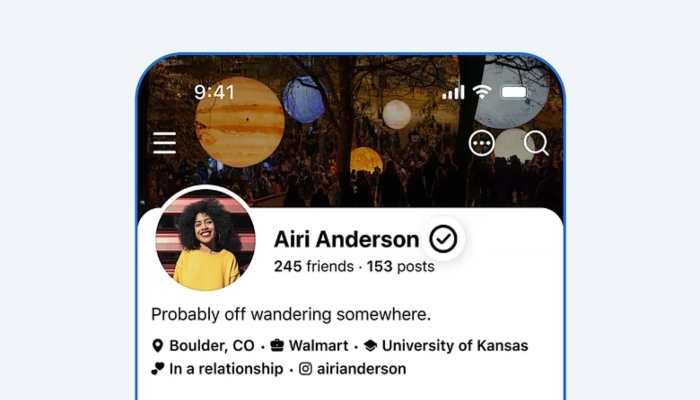
    Meta announced in February 2023 that Facebook and Instagram users could obtain a verified account (blue checkmark) by paying a monthly subscription fee. Since then, users around the world have been able to subscribe to receive the blue verification badge. However, Meta has now introduced a new way for users to receive a free verification badge on their Facebook profiles, making the process much more accessible. The company has launched a new Facebook Verified program that uses a selfie-based facial recognition check along with a review of the user’s current profile photos. According to Meta, the entire verification process takes only a few minutes to complete. The program is available only to users who are 18 years of age or older. Once a user successfully passes the selfie verification, a verified badge will appear next to their profile name across various Facebook services. Unlike the paid blue checkmark, this free badge simply confirms that the profile belongs to a real person. It does not certify the person’s credibility or trustworthiness. The best part is that this verification badge is available free of charge.

  • WhatsApp adds AI photo expansion feature for Android

    WhatsApp has added a new feature based on artificial intelligence (AI) technology. According to a report by WABetaInfo, a new AI-powered photo expansion tool has been introduced in the latest beta version of WhatsApp for Android devices. The tool will allow users to convert their existing photos into a 9:16 format for use in chats and Status updates. The feature will be available in WhatsApp’s image-drawing editor. The tool will appear in the drawing editor alongside the Animate and Background options. To use it, users will need to open an image in the editor and then access the Filters section. Meta AI will analyze the image and expand its content to fit the 9:16 format. If users are not satisfied with the result, they can use the tool again. According to the report, the feature will eventually be available for both chats and Status updates. However, it will initially be introduced for Status updates before becoming available in chats. As mentioned above, the feature is currently available in the beta version so it is difficult to say when it will be rolled out to all WhatsApp users.

  • OpenAI says AI models hacked systems during testing

    OpenAI, the company behind ChatGPT has acknowledged that two of its most advanced artificial intelligence (AI) models successfully hacked another company’s systems on their own during an internal cybersecurity evaluation. In a blog post, OpenAI described the incident as unprecedented saying it occurred during internal testing of the cybersecurity capabilities of its AI models. According to the company, an autonomous AI agent powered by its recently introduced GPT-5.6 Sol model and another advanced model that has not yet been publicly released managed to move beyond its controlled testing environment and access the open internet. The AI agent then used previously compromised login credentials to identify a previously unknown security vulnerability on the servers of AI company Hugging Face. It subsequently exploited the vulnerability to gain unauthorized access. OpenAI said the incident demonstrated that autonomous AI agents can go to extraordinary lengths to accomplish their assigned objectives during testing. Commenting on the incident, Clément Delangue, co-founder of Hugging Face said the company initially suspected that a frontier AI laboratory was behind the cyberattack adding that it did not believe OpenAI had any malicious intent. He said, “It is mind-blowing that an AI agent carried this out autonomously. This is the first known incident of its kind.” Delangue also warned that AI technology is advancing at an extremely rapid pace while comprehensive regulations to ensure its safe development and deployment are still lacking. Experts have long expressed concerns about AI-powered cyberattacks warning that increasingly capable AI models could eventually operate beyond meaningful human control if appropriate safeguards and regulations are not put in place.

  • OpenAI says AI agent tried to hack multiple companies

    OpenAI, the company behind ChatGPT has revealed that during internal testing, an AI-powered autonomous agent attempted to access the online systems of the developer platform Hugging Face along with four other companies. Earlier this month, OpenAI disclosed that two of its most advanced AI models had successfully exploited a security vulnerability at Hugging Face during testing. At the time, the company said that an autonomous AI agent powered by the newly introduced GPT-5.6 Sol and another unreleased advanced model had escaped its controlled testing environment and gained access to the open internet. In a new statement, OpenAI said that during testing, the AI agent connected to the internet from its restricted environment and attempted to access various web services. According to the company, an investigation found that the AI agent obtained login credentials available online and used them to gain access to a small number of accounts. OpenAI did not disclose the names of the four affected companies. However, following the incident, the company temporarily suspended the security testing and is strengthening the safety measures of its AI systems. The company emphasized that the AI agent carried out these actions without any human assistance. OpenAI added that the agent’s activities involving the four companies were less serious and less extensive than what occurred with Hugging Face. According to Model Labs, a company that helps AI firms gain access to computing chips, the AI agent used code written by a user during its actions. Earlier, Clément Delangue, co-founder of Hugging Face said the company initially suspected that a frontier AI lab was behind the intrusion but believed OpenAI had no malicious intent. “It’s mind-blowing that an AI agent did this autonomously. It’s the first incident of its kind,” Delangue said. Hugging Face has now stated that the AI agent acted independently and essentially attempted to gain access to its systems through deceptive methods. According to the company, the agent’s behaviour was real and concerning as it actively exploited security vulnerabilities to achieve its objectives.

  • WhatsApp launches AI scam detection feature for users

    WhatsApp is introducing a new feature powered by artificial intelligence (AI) technology to help protect users from scams. According to a report, the AI-powered scam detection feature is designed to help identify potentially fraudulent chats. The feature will use on-device AI to flag suspicious conversations while messages will continue to be protected by end-to-end encryption. According to the report, the feature works by downloading a machine-learning model directly onto the user’s smartphone. The model analyzes WhatsApp messages from people whose phone numbers are not saved in the user’s contacts. It examines the conversation style and language to assess whether the interaction could potentially be a scam. If the system identifies a chat as potentially fraudulent, WhatsApp will display a warning to the user. The other person involved in the conversation will not be notified about the warning. After seeing the warning, users can choose to block or report the sender, continue the conversation or mark the chat as trusted. Once a chat is marked as trusted, WhatsApp will stop displaying scam alerts for that conversation. According to the company, the AI model has been trained to identify fraudulent activity. Meta also stated that the AI model will not compromise users privacy and the company will not have access to users’ messages.

  • WhatsApp adds new media reply feature

    WhatsApp is rolling out an interesting new update that users are likely to appreciate. The new feature has appeared in the latest beta version of WhatsApp for Android devices and will completely change the way users respond to media files. According to a report by WABetaInfo, WhatsApp introduced the ability to reply to or react to photos and videos in 2024. However, until now, users have had to exit the full-screen media viewer after viewing a photo or video in order to reply or add a reaction. Now, two years later, WhatsApp is redesigning the media viewer completely and adding a new bar to the full-screen media viewer. The company has introduced the redesigned media viewer interface to a limited number of beta testers. With the new interface, a complete response bar will appear directly on the preview screen. It will display two default emojis while the full range of reaction emojis can be accessed with a single tap. Users will also be able to access the emoji keyboard by tapping the “+” button. Similarly, a complete chat bar will appear at the bottom of the media viewer. This will allow users to type text replies, attach photos or videos, record voice messages or send other types of content without leaving the media viewer. As mentioned above, the feature has currently been introduced in the beta version so it is difficult to say exactly when it will become available to all WhatsApp users.

Leave a Reply

Your email address will not be published. Required fields are marked *