youtube explains keeps

YouTube explains why it keeps changing its interface?

YouTube’s user interface is frequently changed on both its mobile and web versions, something that many users do not particularly like. This raises the question of why YouTube keeps experimenting with its user interface especially since some changes become permanent while others are eventually reversed.

Over the past year alone, more than half a dozen changes have been introduced to YouTube’s interface. YouTube has now explained why it continues to make these changes.

YouTube Vice President Jonathan Tiedrsky discussed the matter in a blog post. He said the reason behind these continuous changes is quite simple.

According to him, the purpose of these changes is to make the video-sharing platform easier to use. He added that YouTube does not want its user interface to become cluttered or confusing which is why the company continues to make adjustments.

The company also explained that some of the recent changes such as redesigning buttons are intended to make them more noticeable and easier for users to identify. According to YouTube, these design improvements are also being extended to larger screens including smart TVs.

Similar Posts

  • Google Gemini surpasses one billion users

    Google’s artificial intelligence (AI) app Gemini has surpassed one billion users. Google CEO Sundar Pichai announced the milestone in a post on X (formerly Twitter). He said Gemini has become Google’s fastest-growing service to reach the milestone of more than one billion users. With this achievement, Google Gemini has become the second-most popular AI assistant after ChatGPT. Sundar Pichai also hinted that more updates related to Gemini are being planned and will be announced soon. He said that one billion people use the Gemini app every month making it the 14th Google service to reach one billion users. ChatGPT reached the same milestone in June 2026 while Gemini achieved it within about two and a half years. Google introduced the app in early 2024. Google’s Android operating system may have contributed significantly to Gemini’s rapid growth as the AI assistant is available as the default assistant on many smartphones. Despite Gemini’s impressive growth, Google continues to face strong competition from OpenAI and Anthropic.

  • Gmail’s hidden undo send feature can save from email mistakes

    Many people have experienced the embarrassment of sending an email through Gmail, only to realize moments later that it was sent to the wrong recipient. In other cases, users notice after sending the email that the autocorrect feature changed certain words altering the intended meaning of the message. Fortunately, avoiding such situations is easy thanks to a Gmail feature that has existed for more than a decade but is still unknown to many users. The feature is called Undo Send which allows users to recall a recently sent email. Google first introduced the feature in March 2009 as part of Gmail Labs where it could only be accessed through the Settings menu. In 2015, it was officially rolled out to all Gmail users. Despite being available for over 11 years, many people are still unaware of it. This is surprising considering Gmail is the world’s most popular email service and nearly everyone who uses Google has a Gmail account. The Undo Send feature is useful if you realize after sending an email that you need to make changes, accidentally sent it to the wrong email address or simply changed your mind. After sending an email, an “Undo” option appears in the bottom-left corner of the screen. Clicking it recalls the email before it reaches the recipient. An important advantage is that if you undo the email within the allowed time, the intended recipient is never notified that an email was sent. By default, the Undo Send time limit is 5 seconds but users can increase it to 30 seconds through Gmail’s settings. Gmail’s Undo Send feature is a simple yet highly useful tool that helps users avoid common email mistakes giving them up to 30 seconds after sending an email to review it and correct any errors before it is delivered.

  • |

    Mark Zuckerberg predicts billions will use AI agents within 5 years

    Meta CEO Mark Zuckerberg has made a striking prediction about the future of artificial intelligence (AI) saying that billions of people will have their own personal AI agents within the next few years. Speaking during the release of Meta’s quarterly earnings report, Zuckerberg predicted that over the next five years, billions of people around the world will be using personal AI agents. “I think it’s almost impossible to imagine a future where, within the next five years, billions of people don’t have their own AI agents. These AI agents will understand your goals and be able to work on your behalf 24 hours a day,” he said. Zuckerberg added that people will use these AI agents to manage their finances, monitor their health, assist with relationships and handle household tasks. “We’re moving toward a future where every person will use multiple AI agents. I believe WhatsApp and other messaging services will become even more important,” he said. According to Zuckerberg, WhatsApp is already the leading platform for interacting with Meta AI. Meta is not the only company investing heavily in AI systems capable of acting autonomously on behalf of users. Google is also focusing on custom AI agents while several other technology companies are developing similar systems. Zuckerberg said the AI agents Meta is building will form the foundation of the company’s next generation of products and are expected to contribute significantly to its revenue growth in the coming years.

  • |

    Google Pixel 11 Pro XL features leaked ahead of launch

    San Francisco: Key features of the Google Pixel 11 Pro XL have reportedly been leaked with major upgrades expected in its camera and AI technology. According to a report by Geeky Gadgets, details about the design and key features of Google’s upcoming flagship smartphone have emerged ahead of its launch. Google is preparing to introduce new devices at its hardware event on August 12. According to the leaked information, the Pixel 11 Pro XL is expected to receive significant upgrades in several areas, including the camera, artificial intelligence, processor and connectivity. The leaks have attracted considerable attention from technology enthusiasts. Google is reportedly planning major improvements to the phone’s design, camera, performance and AI capabilities. According to the leaked details, the phone’s camera bar has been redesigned and will reportedly include an LED notification ring. Early leaks referred to this feature as “Pixel Glow” but recent reports suggest its possible official name could be “Highlight.” Available in five colours The Pixel 11 Pro XL is reportedly expected to be available in five colours: green, light green, silver, midnight and red. The phone is expected to feature a 6.8-inch LTPO OLED display with support for a 120Hz refresh rate. Reports also suggest that it will have a 13-megapixel ultra-wide selfie camera on the front. The design is also expected to receive some changes. The Pixel 11 Pro XL may feature a durable aluminum frame and Gorilla Glass Victus 3 which could provide greater protection against scratches and accidental drops. Major camera improvements The Pixel 11 Pro XL is expected to have a triple rear-camera setup. According to the leaks, it may include a 50-megapixel main camera, a 48-megapixel ultra-wide camera and a 48-megapixel periscope telephoto camera. The telephoto camera is reportedly expected to provide 5x optical zoom. The phone may also feature a 120x Pro Zoom option in its software, designed to capture distant objects and scenes with greater detail. With the help of Google’s Gemini AI technology, the camera could offer improved low-light photography, scene recognition and real-time image processing. A new mode called “Motion Capture” is also reportedly being developed. It could use AI to track moving people or objects and maintain focus on them. Improved performance with Tensor G6 The phone is also expected to feature Google’s new Tensor G6 processor which could provide improved performance for multitasking, gaming, video editing and AI-powered applications. The Tensor G6 is expected to offer enhanced capabilities for on-device machine learning, real-time language translation and intelligent text suggestions. The leaked reports also claim improvements in battery performance. The phone could feature an adaptive power-management system that adjusts energy consumption according to usage patterns to help extend battery life. Range of AI features The Pixel 11 Pro XL is expected to include several new AI-powered features. These may include an Animal Rescue feature designed to help identify and locate lost pets. Other expected features include advanced voice recognition, personalized app suggestions based on user habits, improved security, on-device encryption and real-time threat detection. A new Focus Mode could allow users to temporarily silence unnecessary notifications so they can concentrate on important tasks. Reports have also mentioned improved speakers, spatial audio and potentially advanced augmented reality (AR) features. Although most of the information currently available about the Pixel 11 Pro XL is based on leaks and speculation, it suggests that Google is focusing heavily on AI technology alongside hardware improvements in its new flagship smartphone. Google is expected to officially announce the phone’s final specifications and price at its launch. Until then, the reported details should be considered leaks and speculation rather than confirmed information.

  • |

    PM Shehbaz Sharif inaugurates Google office in Pakistan

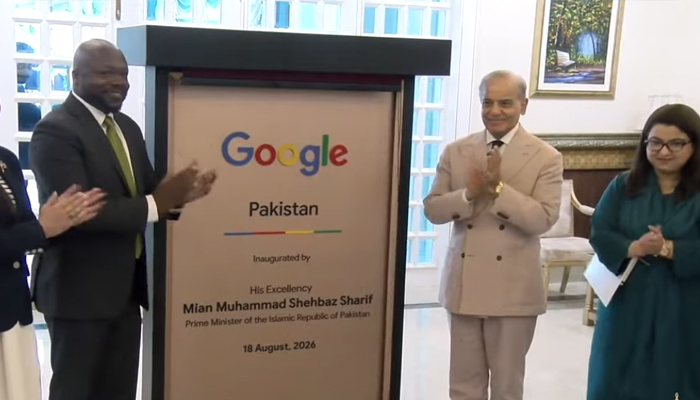
    Islamabad – Prime Minister Shehbaz Sharif inaugurated Google’s new office in Pakistan. On the occasion, the Prime Minister also met with a Google delegation where they discussed the promotion of digital technology in Pakistan and prospects for future cooperation. During the meeting, Prime Minister Shehbaz Sharif said that Pakistan marks the beginning of an important and exciting new journey for Google adding that there are enormous opportunities for Google in the country. The Prime Minister also emphasized the importance of promoting Pakistan’s digital economy and strengthening cooperation with international companies in the field of modern technology. On the occasion, Google’s Vice President said that the company seeks to establish a long-term partnership with Pakistan. He said further steps were needed to promote digital technology in the country. The Google Vice President also made an important announcement for Pakistani students stating that Pakistani students will soon be provided with free access to Google Gemini for one year. He said the initiative would give students access to modern artificial intelligence technology enabling them to benefit from it in their educational and research activities. The inauguration of Google’s office in Pakistan is being described as an important development for the promotion of digital technology, artificial intelligence and modern digital skills in the country.

  • |

    10 technologies replaced by smartphones

    Smartphones are now found in almost everyone’s hands but their rise has also rendered many once-popular technologies obsolete. At the beginning of the 21st century, personal computers, home internet and mobile phones became widely accessible. Few could have imagined that, within a few years, all these technologies would merge into a single device that would transform nearly every aspect of daily life. That device is the smartphone. It serves as a flashlight, bank account manager, weather forecaster, fitness tracker, camera and much more. One of the smartphone’s greatest strengths is its ability to combine multiple functions into a single, easy-to-use device. As a result, many older technologies have largely disappeared. Here are ten of them: 1. Landline phones Landline phones were among the first technologies to be replaced by smartphones. Once common in nearly every home, they have become largely unnecessary because smartphones provide calling capabilities along with numerous internet-based communication apps. 2. Digital cameras Between 2008 and 2021, sales of compact digital cameras declined by more than 97 percent. Modern smartphones feature increasingly advanced cameras eliminating the need for many people to purchase separate digital cameras. 3. Calculators Pocket calculators were once essential tools for students and professionals. Today, every smartphone includes a built-in calculator while dedicated apps can solve even complex mathematical problems. 4. Alarm clocks Traditional alarm clocks have become much less common because smartphones include customizable alarm features allowing users to choose sounds, adjust volume and set multiple alarms. They also function as clocks reducing the need for separate timepieces. 5. Walkie-talkies Walkie-talkies were widely used in workplaces for instant communication. Smartphones now offer voice calls, messaging and group chats providing far more advanced communication options. 6. MP3 players Before smartphones, MP3 players were the preferred way to listen to music. Smartphones now allow users to store songs or stream millions of tracks through music apps without downloading them. 7. Radios Radio was once the primary source of music and news. Today, smartphones can stream live radio stations as well as podcasts and online audio services. 8. Compact Discs (CDs) CD sales peaked in 2002 and remained popular even after the arrival of devices like the iPod. However, smartphones and online streaming services have largely eliminated the need for physical music discs. 9. GPS devices Dedicated GPS navigation systems were once common in vehicles. Today, smartphones include built-in GPS sensors and navigation apps such as Google Maps making standalone GPS devices largely unnecessary. 10. Feature phones Basic mobile phones were once highly desirable and even considered status symbols. However, smartphones have almost completely replaced them leaving feature phones with only a small share of the market.

Leave a Reply

Your email address will not be published. Required fields are marked *