pakistan laboratory that

Pakistan: A Laboratory That Refuses to Learn

By Ali Hiader

Pakistan has gradually become a testing ground for government projects. Governments experiment with massive infrastructure projects costing billions, and when the results fall short of expectations, another project of the exact same nature is launched. The tragedy is that while other countries may well be learning from Pakistan’s experiments, we have completely failed to learn from them.

Punjab’s public transport system serves as a clear example of this. Currently, there are three major metro bus projects operating in Lahore, Rawalpindi, and Multan, while two additional projects are under construction in Faisalabad and Gujranwala. The total length of the existing metro bus routes is approximately 70 kilometers, served by around 167 buses. In Lahore, a city with a population of nearly 20 million, only 66 buses operate along a 27-kilometer route; this indicates that a substantial amount of public funds have been allocated to cover only a limited area.

It is also essential to consider the cost of these projects. Approximately 30 billion rupees were spent on the Lahore Metro Bus project, around 38 billion rupees on the Rawalpindi Metro Bus, and about 29 billion rupees on the Multan Metro Bus; thus, the total cost … is approximately 97 billion rupees. However, the matter does not end there. Subsequently, Lahore was gifted another major transport project—the Orange Line Metro Train—with a total cost of approximately 300 billion rupees.

The issue is not that governments are making a mistake by investing in public transport; public transport is indispensable in expanding cities and can play a vital role in improving the mobility of ordinary citizens. The real question is whether a developing country like Pakistan can afford a transport system that requires the government to provide massive annual subsidies for its operation.

According to reported figures, Punjab’s three Metro Bus projects collectively require an annual subsidy of approximately Rs 21 billion, while the Orange Line Metro Train also requires annual government financial support. This means that, even years after the initial construction costs were paid, taxpayers continue to bear the expenses of these projects. Meanwhile, passengers still face issues such as overcrowding, long wait times, and limited service capacity.

The Punjab government’s new green electric bus project merits attention from a different reason. Chief Minister Maryam Nawaz’s administration has proposed a plan to deploy 5,000 electric buses across Punjab over five years at an estimated total cost of PKR 300 billion. While this cost is relatively lower than that of Lahore’s existing Metro Bus and Orange Line Train systems, the project offers the added advantage of not requiring heavy infrastructure—such as dedicated metro corridors or rail networks; existing roads and bus stops suffice, and operations are far more flexible than current public transport systems. A driver and a conductor are all that is needed to operate a bus.

Most importantly, electric buses can provide public transport services to a vast population with relatively low infrastructure costs. In principle, this model is particularly well-suited to a province where millions of citizens still lack access to reliable public transport.However, Punjab has previously experimented with conventional bus-based public transport; projects like the Speedo service and BUSCO were launched in Lahore and its surrounding areas with similar objectives. The BUSCO project, in particular, ultimately became a prime example of how a public welfare system can shut down when governments fail to plan for the long-term management of public assets. Today, these buses lie in a state of ruin, whereas they could have been properly sold, relocated, or repurposed.

This is precisely why the Green Bus project requires a different financial model. For developing countries like Pakistan, it is extremely difficult to sustain public amenities that rely on perpetual subsidies. Whenever the government faces a financial crisis or a shortage of funds, these buses will eventually end up as nothing more than wrecks. A transport system that cannot survive without billions of rupees in annual government aid is, at its core, a weak system.

To ensure that the project runs effectively, it is essential to operate it on a “no-profit, no-loss” basis so that it remains sustainable for years to come. Fares should be structured so that, following the initial government investment, the system can at least cover its own operating, repair, and maintenance costs, as well as the expense of future bus replacements. While it is acceptable for the government not to make a profit, it must avoid creating a system that requires billions of rupees in annual subsidies merely to remain operational.At the same time, the number of buses must be sufficient for public transport to truly serve as an alternative to private vehicles. Currently, passengers face severe overcrowding, long waits, and uncomfortable journeys.

If traveling by government bus means enduring extreme overcrowding, public transport cannot persuade people to leave their motorcycles and cars at home.Kasur serves as a prime example of this situation. The Kasur district, with a population of approximately 3.8 million, has received only 12 ‘Green Buses’ so far—buses that are smaller than those operating in Lahore. Yet, for a population of this size, the number of buses should have been far greater.

If the government genuinely wants people to prioritize public transport, it must increase the fleet size to a level where passengers can travel in comfort and dignity, rather than having to grapple with one another just to secure a spot on a bus.Punjab now has the opportunity to learn from its past. Instead of viewing every public transport project merely as an occasion for inauguration or a publicity stunt, Maryam Nawaz should focus on its long-term sustainability. The true measure of a project’s success is not how impressive it looks on the day of its inauguration, but rather how effective, affordable, and financially sustainable it remains even ten or twenty years down the line.Punjab certainly needs better public transport. However, the province requires systems that prioritize sustainability, accessibility, and public convenience over political symbols. The government should undertake fewer projects that remain perpetually dependent on taxpayers’ money and instead focus on projects that can stand on their own feet.


Similar Posts

  • Microplastics linked to heart risk

    A new study has found that people who survived a heart attack had higher levels of tiny plastic particles known as microplastics and nanoplastics in their blood. The findings suggest that plastic pollution could be an overlooked risk factor for heart disease. Researchers from the University of Campania in Italy also discovered that smokers and people who are regularly exposed to air pollution had higher amounts of these plastic particles in their blood. The study published in the European Heart Journal found that 84% of heart attack patients had microplastics and nanoplastics in the arteries that supply blood to the heart. In comparison these particles were found in 40% of people with chronic ischemic heart disease and 32% of people with healthy coronary arteries. Experts explained that microplastics and nanoplastics are extremely small plastic particles released from everyday items such as plastic packaging clothing and other plastic products. Researchers said the study does not prove that these plastic particles directly cause heart attacks.  However the findings add to growing evidence that they may affect heart health and more research is needed to better understand their impact.

  • Danger signs your air conditioner needs repair

    As temperatures rise many people buy old or low cost air conditioners to save money. However experts warn that aging AC units can become dangerous if problems are ignored.  Small faults may turn into serious issues including electrical short circuits fires or costly damage. According to experts older air conditioners often develop worn out wiring damaged electrical parts faulty motors and overheating. These problems may seem minor at first but can become dangerous if they are not repaired in time. One of the biggest warning signs is a burning smell or the odor of melted plastic when the AC is switched on.  Experts say this could mean the internal wiring motor or insulation has been damaged increasing the risk of fire. If this happens turn off the unit immediately and have it checked by a qualified technician. Unusual sounds such as rattling grinding or loud noises are also signs that something is wrong. These noises may be caused by a loose part a damaged fan or a compressor problem.  Ignoring them could lead to a complete system failure. If the air conditioner becomes unusually hot while running it may indicate an electrical fault inside the unit.  Overheating can increase the risk of a short circuit or fire making immediate inspection and repair important. Experts also advise not to ignore weak cooling. Reduced cooling may be caused by low refrigerant a faulty compressor or a clogged air filter.  These issues usually mean the AC needs servicing or repairs. Another serious warning sign is seeing sparks near the voltage stabilizer or electrical wires. This may indicate loose connections or damaged wiring, which can quickly become a fire hazard if not fixed. Experts recommend turning off the air conditioner immediately if you notice any of these warning signs and contacting a qualified technician for a full inspection.  Timely repairs can help prevent bigger damage and keep your home and family safe. They also advise that if an air conditioner keeps breaking down and needs frequent repairs replacing it with a newer safer and more energy efficient model may be a smarter and more cost effective choice.

  • Scientists use sharks to improve hurricane forecasts

    Scientists at the University of Delaware in the United States are investigating whether sharks can be used to improve predictions of hurricane intensity and serve as ocean-observing systems for collecting marine data. Researchers at the University of Delaware are attaching sensors to sharks that measure ocean temperature, electrical conductivity and depth. Electrical conductivity is related to the amount of salt in the water. According to Aaron Carlisle, a professor at the university’s School of Marine Science and Policy and the lead researcher of the study, animal-mounted sensors have been successfully used in marine research for several years particularly in areas where scientific observations are limited. Researchers say sharks are suitable for this research because they are abundant, inhabit vast areas of the ocean and are relatively easier to access than many protected marine mammals. So far, shark tagging has mainly been used to study their movements and habitats. However, in this new research, scientists are selecting sharks that can collect useful data for hurricane forecasting and swim close enough to the ocean surface for their tags to transmit information via satellites. Preliminary analyses in the North Atlantic have identified shortfin mako sharks, blue sharks, smooth hammerhead sharks and juvenile great white sharks as suitable species for the research. According to Aaron Carlisle, scientists are paying particular attention to the heat in the upper layer of the ocean known as the “mixed layer.” This layer of water plays an important role in the intensity of hurricanes because a warmer mixed layer can contribute to the formation of stronger hurricanes. Caroline Wiernicki, a doctoral student at the University of Delaware said the shark-tagging process begins in early May, when several migratory shark species come closer to the coast after spending the winter in remote areas of the Atlantic Ocean. Researchers travel 50 to 65 kilometres offshore in a research vessel where they deploy baited lines and typically wait two to three hours for sharks to approach. A tag is attached to the shark’s dorsal fin. When the shark swims near the surface, the tag connects with a network of satellite receivers and transmits data. Carlisle said the tagging process is completed rapidly similar to a “pit crew” during a motor race and usually takes less than five minutes. Shark tagging is carried out under institutional animal-care oversight to minimize its impact on the animals. The tags are attached using materials that gradually dissolve and eventually detach on their own. Before each shark is released back into the ocean, its health is examined because stress or injury could affect its natural behaviour and consequently, the reliability of the data collected. Caroline Wiernicki said sharks are portrayed as extremely frightening animals in movies whereas in reality they are relatively calm creatures. According to the researchers, if the project proves successful, data collected from sharks could help improve forecasts of the intensity of hurricanes approaching the US East Coast. This information could provide more reliable forecasts to coastal communities from North Carolina to Massachusetts helping them prepare for storms and improve coastal protection. Aaron Carlisle said sharks are remarkable animals that are exceptionally well adapted to life in the ocean and there is much that humans can learn from them. If it is proven that sharks can also benefit humans, it would be a win-win situation for both.

  • How to empower women economically

    Women often face social pressure traditional restrictions and limited opportunities that can slow down their personal and professional growth.  Creating more opportunities for women and supporting their independence is important for building a stronger society. Economic independence can bring greater confidence stability and freedom to women’s lives. It allows them to use their skills make important decisions and contribute to the progress of their families and communities. When more women take part in economic activities the overall economy can also benefit.  Financially independent women are better able to make decisions about their education careers health and future. Education and skill development Education and professional skills are important steps toward economic independence.  Women should have access to education at every level along with training in areas such as technical skills digital skills and business management. Skill based training can help women find jobs start businesses or work independently according to their abilities. Support women entrepreneurs Women should have better opportunities to start and grow their own businesses.  Small loans and microfinance programs with reasonable conditions can help women invest in their business ideas. Government agencies and private organizations can also provide business training mentoring investment opportunities and networking programs. Such support can help women learn from other successful entrepreneurs and grow their businesses. Use digital platforms The internet has created new ways for women to earn money from home or work with people around the world. Women can learn skills such as freelancing e-commerce digital marketing graphic design and other online services. Online courses can help them improve their abilities while social media can be used to promote their products services and talents. Strong policies and legal protection Government policies also play an important role in supporting women at work.  Women should have equal opportunities fair pay and safe working environments. Strong laws against workplace harassment should be properly implemented. Maternity leave and other workplace facilities can also make it easier for women to continue their careers. Change social attitudes economic empowerment is difficult without changing social attitudes.  Families and communities should support women who want to study work start businesses or make financial decisions. Awareness campaigns and positive media messages can also help challenge outdated ideas and highlight the valuable role women play in society. Building a stronger society Women’s economic empowerment is not only about helping individual women. It can also benefit families communities and the wider economy. By improving education skills business opportunities digital access legal protection and social support women can create better opportunities for themselves while contributing to a stronger and more successful society.

  • Too much salt? Try these simple tricks

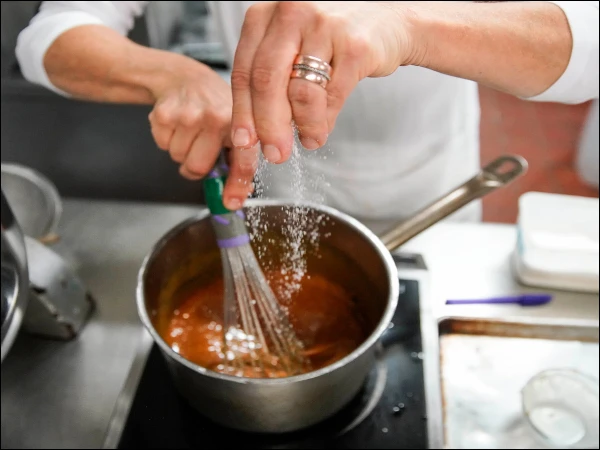
    Salt is one of the most important ingredients in cooking because it brings out the flavor of food.  A small change in spices may not make much difference but too little salt can make a dish taste bland while too much can ruin its flavor. Adding salt to food is easy when it is needed. But if you accidentally add too much salt you may think the whole dish is ruined.  Fortunately there are several simple kitchen tricks that can help reduce the strong salty taste and save your food. Add a Potato If your curry or another dish has too much salt take a raw potato cut it into two pieces and add it to the food. Let it cook for about 10 minutes and then remove it.  A boiled potato can also be used. If you prefer you can leave the potato in the curry and serve it with the dish. Use fresh cream Fresh cream can help make a salty dish taste milder. Add a small amount of cream to the curry or other suitable dishes and mix well.  It can reduce the strong salty taste while also making the food smoother and richer. Try a dough ball A small ball of flour dough is another traditional home method. Make a small dough ball and place it in the curry.  Leave it for around 15 minutes and then take it out. This may help reduce the salty taste of the dish. Add water or milk For dishes that can handle extra liquid adding a little water can reduce the salty taste.  Milk or cream can also work well in some recipes. Milk can make the flavor softer and more balanced. Use yogurt and fried onion Yogurt and fried onions can also help balance the taste especially in dishes such as meat curry karahi, or mixed vegetables. Grind some browned onions with yogurt and mix them into the dish. This can make the strong salty flavor less noticeable while adding extra taste. Add salt slowly The best way to avoid overly salty food is to add salt little by little while cooking. Taste the food before adding more.  This simple habit can help you control the amount of salt and keep your dishes flavorful. Using less salt overall is also better for general health. So instead of adding a large amount at once add small amounts gradually and adjust the taste as needed.

  • Team sets record after 10 T-Shirt folding attempts

    David Rush, who has achieved more than 200 Guinness World Records has added another record to his name. This time he teamed up with 10 co-workers and a mental skills expert from Las Vegas to set a new record for folding T-shirts. During a team building trip to Las Vegas the 12-member team attempted to fold 12 T-shirts in a relay race as quickly as possible. The previous record was 2 minutes and 24 seconds. After several failed attempts David and his team finally completed the challenge in just 2 minutes and 19.65 seconds. The challenge was not only about speed. Team members also had to follow the rules carefully. Folding a shirt incorrectly starting too early or making even a small mistake could cancel the entire attempt. The team needed 10 attempts to break the record. Several early attempts failed because of rule violations.  Some members folded the shirts incorrectly while others started their turn too soon. On their final successful attempt all 12 members followed the rules perfectly and finished the relay in 2 minutes and 19.65 seconds officially setting a new Guinness World Record for the fastest relay-style T-shirt folding challenge.

Leave a Reply

Your email address will not be published. Required fields are marked *