Maryam Aurangzeb rejects PPP’s rigging claim…
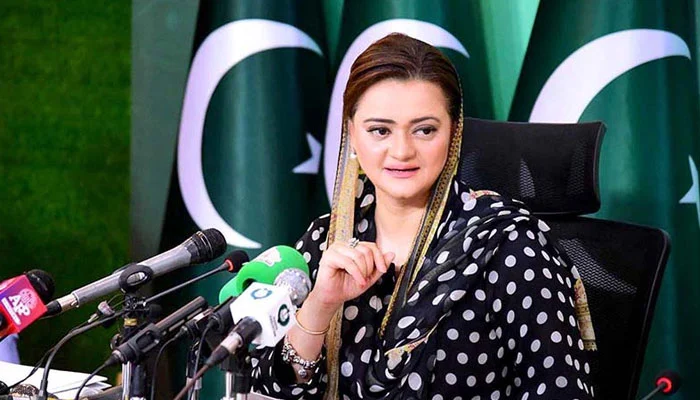
Pakistan Muslim League (Nawaz) (PML-N) leader and Senior Minister of Punjab, Maryam Aurangzeb, strongly rejected allegations of election rigging made by the Pakistan Peoples Party (PPP), questioning the credibility of such claims by pointing to the PPP’s own government in Azad Jammu and Kashmir (AJK).
Speaking to the media in Rawalpindi, Maryam Aurangzeb said that the PPP’s accusations of electoral fraud were baseless and contradictory. Referring to PPP leader Nayyar Bukhari’s remarks, she said it was unreasonable to claim widespread rigging on the basis of only two ballot papers when the election involved thousands of votes. According to her, isolated incidents cannot be used to undermine the credibility of an entire electoral process.
She further argued that since the Pakistan Peoples Party is in power in Azad Kashmir, its allegations of election manipulation effectively amount to accusing its own administration of wrongdoing. “If you insist that rigging took place in Azad Kashmir, then you are accusing your own government of conducting fraudulent elections,” she remarked. Aurangzeb added that the people of both Punjab and Azad Kashmir had exercised their democratic right and chosen not to vote for the PPP, and that the party should accept the public verdict instead of making unfounded allegations.
Maryam Aurangzeb also criticized the timing of the PPP’s accusations, noting that claims of rigging were being made as soon as polling began. She argued that elections are won through the support of voters, not through repeated allegations. “You do not win elections by making accusations; you win them by earning the trust and votes of the people,” she said.
Addressing another issue, Aurangzeb questioned attempts to politicize a recent death, stating that the deceased had not died from gunfire. She asked whether political opponents now intended to use even such incidents for political gain, criticizing what she described as the exploitation of sensitive matters for electoral purposes.
Turning her attention to governance, Aurangzeb said the Pakistan Peoples Party should focus on improving its performance in Sindh, where it has governed for years. She argued that better governance would provide meaningful relief to the people of the province. Drawing an analogy, she said that if a student fails to prepare for an examination, they cannot simply lock the examination hall. In the same way, she suggested that political parties cannot blame the electoral process when they fail to secure public support.
Aurangzeb maintained that the Pakistan Muslim League (N) had earned the confidence of the electorate through its performance and public service. She expressed surprise that the PPP was repeatedly raising issues related to gunfire and election rigging, saying such rhetoric reflected an unwillingness to accept the democratic outcome.
She also referred to a speech delivered by PPP Chairman Bilawal Bhutto Zardari the previous day, questioning the tone and substance of his remarks. According to Aurangzeb, the PPP should respect the will of the voters rather than challenging the legitimacy of the election without sufficient evidence.
Concluding her remarks, Maryam Aurangzeb emphasized that Pakistan’s electoral system provides legal mechanisms for addressing disputes. She said that if the PPP genuinely believes irregularities occurred, it should present its evidence before the Election Commission or the relevant election tribunals. Instead of complaining publicly, she urged the party to pursue the appropriate legal channels. She concluded by saying that the PPP’s own voters had rejected its narrative and that the party should contest elections through democratic means while respecting the mandate given by the people.