fia arrests two
|

FIA arrests two in Rs533m gold loan fraud case

The Federal Investigation Agency (FIA) has arrested a bank cashier and an approved goldsmith in connection with an alleged fraud worth more than Rs533 million at a bank branch in Faisalabad district.

According to the FIA, the alleged financial irregularities surfaced during an internal inspection of the bank’s gold financing scheme at its Mamoon Kanjan branch. Investigators discovered that 17 bags containing pledged gold had gone missing, while several other cases involved gold that turned out to be fake, underweight or otherwise failed to match the details recorded in the bank’s loan documents.

The investigation found irregularities in 107 gold loan accounts, raising concerns about the handling and verification of gold pledged against loans. The bank estimates that the alleged fraud caused financial losses of more than Rs533.62 million.

The FIA has registered a case against goldsmith Tahir Mahmood, cashier Muhammad Arshad and another suspect, Abdul Razzaq. Officials have arrested the cashier and the approved goldsmith as part of the ongoing investigation.

Investigators are now examining the records of the affected loan accounts and the procedures followed while assessing and approving the pledged gold. The FIA said it would determine the involvement of other individuals during the course of the investigation.

Authorities are also expected to examine whether the suspects acted alone or worked with others to remove pledged gold, substitute genuine gold with counterfeit or lower-weight items, and facilitate loans against inadequate collateral.

The case highlights serious concerns about oversight and verification procedures within gold financing schemes, where banks provide loans against gold deposited as security. The FIA said further action would follow as investigators establish the full scope of the alleged fraud and identify any additional people involved.
Similar Posts

  • | |

    Pakistan-Belarus deepen defence ties, top military…

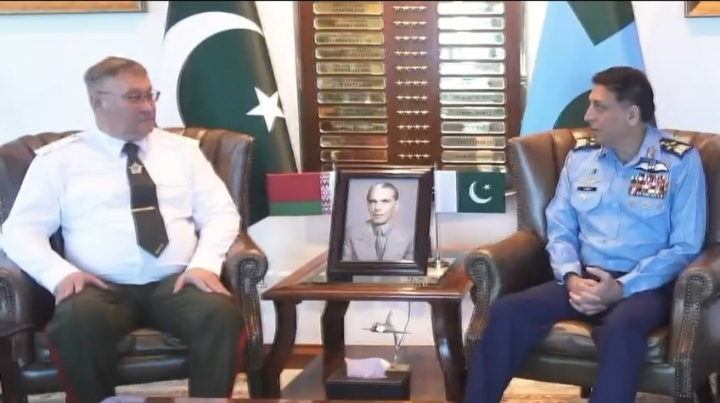
    ISLAMABAD: Pakistan and Belarus have reaffirmed their commitment to expanding defence cooperation following high-level talks between senior military officials at Air Headquarters in Islamabad. According to the Inter-Services Public Relations (ISPR), a Belarusian defence delegation led by Major General Muraveiko Pavel Nikolayevich, Chief of the General Staff of the Armed Forces and First Deputy Defence Minister, met with Air Chief Marshal Zaheer Ahmed Baber Sidhu, Chief of the Air Staff, on Thursday. The discussions focused on regional security, matters of mutual interest and opportunities to broaden military collaboration between the two countries. During the meeting, the Pakistan Air Force chief reiterated the PAF’s resolve to strengthen bilateral defence ties through greater cooperation in joint training, military exercises, technological innovation and defence industry partnerships. The Belarusian military chief praised the Pakistan Air Force for its high level of operational readiness, technological progress and growing self-reliance in defence capabilities. He also reaffirmed Belarus’ interest in expanding military cooperation with Pakistan across key areas. The meeting highlighted the shared determination of both countries to reinforce defence relations and explore new avenues of collaboration aimed at promoting mutual strategic interests

  • | | |

    PM Shehbaz orders scientific system to assess tax …

    Prime Minister Shehbaz Sharif has directed the Federal Board of Revenue (FBR) to develop a scientific and comprehensive method to assess tax potential in different sectors of the economy. The new system is aimed at improving tax collection. It will also help identify sectors with untapped revenue potential. The government wants to strengthen tax administration and reduce tax evasion. The prime minister issued the directives during a meeting on FBR reforms in Islamabad on Wednesday. He directed the FBR to work with the power sector to identify businesses and individuals involved in the informal economy. Authorities will also identify those suspected of avoiding taxes. Shehbaz instructed officials to take legal action against people and businesses found involved in tax evasion. The prime minister said improvements in the FBR’s monitoring system were already producing results. He pointed out that sugar production data had matched FBR records for the first time in Pakistan’s history. He described the development as an important sign of improved monitoring and tracking. Shehbaz praised FBR Chairman Rashid Mahmood Langrial and his team for their efforts. He also appreciated taxpayers and businesses that were following tax laws. The prime minister said the government had provided maximum possible support to export-oriented and domestic industries. He said the government would continue facilitating businesses while ensuring compliance with tax regulations. He directed the FBR chairman and senior officials to spend the first week of every month in Karachi. They will meet business representatives and address their concerns. Shehbaz also ordered the expansion of digital production monitoring. He directed officials to make tracking systems operational in the textile, beverages, steel, poultry, edible oil and ghee, and tyre sectors by December. He also stressed that appointments and transfers within the FBR must be made strictly on merit. The prime minister praised the new system for evaluating officers. He said merit and transparency must remain central to FBR reforms. He directed authorities to prepare a list of high-performing officers. The best-performing officials will be considered for awards on Independence Day. Shehbaz also ordered an immediate third-party audit of customs bonded warehouses. The audit will examine the warehouses and identify possible irregularities. Officials will then be required to take corrective measures where necessary. The meeting was informed about progress on production tracking systems and human resource reforms. Officials said tracking systems were already fully operational in the sugar, cement, tobacco, tiles and fertiliser sectors. Work in five additional sectors was also nearing completion. These sectors have an estimated tax potential of more than Rs700 billion. Officials said tracking systems were also being developed for nine other production sectors. These sectors are estimated to have an additional tax potential of around Rs560 billion. The prime minister directed authorities to complete indirect tax tracking across the production sector by the end of the year. The meeting also reviewed reforms in the FBR’s workforce. Newly recruited officers are receiving specialised training. Existing officers are also undergoing training. The programmes have been designed around merit and performance. Officials said the training modules were aligned with international standards and Pakistan’s tax requirements. A new performance evaluation system has also been introduced. Under the system, high-performing officers can receive recognition. Officials who fail to meet performance standards can face penalties. The government has also appointed 957 third-party auditors. The move is intended to improve transparency and strengthen tax-related processes. Recruitment of 280 goods evaluators is also under way. The evaluators will work under the customs faceless assessment system. The meeting also discussed measures to reduce unnecessary tax disputes. A Case Scrutiny Committee is being established for this purpose. The committee will determine whether tax cases should proceed based on their merits. Officials also provided an update on Alternative Dispute Resolution Committees. By June 2026, 152 out of 377 applications had been resolved within 90 days. The process resulted in the recovery of Rs54 billion in tax revenue. Digital reforms also reviewed Prime Minister Shehbaz Sharif separately reviewed progress on the national digital vision. He ordered immediate measures to make the newly established Sky47 AI national central data centre available to federal government institutions. The prime minister said the initiative would help modernise government services. He said citizens would eventually be able to use a single digital identity to access multiple public services. These services could include government document verification, banking, healthcare and transfers. The prime minister said a central national data centre would bring information from federal institutions together. He said this would reduce the need for separate data centres. It could also help save public resources. Shehbaz said the national digital vision was important for building a more integrated society. He highlighted three key areas of the programme. These include the digital economy, digital citizen services and digital government services. He directed authorities to initially focus on health, agriculture, utilities, housing and small and medium-sized enterprises. The aim is to ensure that citizens begin receiving improved digital services as quickly as possible. Officials said digital implementation was already under way in agriculture, food, health, energy, housing and SMEs. Work has also started in 14 additional priority sectors. The housing component will introduce a central identification number for public and private properties. The SME component will create an integrated system of unique legal identities for businesses. The government believes these measures can improve transparency and economic activity. Shehbaz also ordered an early meeting of the National Digital Commission. The meeting will include key stakeholders. Provincial governments will also be consulted. The commission was established under the Digital Nation Pakistan Act 2025. It is chaired by the prime minister and includes the chief ministers of all provinces. The prime minister said consultation with federal and provincial institutions was essential for effective implementation. He also stressed the importance of international standards and global best practices.

  • | |

    Government college students excel in Karachi inter…

    KARACHI: The Board of Intermediate Education Karachi (BIEK) on Friday announced the results of the Intermediate Part-II annual examinations 2026. Students from government colleges secured top positions in several groups, highlighting the strong performance of public-sector educational institutions. BIEK Chairman Professor Ghaffar Muhammad Lakho said the results were encouraging for government colleges. He noted that the top two positions in the pre-medical group were won by students of a government college. According to him, this reflects the growing trust of students and parents in public-sector education. In the pre-medical group, Hafsa Khan of BAMM PECHS Government College for Women secured first position. She scored 1,011 marks out of a total of 1,100. Her classmate Huda Sarwar claimed the second position with 1,007 marks. Amina Aziz of Bahria College, Karsaz, secured third place after obtaining 1,004 marks. Controller of Examinations Zarina Rashid said that 23,613 students registered for the pre-medical examinations. A total of 23,007 candidates appeared in the exams. Out of them, 14,134 students passed. The overall pass percentage in the pre-medical group remained 61.43%. Female students dominated the Arts Private Group by securing all top three positions. Rafia Shoaib Jaliwala topped the group with 925 marks. Almas Fatima and Khansa Raza jointly secured the second position with 902 marks each. Amra Shoaib Jaliwala stood third after scoring 901 marks. Students also performed well in the Home Economics Group. Azka Imran of Rana Liaquat Ali Khan Government College of Home Economics secured first position with 973 marks out of 1,200. Aila Anwar obtained second position with 968 marks. Yamna Shariq secured third place by scoring 953 marks. Special candidates also recorded an impressive performance. In the Arts Regular category, Syed Hammad Ali secured first position with 1,004 marks. Taha Ahmed came second with 990 marks, while Maryam Bibi claimed third position after scoring 985 marks. The board said the pass percentage in the Arts Private Group stood at 50.04%. The Home Economics Group recorded a pass rate of 52.47%. The highest success ratio was observed among special candidates, where the pass percentage reached 95.87%.

  • |

    Woman killed as 11kV power line falls in Lahore

    A tragic accident claimed the life of a woman in Lahore on Wednesday after an 11-kilovolt (11kV) high-voltage electricity wire snapped and fell on her near Sheikh Hospital in the city’s Muslim Town area, officials said. According to rescue authorities, the woman was walking along the roadside with her young daughter when the live power line suddenly collapsed, causing a powerful electric shock. She suffered severe burns and died at the scene before emergency responders could provide medical assistance. Rescue teams rushed to the area immediately after receiving reports of the incident. However, officials were unable to recover the victim’s body until electricity to the damaged line was disconnected due to the danger posed by the live 11kV wire. Fortunately, the woman’s daughter escaped the incident unharmed despite being with her at the time of the accident. Witnesses described the child’s survival as miraculous, saying she narrowly avoided contact with the live cable. Authorities promptly informed the Lahore Electric Supply Company (LESCO), which dispatched technical teams to disconnect the power supply and remove the damaged wires. Rescue personnel and police remained at the scene while engineers worked to secure the area and prevent further danger to pedestrians and motorists. Police have launched an investigation to determine what caused the high-voltage line to fall. Officials will examine whether recent weather conditions, aging infrastructure, or a technical fault contributed to the incident. The victim’s identity has not yet been officially released, and her body will be shifted for legal formalities once the area is declared safe. The incident has once again raised serious concerns over the safety and maintenance of electrical infrastructure in densely populated urban areas. Residents urged authorities to conduct immediate inspections of overhead power lines to prevent similar tragedies. Emergency officials also advised the public to stay away from fallen electrical wires and report such hazards immediately, warning that even wires lying on the ground can remain live and extremely dangerous until disconnected by utility workers.

  • | |

    Olivia Munn reveals the style shift that helped he…

    Olivia Munn is opening up about how she found her personal style again after navigating motherhood, postpartum anxiety and a difficult breast cancer journey. The 46-year-old actress recently spoke with USA Today about how her experiences changed the way she viewed her body, clothing and identity. For Munn, fashion became more than choosing an outfit. It became a way to reconnect with herself after years of major changes. (People.com⁠) Munn first struggled with her changing body after welcoming her son, Malcolm, in 2021. She said she had expected her body to return to how it looked before pregnancy, but that did not happen. Breastfeeding, weight changes and a larger bust also meant many of her clothes no longer fit. At the same time, Munn was dealing with postpartum anxiety, which she described as an isolating experience. Instead of immediately replacing her entire wardrobe, she began making more intentional choices. Comfort, simplicity and clothing that made her feel confident became more important than following every new trend. Her style journey took another turn after she was diagnosed with breast cancer in 2023. Munn underwent multiple surgeries, including a double mastectomy and later reconstruction, as she focused on her health and recovery. (People.com⁠) After going through what she described as years of “back-to-back battles,” Munn reached a turning point. She realized she was tired of feeling disconnected from the way she dressed and decided she wanted to reclaim that part of herself. Rather than allowing her experiences to dictate what she could wear, Munn began figuring out what made her feel comfortable and authentic again. Her approach became less about dressing according to expectations and more about dressing for herself. That mindset also influenced her recent partnership with fashion brand Anne Klein. Munn has embraced clothing that feels polished while still fitting her lifestyle and changing body. Her story highlights how personal style can become part of rebuilding confidence after major life changes. For Munn, finding the right clothes was not simply about looking good. It was about recognizing herself again. After years of physical and emotional challenges, she is choosing to make room for joy, confidence and self-expression. Munn’s style shift is ultimately a story about reclaiming identity. She is no longer waiting to feel like her old self. Instead, she is discovering who she is now—and dressing for that woman.

  • | |

    LHC CJ orders 2-month deadline for long-pending tr…

    Chief Justice Lahore High Court (LHC) Justice Aalia Neelum has taken a major step to expedite the trials of accused persons who have remained in custody for more than three years, directing that their cases be decided within two months. On the directions of Chief Justice Aalia Neelum, letters have been issued to the Sessions Judges of 28 districts across Punjab, directing them to ensure the speedy disposal of cases involving under-trial prisoners who have been in detention for more than three years. The Sessions Judges have been instructed to place such cases on a fast-track basis and hear them on a priority basis so that decisions are delivered within the stipulated period of two months. The Chief Justice directed that all Sessions Judges in Punjab would be bound to ensure the disposal of these cases within the prescribed timeframe. The district judiciary has also been directed to accelerate proceedings in cases involving long-incarcerated under-trial accused and avoid unnecessary adjournments that could further prolong their detention. The Lahore High Court has also sought implementation reports regarding cases in which accused persons have remained behind bars for more than three years, in order to monitor progress and ensure compliance with the directions. The initiative aims to facilitate the timely provision of justice to prisoners whose trials have remained pending for prolonged periods. The directions are also intended to address unnecessary delays in criminal proceedings and reduce the backlog of long-pending cases. The Chief Justice’s directive underscores the need for the district judiciary to prioritize cases involving under-trial prisoners and ensure that prolonged detention does not continue merely because of delays in the disposal of their trials. The Sessions Courts across Punjab have accordingly been asked to take immediate measures to speed up proceedings and submit reports regarding compliance with the Lahore High Court’s directions.

Leave a Reply

Your email address will not be published. Required fields are marked *