fifa president gianni
| |

FIFA President Gianni Infantino withdraws FIFA forward enterprise proposal


FIFA President Gianni Infantino has officially announced the withdrawal of the proposed FIFA Forward Enterprise initiative after facing significant opposition from stakeholders, saying the project no longer serves the best interests of global football.

In an official statement, Infantino confirmed that the FIFA Forward proposal has been formally abandoned and that no further work or discussions will be carried out regarding the initiative.

“The FIFA Forward project has officially come to an end, and there will be no further progress on the proposals,” Infantino said.

According to the FIFA president, the plan—which was linked to broader investment ideas surrounding the FIFA World Cup—had become increasingly divisive within the international football community. Rather than bringing football stakeholders together, the proposal had created disagreement among member associations and other interested parties.

Infantino acknowledged that the growing differences of opinion convinced FIFA’s leadership that continuing with the project would not benefit the sport.

“The World Cup investment proposal has led to divisions within football, and it is no longer in the game’s best interests to continue pursuing it,” he stated.

He emphasized that the FIFA Forward Enterprise initiative was always intended to move forward only if it received the support of a clear majority of FIFA’s member associations. Since that level of consensus was no longer evident, FIFA decided to discontinue the proposal altogether.

“The project was always dependent on the backing of the majority of FIFA’s member countries,” Infantino explained. “After carefully listening to the views and concerns expressed by all parties involved, we have concluded that the proposal should not proceed.”

The FIFA president stressed that the decision reflected the organization’s commitment to consultation, transparency, and unity within world football. He said FIFA had taken into account the opinions of national football associations, confederations, and other stakeholders before reaching its final conclusion.

Infantino reiterated that FIFA’s primary objective has always been to strengthen the global game rather than create unnecessary disagreements.

“Our mission has always been to promote unity and improve football around the world,” he said. “That commitment remains unchanged, and we believe this decision is in the best interests of the sport.”

Looking ahead, Infantino expressed hope that all stakeholders would once again work together to address the challenges facing international football. He said FIFA intends to bring all relevant parties back to the negotiating table to explore new ideas and initiatives that enjoy broader support across the football community.

“We will continue engaging with all stakeholders to find common ground and develop solutions that benefit football globally,” he said.

Despite shelving the FIFA Forward Enterprise proposal, Infantino assured member associations that FIFA remains fully committed to supporting football development, particularly in countries where additional investment and infrastructure are needed.

He emphasized that expanding access to the sport, improving facilities, and creating opportunities for young players around the world will remain central to FIFA’s long-term strategy.

“Our mission to promote and develop football in countries that need greater support will continue,” Infantino concluded. “We remain committed to investing in the future of the game and ensuring that football continues to grow in every region of the world.”

The decision marks a significant shift in FIFA’s strategic planning and underscores the organization’s willingness to reconsider major initiatives when they fail to achieve broad consensus among its global membership.

Similar Posts

  • |

    Indian student protest to continue after clashes in Delhi leave nearly 180 injured

    A youth led protest movement in India has vowed to continue demonstrations demanding the resignation of Education Minister Dharmendra Pradhan after violent clashes with police in New Delhi left nearly 180 people injured. The movement, known as the Cockroach Janta Party, cancelled plans for another march to parliament but said protests would continue at the Jantar Mantar demonstration site. Organisers said they wanted to avoid further injuries after Monday’s confrontation with security forces. The campaign began as an online satirical movement but has rapidly grown into one of the biggest public challenges facing Prime Minister Narendra Modi during his third term in office. It has attracted widespread support from young people angered by repeated examination paper leaks and allegations of corruption in India’s education system. Thousands of protesters from Delhi and nearby regions gathered outside parliament on Monday to demand accountability over a national medical entrance examination leak that affected more than two million students earlier this year. The exam had to be conducted again after question papers were leaked, while reports of several student suicides linked to the controversy intensified public outrage. Police used batons and tear gas to disperse demonstrators after violence broke out during the march. According to Delhi Police, more than 118 police and security personnel, along with around 60 protesters, were injured during the clashes. Most of those hurt received medical treatment and were later discharged from hospital. Authorities also detained around 70 protesters and said legal action would be taken against them. Police accused demonstrators of ignoring restrictions on public gatherings and behaving aggressively despite repeated warnings. On Tuesday, around 500 protesters gathered peacefully at Jantar Mantar despite light rain and heavy security across central Delhi. Paramilitary forces remained deployed while barricades were placed on several roads to prevent further unrest. CJP founder Abhijeet Dipke apologised to supporters for the violence they faced during Monday’s protest. He expressed particular concern over female demonstrators who he claimed were assaulted by male police officers during the clashes. Dipke announced that while the movement would continue its campaign, organisers would not attempt another march towards parliament because they feared more young people could be injured. The protest movement gained significant momentum after social activist Sonam Wangchuk joined the campaign with a hunger strike in late June. Wangchuk was later moved to hospital by authorities, a move that further fuelled criticism of the government among supporters. The group’s demands include the resignation of the education minister, the release of Wangchuk and financial compensation for the families of students who reportedly died by suicide following the examination leak. Government officials have indicated they are open to discussions. Health Minister JP Nadda recently met representatives of the movement and requested time to consider their demands. Parliamentary Affairs Minister Kiren Rijiju also called for calm and said ongoing talks should not be disrupted. Opposition parties criticised the government’s handling of the protests and accused authorities of using excessive force against peaceful demonstrators. Leaders of the ruling Bharatiya Janata Party rejected those claims and argued that the violence appeared to have been deliberately provoked. Political analysts believe that even if negotiations reduce immediate tensions, the wider frustration among India’s younger generation is unlikely to disappear. Concerns over unemployment, repeated examination scandals and growing distrust in public institutions continue to drive dissatisfaction, making youth unrest an increasingly important political issue for the government.

  • | |

    Trump warns Iran backers of economic punishment

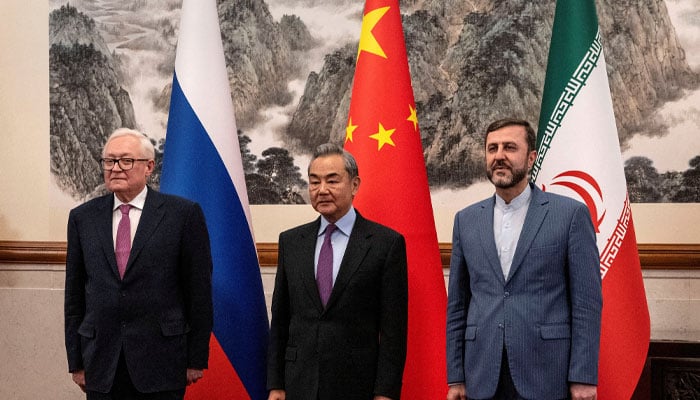
    US President Donald Trump has warned that countries providing an economic “lifeline” to Iran could face financial penalties as Washington steps up pressure on Tehran. Trump has also announced what he described as an “economic D-Day” against Iran as part of his broader campaign to weaken the country’s economy and force changes in its policies. The latest threat reflects Trump’s continued reliance on US economic power as a key foreign policy tool. His administration has increasingly used tariffs, sanctions and other financial measures to pressure countries and governments that Washington believes support US rivals or undermine its strategic objectives. Analysts, however, question whether the strategy can deliver the same results against Iran as it has in cases where the United States enjoys greater cooperation from other major economies. Iran maintains important economic ties with China and Russia, two countries that have strong reasons to resist US pressure. Russia already faces extensive American sanctions and has significantly reduced its dependence on the US-led global financial system. As a result, additional US economic pressure may have a limited impact on Moscow’s willingness to maintain trade and other economic relations with Tehran. China could present an even greater challenge for Washington. Beijing has repeatedly shown that it is prepared to resist or work around US sanctions when its own economic and strategic interests are at stake. China remains one of Iran’s most important trading partners, particularly in the energy sector, making Beijing a key factor in any US effort to isolate Tehran economically. Paul Musgrave, an associate professor of government at Georgetown University in Qatar, told Arab media that Trump would face significant difficulties in making his pressure campaign fully effective. Musgrave said Trump was attempting to impose a coordinated sanctions regime largely through unilateral US pressure, even though such efforts have traditionally depended on cooperation from multiple countries. He noted that an effective international campaign would require support from major powers, including China and Russia, as well as cooperation among the five permanent members of the United Nations Security Council. Trump said in a post on his social media platform, Truth Social, on Tuesday that his campaign against Iran would become one of the most devastating economic operations ever directed against a country. The statement signals a major escalation in Washington’s economic pressure on Tehran. Trump’s administration appears determined to use America’s financial influence, access to global markets and trade relationships to make it increasingly difficult for Iran to maintain its international economic ties. However, experts warn that the strategy could also create significant economic consequences beyond Iran. If Washington threatens countries that continue trading with Tehran, those governments could face a difficult choice between maintaining their economic interests and avoiding US penalties. The effectiveness of Trump’s strategy will largely depend on whether Washington can convince major trading partners to cooperate. China and Russia are likely to remain the biggest obstacles, particularly if they view continued economic engagement with Iran as important to their own strategic interests. The latest move also comes after a series of contentious trade battles during Trump’s second presidential term, highlighting his continued preference for economic pressure as a means of pursuing foreign policy goals. Whether the approach can isolate Iran without triggering further tensions with major global powers remains uncertain.

  • |

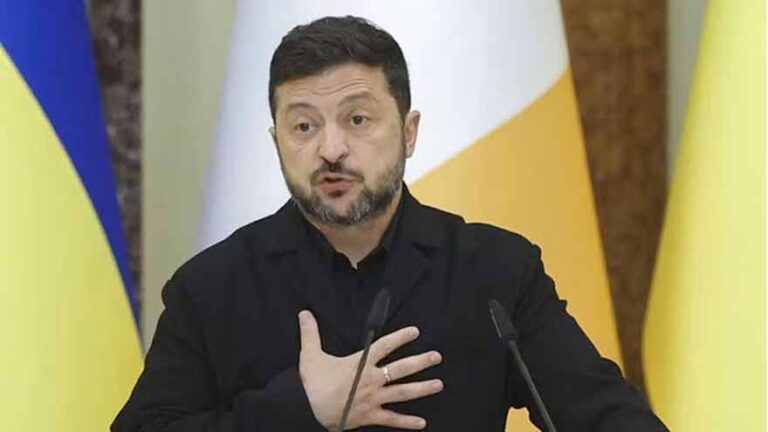
    Devastating Russian ballistic missile strikes claim lives across Ukraine following presidential warning

    Russian forces executed a coordinated overnight barrage of ballistic missiles targeting several Ukrainian urban centres, resulting in multiple civilian casualties and extensive structural damage shortly after President Volodymyr Zelenskyy issued a national safety alert. A direct hit from an Iskander-M ballistic missile destroyed a family home on the outskirts of Kryvyi Rih, killing six people, including two young girls aged five and twelve, and leaving at least eight others wounded. In the capital city of Kyiv, emergency services confirmed one death alongside widespread fires across several municipal districts, whilst residential buildings in the western city of Lviv also sustained damage during the bombardment. The severe escalation prompted neighbouring Poland to scramble fighter jets and activate ground-based air defence systems to secure its own national airspace. In response to the wave of destruction, President Zelenskyy renewed his urgent appeal to international allies for additional air defence missiles to replenish depleted stockpiles and protect civilian infrastructure. Meanwhile, in Russia’s western Penza region, a Ukrainian retaliatory drone strike set fire to a large commercial warehouse, injuring one individual and forcing the emergency evacuation of approximately two hundred workers.

  • | |

    Hungary shuts only nuclear plant amid drought

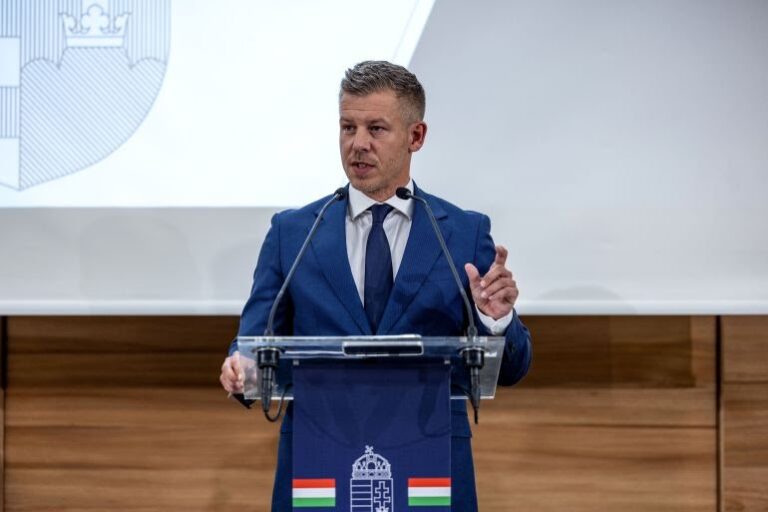
    BUDAPEST: Hungary has taken the unprecedented step of shutting down its only nuclear power plant after severe drought pushed the Danube River to critically low levels, threatening the facility’s ability to safely cool its reactors and raising fears of an energy crisis during an intense summer heatwave. The closure of the Paks Nuclear Power Plant marks the first complete shutdown in the facility’s 44-year history. The plant, which typically supplies between one-third and 40 percent of Hungary’s electricity, has been forced offline as water levels in the Danube continue to fall amid one of Central Europe’s worst droughts in recent decades. Prime Minister Peter Magyar warned that the country now faces its “most critical five days,” with temperatures expected to climb to around 40 degrees Celsius just as electricity demand peaks. In a video message shared on social media, Magyar said the shutdown would place enormous pressure on Hungary’s electricity grid, public services and essential infrastructure. “Tomorrow, the Paks power plant will not be generating, while the hottest days are still ahead,” he said, urging citizens and businesses to reduce electricity consumption during evening peak hours between 5 p.m. and 10 p.m. The 2-gigawatt facility operates four Russian-built reactors that rely on water from the Danube for cooling. With river levels dropping to record lows, authorities determined that continuing operations could compromise reactor safety. Officials have also warned that the plant could remain offline for several weeks if weather conditions fail to improve. The drought has affected more than just power generation. Falling water levels have disrupted river transport, slowed tourism and prompted water-use restrictions in over 100 cities and villages, including areas surrounding Budapest. To maintain electricity supplies, Hungary has begun importing emergency power from neighboring countries while considering additional measures to stabilize the grid. The government is also weighing mandatory electricity restrictions for large industrial consumers if conditions worsen. Officials estimate the crisis could cost the country between 100 billion and 200 billion forints (approximately $315 million to $630 million) because of soaring electricity import prices. Climate experts say the situation highlights the growing vulnerability of Europe’s energy infrastructure to extreme weather events linked to climate change. Nuclear power plants across the continent depend on rivers and lakes for cooling, making prolonged droughts an increasingly serious operational challenge. For now, authorities remain focused on conserving electricity and closely monitoring the Danube’s water levels. With scorching temperatures forecast to continue, Hungary faces a difficult balancing act between ensuring public safety, maintaining energy security and managing one of the country’s most severe climate-related emergencies in decades.

  • |

    Lt Gen (R) Abdul Qayyum calls for global peace through dialogue; FIRD Chairman Toaha Qureshi backs strong armed forces

    LONDON:  Senator Lt Gen (R) Abdul Qayyum (HI(M)), President of the Pakistan Ex-Servicemen Society, called for greater respect for international law, dialogue under the umbrella of the United Nations and enhanced cooperation among Muslim countries to address global security challenges, while Forum for International Relations Development (FIRD) Chairman Toaha Qureshi reaffirmed support for Pakistan’s armed forces, saying they remained the country’s defenders and that the Field Marshal had enhanced Pakistan’s reputation on the global stage. Addressing the Second International Conference on Global Peace, organised by FIRD in London, Senator Abdul Qayyum said lasting peace could only be achieved through diplomacy and adherence to international law. “Respect for international law and pursuing dialogue as a strategy for peace under the umbrella of the United Nations can help resolve even the most complex global challenges. Destructive wars can only lead to catastrophic consequences and bring suffering to humanity as a whole,” he said. During his address, the senator argued that the post-Cold War unipolar world had witnessed repeated violations of international law and human rights, weakening the effectiveness of institutions such as the United Nations and the International Court of Justice. Discussing global security, he said colonialism had evolved into neo-colonialism in the modern era and referred to the establishment of US military bases around the world. He also cited recent developments in the Middle East, saying they had highlighted the importance of national self-reliance in defence and strategic planning. Senator Abdul Qayyum said vulnerable states increasingly needed to strengthen their own defence capabilities while developing strategic partnerships through mutual defence agreements. Referring to recent tensions involving Iran, Israel and the United States, he said the evolving regional security environment had prompted Gulf countries to reassess their strategic priorities and seek greater autonomy. He said Pakistan, with its strategic geographical location and strong defence capability, could play a constructive role in promoting closer cooperation among Muslim-majority countries. He added that greater unity among Muslim states, beyond sectarian divisions, could strengthen regional stability and collective security. The senator warned that unilateral actions and disregard for international law risked pushing the world towards another major global conflict. Referring to former US President Richard Nixon’s geopolitical doctrine, he said pragmatic diplomacy, a balance of power and economic stability remained essential foundations for international peace. Addressing interfaith harmony, Senator Abdul Qayyum said dialogue and mutual respect remained essential to strengthening relations between different faith communities. He expressed concern over the rise of Islamophobia and called for greater engagement, education and cooperation to counter prejudice and promote peaceful coexistence. Speaking at the conference, FIRD Chairman Toaha Qureshi said Pakistan’s armed forces were the guardians of the country’s sovereignty and deserved the nation’s continued support. “Pakistan’s armed forces are the protectors of the country. We need strong armed forces, and it is necessary that we continue to support this institution,” he said. Qureshi added that Pakistan’s Field Marshal had earned the country greater international recognition and enhanced its standing through his leadership. The conference also heard from educationist and businessman Mian Muhammad Jehangir, who stressed the importance of meaningful education in shaping future generations and driving national development. He said Pakistan’s youth possessed immense talent and potential, adding that investment in quality education, skills development and character-building was essential for the country’s progress. He praised the achievements, resilience and capabilities of Pakistan’s young people, expressing confidence that they would play a pivotal role in building a stronger, more prosperous and globally competitive nation.

  • |

    Crimean residents struggle with power cuts as Ukrainian strikes disrupt daily life

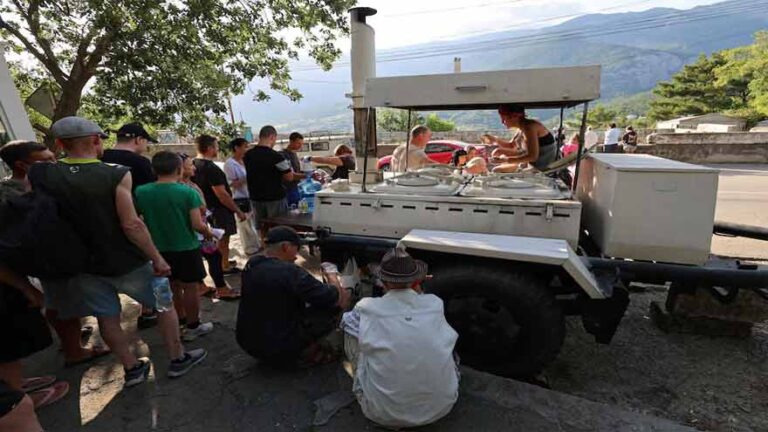
    Residents across Crimea are facing growing hardship after repeated Ukrainian attacks on energy infrastructure disrupted electricity and fuel supplies across the peninsula. Long power outages have forced many families to rely on community kitchens for hot meals as daily life becomes increasingly difficult. Crimea, which Russia annexed from Ukraine in 2014, has experienced months of pressure on its energy network following Ukrainian strikes targeting power plants and other strategic facilities. Ukrainian officials say the campaign is aimed at weakening Russia’s military capabilities and bringing the effects of the war closer to Russian controlled territory. The attacks come as Ukraine continues to endure regular missile and drone strikes on its own cities since Russia launched its full scale invasion in 2022. In the town of Massandra, local authorities have organised public meal services for residents who are unable to cook because of prolonged electricity cuts. Large pots of buckwheat and reheated canned beef are prepared each day and distributed to around 200 people. Officials say many households depend entirely on electric stoves, leaving them without a way to prepare food when the power goes out. Massandra town administration head Oksana Madyud said the community kitchens were set up to support families facing ongoing disruptions. She explained that many residents have no alternative cooking methods and need access to hot meals until electricity supplies become more stable. Local workers continue preparing food every day to help elderly residents and vulnerable families cope with the difficult conditions. The prolonged outages have created serious challenges for many people, particularly those living in high rise apartment buildings. Marina, a local resident, said she was forced to search for a gas stove and fuel cylinders after losing electricity in her apartment. She explained that climbing down from her tenth floor flat has become painful because of a leg injury, yet she had little choice because her home has only an electric cooker that cannot be used during blackouts. Another resident, Alexandra, said she had spent ten days without electricity before power was finally restored. She joined the queue for a hot meal after being drawn by the smell of freshly prepared food. Although electricity had returned that afternoon, she remained uncertain whether the supply would continue once she reached home, reflecting the uncertainty many families now face. Fuel shortages have added to the difficulties across towns and cities in Crimea, making transport and everyday activities more challenging. The continuing disruption has increased pressure on local authorities to provide emergency support while residents adjust to frequent interruptions in essential services. As the conflict between Russia and Ukraine continues, civilians on both sides are increasingly feeling the consequences. While Ukraine says its strikes are intended to weaken Russia’s military infrastructure, residents in Crimea are left dealing with power shortages, limited fuel supplies and an uncertain daily routine as the war continues to affect civilian life far from the front lines.

Leave a Reply

Your email address will not be published. Required fields are marked *