fifa president gianni
| |

FIFA President Gianni Infantino withdraws FIFA forward enterprise proposal


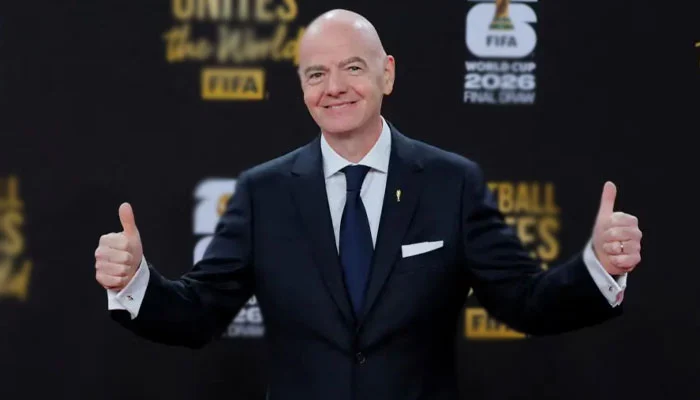
FIFA President Gianni Infantino has officially announced the withdrawal of the proposed FIFA Forward Enterprise initiative after facing significant opposition from stakeholders, saying the project no longer serves the best interests of global football.

In an official statement, Infantino confirmed that the FIFA Forward proposal has been formally abandoned and that no further work or discussions will be carried out regarding the initiative.

“The FIFA Forward project has officially come to an end, and there will be no further progress on the proposals,” Infantino said.

According to the FIFA president, the plan—which was linked to broader investment ideas surrounding the FIFA World Cup—had become increasingly divisive within the international football community. Rather than bringing football stakeholders together, the proposal had created disagreement among member associations and other interested parties.

Infantino acknowledged that the growing differences of opinion convinced FIFA’s leadership that continuing with the project would not benefit the sport.

“The World Cup investment proposal has led to divisions within football, and it is no longer in the game’s best interests to continue pursuing it,” he stated.

He emphasized that the FIFA Forward Enterprise initiative was always intended to move forward only if it received the support of a clear majority of FIFA’s member associations. Since that level of consensus was no longer evident, FIFA decided to discontinue the proposal altogether.

“The project was always dependent on the backing of the majority of FIFA’s member countries,” Infantino explained. “After carefully listening to the views and concerns expressed by all parties involved, we have concluded that the proposal should not proceed.”

The FIFA president stressed that the decision reflected the organization’s commitment to consultation, transparency, and unity within world football. He said FIFA had taken into account the opinions of national football associations, confederations, and other stakeholders before reaching its final conclusion.

Infantino reiterated that FIFA’s primary objective has always been to strengthen the global game rather than create unnecessary disagreements.

“Our mission has always been to promote unity and improve football around the world,” he said. “That commitment remains unchanged, and we believe this decision is in the best interests of the sport.”

Looking ahead, Infantino expressed hope that all stakeholders would once again work together to address the challenges facing international football. He said FIFA intends to bring all relevant parties back to the negotiating table to explore new ideas and initiatives that enjoy broader support across the football community.

“We will continue engaging with all stakeholders to find common ground and develop solutions that benefit football globally,” he said.

Despite shelving the FIFA Forward Enterprise proposal, Infantino assured member associations that FIFA remains fully committed to supporting football development, particularly in countries where additional investment and infrastructure are needed.

He emphasized that expanding access to the sport, improving facilities, and creating opportunities for young players around the world will remain central to FIFA’s long-term strategy.

“Our mission to promote and develop football in countries that need greater support will continue,” Infantino concluded. “We remain committed to investing in the future of the game and ensuring that football continues to grow in every region of the world.”

The decision marks a significant shift in FIFA’s strategic planning and underscores the organization’s willingness to reconsider major initiatives when they fail to achieve broad consensus among its global membership.

Similar Posts

  • | |

    British home secretary faces heavy criticism over attempt to deport grooming gang leader to Pakistan

    British Home Secretary Shabana Mahmood is facing sharp backlash over the government’s attempt to forcibly deport Shabbir Ahmed, a convicted child sex offender and leader of a grooming gang, to Pakistan. The controversy has sparked a diplomatic row between the United Kingdom and Pakistan, with the British government threatening sanctions against Pakistan if it refuses to accept Ahmed. Ahmed, who was convicted of child sexual exploitation in 2012, was recently released from prison. However, attempts to remove him face significant legal hurdles under the Immigration Act 1971. Under this legislation, Commonwealth citizens who moved to the UK before 1973 and have resided there for at least five years are protected from deportation. Having arrived in the UK during the late 1960s, Ahmed remains shielded by these statutory protections. Members of the British Pakistani community have expressed strong opposition to Mahmood’s approach, alleging that the Home Office is pushing the measure to appease far-right political factions

  • |

    Arshad Nadeem powers through to Commonwealth Games javelin final

    Arshad Nadeem, Pakistan’s reigning Olympic champion, has punched his ticket to the men’s javelin throw final at the 2026 Commonwealth Games. He came through a tricky qualification round in Glasgow on Thursday to get there. Strong winds made life hard for every thrower in the field. None of them managed to reach the automatic qualifying distance of 84 metres, which made the round unusually unpredictable. Arshad, seen by many as a top medal contender, got things going with a throw of 78.63 metres on his first attempt. His second try was ruled a foul. He then closed out the round with a throw of 75.65 metres. That mark was not enough to hit the automatic cutoff, but it easily secured his place among the twelve finalists heading into Friday. Sri Lanka’s Rumesh Pathirage led all qualifiers with a throw of 82.84 metres. Anderson Peters of Grenada, the current world champion, was next best at 81.29 metres. Only two other athletes crossed the 80-metre line, South Africa’s Douw Smit, who reached 80.64 metres, and England’s Benjamin East, who managed 80.38 metres. India’s Neeraj Chopra, who has long been Arshad’s fiercest competitor, also booked his spot in the final. He started with a throw of 76.28 metres, then pushed further to 79.61 metres on his second attempt to confirm qualification. India actually secured three finalists in total. Rohit Yadav joined Chopra after throwing a best of 78.37 metres, while Yashveer Singh kept improving across his attempts and eventually settled for 78.36 metres. It was not such good news for Pakistan’s other entrant, Muhammad Yasir Sultan. He fouled his first throw, then followed up with attempts of 71.42 and 74.36 metres. Unfortunately, that wasn’t enough to carry him into the final. Friday’s javelin final is scheduled for 7:45 PM Pakistan Standard Time. Pakistan has a long history at the Commonwealth Games, having first competed back in 1954. Since then, the country has amassed 82 medals overall, including 27 gold, 27 silver, and 28 bronze. Its most successful campaign in recent memory came at the 2022 Birmingham Games. A 68-member Pakistani contingent took part across 12 sports and ultimately finished 18th in the medal table with eight medals. That edition also marked one of Arshad’s finest moments. He won javelin gold with a Games record throw of 90.18 metres, delivering Pakistan’s first athletics gold at the Commonwealth Games since 1962.

  • |

    Shaheen, Naseem should play more domestic cricket, Usman Shinwari

    Former Pakistan fast bowler Usman Shinwari has urged Shaheen Shah Afridi and Naseem Shah to play more domestic and first-class cricket, arguing that regular competitive cricket can help the two premier pacers maintain their pace, fitness and longevity. Speaking to the media, Shinwari said Pakistan has traditionally placed too much emphasis on bowling speed, often overlooking the impact of workload and continuous cricket on a fast bowler’s body. “Even if your fitness is like Cristiano Ronaldo’s, bowling continuously can eventually affect your pace,” he said. Shinwari described Shaheen and Naseem as outstanding bowlers and said he was not in a position to offer them personal advice. However, he stressed that playing selected domestic cricket could help them retain their rhythm and speed while reducing the risk of injuries. The former pacer also discussed Pakistan’s upcoming challenges in England, saying tours of the country have historically been difficult for Pakistan. He believes the team can still produce a strong series if it carries its current momentum forward. Reflecting on Pakistan’s recent Test performances against the West Indies, Shinwari said the team’s first-match performance was disappointing but praised the side for making a strong comeback in the second Test. He emphasised the importance of consistency, saying better continuity within the team would ultimately produce better results. Shinwari also backed the decision to restore Babar Azam to the Test captaincy, describing it as a positive move and saying Babar has the ability to lead Pakistan in the longest format. Another major point raised by Shinwari was Pakistan’s approach to selecting players across different opponents. He argued that the same combination should not automatically be used against teams with vastly different playing conditions and strengths. Discussing Mohammad Abbas, Shinwari questioned the excessive focus on speed. He noted that Abbas had taken eight wickets at around 125kph in a recent match, arguing that the pacer’s best years were affected because too much importance had been attached to increasing his pace. “Speed is important, but it should not be given excessive importance,” he said. On Ihsanullah, Shinwari said the fast bowler had expressed grievances and suggested that his disciplinary issues should be addressed. Despite his experience, Shinwari made it clear that he has no plans to become Pakistan’s national team coach. He argued that coaches, like players, should progress through a structured system rather than being appointed directly to the national side. His comments have once again highlighted the debate over workload management, pace, domestic cricket and long-term planning in Pakistan’s fast-bowling system.

  • |

    West Indies stun Pakistan by 90 runs

    West Indies defeated Pakistan by 90 runs in the first Test of the two-match series on Tuesday. Pakistan failed to chase down a target of 211 runs. The national team was bowled out for just 120 runs in its second innings. The match was played at the Brian Lara Academy in Tarouba. Pakistan’s batters struggled badly on a difficult pitch. The West Indies fast bowlers maintained constant pressure throughout the innings. Pakistan began their chase with hopes of securing a win. However, the batting line-up collapsed quickly. Eight Pakistani batters failed to score in double figures. Captain Babar Azam was the only batter who offered strong resistance. He remained unbeaten on 58 runs. However, he received little support from the other end. Azan Awais, Imam-ul-Haq and Shan Masood were dismissed for three runs each. Ali Usman scored two runs. Khurram Shahzad made four runs. Salman Ali Agha, Aamer Jamal and Mohammad Ali were dismissed without scoring. The repeated fall of wickets left Pakistan in serious trouble. Earlier, West Indies resumed their second innings on the fourth day at 126 for seven. Their batters added 55 more runs before being bowled out for 181. West Indies entered the second innings with a 29-run lead from the first innings. That advantage proved crucial. It allowed the hosts to set Pakistan a target of 211 runs for victory. Pakistan’s batters found the target extremely difficult to chase. The pitch offered assistance to the bowlers. West Indies used the conditions effectively and kept taking wickets at regular intervals. The visitors had earlier scored 282 runs in their first innings. Shan Masood was Pakistan’s leading batter. He scored an impressive 109 runs. Imam-ul-Haq also made an important contribution. He scored 63 runs. However, the rest of the batting line-up failed to build enough partnerships. Justin Greaves was the standout bowler for West Indies in Pakistan’s first innings. He claimed five wickets and played a key role in restricting Pakistan to 282. West Indies had scored 311 runs in their first innings. Shai Hope was among their top performers. He scored 92 runs and narrowly missed a century. Kavem Hodge also played an important innings. He scored 84 runs and helped West Indies post a competitive total. Pakistan’s Mohammad Ali was the leading bowler in the first innings. He took four wickets. Mohammad Abbas also impressed with the ball and claimed three wickets. The match remained competitive because of the difficult batting conditions. However, West Indies handled the pressure better in the crucial moments. Pakistan’s second-innings collapse eventually handed West Indies a convincing victory. The hosts bowled the visitors out for 120 runs.

Leave a Reply

Your email address will not be published. Required fields are marked *