devastating russian ballistic
|

Devastating Russian ballistic missile strikes claim lives across Ukraine following presidential warning

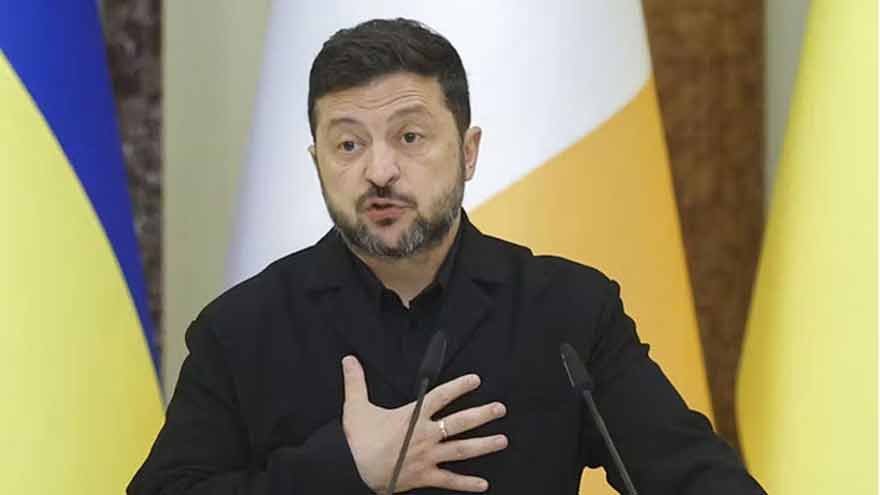
Russian forces executed a coordinated overnight barrage of ballistic missiles targeting several Ukrainian urban centres, resulting in multiple civilian casualties and extensive structural damage shortly after President Volodymyr Zelenskyy issued a national safety alert.

A direct hit from an Iskander-M ballistic missile destroyed a family home on the outskirts of Kryvyi Rih, killing six people, including two young girls aged five and twelve, and leaving at least eight others wounded.

In the capital city of Kyiv, emergency services confirmed one death alongside widespread fires across several municipal districts, whilst residential buildings in the western city of Lviv also sustained damage during the bombardment.

The severe escalation prompted neighbouring Poland to scramble fighter jets and activate ground-based air defence systems to secure its own national airspace. In response to the wave of destruction, President Zelenskyy renewed his urgent appeal to international allies for additional air defence missiles to replenish depleted stockpiles and protect civilian infrastructure.

Meanwhile, in Russia’s western Penza region, a Ukrainian retaliatory drone strike set fire to a large commercial warehouse, injuring one individual and forcing the emergency evacuation of approximately two hundred workers.

Similar Posts

  • | |

    UNESCO raises questions over Pakistan’s Taxila h…

    Islamabad: Pakistan’s ancient heritage sites have come under scrutiny after UNESCO raised questions over conservation work carried out at the historic Taxila archaeological sites of Mohra Moradu and Sirkap, prompting a Senate committee to seek detailed explanations from government officials. The Senate Standing Committee on National Heritage and Culture reviewed UNESCO’s concerns during a meeting at Parliament House and questioned whether restoration work at Pakistan’s internationally recognised heritage sites was being carried out according to global preservation standards. Officials informed the committee that UNESCO had asked for additional information regarding the conservation work conducted by the Directorate General of Archaeology, Punjab, at the Taxila sites. The committee was told that the required details had already been provided to UNESCO by the provincial authorities and no further objections had been received after the submission. Officials assured lawmakers that the restoration work followed UNESCO conservation guidelines and international standards. The meeting was chaired by Senator Hidayatullah Khan and attended by Senators Abdul Wasay, Bushra Anjum, Sarmad Ali and Syed Waqar Mehdi along with senior officials from the Ministry of National Heritage and Culture. During the briefing, officials explained that after the 18th Constitutional Amendment, responsibility for heritage conservation was transferred to provincial governments. They said the Government of Punjab started conservation activities at the Taxila archaeological sites and followed recommendations provided by UNESCO, ICOMOS and other expert organisations. Officials said the conservation strategy focused on protecting the original structure of the ancient remains while using scientific methods. They explained that the work included repairing damaged walls, improving drainage systems, protecting old structures from weather damage and using materials compatible with the original construction. Senator Syed Waqar Mehdi asked officials about the exact concerns raised by UNESCO. Officials explained that UNESCO’s observations mainly focused on the materials used during restoration, the method for rebuilding certain walls and the height of reconstructed structures. They said these issues were reviewed and addressed through detailed documentation submitted to UNESCO. The committee was informed that scientific cleaning and repair methods were used to protect the archaeological remains while maintaining international conservation principles. Pakistan currently has six sites listed as UNESCO World Heritage Sites, while documents for 24 more locations have been prepared for possible future inclusion. Officials told the committee that UNESCO usually considers only one nomination from each country annually.   They said Pakistan has requested UNESCO to give priority to its pending nominations so more historical locations can receive international recognition. The committee also discussed plans to develop Taxila as a major heritage and tourism destination.   Officials informed members that around Rs100 million had already been spent during the current year on conservation activities. They said further projects, including an open air museum and improved visitor facilities, were being considered to attract tourists while protecting ancient sites.   Senator Bushra Anjum stressed that stronger federal monitoring was needed despite heritage being mainly managed by provinces. She said Pakistan must improve tourism facilities around heritage sites, including better visitor services, accommodation options and a sustainable system that creates income while preserving history.   She warned that inappropriate materials or poor restoration methods could permanently damage important archaeological sites.   The committee directed the ministry to provide UNESCO’s official response once received and recommended that members visit the Taxila archaeological sites personally to review the conservation work. The meeting also discussed another major heritage issue involving the recovery of smuggled Pakistani archaeological artefacts from the United States. Officials informed the committee that 513 valuable archaeological artefacts had been returned to Pakistan through cooperation with US authorities. They said the recovered objects mainly belonged to the ancient Gandhara civilisation and had been seized after being illegally taken out of Pakistan over several decades. Officials described the artefacts as priceless national treasures representing Pakistan’s thousands of years of history. The committee was informed that plans were underway to establish a new museum where these recovered items could be safely preserved and displayed to the public. Officials said efforts were being made to acquire land for the museum in coordination with the Capital Development Authority and public private partnership options were also being explored. Committee members demanded details about the people involved in the smuggling network, the investigation process and the estimated value of the recovered artefacts. They directed the ministry to submit a complete report explaining how the artefacts were recovered and what action had been taken against those involved in illegal trafficking. The committee also discussed reports about the demolition of a historic Mughal era arch near Rohara Village for a housing development project. The chairman directed officials to collect complete information about the incident and present a detailed report at the next meeting.

  • | |

    Mir Raza’s father raises new questions over son?…

    The father of businessman Mir Raza Ali has raised fresh concerns about the investigation into his son’s death. Speaking to the media on Monday, Mir Hassan claimed that his son’s business partner went missing after being questioned by police. He said police had questioned the business partner once. The man was allegedly not seen again after the questioning. Hassan said the family had not been informed about the investigation involving employees of the guest house in Gulistan-e-Johar. Mir Raza’s body was found near the guest house. “We have not been told what investigations were conducted with the employees,” he said. The victim’s father also questioned why CCTV footage from the guest house had not been made public. The latest concerns have emerged as investigators continue to review the circumstances surrounding Mir Raza’s death. The case took a new turn after the businessman’s body was exhumed for a second post-mortem examination. The second medical examination found a firearm injury and several wounds that had occurred before death. It also reported signs of internal bleeding. According to the findings, a bullet entered the upper right side of Mir Raza’s back and exited through the left side of his chest. The bullet fractured his sixth rib and caused internal bleeding. The report also documented injuries to different parts of his head, face, neck and chest. Following the medical findings, police added Section 302 of the Pakistan Penal Code to the case. The section relates to murder. The original FIR had been registered under Section 365, which concerns kidnapping. Mir Raza, 25, was allegedly abducted from the PECHS area. His body was later found in bushes near a wedding hall in Gulistan-e-Johar. Police had earlier suspected that he may have been tortured before being shot. The case initially faced uncertainty over whether Mir Raza had been murdered or had died by suicide. His family, however, consistently rejected the suicide theory. The second post-mortem has strengthened the family’s claim that Mir Raza was killed. Questions had also been raised about the first post-mortem report. Karachi Police Surgeon Dr Summaiya Syed had pointed out several issues in the initial examination. She had questioned why the body was not X-rayed and why hand swabs were not collected for gunshot residue testing. She had also raised concerns over the scientific measurement and photography of firearm injuries. Questions were further raised about the documentation of the bullet’s path and the examination of the entry and exit wounds. Following these developments, police dissolved the previous investigation team. A new team was formed under the leadership of DIG Crime and Investigation Amir Farooqi. The new team was tasked with conducting a fresh investigation based on the latest medical findings. Investigators were also expected to revisit the crime scene. They were directed to re-question the victim’s family and other relevant individuals. The team was also expected to examine forensic, technical, physical and circumstantial evidence. Mir Raza’s family has repeatedly criticised the handling of the case. They have maintained that he was murdered and demanded that those responsible be identified and brought to justice. The family’s lawyer, Jibran Nasir, had also alleged that investigators pressured the family to accept a suicide theory. He called for an independent and impartial investigation. The Sindh government has meanwhile decided to establish a judicial commission headed by a Sindh High Court judge. The commission is intended to oversee a transparent and impartial investigation into Mir Raza’s death.

  • | |

    Gillian Anderson makes shocking confession about h…

    Gillian Anderson has opened up about a deeply personal part of her past, revealing that one of her first relationships was with an older girl during her high school years. The X-Files star made the candid admission during a recent interview with The Sunday Times. Anderson, 58, reflected on her teenage years and explained that the relationship felt very different from the romantic experiences she would have later in life. According to Anderson, the relationship was “secretive and illicit” and something the two girls felt they had to hide. She also revealed that a boyfriend eventually discovered the relationship and ended their romance because of it. (Page Six⁠) At the time, Anderson said she did not identify herself as gay. She had already dated boys, and she explained that she did not have the language to fully understand or describe what she was experiencing. Her comments offer a glimpse into how Anderson’s understanding of her sexuality developed over time. She has previously spoken publicly about relationships with women, but her latest interview provides more detail about one of her earliest experiences. Anderson also reflected on her later relationships with women. She explained that, when she was younger, she did not necessarily imagine those relationships becoming lifelong partnerships. Her perspective has since evolved. Today, Anderson says she does not believe the gender of a person should determine whether they can be considered a life partner. She explained that the person she currently considers her life partner happens to be male, but she could feel the same way about a woman. (The Times⁠) The actress has been linked to The Crown creator Peter Morgan since 2016, although the pair have generally kept their relationship private. Anderson has also been married twice and has three children. (The Times⁠) Her openness about relationships comes at a time when sexuality and identity are also central themes in some of her recent work. Anderson stars in Teenage Sex and Death at Camp Miasma, a film that explores sexuality, identity and complicated relationships. For Anderson, however, the revelation is not simply about her teenage romance. It is about looking back at a younger version of herself and recognizing that she did not always have the words to understand her feelings. Her latest comments have given fans a rare glimpse into her personal journey while showing how her views on love and relationships have continued to evolve.

  • |

    Fact check: SRK never backed Jantar Mantar protest

    A social media claim suggesting that Bollywood star Shah Rukh Khan publicly backed the ongoing student demonstrations at Jantar Mantar in Delhi has been found to be untrue, following verification against his official accounts. A screenshot circulating widely online alleged that the actor had voiced solidarity with the protesting students. The post claimed he described himself as standing behind them “emotionally and morally.” The image spread rapidly, and a large number of social media users took it at face value, assuming Khan had genuinely made a public statement on the matter. But a closer look at his verified profiles told a different story. Neither his official Instagram nor his X account contained any post referencing the protest. According to various reports, the mix-up likely originated from a fan-run account operating under his name, which had been posting updates related to the demonstrations. A number of users apparently mistook these fan posts for statements coming directly from the actor himself. As the fake screenshot kept circulating, other users began flagging it as inauthentic. Comments pushing back on the claim appeared across social platforms. One person simply labeled it “Fake.” Another echoed the sentiment, writing, “This is fake.” A third user challenged those sharing it, asking why they were “spreading fake news” when the actor “has not posted anything.” Yet another dismissed it in Hindi, writing “Fake hai.” For his part, Shah Rukh Khan has stayed silent on the protest altogether. His attention, based on available reports, remains directed toward his upcoming release, ‘King’, rather than commentary on the demonstrations. The protests themselves have drawn considerable attention, pulling in thousands of participants. The gathering followed the larger ‘Chalo Sansad’ march, which appears to have been a catalyst for the broader movement. At this point, there is no confirmed or verified statement from Shah Rukh Khan addressing the protest in any capacity. Until his official channels indicate otherwise, claims attributing such remarks to him should be treated as unverified and, based on current evidence, false.

  • | |

    Rain expected across Pakistan amid flood alert

    Rainfall is expected at several locations across Punjab, Balochistan, upper Khyber Pakhtunkhwa, Gilgit-Baltistan and Kashmir, with weather conditions likely to remain unsettled in parts of the country. According to the Flood Forecasting Division (FFD) Lahore, low-level flooding is continuing at several key barrages along the Indus River. The affected locations include Kalabagh, Chashma, Taunsa and Guddu, where water levels remain elevated. The latest situation has prompted continued monitoring of river flows, particularly at locations where water levels are already above normal. The expected rainfall in different parts of the country could influence water flows in rivers and streams, depending on the intensity and duration of the showers. The FFD keeps a close watch on river conditions and provides updates to relevant authorities to help them assess possible flooding risks. Local administrations in vulnerable areas are also expected to remain alert as weather conditions develop. Residents living near rivers, canals and other low-lying areas have been advised to remain cautious and follow instructions issued by local authorities. People travelling through areas vulnerable to heavy rainfall or flooding are also encouraged to stay updated on weather and river conditions. The rainfall forecast comes as several parts of the country continue to experience varying weather patterns. While scattered showers may provide relief from hot and humid conditions in some areas, heavier rainfall could increase runoff and raise water levels in vulnerable waterways.

  • |

    ‘Super’ El Niño threatens $20bn Africa hit

    Africa could suffer economic losses of between $10 billion and $20 billion if a powerful El Niño weather pattern develops, the African Development Bank’s climate chief has warned. The expected weather event could bring severe droughts, floods and storms to different parts of Africa. It could put additional pressure on food supplies, water resources and government finances. Anthony Nyong, the African Development Bank’s director for climate change and green growth, said countries facing the worst effects could see their gross domestic product decline by around 1% to 2%. He said the potential losses could amount to between $10 billion and $20 billion across the continent. The warning comes as forecasters monitor rising temperatures in the Pacific Ocean. Current conditions have raised concerns that the next El Niño could become unusually strong. El Niño is a climate pattern that can significantly change weather conditions in different parts of the world. In Africa, it can contribute to drought, heavy rainfall, flooding and storms. A severe event could deepen existing climate problems across the continent. The Sahel region has already faced serious drought conditions in recent years. Other parts of Africa are still recovering from major storms and floods. Nyong warned that the economic consequences may continue long after the weather event ends. He pointed to Mozambique’s experience after Cyclone Idai in 2019. The country needed years to recover from the damage caused by the storm. Agriculture could be among the sectors hit hardest by the expected climate shock. The previous El Niño, which occurred during 2023 and 2024, brought severe drought to Southern Africa. East Africa experienced heavy rainfall and flooding. The extreme weather contributed to crop failures and higher food prices. Coastal areas also recorded unusually high sea levels. African farmers are already facing substantial losses. The African Development Bank estimates that agricultural losses could reach around $327 million this year. Fishing communities could also suffer. Rising sea temperatures and storms are expected to affect fisheries productivity. The bank estimates that fisheries productivity could decline by between 1% and 4%. Nyong warned that food shortages could become a major concern if the expected weather pattern intensifies. Maize is particularly important because it is a major staple food in many African countries. A significant decline in production could push prices higher and increase pressure on vulnerable households. The expected disaster could also put further pressure on national budgets. Many African governments already have limited resources to respond to climate emergencies. Severe weather could force them to spend more on relief, reconstruction and infrastructure repairs. This could mean less money for health, education and development projects. Nyong described the situation as a “climate finance trap”. Countries may have to divert funds from essential services to deal with climate-related emergencies. The African Development Bank is preparing to assess the possible effects of El Niño on its investments. The bank plans to hold a major seminar in September. Senior officials will examine the potential risks to existing and planned projects. The institution is also prepared to restructure some projects if necessary. It will work with affected countries to seek additional international climate financing. Possible sources include the Green Climate Fund, Adaptation Fund and Climate Investment Funds. New loss-and-damage financing mechanisms could also provide support to countries suffering serious climate impacts. The expected strength of El Niño could increase Africa’s climate financing needs significantly. Nyong estimated that the continent could require up to $100 billion this year to strengthen climate resilience and adaptation. He said the need for climate adaptation funding was already extremely high. The possible El Niño event could add billions of dollars to that requirement. The financing gap remains a major challenge for developing countries. Without sufficient funding, vulnerable countries may struggle to prepare for droughts, floods and storms before they occur. The humanitarian consequences could be severe if drought and food shortages intensify. Nyong warned that large numbers of people could be forced to leave their homes in search of food, water and livelihoods. Sudan, South Sudan, the Democratic Republic of Congo, Somalia, Mali, Burundi and Nigeria were among the countries identified as potentially vulnerable to severe impacts. Agricultural losses could leave many communities without reliable sources of income. Shortages of water and grazing land could also increase competition between communities. Such pressures could worsen instability in regions already affected by conflict, poverty and displacement. The African Development Bank has therefore called for greater investment in preparedness and climate resilience. Nyong stressed that governments should act before disasters strike rather than wait until the damage has already occurred.

Leave a Reply

Your email address will not be published. Required fields are marked *