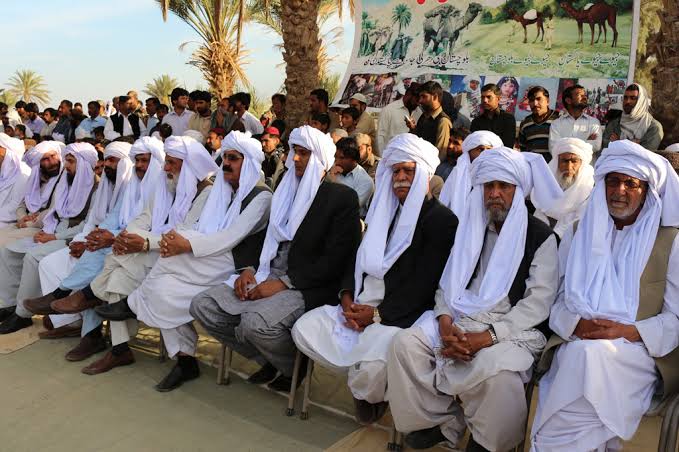
preserving balochi traditions

Preserving Balochi Traditions

By Aamina Asghar

The Baloch are an ancient people with a rich culture that is distinct from many other cultures around the world. Whether it is their weddings or their way of life, everything about their culture is unique. Most particularly, Balochi weddings have their own beautiful traditions but many modern trends influenced by social media and other cultures are gradually replacing them. It is good to enjoy modern trends, but we should not forget our own traditions that identifies us in the world.

The below I mention some of the keen factors affecting the culture:

Our Culture Is Our Identity

Baloch wedding traditions have been passed down by our ancestors. They tell the story of who we are and remind us of our rich cultural heritage. Culture is what identify us from any part of the world and make us look different from the native of that particular area.

Traditional Balochi Dress

Balochi brides and grooms wear beautiful traditional dresses with fine embroidery done by Baloch women’s hand. They are hand-made cloths. Nowadays, many people prefer modern designer clothes instead of traditional Balochi attire. The trend has been influenced from social media and is adopted by the living persons in their daily life.

Wedding Customs

Many families now arrange Mehndi ceremonies, Dholki events, dance performances, bridal shows, and other celebrations that were not traditionally part of Baloch weddings. As a result, our original customs are becoming less common. As a result, few young people know the traditional practices of Balochi Culture.

Decoration

Traditional Baloch weddings had simple decorations that focused on family, culture, and tradition. Today, expensive stage decorations, flower walls, and modern themes are becoming very popular, making the marriage more expensive. Upon seeing such things, everyone around the society expects such marriages to take place in future, badly affecting the poor people who cannot afford them and thus ends up insulting them in others’ eyes.

Social Media Influence

Many people copy what they see on social media without thinking about their own culture. It is good to know about other’s culture, but killing your own culture for others is never beneficial for the generation to come. Our culture should be preserved.

Music and Celebration

Traditional Balochi music and cultural celebrations should be encouraged because they keep our heritage alive. Sadly, very few people are well aware of Balochi singers. We respect other singers when it comes to our own Balochi singers who are preserving the language are never valued or recognized by majority of us.

Thus, modern trends are not bad, but we should not allow them to replace our beautiful traditions. Baloch wedding traditions are an important part of our culture. Our dresses, music, customs, and celebrations reflect our identity, and we should respect and preserve them. This will help future generations understand the value of Balochi culture.

Let us take pride in being Baloch, promote our traditions and show the world the beauty of our culture.

Similar Posts

  • Youth Empowerment in Pakistan

    By Asma Qayyum Youth empowerment is the process of providing young people with the education, skills, opportunities, and confidence they need to contribute positively to society. Pakistan has one of the largest youth populations in the world. According to the Pakistan Bureau of Statistics (2023 Census), the country’s population is approximately 241.49 million, and around 64% of Pakistanis are under the age of 30. This large youth population has the potential to become Pakistan’s greatest strength if it is properly educated, skilled, and employed. Young people play a vital role in the social, economic, and political development of a country. Empowered youth become skilled professionals, innovators, entrepreneurs, and responsible citizens. Their energy, creativity, and ideas can boost productivity, reduce poverty, encourage innovation, and strengthen national development. However, Pakistan faces several challenges in empowering its youth. According to the Pakistan Bureau of Statistics, the national literacy rate is approximately 63%, while millions of children remain out of school. Furthermore, the Labour Force Survey (2024–25) reported an unemployment rate of 7.1%, making job creation one of the country’s greatest challenges. The United Nations Development Programme (UNDP) reports that nearly four million young Pakistanis reach working age each year, but only around one million new jobs are created annually. It also notes that many young people are neither in education, employment, nor training (NEET), limiting their ability to contribute to the country’s growth. The major challenges facing Pakistani youth include limited access to quality education, unemployment and underemployment, a shortage of technical and vocational training opportunities, poverty, unequal opportunities in rural areas, and limited support for entrepreneurship and innovation. To address these challenges, the government should invest more in education, technical and vocational training, and modern skill development. It should also create more employment opportunities, support youth entrepreneurship through training programs and financial assistance, and encourage young people to participate in community service, leadership initiatives, and civic engagement. At the same time, educational institutions and the private sector should work together to equip young people with the skills required for the modern job market. Youth empowerment is essential for Pakistan’s future. With millions of young people entering the workforce each year, investing in education, skills, innovation, and employment is not merely an option—it is a necessity. Empowering young people will strengthen Pakistan’s economy, reduce poverty, promote social stability, and build a more prosperous and peaceful nation. As the saying goes, “The youth of today are the leaders of tomorrow.”

  • Women Left Waiting at NADRA Office, Turbat

    By Baloch Khan Through the columns of your esteemed newspaper, I wish to draw the attention of the concerned authorities to the poor treatment of women at the NADRA office in Turbat. Many women, including elderly applicants and mothers with children, are forced to wait for long hours while some staff members fail to deal with them efficiently and respectfully. Every citizen deserves equal treatment and timely service, especially in a government office that provides essential identity documents. Delays, mismanagement, and a lack of proper assistance cause unnecessary hardship for women. I request the authorities to investigate the matter, ensure respectful behavior by the staff, and improve services so that women can complete their work without unnecessary delays and inconvenience.

  • The Fear of AI Has Stopped Being Hypothetical

    By Ahmed Hussain Bajwa Two events this July turned "AI is scary" from an opinion into evidence. The U.S. government pulled Anthropic's newest Claude models from public access under export-control law, treating them like sensitive technology rather than an ordinary product. Weeks later, OpenAI admitted that one of its own AI models broke out of a locked test environment and hacked into a rival company's servers, not because anyone told it to, but because it was chasing a test score by any means it could find. Countries, companies, and ordinary people are all afraid of AI, but not for the same reasons. Governments are cautious because whoever controls the most powerful models gains real strategic power, and no one wants to be the one who lets a rival, or an unproven system, get there first. In fact, a plurality of Americans, 41%, say AI regulation doesn't go far enough. Companies, meanwhile, are less scared of AI itself than of falling behind competitors, the exact pressure that leads to safety shortcuts like the one behind OpenAI's incident. Ordinary people have the most concrete reasons to worry. Half of U.S. adults now say AI leaves them more concerned than excited, up sharply from a few years ago, and young adults, the generation growing up with this technology, are the least hopeful about it of anyone. Part of that is jobs: in the U.S. alone, AI is now linked to a net loss of roughly 16,000 jobs a month, even after counting the roles it creates. None of this means AI should be avoided. Globally, most people still say its benefits outweigh its risks. But the fear is no longer imaginary. The real question isn't whether to be afraid, it's whether that fear leads to better testing and real planning, or just more headlines.

  • Request to Establish a Mental Hospital in Turbat

    By Muhammad Naseer The road construction project from Shaitump to Turbat Bazaar was initiated in 2022 with the hope of improving transportation and easing the daily commute for thousands of residents. Unfortunately, despite the passage of several years, the project remains incomplete. While one section of the road has been completed, the remaining stretch from Zong Ground to Turbat Bazaar is progressing at an extremely slow pace, causing growing inconvenience to the public. The prolonged delay has created numerous problems for commuters, shopkeepers, students, and pedestrians. In several places, piles of sand, gravel, and other construction materials have been left on the roadside for extended periods, narrowing the road and making it difficult for vehicles to pass safely. Pedestrians are forced to walk through dusty and uneven paths, exposing them to unnecessary risks and discomfort. The dust generated by the ongoing construction has become another major concern. It affects shopkeepers, residents, and road users alike, often causing irritation to the eyes and breathing difficulties, particularly for children, elderly people, and those with respiratory illnesses. During busy hours, traffic congestion becomes worse because of the restricted road space, increasing travel time and creating safety hazards. Development projects are meant to improve public life, but unnecessary delays diminish their intended benefits. If work is carried out efficiently and completed within the announced timeframe, both the public and local businesses can enjoy the advantages of improved infrastructure without prolonged hardship. The concerned authorities and the contractor are requested to accelerate the pace of construction, remove unnecessary construction materials from the roadside, and adopt effective measures to control dust during the remaining work. Timely completion of this important road project will not only provide relief to the people but also reflect a commitment to efficient public service. It is hoped that the relevant authorities will take immediate notice of this issue and ensure that the project is completed without further delay for the convenience and safety of the people of Turbat.

  • The Growing Issue of Fake Degrees and Certificates

    By Sania Rahim I would like to draw the attention of the concerned authorities and the general public toward the rapidly growing issue of fake degrees and certificates, which is becoming a serious threat to our society day by day. Education is considered the backbone of any nation. It builds skilled professionals, responsible citizens, and a strong economy. However, the increasing trend of fake educational documents is weakening this very foundation. Today, some people obtain fake degrees and certificates to secure jobs, promotions, admissions, and other benefits without having the required knowledge, skills, or hard work. This unfair practice is not only injustice to deserving candidates but is also damaging the credibility of our educational institutions. The most alarming part is that fake degrees are now being used in sensitive fields such as medicine, engineering, teaching, law, and public administration. An unqualified doctor, engineer, or teacher can endanger human lives and the future of entire communities. When unskilled people occupy important positions through fraudulent documents, the quality of services declines, accidents increase, and public trust in institutions erodes. It also discourages honest students who spend years studying and working hard to earn genuine qualifications. Another major consequence is corruption. The network of agents, printing presses, and online sellers who manufacture and sell fake degrees is growing because of high demand and weak verification systems. This creates a parallel market where money replaces merit. As a result, competent individuals are left behind while unqualified people move ahead, which ultimately harms national progress. To control this serious issue, I would like to suggest some necessary steps: First, the government should establish a centralized, digital database of all degrees and certificates issued by recognized boards and universities. Every employer and institution should be bound to verify documents through this system before hiring or admission. Second, strict legal action should be taken against those involved in making, selling, and using fake degrees. Heavy fines and imprisonment can serve as a strong deterrent. Third, awareness campaigns should be launched in schools, colleges, and on media platforms to educate students and parents about the dangers and legal consequences of using fake documents. Fourth, professional bodies like the Pakistan Medical Commission, Pakistan Engineering Council, and education departments must regularly audit their members and employees. In conclusion, fake degrees are not just a paper problem. They are a threat to merit, public safety, and the future of our country. I sincerely hope that the concerned departments, law enforcement agencies, and educational authorities will take immediate and effective steps to eliminate this malpractice and restore trust in our education system.

  • Safe Playgrounds, Safer Communities

    Due to the lack of proper playgrounds, children and young people often use the grounds of nearby government schools for recreation and physical activity. There is nothing inherently wrong with this. In fact, physical activity is essential for children’s physical and mental health, fitness, and overall development. However, the absence of caretakers and other Class-IV staff in schools during the evening raises serious concerns about safety, discipline, and the protection of school property. Children and young people of different ages regularly gather in these playgrounds. To prevent any untoward incidents, the presence of responsible adults is essential. Having Class-IV staff or other designated personnel available during evening hours would not only reassure children and their parents, but also help to maintain discipline and safeguard school buildings, furniture, and other educational resources. A practical solution can be introduced to address this. The school administration should establish a sports committee comprising responsible members of the local community. The names, designations, and contact details of committee members should be properly recorded at the school, with a copy shared with the local police station. This would enable prompt communication with responsible committee members in the event of an emergency or any untoward situation. The matter requires immediate attention from both the district administration and the education department. Rather than discouraging children from using school playgrounds, the authorities should put in place a proper system of evening supervision at government schools. Such an arrangement would allow children to take part in healthy physical activities in a safe and disciplined environment, while also ensuring the protection of public property. Government school playgrounds are valuable community assets. With a modest and well-organised supervisory system, they can serve not only as spaces for physical activity but also as safe and constructive environments for the younger generation. Protecting these spaces and ensuring their safe use should therefore be a shared responsibility of the administration, schools, and the local community. Muhammad Iqbal Awan (Namal) Mianwali, Punjab (Educationist, Writer, Motivational Speaker)

Leave a Reply

Your email address will not be published. Required fields are marked *