urgent need clean

Urgent Need for Clean Drinking Water in Gwadar

By Shayhaq Siraj

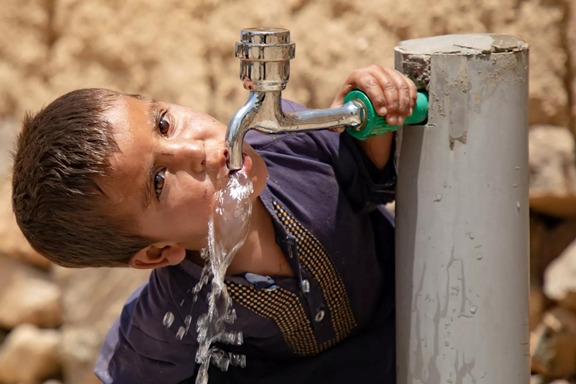
Gwadar, a city that stands as a symbol of development and economic promise, is unfortunately facing a severe crisis of clean drinking water. Despite being a focal point of national and international attention due to its strategic importance, the basic necessity of safe water remains a distant dream for many residents.

The people of Gwadar are forced to rely on water tankers and private suppliers, which are often expensive and unreliable. In many areas, the available water is contaminated and unfit for human consumption, posing serious health risks, especially to children and the elderly. Waterborne diseases are becoming increasingly common, highlighting the urgent need for intervention.

It is deeply concerning that while large-scale development projects are underway, the fundamental rights of local citizens are being overlooked. Access to clean drinking water is not a luxury; it is a basic human right that must be ensured for every individual.

The authorities must take immediate and effective measures to address this crisis. Investment in proper water supply infrastructure, desalination plants, and efficient distribution systems is crucial. Furthermore, strict monitoring should be implemented to ensure the quality of water being supplied to the public.

Gwadar’s true progress cannot be measured solely by infrastructure and investment but by the well-being of its people. Providing clean drinking water is essential for a healthy, prosperous, and sustainable future.

I hope the concerned authorities will take swift action to resolve this pressing issue.
Similar Posts

  • Request to Establish a Mental Hospital in Turbat

    By Muhammad Naseer The road construction project from Shaitump to Turbat Bazaar was initiated in 2022 with the hope of improving transportation and easing the daily commute for thousands of residents. Unfortunately, despite the passage of several years, the project remains incomplete. While one section of the road has been completed, the remaining stretch from Zong Ground to Turbat Bazaar is progressing at an extremely slow pace, causing growing inconvenience to the public. The prolonged delay has created numerous problems for commuters, shopkeepers, students, and pedestrians. In several places, piles of sand, gravel, and other construction materials have been left on the roadside for extended periods, narrowing the road and making it difficult for vehicles to pass safely. Pedestrians are forced to walk through dusty and uneven paths, exposing them to unnecessary risks and discomfort. The dust generated by the ongoing construction has become another major concern. It affects shopkeepers, residents, and road users alike, often causing irritation to the eyes and breathing difficulties, particularly for children, elderly people, and those with respiratory illnesses. During busy hours, traffic congestion becomes worse because of the restricted road space, increasing travel time and creating safety hazards. Development projects are meant to improve public life, but unnecessary delays diminish their intended benefits. If work is carried out efficiently and completed within the announced timeframe, both the public and local businesses can enjoy the advantages of improved infrastructure without prolonged hardship. The concerned authorities and the contractor are requested to accelerate the pace of construction, remove unnecessary construction materials from the roadside, and adopt effective measures to control dust during the remaining work. Timely completion of this important road project will not only provide relief to the people but also reflect a commitment to efficient public service. It is hoped that the relevant authorities will take immediate notice of this issue and ensure that the project is completed without further delay for the convenience and safety of the people of Turbat.

  • A Better Tomorrow Starts Today

    By Nazaink Majid Everyone dreams of a better future, but dreams only come true when we take action today. Every good choice we make, every lesson, and every small effort we put in helps build a brighter tomorrow. Instead of waiting for the perfect time we should start making positive changes today. “A Better Tomorrow Starts Today” reminds us that if we want to change our future, we must begin in the present. Every small step taken today brings us closer to the life we aspire to achieve. Every day presents us with countless choices. Some may seem small, such as waking up early, completing our work on time, reading a book, or helping someone in need. However, these small decisions gradually shape our character and determine our future. Success is not the result of one extraordinary action but of many ordinary actions repeated consistently. Those who use today wisely are the ones who enjoy a better tomorrow. A healthy future begins with healthy choices. Eating nutritious foods, exercising regularly, maintaining good hygiene, and getting enough sleep improve both physical and mental well-being. Likewise, avoiding harmful habits such as procrastination, laziness, and excessive screen time helps individuals become more productive. Small healthy routines practiced everyday lead to long-term benefits. Creating a better tomorrow is not only a personal responsibility but also a social one. Every individual can contribute to society by showing kindness, respecting others, and helping people in need. At the same time, protecting the environment is essential for future generations. Planting trees, keeping our surrounding clean, reducing plastic waste, conserving water, are simple action that have a lasting impact. A sustainable future begins with responsible actions taken today. Life is filled with challenges and setbacks, but challenges should not discourage us. Instead, they should inspire us to grow stronger and wiser. Every failure teaches valuable lessons, and every difficulty provides an opportunity to improve. Successful people are not those who never fail but those who continue moving forward despite failure. Determination, patience, and resilience transform today’s struggles into tomorrow’s achievements. A better tomorrow is built not only through success but also through strong values. Kindness, honesty, responsibility create trust and strengthen relationships. Positive values practiced daily create lasting change. A better tomorrow is not a distant dream – it is the result of what we choose today. Every positive action, every lesson learned, every kind word spoken, and every responsible decision contributes to a brighter future. Instead of waiting for the perfect moment, we should begin now. By working hard, caring for others, protecting our environment and believing in our ability to improve, we can recreate a future filled with hope and opportunity. The journey toward a better tomorrow begin with a single step taken today.

  • A Town without Education

    By Zoya Khan Naseer Ahmed I am writing to bring your attention to a pressing issue at Government Girls High School in Balicha, which is currently facing a severe shortage of qualified teachers. Many teachers from Balicha choose to relocate and teach in cities so that their own children can receive a better education, leaving our local school understaffed. Not every family has the financial means to relocate or send their children to cities for schooling; most of the local population depends entirely on this government institution. When asked why proper instruction is lacking, some educators explain that staying in Balicha compromises their own children’s academic futures due to limited facilities. However, every child deserves access to quality education regardless of their socio-economic status or geographic location. At present, students are deprived of proper instruction in core subjects. While Urdu, Islamiat, and Arabic are taught regularly in some classes, essential subjects like English, Mathematics, Science, and Geography are frequently neglected due to the absence of specialized teachers. This deficit is particularly critical for students in Grades 9 and 10, where key scientific disciplines—including Biology, Chemistry, and Physics—are not taught properly. Without adequate instruction in these foundational subjects, students are unable to prepare effectively for their board examinations or pursue higher education successfully. Every student deserves an equal opportunity to learn. I urge the relevant authorities to appoint qualified teachers to Government Girls High School, Balicha, ensuring that students can receive a complete education and build a better future.

  • Save Jamia Masjid Lakhi Dar, Shikarpur

    Jamia Masjid Lakhi Dar is one of the few surviving ancient buildings in Shikarpur and a masterpiece of historical architecture. Located in the city’s famous Lakhi Dar area, it is popularly known by that very name. This noble mosque stands as an unparalleled testament to the architectural, artistic, and cultural heritage of Sindh, and of Shikarpur in particular. Today, though, it awaits the attention needed to ensure its very survival. The mosque has two entrances. The main one faces east, towards the Clock Tower (Ghanta Ghar), while the second lies on the north side. Passing through the eastern door leads into a spacious courtyard, followed by a veranda with a wooden ceiling. From this veranda, three doorways open into the mosque’s inner sanctum. In earlier times, the mosque’s interior was adorned with beautiful fresco work. Over the years, however, haphazard and amateur renovation and repainting have nearly erased this original ornamentation. Fortunately, traces of the exquisite artwork survive on the ceiling of the central dome, rendered in soft, pastel tones. The mosque comprises three domes, the central one larger than the other two. Handsome turrets rise from its corners, while two smaller minarets stand on the front parapet wall facing the central dome — a further showcase of its architectural mastery. Its most distinctive feature is the ornamental lantern crowning the central dome, a fine example of Sindh’s Islamic architectural artistry. It was arguably the first mosque in Shikarpur to feature such a decorative lantern atop its dome. But alas — today, this history is breathing its last. To look upon Jamia Masjid Lakhi Dar now is to feel the eyes fill with tears and the heart sink with sorrow. Centuries of history, this rare architectural specimen, its exquisite frescoes, the beauty of its domes, and its ornamental lantern are all slowly decaying under the weight of time, weathering, and sheer neglect. If this monument is not preserved on scientific principles today, future generations may know it only through the pages of history books. We strongly appeal to the Culture, Tourism, Antiquities & Archives Department of the Government of Sindh, archaeology experts, the district administration of Shikarpur, elected representatives, and all responsible authorities to take these measures without fail. First, immediately conduct a technical survey of Jamia Masjid Lakhi Dar. Second, carry out scientific restoration that preserves its original architectural beauty. Third, conserve the remaining fresco work and intricate motifs. Four, take emergency measures to protect the ornamental lantern, domes, and minarets. And last but not least, manage the mosque more effectively as a protected cultural heritage site of Sindh. Jamia Masjid Lakhi Dar is not merely a structure of brick, mortar, and lime — it is a living document of Shikarpur’s civilization, history, religious legacy, and the artistic grandeur of Sindh. If we fail to save it today, history will never forgive us.

  • Brain Drain: A Growing Challenge for Pakistan

    By Asma Qayyum Brain drain refers to the migration of highly educated and skilled professionals to other countries in search of better employment opportunities, higher salaries, quality education, advanced research facilities, and improved living conditions. This phenomenon has become one of Pakistan’s most serious development challenges, affecting the country’s economic growth and human capital. According to the World Bank, Pakistan is among the countries experiencing a significant outflow of skilled workers. Furthermore, official data from the Bureau of Emigration and Overseas Employment (BEOE) show that hundreds of thousands of Pakistanis leave the country each year for overseas employment, including a large number of educated professionals. This growing migration places additional pressure on vital sectors such as healthcare, engineering, education, and information technology. Several factors contribute to brain drain, including unemployment, low salaries, limited research opportunities, political instability, economic uncertainty, and poor working conditions. As a result, many talented individuals believe they can achieve greater professional success and a better quality of life abroad. The consequences of brain drain are far-reaching. Pakistan loses experienced doctors, engineers, teachers, researchers, scientists, and IT specialists whose knowledge and expertise are essential for national development. The departure of these professionals weakens public services, reduces innovation, and slows economic progress. According to the Bureau of Emigration and Overseas Employment, 762,499 Pakistanis officially left the country for overseas employment in 2025. Since 1971, more than 15 million Pakistanis have been registered for overseas employment through the bureau. These figures highlight the scale of the issue and the urgent need for effective policy measures. To reduce brain drain, the government should create more employment opportunities, improve salaries and working conditions, invest in research, innovation, and higher education, and provide incentives that encourage skilled professionals to remain in or return to Pakistan. A stable economy, merit-based opportunities, and professional growth are essential to retaining the country’s talented workforce. Pakistan’s greatest asset is its people. By investing in its skilled professionals and creating an environment where they can thrive, the country can transform brain drain into brain gain and build a stronger, more prosperous future.

  • Shortage of water in dasht

    By Baloch Khan Through the columns of your respected newspaper, I would like to draw the attention of the concerned authorities to the serious shortage of water in Dasht. The people of our area are facing great difficulties because clean drinking water is not available. Women and children have to travel long distances to fetch water. Sometimes the available water is dirty and unsafe, which causes many diseases. Farmers are also suffering because there is not enough water for their crops and animals. I request the government and the concerned departments to solve this problem by repairing water supply systems, installing new water pipelines, and providing clean drinking water to the people of Dasht as soon as possible. I hope my letter will be published and the authorities will take immediate action.

Leave a Reply

Your email address will not be published. Required fields are marked *