town without education

A Town without Education

By Zoya Khan Naseer Ahmed

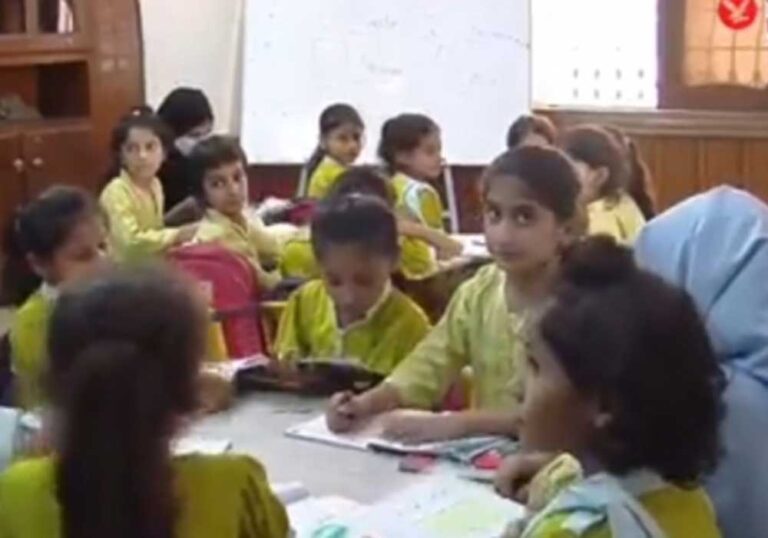
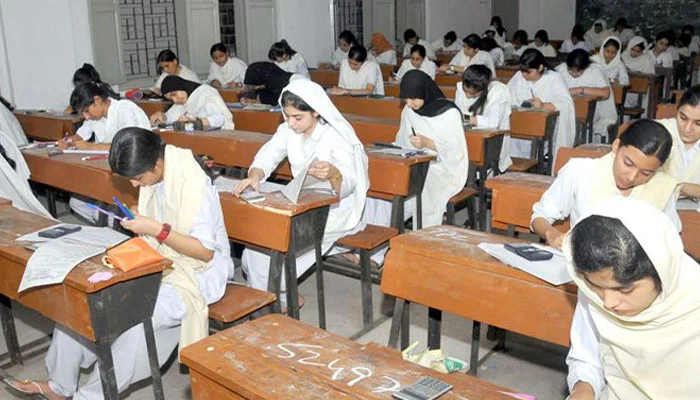
I am writing to bring your attention to a pressing issue at Government Girls High School in Balicha, which is currently facing a severe shortage of qualified teachers. Many teachers from Balicha choose to relocate and teach in cities so that their own children can receive a better education, leaving our local school understaffed. Not every family has the financial means to relocate or send their children to cities for schooling; most of the local population depends entirely on this government institution. When asked why proper instruction is lacking, some educators explain that staying in Balicha compromises their own children’s academic futures due to limited facilities. However, every child deserves access to quality education regardless of their socio-economic status or geographic location. At present, students are deprived of proper instruction in core subjects. While Urdu, Islamiat, and Arabic are taught regularly in some classes, essential subjects like English, Mathematics, Science, and Geography are frequently neglected due to the absence of specialized teachers.
This deficit is particularly critical for students in Grades 9 and 10, where key scientific disciplines—including Biology, Chemistry, and Physics—are not taught properly. Without adequate instruction in these foundational subjects, students are unable to prepare effectively for their board examinations or pursue higher education successfully. Every student deserves an equal opportunity to learn. I urge the relevant authorities to appoint qualified teachers to Government Girls High School, Balicha, ensuring that students can receive a complete education and build a better future.
Similar Posts

  • The Lack of Internet and Technology

    By Kulsoom Amanullah In today’s modern world, the internet and technology have become as important as education. They play a vital role in learning, communication, business, and daily life. However, many people living in villages and remote areas still do not have access to the internet or modern technology. This lack of digital facilities creates serious problems for students and limits their opportunities to learn and improve their future. Without a reliable internet connection, students cannot attend online classes, search for educational materials, complete research, or develop important digital skills. They also miss opportunities to participate in online courses, educational competitions, and virtual learning programs. The lack of internet access is as harmful as the lack of educational resources because it prevents students from gaining knowledge and keeping up with the modern world. Students in remote areas are as talented and hardworking as students in cities, but they often do not have the same facilities. As a result, they may fall behind in their studies and struggle to compete for higher education and better job opportunities. This digital divide increases educational inequality and slows the overall development of society. The government and organizations should work together to improve internet services, expand network coverage, and provide affordable technology to rural communities. Schools should also be equipped with computer laboratories and reliable internet connections so that every student can benefit from digital learning. Public awareness programs should encourage the responsible and productive use of technology. Access to technology should be as available as other basic educational facilities. If every student gets the opportunity to use the internet, they can learn new skills, explore knowledge, communicate with the world, and build a brighter future. I request the authorities to recognize that the digital divide is a serious issue that needs immediate attention. Providing reliable internet and technology is not only about modern development; it is about giving every person an equal opportunity to succeed and contribute to the progress of the nation.

  • Shortage of water in dasht

    By Baloch Khan Through the columns of your respected newspaper, I would like to draw the attention of the concerned authorities to the serious shortage of water in Dasht. The people of our area are facing great difficulties because clean drinking water is not available. Women and children have to travel long distances to fetch water. Sometimes the available water is dirty and unsafe, which causes many diseases. Farmers are also suffering because there is not enough water for their crops and animals. I request the government and the concerned departments to solve this problem by repairing water supply systems, installing new water pipelines, and providing clean drinking water to the people of Dasht as soon as possible. I hope my letter will be published and the authorities will take immediate action.

  • Mental Health Matters

    By Asma Qayyum Mental health is an essential part of a person’s overall well-being. It influences how we think, feel, make decisions, cope with stress, and interact with others. Despite its importance, many people still hesitate to discuss mental health because of fear, stigma, shame, or misunderstanding. Breaking this silence is the first step toward creating a society where everyone feels safe and encouraged to seek help. According to the World Health Organization (WHO), approximately 1 in every 8 people worldwide lives with a mental health condition. The WHO also reported that around 1.1 billion people were living with a mental disorder in 2021. Furthermore, depression affected approximately 280 million people globally in 2019, including 23 million children and adolescents. These figures highlight that mental health challenges are widespread and can affect anyone, regardless of age, gender, or social background. Among the most common mental health conditions are anxiety and depression, which affect hundreds of millions of people around the world. Several factors contribute to poor mental health, including academic pressure, financial difficulties, family conflicts, traumatic experiences, loneliness, bullying, and excessive use of social media. Young people are particularly vulnerable because they often experience significant emotional, academic, and social pressures during their formative years. Poor mental health can have serious consequences for both individuals and society. It may reduce concentration, lower academic and workplace performance, damage relationships, and increase the risk of physical health problems. If left untreated, mental health conditions can significantly reduce a person’s quality of life and overall well-being. The encouraging news is that most mental health conditions can be effectively treated and managed with timely support. Seeking help from mental health professionals, talking to trusted family members or friends, exercising regularly, getting enough sleep, eating a balanced diet, and practicing healthy stress-management techniques can greatly improve mental well-being. Schools, colleges, workplaces, and communities also play a vital role by promoting awareness, reducing stigma, and encouraging open conversations about mental health. In conclusion, mental health deserves the same attention and care as physical health. By encouraging open discussions, supporting those who are struggling, and increasing public awareness, we can break the silence surrounding mental health. Together, we can build a more compassionate, understanding, and healthier society where no one feels alone in facing mental health challenges.

  • Death Certificate

    By Waseem Hasil Every family eventually faces the quiet, overwhelming pain of losing someone they love. In those raw moments of grief, the last thing anyone should have to worry about is whether they can afford the paperwork required to officially honor their loss and settle their loved one’s affairs. I am writing to you today not just as a citizen raising a policy issue, but as someone deeply concerned about how our current administrative system treats grieving families during their most vulnerable hours. While government policies often announce free registration, the human reality at the ground level tells a very different story. Citizens arriving at local union council offices or municipal counters are frequently met with unexpected charges, costly attestation fees, and confusing legal hurdles. For a family that has just lost its primary earner, coming up with extra money for delayed registration fines, stamp papers, or succession documentation is an agonizing extra weight to carry. It feels deeply unfair that obtaining a basic legal paper, something essential for pension claims and family inheritance, becomes a financial negotiation. Official procedures should reflect compassion and empathy, serving as a support system rather than an added obstacle. When we allow indirect fees and procedural delays to mount, we make an already heartbreaking situation needlessly harder for ordinary people who are simply trying to do what is right. I sincerely appeal to your office to step into the shoes of those waiting at municipal desks across the country. Please establish strict oversight to clear away hidden fees, simplify the paperwork, and ensure that every family, regardless of their financial status, can obtain a death certificate with dignity and ease.

  • Ali Raza’s Murder: A Wake-Up Call for Justice and Safety in Karachi

    By Nazaink Majid I am writing this letter to seek justice for the tragic and heartbreaking murder of Ali Raza. Mirza Raza Ali, a famous Wafflix food grand owner from Gulistan -e-Johar and who was murdered in Gulistan -e- Johar, Karachi. According to a Pakistan today on the police investigation, Mir Ali Raza was in contact with his fiance until 11:30 PM, after which he returned to his home in PECHS. At around 3:00 AM on July 28, his fiance attempted to reach him again. Over a span of roughly 20 minutes, she made more than 40 panic calls and sent multiple text messages expressing immediate concern for his safety, none of which were answered. Police Sources confirmed that before leaving his PECHS house, Mir Ali Raza had abruptly deleted his social media accounts and disconnected his whatsapp. And he sent some amount of money to his father’s account. On 28 July at 4:12, Ali Raza went to his home. The following days, on the night of 29 July, his body was left at a location, and people discovered it on the morning of 30 July. The painful death of Ali Raza shows that people’s lives are not safe. No family should have to suffer the loss of a loved one in a such a way. Ali Raza’s death is a reminder that every life matters and every citizen deserves safety. We demand justice for Ali Raza and safety for every citizen of Karachi. No one should live in fear. Every person deserves justice, Safety and the chance to live without danger. The Ali Raza’s death should not become just another incident forgotten with time. It should be a wake-up call for stronger action, and safety for everyone. We appeal to the authorities to stand with the victim’s family, investigate this matter with honesty, and ensure that justice is served. No family should have to suffer such a loss, and no one life should be taken without accountability.

  • Poor State of Education in Balochistan

    By Shayhaq Siraj Balochistan, despite being the largest province of Pakistan, continues to suffer from a deeply neglected education system. Thousands of children are still out of school, while those enrolled often face a lack of basic facilities. Many schools exist only on paper, and in several areas, buildings are either in ruins or completely absent. One of the most pressing issues is the shortage of qualified teachers. In rural districts such as Kech and Turbat, students are deprived of quality instruction, leading to poor academic performance and high dropout rates. Additionally, the absence of proper monitoring allows ghost teachers and mismanagement to persist unchecked. The situation is further worsened by a lack of infrastructure. Schools without electricity, clean drinking water, and furniture are a common sight. In extreme weather conditions, students are forced to study in unbearable environments, which discourages attendance and learning. Education is the backbone of any society, yet it remains a low priority in Balochistan. Immediate steps must be taken by the government to improve school facilities, recruit trained teachers, and ensure strict accountability. Without urgent reforms, the future of an entire generation remains at risk.

Leave a Reply

Your email address will not be published. Required fields are marked *