death certificate

Death Certificate

By Waseem Hasil

Every family eventually faces the quiet, overwhelming pain of losing someone they love. In those raw moments of grief, the last thing anyone should have to worry about is whether they can afford the paperwork required to officially honor their loss and settle their loved one’s affairs. I am writing to you today not just as a citizen raising a policy issue, but as someone deeply concerned about how our current administrative system treats grieving families during their most vulnerable hours. While government policies often announce free registration, the human reality at the ground level tells a very different story. Citizens arriving at local union council offices or municipal counters are frequently met with unexpected charges, costly attestation fees, and confusing legal hurdles. For a family that has just lost its primary earner, coming up with extra money for delayed registration fines, stamp papers, or succession documentation is an agonizing extra weight to carry. It feels deeply unfair that obtaining a basic legal paper, something essential for pension claims and family inheritance, becomes a financial negotiation. Official procedures should reflect compassion and empathy, serving as a support system rather than an added obstacle. When we allow indirect fees and procedural delays to mount, we make an already heartbreaking situation needlessly harder for ordinary people who are simply trying to do what is right.
I sincerely appeal to your office to step into the shoes of those waiting at municipal desks across the country. Please establish strict oversight to clear away hidden fees, simplify the paperwork, and ensure that every family, regardless of their financial status, can obtain a death certificate with dignity and ease.

Similar Posts

  • Safe Playgrounds, Safer Communities

    Due to the lack of proper playgrounds, children and young people often use the grounds of nearby government schools for recreation and physical activity. There is nothing inherently wrong with this. In fact, physical activity is essential for children’s physical and mental health, fitness, and overall development. However, the absence of caretakers and other Class-IV staff in schools during the evening raises serious concerns about safety, discipline, and the protection of school property. Children and young people of different ages regularly gather in these playgrounds. To prevent any untoward incidents, the presence of responsible adults is essential. Having Class-IV staff or other designated personnel available during evening hours would not only reassure children and their parents, but also help to maintain discipline and safeguard school buildings, furniture, and other educational resources. A practical solution can be introduced to address this. The school administration should establish a sports committee comprising responsible members of the local community. The names, designations, and contact details of committee members should be properly recorded at the school, with a copy shared with the local police station. This would enable prompt communication with responsible committee members in the event of an emergency or any untoward situation. The matter requires immediate attention from both the district administration and the education department. Rather than discouraging children from using school playgrounds, the authorities should put in place a proper system of evening supervision at government schools. Such an arrangement would allow children to take part in healthy physical activities in a safe and disciplined environment, while also ensuring the protection of public property. Government school playgrounds are valuable community assets. With a modest and well-organised supervisory system, they can serve not only as spaces for physical activity but also as safe and constructive environments for the younger generation. Protecting these spaces and ensuring their safe use should therefore be a shared responsibility of the administration, schools, and the local community. Muhammad Iqbal Awan (Namal) Mianwali, Punjab (Educationist, Writer, Motivational Speaker)

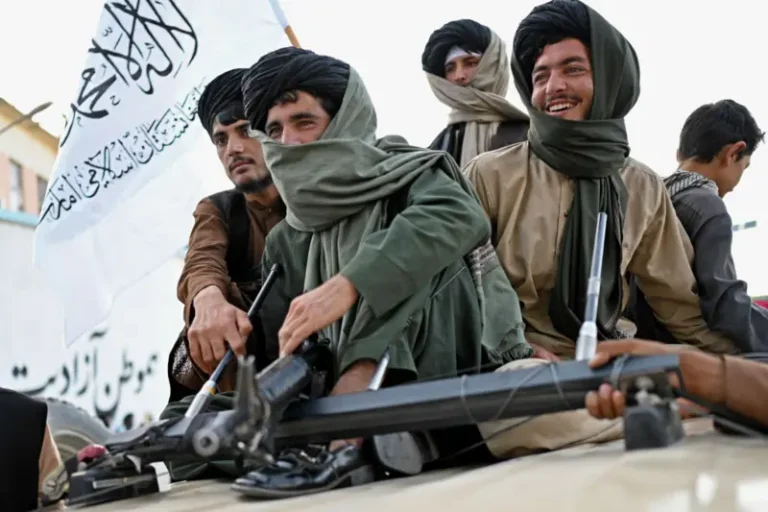
  • Afghanistan lost peace under the Taliban

    By Kulsoom Amanullah When Taliban entered Kabul in Augusta 2021,the loss of peace in Afghanistan and the role of the Taliban in the country’s long and difficult history. Afghanistan has suffered from decades of war, political conflict, and instability. The Taliban have been an important part of this history, and their return to power in 2021 changed the lives of millions of Afghan people. The Taliban first emerged in Afghanistan in the 1990s and controlled most of the country by 1996. Their rule was known for strict religious policies and restrictions on many aspects of daily life. After the attacks of September 11, 2001, the United States and its allies invaded Afghanistan, and the Taliban government was removed from power. However, the conflict continued for many years. During this period, Afghan civilians experienced violence, displacement, poverty, and insecurity. In August 2021, the Taliban returned to power after the withdrawal of United States and allied forces. Since then, Afghanistan has faced many serious challenges. Although the level of large-scale fighting has decreased compared with some earlier years, peace is more than simply the absence of war. True peace requires safety, freedom, economic stability, education, and respect for the rights and dignity of all people. One of the most serious concerns under the Taliban has been restrictions on women’s and girls’ education and participation in society. Girls have faced severe restrictions on secondary and higher education, while women have also faced limitations on employment and public life. These policies have created deep concern both inside and outside Afghanistan. Education is essential for the development of any country, and denying opportunities to a large part of the population can make it harder for Afghanistan to achieve long-term progress. The Afghan people also face economic and humanitarian difficulties. Many families struggle with poverty and limited access to basic services. Years of war have weakened the country’s infrastructure and economy. The international community has provided humanitarian assistance, but Afghanistan still needs long-term solutions that can help its people live with dignity and hope. At the same time, it is important to remember that ordinary Afghan people are not responsible for the conflicts that have affected their country. They are the ones who have suffered the most from decades of violence and instability. Afghan families deserve the opportunity to live peacefully, earn a living, educate their children, and build a secure future. Afghanistan needs a peaceful and inclusive future. The Taliban, as the current rulers of the country, have a major responsibility to create conditions in which all citizens can live safely and with dignity. The rights of women and girls, access to education, economic development, and humanitarian needs should be given serious attention. The story of Afghanistan teaches us that lasting peace cannot be achieved through force alone. It requires dialogue, justice, education, cooperation, and respect for human rights. I hope that one day Afghanistan will move beyond its painful past and become a peaceful country where every citizen can live without fear and every child can dream of a better future.

  • The Lack of Internet and Technology

    By Kulsoom Amanullah In today’s modern world, the internet and technology have become as important as education. They play a vital role in learning, communication, business, and daily life. However, many people living in villages and remote areas still do not have access to the internet or modern technology. This lack of digital facilities creates serious problems for students and limits their opportunities to learn and improve their future. Without a reliable internet connection, students cannot attend online classes, search for educational materials, complete research, or develop important digital skills. They also miss opportunities to participate in online courses, educational competitions, and virtual learning programs. The lack of internet access is as harmful as the lack of educational resources because it prevents students from gaining knowledge and keeping up with the modern world. Students in remote areas are as talented and hardworking as students in cities, but they often do not have the same facilities. As a result, they may fall behind in their studies and struggle to compete for higher education and better job opportunities. This digital divide increases educational inequality and slows the overall development of society. The government and organizations should work together to improve internet services, expand network coverage, and provide affordable technology to rural communities. Schools should also be equipped with computer laboratories and reliable internet connections so that every student can benefit from digital learning. Public awareness programs should encourage the responsible and productive use of technology. Access to technology should be as available as other basic educational facilities. If every student gets the opportunity to use the internet, they can learn new skills, explore knowledge, communicate with the world, and build a brighter future. I request the authorities to recognize that the digital divide is a serious issue that needs immediate attention. Providing reliable internet and technology is not only about modern development; it is about giving every person an equal opportunity to succeed and contribute to the progress of the nation.

  • Thank You for Giving Millions of Ordinary People an Extraordinary Voice

    By Syed Anwar Wasti For most of my life, I carried countless ideas, experiences, and stories within me. I wanted to write, share, and contribute—but I struggled to express myself. English was not my strongest language, I couldn’t type in Urdu, and many of my thoughts remained locked inside my mind. After living in the United States for more than four decades, I have witnessed many remarkable technological advances. Yet, in my personal opinion, few have transformed my life as profoundly as Artificial Intelligence—especially ChatGPT. Today, I can write articles, create blog posts, prepare speeches, develop video scripts, organize research, manage my website, and share my experiences with people around the world. Whether I am writing about my travels, my community, my business, or my personal reflections, AI has helped me turn ideas into words and words into meaningful conversations. What once required a team of writers, editors, and researchers can now be accomplished by one determined individual with the right tools. That is not just innovation—it is empowerment. Technology is most powerful when it gives ordinary people the opportunity to do extraordinary things. For me, AI has done exactly that. It has given me confidence, creativity, and, most importantly, a voice. Thank you for giving millions of ordinary people an extraordinary voice. Hats off to the brilliant minds behind ChatGPT and AI. May God bless you all, and may your work continue to benefit humanity for generations to come.

  • Pakistan: The Moment Frustration Met Patience

    Why would two nations that had been at war for months agree to let Pakistan carry their words to one another? The answer says a great deal about the place Pakistan has earned in the global hierarchy. Few countries are able to exchange views openly with both Tehran and Washington, yet Pakistan has built exactly that kind of standing through years of patient and balanced diplomacy. In Switzerland this June, that effort proved its worth. When the Iranian delegation grew frustrated and stepped away from the table, the negotiations might easily have collapsed. Instead, mediators from Pakistan and Qatar kept the channels open, passing messages between the two sides until the heat dissipated. The meeting at Burgenstock stretched on for eighteen hours, a test of patience that Pakistan met with gracious endurance. And what did it pocket for its own benefit? Nothing for itself. Its only aim was to silence the guns and keep the Strait of Hormuz open, so the wider world could feel some relief. Is that not the affirmation of a nation that proceeds in good faith? Credibility of this magnitude is not cultivated overnight. It is built progressively, through transparency and disciplined action, and in Switzerland, the world saw clearly that Pakistan possesses this cross-cultural credibility.

  • Virat kholi and 2027 ODI World cup

    By Muhammad Naseer Virat Kohli’s possible presence in the 2027 ODI World Cup has already created excitement among cricket fans. After years of remarkable performances, Kohli has become one of the most respected ODI batters of his generation. He has openly reaffirmed his commitment to playing in the 2027 World Cup, giving fans hope that they may see him represent India in another major tournament. The 2027 World Cup will be especially important because it could be one of the final major international tournaments of his career. Kohli has already experienced the pressure and excitement of World Cups on several occasions. He was part of India’s 2011 World Cup-winning team and later became one of the tournament’s most consistent performers. His extraordinary ability to chase difficult targets has made him particularly valuable in ODI cricket. His experience could also provide important guidance to younger players entering their first World Cup. However, reaching 2027 will require maintaining fitness, form, and consistency over the coming years. Cricket is an unpredictable sport, and no player can guarantee what the future will bring. Nevertheless, Kohli’s determination suggests that he still has ambitions left to fulfil in the 50-over format. For millions of supporters, watching him in another World Cup would be an emotional experience. His presence could also add enormous attention to the tournament. More importantly, the younger generation could learn from his preparation, discipline, and approach to the game. Kohli has already achieved numerous individual milestones, but another World Cup triumph would add another memorable chapter to his career. India will have many talented players by 2027, so the final team selection will depend on form and fitness at that time. If Kohli remains at his best, his experience could be extremely valuable in a high-pressure tournament. The 2027 World Cup may therefore become not only a competition for India but also another stage in the remarkable story of one of cricket’s modern greats. Fans will undoubtedly hope to see his familiar number on the Indian jersey when the tournament begins. Whether he produces another unforgettable innings or simply guides younger teammates, his contribution could be significant. For now, the possibility of Virat Kohli playing in the 2027 ODI World Cup is enough to keep cricket lovers eagerly waiting for what could be another memorable chapter in his extraordinary career.

Leave a Reply

Your email address will not be published. Required fields are marked *