better tomorrow starts

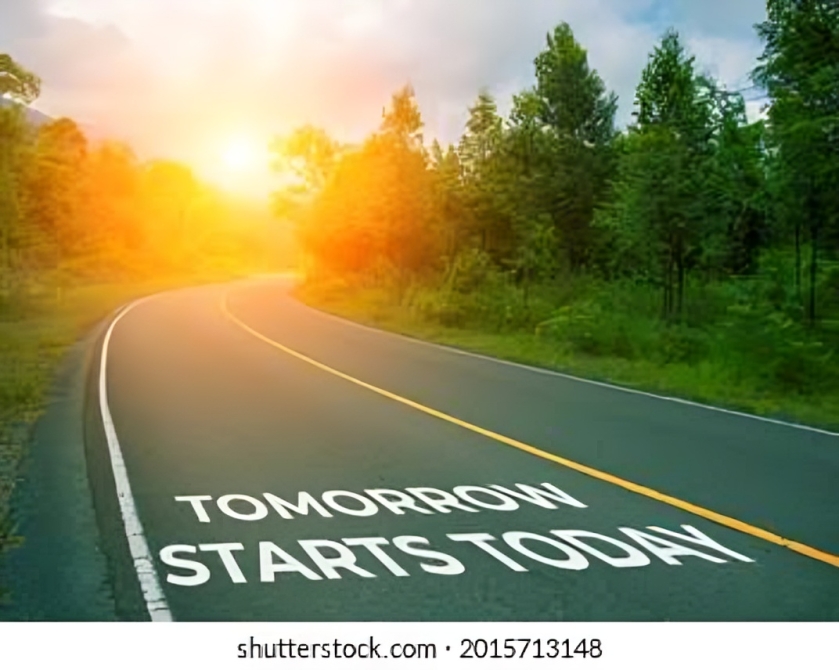
A Better Tomorrow Starts Today

By Nazaink Majid

Everyone dreams of a better future, but dreams only come true when we take action today. Every good choice we make, every lesson, and every small effort we put in helps build a brighter tomorrow. Instead of waiting for the perfect time we should start making positive changes today. “A Better Tomorrow Starts Today” reminds us that if we want to change our future, we must begin in the present. Every small step taken today brings us closer to the life we aspire to achieve.

Every day presents us with countless choices. Some may seem small, such as waking up early, completing our work on time, reading a book, or helping someone in need. However, these small decisions gradually shape our character and determine our future. Success is not the result of one extraordinary action but of many ordinary actions repeated consistently. Those who use today wisely are the ones who enjoy a better tomorrow.

A healthy future begins with healthy choices. Eating nutritious foods, exercising regularly, maintaining good hygiene, and getting enough sleep improve both physical and mental well-being. Likewise, avoiding harmful habits such as procrastination, laziness, and excessive screen time helps individuals become more productive. Small healthy routines practiced everyday lead to long-term benefits.

Creating a better tomorrow is not only a personal responsibility but also a social one. Every individual can contribute to society by showing kindness, respecting others, and helping people in need. At the same time, protecting the environment is essential for future generations. Planting trees, keeping our surrounding clean, reducing plastic waste, conserving water, are simple action that have a lasting impact. A sustainable future begins with responsible actions taken today.

Life is filled with challenges and setbacks, but challenges should not discourage us. Instead, they should inspire us to grow stronger and wiser. Every failure teaches valuable lessons, and every difficulty provides an opportunity to improve. Successful people are not those who never fail but those who continue moving forward despite failure. Determination, patience, and resilience transform today’s struggles into tomorrow’s achievements.

A better tomorrow is built not only through success but also through strong values. Kindness, honesty, responsibility create trust and strengthen relationships. Positive values practiced daily create lasting change.

A better tomorrow is not a distant dream – it is the result of what we choose today. Every positive action, every lesson learned, every kind word spoken, and every responsible decision contributes to a brighter future. Instead of waiting for the perfect moment, we should begin now. By working hard, caring for others, protecting our environment and believing in our ability to improve, we can recreate a future filled with hope and opportunity. The journey toward a better tomorrow begin with a single step taken today.
Similar Posts

  • |

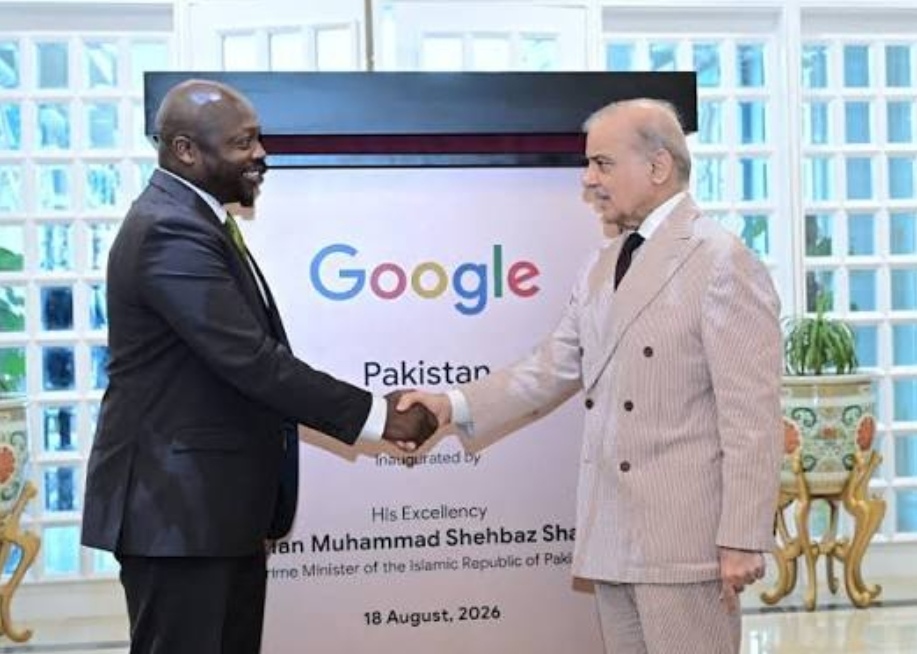
    Pakistan, google sign “historic” MOU

    By Umar Mujtaba Islamabad: Pakistan and Google have signed a memorandum of understanding (MoU) to expand cooperation in artificial intelligence, digital skills, IT exports and innovation, with Pakistani students set to receive free one year access to advanced AI tools including Gemini. The agreement was signed on Friday during a reception hosted by Prime Minister Shehbaz Sharif in honour of the Google team, according to a statement issued by the Prime Minister’s Office. Under the agreement, an Artificial Intelligence (AI) centre of excellence will be established in Islamabad for the training of young people and professionals to align their skills with global market requirements. This news comes days after Google opened its first office in Pakistan, which signals the company’s interest in Pakistan’s technology sector. Pakistani students will also receive one year of free google AI tools access, including gemini and google AI plus.  Both sides have agreed to expand google certificate to 150,000 in 2026, helping Pakistani youth with market oriented skills.  A joint taskforce will also be established to increase the country’s IT exports and improve the country’s competitiveness in the global technology sector.  The agreement also covers efforts to improve the global competitiveness of Pakistan’s mobile application and gaming industries, while promoting digital payments and expanding digital commerce. One of the areas identified for cooperation is the Federal Board of Revenue’s digitization program, where AI powered data analytics could be used to improve tax administration and public-sector efficiency. In agriculture, Pakistan and Google will explore AI applications for crop monitoring, forecasting and sustainable farming practices. The agreement also aims to use digital platforms to help Pakistani small and medium sized enterprises access international markets and expand their exports. The Prime Minister of Pakistan Shahbaz Sharif described the collaboration as a stepping stone toward contributing to a field that is “very attractive” and “the call of the day.”  Mr Sharif noted that the delegation’s arrival was “a sheer coincidence” because it comes precisely as the country is undergoing a major digital transformation of governance under the government’s “Digital Nation Pakistan” initiative.  Wilson L. White (Vice President for Government Affairs and Public Policy) described the $30 Billion Export Target by stating “Your ambition of making Pakistan a 30-billion-dollar IT export hub aligns with the goals that we have at Google.” 

  • The Growing Issue of Fake Degrees and Certificates

    By Sania Rahim I would like to draw the attention of the concerned authorities and the general public toward the rapidly growing issue of fake degrees and certificates, which is becoming a serious threat to our society day by day. Education is considered the backbone of any nation. It builds skilled professionals, responsible citizens, and a strong economy. However, the increasing trend of fake educational documents is weakening this very foundation. Today, some people obtain fake degrees and certificates to secure jobs, promotions, admissions, and other benefits without having the required knowledge, skills, or hard work. This unfair practice is not only injustice to deserving candidates but is also damaging the credibility of our educational institutions. The most alarming part is that fake degrees are now being used in sensitive fields such as medicine, engineering, teaching, law, and public administration. An unqualified doctor, engineer, or teacher can endanger human lives and the future of entire communities. When unskilled people occupy important positions through fraudulent documents, the quality of services declines, accidents increase, and public trust in institutions erodes. It also discourages honest students who spend years studying and working hard to earn genuine qualifications. Another major consequence is corruption. The network of agents, printing presses, and online sellers who manufacture and sell fake degrees is growing because of high demand and weak verification systems. This creates a parallel market where money replaces merit. As a result, competent individuals are left behind while unqualified people move ahead, which ultimately harms national progress. To control this serious issue, I would like to suggest some necessary steps: First, the government should establish a centralized, digital database of all degrees and certificates issued by recognized boards and universities. Every employer and institution should be bound to verify documents through this system before hiring or admission. Second, strict legal action should be taken against those involved in making, selling, and using fake degrees. Heavy fines and imprisonment can serve as a strong deterrent. Third, awareness campaigns should be launched in schools, colleges, and on media platforms to educate students and parents about the dangers and legal consequences of using fake documents. Fourth, professional bodies like the Pakistan Medical Commission, Pakistan Engineering Council, and education departments must regularly audit their members and employees. In conclusion, fake degrees are not just a paper problem. They are a threat to merit, public safety, and the future of our country. I sincerely hope that the concerned departments, law enforcement agencies, and educational authorities will take immediate and effective steps to eliminate this malpractice and restore trust in our education system.

  • A Town without Education

    By Zoya Khan Naseer Ahmed I am writing to bring your attention to a pressing issue at Government Girls High School in Balicha, which is currently facing a severe shortage of qualified teachers. Many teachers from Balicha choose to relocate and teach in cities so that their own children can receive a better education, leaving our local school understaffed. Not every family has the financial means to relocate or send their children to cities for schooling; most of the local population depends entirely on this government institution. When asked why proper instruction is lacking, some educators explain that staying in Balicha compromises their own children’s academic futures due to limited facilities. However, every child deserves access to quality education regardless of their socio-economic status or geographic location. At present, students are deprived of proper instruction in core subjects. While Urdu, Islamiat, and Arabic are taught regularly in some classes, essential subjects like English, Mathematics, Science, and Geography are frequently neglected due to the absence of specialized teachers. This deficit is particularly critical for students in Grades 9 and 10, where key scientific disciplines—including Biology, Chemistry, and Physics—are not taught properly. Without adequate instruction in these foundational subjects, students are unable to prepare effectively for their board examinations or pursue higher education successfully. Every student deserves an equal opportunity to learn. I urge the relevant authorities to appoint qualified teachers to Government Girls High School, Balicha, ensuring that students can receive a complete education and build a better future.

  • Shortage of water in dasht

    By Baloch Khan Through the columns of your respected newspaper, I would like to draw the attention of the concerned authorities to the serious shortage of water in Dasht. The people of our area are facing great difficulties because clean drinking water is not available. Women and children have to travel long distances to fetch water. Sometimes the available water is dirty and unsafe, which causes many diseases. Farmers are also suffering because there is not enough water for their crops and animals. I request the government and the concerned departments to solve this problem by repairing water supply systems, installing new water pipelines, and providing clean drinking water to the people of Dasht as soon as possible. I hope my letter will be published and the authorities will take immediate action.

  • Deforestation must be discouraged

      By: Shahnoor Haroon I am writing this letter to share my thoughts about deforestation. In my opinion, deforestation is a very serious problem. It means cutting down many trees from forests and other places. I think trees are one of the most important gifts of nature. They give us oxygen, fruits, wood, medicine, and shade. They also make our surroundings green and beautiful. I feel that our lives would be very difficult if there were no trees around us. Nowadays, many trees are being cut down for different reasons. People need land to build houses, roads, schools, factories, and shops. Trees are also cut down to get wood and to make land available for farming. I think some people do not think about the bad results of cutting down trees. They only think about their needs today and forget about the future. Deforestation has many harmful effects. When there are fewer trees, the air becomes dirty because trees help to clean the air. They also keep the weather cool. I have noticed that places with more trees are usually cooler and fresher. When trees are cut down, the temperature can become higher. Cutting down trees can also cause floods and soil erosion. During heavy rain, tree roots help to hold the soil, but without trees, the soil can easily be washed away. I also feel sorry for animals and birds that lose their homes because of deforestation. Forests are their natural homes, where they find food and shelter. When people cut down forests, many animals have to move to other places. Some animals even die because they cannot find enough food or a safe place to live. This is very sad and unfair to them. I believe that every person can help in a small way. We can plant a tree near our home or school and take care of it. We can also ask our friends and family to plant trees.

  • Dasht is in danger

    By Meer Baloch Through your newspaper, I want to draw attention to the serious situation in Dasht. The people of Dasht are facing many problems, and they do not feel safe in their own area. There is a lack of proper security, police protection, hospitals, and other basic facilities. People are worried about their safety, especially women, children, and elderly people. The government should take immediate steps to improve security and provide basic facilities to the people of Dasht. I hope you will publish this issue in your newspaper so that the authorities can take notice and protect the people of Dasht.

Leave a Reply

Your email address will not be published. Required fields are marked *