bangkok8217s original name
|

Bangkok’s original name has 168 characters

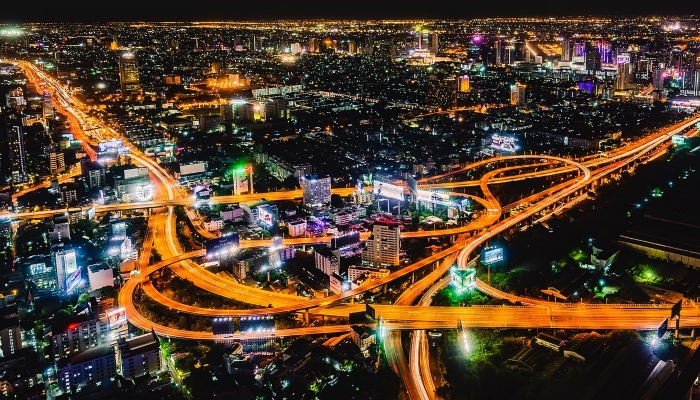
Did you know that the city with the world’s longest official name is also one of the most famous cities on Earth?

Interestingly, the name by which most people know this city is not its official name. The city is Bangkok, the capital of Thailand whose full ceremonial name consists of 168 characters.

If you ever visit Thailand, you are unlikely to hear local residents recite the full name as even many of them cannot remember it.

The city’s full ceremonial name is Krungthepmahanakhonamonrattanakosinmahintharaayuthayamahadilokphopnoppharatratchathaniburiromudomratchaniwetmahasathanamonpimanawatansathitsakkathattiyawitsanukamprasit.

Bangkok’s official ceremonial name is recognized by Guinness World Records as the longest place name in the world.

If you find it impossible to remember, you’re certainly not alone. The city also has a shorter official name in Thai: Krung Thep Maha Nakhon which is commonly shortened further by locals to simply Krung Thep.

In 2022, the Thai government announced that both Krung Thep Maha Nakhon and Bangkok would be accepted as official Romanized names for the capital.

The 168-character ceremonial name is derived from Sanskrit and Pali and its shorter form roughly translates to “The Great City of Angels.” However, historians are still uncertain why such an extraordinarily long ceremonial name was originally adopted.

How did name “Bangkok” come about?

According to popular accounts, the name Bangkok predates the establishment of the city as Thailand’s capital. It is believed to have originated from the area’s former village or district name possibly derived from the Thai words “Bang” (a village or riverside settlement) and “Makok” referring to a type of wild plum or olive tree that once grew abundantly in the area.

Over time, the name Bang Makok is thought to have evolved into Bangkok, the name by which the city became known internationally.

Similar Posts

  • |

    Gaza students overcome adversity for top results

    Thousands of students across the Gaza Strip achieved success in this year’s Tawjihi high school examinations despite months of conflict, displacement and severe disruptions to daily life, demonstrating remarkable determination to continue their education under extraordinary circumstances. The annual Tawjihi examinations, which play a decisive role in determining admission to universities and future careers, were completed by thousands of Palestinian students who prepared for the tests while living through prolonged instability, damaged infrastructure and limited access to educational resources. Among the success stories were three siblings from Khan Younis who earned outstanding grades after months of dedicated study. Despite facing repeated challenges during the academic year, the family celebrated their achievements, describing education as a source of hope and resilience. The students said the difficult conditions often made it emotionally exhausting to continue studying. However, they remained focused on their academic goals and credited their family for providing encouragement throughout the year. They said their success represented not only personal achievement but also a reward for months of perseverance. The family’s journey was particularly challenging because two of the siblings have physical disabilities, making regular attendance at private tuition difficult. Their parents arranged for teachers to conduct lessons at home, ensuring they could continue their studies despite mobility challenges and the difficult security situation. Their mother said years of continuous support, confidence and determination helped her children overcome obstacles. She expressed pride in their achievements, saying their success proved that dedication and family support can help students overcome even the most difficult circumstances. Education officials said nearly 89,000 students from the occupied Palestinian territories took the Tawjihi examinations this year, while thousands of Palestinian students living abroad also participated. Authorities added that more than 36,000 students from Gaza alone sat for the examinations despite the ongoing humanitarian crisis. Officials also noted the heavy impact of the conflict on the education sector. Hundreds of schools have reportedly been damaged, while many educational institutions remain unusable because of destruction. In many areas, students attended lessons inside temporary shelters, tents or partially damaged buildings where classrooms lacked desks, chairs and basic learning facilities. Teachers continued providing instruction despite the challenging conditions. Many educators said they had to support students emotionally as well as academically because many had lost family members or been forced to leave their homes during the conflict. One mathematics teacher said students often arrived carrying emotional trauma, making psychological support just as important as classroom instruction. She explained that teachers tried to encourage students, helping them remain focused on their studies despite the hardships surrounding them. Several students also shared deeply personal stories of loss. One student who lost multiple close family members during the conflict said completing her examinations became both an emotional struggle and a tribute to her loved ones. Although she celebrated passing the exams, she said the moment was bittersweet because many family members were no longer alive to witness her achievement.

  • How Lahore’s historic Neela Gumbad is emerging from decades of clutter

    For generations of Lahoris, the name Neela Gumbad (Blue Dome) referred to a bustling commercial center. The kind of place you visited to purchase a bicycle, repair a motor tire, or navigate a maze of auto parts shops.  Behind Anarkali Bazaar, the name itself felt almost metaphoric, as the physical blue dome was impossible to see from the main street. The location was swallowed whole by decades of unregulated commercial expansion, illegal encroachments, dangling electrical wires, and storefronts. One of Lahore’s most significant 17th-century heritage landmarks had been completely erased from the public eye. Now, a major initiative led by Chief Minister Maryam Nawaz under the government’s heritage restoration project is finally breathing new life into the centuries-old monument. The history of Neela Gumbad records back to 1673 during the reign of Mughal Emperor Aurangzeb. The complex was constructed as the final resting place and shrine for the venerated Sufi saint Sheikh Abdul Razzaq (often referred to as Abdur Razzaq Makki).  The tomb earned its famous moniker from Central Asian-style blue glazed tiles that adorned its central dome. However, as Lahore expanded into a modern metropolis throughout the 20th century, the historic shrine fell victim to severe urbanisation. The area around the tomb transformed into the infamous Neela Gumbad Cycle Market. Bulky, multi-story cycle shops, workshops, and illegal extensions were constructed directly against the shrine’s perimeter walls. Over time, the once-spacious courtyard and surrounding greenery vanished. Therefore, reducing the ancient monument to a claustrophobic nook completely hidden by concrete, rusted signboards and traffic congestion. Visitors to the area could spend hours in the market without realizing that a 350-year-old Mughal-era tomb stood there behind the shops. The ongoing restoration effort is radically altering the landscape of the area. To restore the monument’s historical dignity, the provincial government initiated a massive clearance operation. Recognizing the economic impact on local merchants, millions of rupees in compensation checks were distributed to dozens of affected shopkeepers and property owners surrounding the shrine prior to the clearance. Heavy machinery was then brought in to demolish the encroaching structures, exposing the weathered brickwork and original arches of the Neela Gumbad complex for the first time in nearly half a century. The project goes beyond simply tearing down illegal shops. It represents a comprehensive attempt at placemaking. It reclaims public spaces for citizens while preserving historical identity. The vision for the site includes a multi-level subterranean parking facility designed to permanently solve the chronic traffic congestion along Mall Road and Anarkali. The space surrounding the shrine is being converted into an open-air public piazza with pedestrian walkways, seating, green spaces, and night lighting. This plan will allow sightings of the blue dome from the main road once again. To preserve the historic commercial identity without compromising the architecture, bicycle vendors are being provided organized spaces within new facilities nearby. Specialized conservationists are working to restore the crumbling brickwork, repair structural damage, and revive the signature blue tiles of the shrine’s dome. As heavy excavators continue clearing debris around the site, the historic silhouette of Neela Gumbad is once again visible. This ongoing revival project serves as a case for how South Asian megacities can reclaim their historic souls.  

  • | |

    US and Japan join hands to stabilize weakening Jap…

    In a rare show of financial coordination, the United States and Japan have confirmed that they jointly intervened in currency markets last week to support the Japanese yen after it plunged to its weakest level in four decades against the US dollar. The move marks the first coordinated intervention between the two allies since 2011, when they acted together following Japan’s devastating earthquake and tsunami. The intervention comes as both governments seek to stabilize the yen and prevent further market volatility that could ripple across the global financial system. Japanese officials and US Treasury Secretary Scott Bessent made it clear that they are prepared to take additional coordinated action if needed to counter excessive fluctuations in the currency. Economists say the joint effort reflects growing concerns that a prolonged depreciation of the yen and instability in Japan’s government bond market could have wider consequences, including increased borrowing costs for the United States and heightened uncertainty in global markets. Analysts also believe that even limited interventions can discourage speculative trading by signaling that authorities are willing to act decisively. The yen has remained under pressure largely because Japan continues to maintain significantly lower interest rates than other major economies. While the Bank of Japan raised its benchmark interest rate to 1% in June—the highest level in nearly three decades—it remains well below the US Federal Reserve’s policy rate of 3.50% to 3.75%, making the dollar a more attractive choice for investors. Japan is also grappling with long-term economic challenges, including a shrinking working-age population, sluggish productivity growth and heavy dependence on imported energy priced in US dollars, all of which have contributed to the currency’s weakness. Japan’s Ministry of Finance stated that the coordinated intervention was aimed at countering excessive volatility and restoring orderly conditions in foreign exchange markets. Secretary Bessent echoed that message, saying the United States strongly supports Japan’s efforts to correct what it views as a significantly undervalued yen. President Donald Trump also defended the move, saying Japan had sought assistance in stabilizing its currency and reaffirming Washington’s commitment to supporting its longtime ally. Following the announcement, the dollar briefly weakened against the yen before regaining some ground. Market observers estimate that Japan may have spent nearly $59 billion purchasing yen in recent interventions, while reports suggest the United States may have bought between $5 billion and $10 billion worth of the Japanese currency, although US officials have not officially confirmed the amount. Financial markets are now closely watching whether further coordinated interventions will be required if pressure on the yen continues, with analysts expecting both governments to remain ready to act in order to preserve stability in global currency markets.

  • | | | |

    Iran targets US bases across Gulf

    The conflict between Iran and the United States intensified on Wednesday after Iran claimed it carried out a new wave of drone attacks on US military bases in Jordan, Bahrain and Kuwait. The latest attacks marked another major escalation in the ongoing regional conflict that has continued for months. Iranian military officials said attack drones targeted Al-Azraq Air Base in Jordan, Sheikh Isa Air Base in Bahrain and Camp Doha in Kuwait. According to Iranian authorities, the strikes focused on military warehouses, logistics facilities, aircraft maintenance centers and ammunition depots used by US forces. Jordan confirmed that its air defense systems intercepted several missiles and drones after they entered the country’s airspace. Officials said four missiles were destroyed while two landed in remote desert areas. No casualties or property damage were reported. Air raid sirens also sounded in Jordan’s southern port city of Aqaba. Videos circulating on social media showed smoke rising over the area. Authorities urged residents to remain alert but confirmed that the situation was under control. Bahrain’s military said its air defense systems successfully intercepted several incoming aerial threats after warning sirens were activated across the country. Officials did not report any casualties or major damage. Iran also claimed it launched a large number of drones against Camp Doha in Kuwait. Iranian media said the attack targeted US ammunition storage sites and military logistics equipment. Kuwait had not issued an official response at the time of reporting. The latest attacks came only a day after Iran launched missile strikes against US-linked military facilities in Jordan and Bahrain, increasing fears that the conflict could spread further across the Gulf region. Meanwhile, US Secretary of State Marco Rubio said Washington remains prepared to negotiate with Iran if Tehran shows genuine willingness to engage in serious talks. Speaking during a regional meeting in Manila, Rubio said the United States continues to support diplomacy but believes Iran is not currently committed to meaningful negotiations. He warned that Iran must not be allowed to threaten international shipping through the Strait of Hormuz. Rubio said any attempt to control one of the world’s busiest shipping routes would create a dangerous precedent and threaten global trade. The security situation has already affected international energy markets. Global oil prices climbed again as fears grew over possible disruptions to oil supplies from the Gulf. Brent crude traded above $91 per barrel, while fuel prices also increased in international markets. The crisis worsened after Yemen’s Houthi movement announced a naval blockade targeting Saudi Arabia. The move forced several oil tankers carrying Saudi crude to change their routes in the Red Sea because of growing security concerns. French shipping company CMA CGM announced an emergency surcharge on cargo shipments starting August 1. The company said the worsening security situation around the Strait of Hormuz has significantly increased fuel and transportation costs. At the same time, US forces carried out another round of airstrikes inside Iran. American military officials said the strikes targeted command centers, drone storage facilities, aircraft hangars, logistics sites and maritime capabilities. The operation marked the 11th consecutive night of US military attacks. Iranian media reported explosions in Tehran, Bushehr, Chabahar, Konarak and parts of Ilam province. Officials said a missile strike damaged an electrical substation supplying power to the Bushehr nuclear power plant. Electricity was restored after several hours, and authorities reported no casualties. US President Donald Trump said 18 American service members have been killed since the conflict began, including four who died in recent Iranian attacks on US military bases in Jordan and Iraq. He said the United States would continue protecting its forces and allies in the region. Iran also claimed it targeted infrastructure linked to a major American technology company operating in Bahrain. However, the claim has not been independently verified. The conflict began in late February following US and Israeli strikes on Iran. Since then, military operations have expanded across several countries in the Middle East. Despite ongoing mediation efforts by regional countries, including Pakistan, no ceasefire agreement has been reached

  • | |

    Israel rejects Trump’s 15-point Gaza plan

    Israeli Prime Minister Benjamin Netanyahu has rejected US President Donald Trump’s proposed 15-point plan for Gaza, insisting that Israel will not withdraw its forces until Hamas is fully and genuinely disarmed. Netanyahu made the statement during a cabinet meeting on Sunday. He said Israel would not accept any arrangement that allows Hamas to retain its weapons while Israeli troops are required to leave Gaza. “Israel rejects the 15-point document,” Netanyahu said, adding that the Israeli military would continue operating against threats to its forces and citizens. The dispute has created another obstacle for Trump’s efforts to establish a lasting ceasefire and political settlement in Gaza. Trump’s Board of Peace had previously announced that an agreement had been reached on the complete disarmament of Hamas and other armed groups operating in the territory. Hamas, however, has linked the handover of its heavy weapons to wider conditions. The group has demanded an end to Israeli military operations and a withdrawal of Israeli forces from Gaza. Netanyahu said disarmament must take place before any Israeli military withdrawal. He rejected the possibility of what he described as a symbolic or “fictitious” disarmament process. The Israeli premier said his government was discussing the next steps with US officials. He indicated that some American proposals were acceptable to Israel, while others remained unacceptable. “We know how to stand our ground on these matters,” Netanyahu said. The disagreement represents a major challenge for Trump’s Gaza initiative, which was presented as a framework for ending the conflict and creating conditions for reconstruction. The proposed plan includes the disarmament of Hamas, a phased Israeli military withdrawal and the rebuilding of Gaza. It also envisages the creation of an international Board of Peace to oversee implementation of the agreement. Hamas had previously signalled support for aspects of the disarmament framework. However, the group has maintained that weapons cannot simply be surrendered while Israeli forces remain in Gaza and military operations continue. Israel, meanwhile, has continued military strikes in Gaza despite the initial ceasefire agreement reached last October. Netanyahu is also facing political pressure at home. His far-right coalition partners have strongly opposed concessions that could allow Hamas to remain armed or secure a significant Israeli withdrawal. National Security Minister Itamar Ben Gvir has rejected the proposed framework and called it unacceptable. With Israeli elections approaching, Netanyahu faces pressure from both domestic allies and international partners. Any major concession on Gaza could create tensions within his governing coalition. The latest rejection therefore puts Trump’s peace initiative under renewed pressure. The central disagreement remains over the sequence of events: Hamas wants Israeli forces to withdraw and military action to end before completing disarmament, while Israel insists that Hamas must first surrender its weapons.

  • | |

    Six members of one family killed in Israeli strike…

    An Israeli airstrike killed a father, his wife and their four children in Gaza City on Tuesday, setting their home on fire, according to health officials, in the latest deadly incident since a US backed ceasefire took hold more than nine months ago. Medics said the strike hit the family’s house in the Sabra neighborhood, killing Firas Al Masri, his wife Salsabeel, their three daughters and their son. The Israeli military confirmed carrying out the strike, saying it had targeted a Hamas militant and that it was still assessing the outcome of the attack. A video obtained by a news agency showed rescue workers battling fires inside the house and carrying out bodies wrapped in white shrouds. Masri’s father, Abu Yusuf Al Masri, said the explosion occurred while the family slept, describing his grief over the loss of his son, daughter in law and grandchildren. He said rescuers could not save the children and grandchildren from the flames and destruction, and that around five or six people died, most of them women and children, without warning and without mercy. Standing outside the family home, he said no place in Gaza offers relative calm or safety anymore. Heavy toll since October The Israeli military said it carried out four separate strikes since Friday that killed four militants from Hamas and Islamic Jihad, three of whom it said had taken part in the October 7, 2023, attack on Israel that triggered the war and involved the seizure of Israeli hostages. Later Tuesday, two additional Israeli airstrikes hit a vehicle in central Gaza and an association building in Gaza City, killing at least six more people and wounding others, according to Palestinian medics, bringing Tuesday’s overall death toll to 12. The Israeli military did not immediately comment on either of these later strikes. These latest deaths add to a toll exceeding 1,160 Palestinians, most of them civilians, killed in Israeli attacks since the ceasefire between Israel and Hamas took effect in October, according to health officials in Gaza. Hamas typically does not disclose its own casualty figures. The truce halted large scale fighting but has not stopped near daily Israeli strikes across the territory. Israel says these operations target militants. Four Israeli soldiers have died at the hands of militants in Gaza during the same period. Mediators including Egypt, Qatar, Turkey and the United States have continued working to advance a plan put forward by President Donald Trump aimed at ending the conflict in Gaza, which calls for Hamas to disarm and for Israeli forces to withdraw, though little progress has emerged so far. The war began when Hamas led fighters attacked communities in southern Israel, killing 1,200 people and taking roughly 250 hostages, according to Israeli figures. Israel’s subsequent military campaign has killed more than 73,000 Palestinians, according to Gaza health officials. Nearly all of Gaza’s population of about two million people now lives crowded along a narrow strip of coastal land, largely in makeshift tents or damaged buildings, enduring severe conditions under continued Hamas control. The continued strikes highlight how the ceasefire, despite formally ending large scale combat, has failed to bring lasting safety to civilians in Gaza, with families like the Al Masris bearing the human cost of attacks that Israel says are aimed at militants but that have repeatedly killed women and children in residential areas. International mediators continue pressing for progress on disarmament and withdrawal terms, though the persistent violence has raised doubts about how quickly, if at all, conditions on the ground might meaningfully improve for Gaza’s remaining population.

Leave a Reply

Your email address will not be published. Required fields are marked *