murad rejects naqvi8217s
| | |

Murad rejects Naqvi’s proposal for new admin…

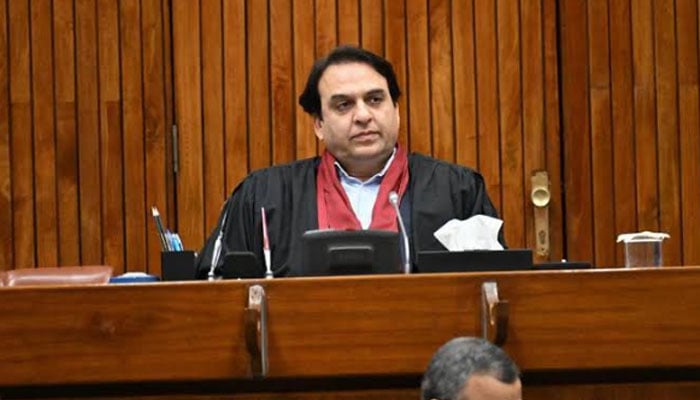
KARACHI: Sindh Chief Minister Murad Ali Shah has strongly rejected Interior Minister Mohsin Naqvi’s proposal for creating new administrative units, calling it an outdated idea that the people of Sindh would never accept.

Speaking to reporters in Bhit Shah on Friday, Murad said he had heard the interior minister’s statement but was unsure what exactly he was referring to. He said if Mohsin Naqvi believes the current governance system has failed, he is free to present proposals, but the idea of creating new administrative units is an old suggestion that has already been debated.

The chief minister said Sindh is the land of Sufi traditions and its people would not support such a move. He stressed that any proposal affecting the province should reflect the will of its people.

Murad also pointed out that different political parties are governing different parts of the country. He noted that Punjab is ruled by the Pakistan Muslim League-Nawaz (PML-N), Balochistan has a coalition government, Sindh is governed by the Pakistan Peoples Party (PPP), while Khyber Pakhtunkhwa is under the Pakistan Tehreek-e-Insaf (PTI).

Commenting on the country’s youth, Murad said young people are Pakistan’s future and will lead the nation in the years ahead. He rejected any negative remarks about them, saying the youth are a valuable national asset and should be encouraged rather than criticised.

Similar Posts

  • | |

    DG Khan victims await CM’s compensation

    By MIR HUNBAL BIRMANI A heartfelt public appeal has been made to Punjab Chief Minister Maryam Nawaz Sharif on social media , urging her to announce financial compensation for the families of the four children who were killed and sixteen injured in the Little Scholars School tragedy in Dera Ghazi Khan on May 7, similar to the relief package announced for victims of the recent Kahna, Lahore academy roof collapse. Parents of deceased children of little scholar school roof collapse incident expressed profound grief over the tragic incident in Kahna, Lahore, where the collapse of an academy roof claimed the lives of innocent children and left several others injured. They offerd prayers for the departed souls, strength for the bereaved families, and a speedy recovery for the injured. Referring to reports that the Punjab government has announced Rs2 million each for the families of the deceased and Rs500,000 each for the injured in the Kahna tragedy, the public appeal on social media describes the decision as commendable. However, it argues that the absence of a similar announcement for the victims of the Little Scholars School tragedy in Dera Ghazi Khan has created a perception of unequal treatment . The statement notes that both incidents involved the collapse of classroom roofs, resulting in the deaths and injuries of schoolchildren. It stresses that negligence and carelessness cannot be overlooked in either case and that the victims in Dera Ghazi Khan deserve the same compassion and support extended to those in Lahore. The appeal further points out that while the Chief Minister promptly announced relief for the Kahna victims, no compensation has yet been announced for the families affected by the Dera Ghazi Khan tragedy, nor did the Chief Minister visit the city to offer condolences. It says this has caused disappointment among the bereaved families and residents of Dera Ghazi Khan. Questioning the perceived disparity, the appeal states that if the Chief Minister considers herself a mother to all the children of Punjab, then the victims of both tragedies should receive equal treatment. The appeal concludes by urging Chief Minister Maryam Nawaz Sharif to announce a compensation package for the families of the deceased and injured children in the Little Scholars School tragedy. It emphasizes that while no amount of money can compensate for the loss of a child or heal the grief of the parents, such assistance would demonstrate that the government stands with all citizens equally. The statement also calls upon elected representatives from Dera Ghazi Khan and the district administration to formally recommend to the Punjab government that financial assistance be provided to the affected families.

  • | |

    Dar vows stronger, peaceful and prosperous Pakista…

    Deputy Prime Minister and Foreign Minister Ishaq Dar has stressed the need to implement the Islamabad Memorandum of Understanding (MoU) in accordance with its spirit and text. Dar said dialogue and diplomacy are the only practical ways to resolve outstanding issues. He said Pakistan has always supported peace, negotiations, cooperation and mutual respect among nations. The foreign minister said developments during the past year had once again highlighted the urgent need to settle longstanding disputes peacefully. He said unresolved disputes remain a major challenge to regional peace and stability. Dar particularly highlighted the Jammu and Kashmir dispute. He described the issue as one of the key causes of instability in the region. He reaffirmed Pakistan’s continued moral, political and diplomatic support for the Kashmiri people. He said Pakistan would continue supporting the Kashmiri people in their struggle for their rights. He also stressed the importance of resolving disputes through peaceful dialogue and diplomatic engagement. Dar paid tribute to the people serving Pakistan and confronting threats from its enemies. He said these threats exist both inside and outside the country. He added that the nation stands united with those working to protect the country. The foreign minister expressed gratitude for the sacrifices made by security personnel and other individuals serving the national interest. He said their services and sacrifices would always be remembered. Dar also called for stronger national institutions. He urged the people to maintain national unity and work together for the country’s progress. He stressed the need to fully utilise the abilities and potential of Pakistan’s people. He said collective efforts were essential to building a strong and prosperous future.

  • | | |

    CCTV exposes couple behind Karachi motorcycle thef…

    Karachi Police have arrested a woman allegedly involved in a series of motorcycle thefts during an operation in the Soldier Bazaar area. The suspect, identified as Sehar Batool, was taken into custody after police acted on intelligence and analyzed CCTV footage. Her husband, who is also wanted in connection with the case, managed to flee and remains at large. According to police officials, the couple is suspected of carrying out numerous motorcycle lifting incidents across different parts of Karachi. Investigators believe they worked together to target parked motorcycles before fleeing the scene with the stolen vehicles. Authorities said CCTV footage played a crucial role in identifying the suspects. The recordings reportedly captured the husband and wife taking away motorcycles, providing investigators with key evidence that led to the woman’s arrest. During the operation, police also recovered a motorcycle from the suspect’s possession. Officials are verifying whether the recovered vehicle matches any of the motorcycles reported stolen in recent cases. A criminal case has been registered against the arrested woman and her absconding husband under the relevant legal provisions. Police have launched a search operation to locate the fugitive suspect while continuing their investigation to determine whether other individuals were involved in the alleged theft network. Law enforcement authorities have urged motorcycle owners to take preventive measures, including parking their vehicles in secure locations, using reliable locking systems, and reporting suspicious activity to the police. Officials say public cooperation, along with surveillance technology, continues to play an important role in tackling vehicle theft across the city. The investigation remains ongoing, and police expect further developments as efforts continue to apprehend the remaining suspect and recover additional stolen motorcycles.

  • | |

    Pakistan’s major dams reach 72% storage capa…

    Pakistan’s water reserves have improved significantly, with the country’s major reservoirs now filled to 72% of their total storage capacity, according to official data released on Sunday. The latest figures show that the combined water storage in the country’s key reservoirs has reached 9.466 million acre-feet (MAF), compared with a total storage capacity of 13.149 million acre-feet. Officials said the improvement follows a substantial increase in water inflows across the Indus River system, with inflows significantly exceeding outflows. The higher inflow has helped replenish major dams and strengthen the country’s water reserves. The increase in reservoir levels is expected to support irrigation needs, improve water availability for agriculture and enhance overall water management during the current season. Authorities continue to monitor inflows and reservoir levels as the monsoon season contributes to rising water storage across the country’s major dams.

  • |

    PCB unveils major domestic cricket overhaul ahead of ODI World Cup

    LAHORE: The Pakistan Cricket Board (PCB) has announced a significant revamp of its 2026–27 domestic cricket season, introducing structural changes aimed at strengthening competition and preparing players for the upcoming ICC Men’s ODI World Cup. The new domestic calendar places greater emphasis on high-quality white-ball cricket while also reshaping Pakistan’s premier first-class competition to improve competitiveness across all formats. According to the PCB, the season will begin on August 11 in Multan with the National Champions Cup, a four-team one-day tournament. Squads for the competition will be selected by the national selection committee, providing emerging players with an opportunity to impress in the 50-over format ahead of the global tournament. The board has also confirmed that the domestic season will feature two List A competitions. Following the National Champions Cup, teams will compete in the President’s Cup, giving players additional match practice and selectors a broader pool of performances to evaluate before international assignments. One of the biggest changes announced is the expansion of regional participation. The number of regional teams has increased from 18 to 20, with Sialkot and Peshawar each receiving permission to field a second team. PCB officials believe the move will create more opportunities for talented cricketers across the country and deepen the domestic talent pipeline. In another landmark decision, the prestigious Quaid-e-Azam Trophy has been divided into Gold and Silver Divisions for the first time in the tournament’s history. The Gold Division will feature the country’s eight strongest teams, while the Silver Division will include 12 teams competing for promotion and a chance to challenge the top sides. Both divisions are scheduled to begin on November 1, with the new format designed to increase the quality and intensity of first-class cricket. The domestic campaign will conclude with the National T20 Cup, scheduled for February and March, ensuring players receive competitive exposure in all three major formats before the international season intensifies. PCB officials said the revised structure reflects the board’s long-term strategy of producing better-prepared cricketers capable of succeeding at the highest level. By increasing meaningful competition, expanding opportunities for regional teams, and aligning domestic cricket with international priorities, the board hopes to strengthen Pakistan’s player development pathway. Cricket analysts have welcomed the changes, saying the new format could raise the standard of domestic cricket while helping selectors identify consistent performers ahead of major international tournaments, including the 2027 ODI World Cup.

  • |

    US investigates possible Russian role in Iranian strikes on CIA facilities

    US intelligence agencies are examining whether Russia helped Iran carry out drone attacks on CIA facilities in the Gulf, raising fresh concerns about growing military cooperation between Moscow and Tehran. Officials are reviewing intelligence to determine whether Russia provided targeting information, advanced drone technology, or other forms of support that may have increased the accuracy of the attacks. According to sources familiar with the investigation, analysts have not reached any final conclusions about Russia’s involvement. However, the precision of the strikes and Russia’s long history of military and technical cooperation with Iran have led intelligence officials to explore whether Moscow played a direct role in planning or supporting the operations. The investigation follows a series of Iranian drone attacks that targeted sensitive US intelligence locations in the region. At least two CIA facilities were reportedly hit in March. One of the sites was located inside the US Embassy in Riyadh, Saudi Arabia, while another was in eastern Iraq. Officials familiar with the matter said additional CIA locations may also have been attacked, although they declined to reveal further details because of security concerns. Western intelligence officials have also reviewed reports suggesting that Russia may have assisted Iran in selecting the targets. One intelligence assessment reportedly concluded that Russia likely contributed to identifying regional CIA facilities, although officials stressed that the findings remain under review and have not been publicly confirmed. According to officials briefed on intelligence reports, the attack on the US Embassy compound in Riyadh involved two upgraded versions of Iran’s Shahed drones. They said one drone created an opening in the embassy’s outer structure while the second entered through the damaged area before exploding inside. No casualties were reported, but the operation demonstrated a level of accuracy that surprised intelligence analysts. The investigation comes as tensions between the United States and Iran remain high following months of military exchanges across the Middle East. American officials are also examining recent Iranian strikes on a US military base in Jordan where ballistic missiles killed two American soldiers. Those attacks have intensified concerns that Iran may be receiving more advanced military support from Russia. Analysts believe Russia has spent years helping Iran improve its drone capabilities. Intelligence sources say Moscow has assisted Tehran in increasing the range and precision of its Shahed drones through technical upgrades. Reports also suggest Russia supplied Iran with the Kometa M satellite navigation system, which is believed to provide greater accuracy and stronger resistance to electronic interference than Iran’s previous guidance systems. Russia has denied supplying the technology and dismissed earlier reports on the matter. The White House referred questions about the investigation to the CIA, which declined to comment. Iran’s mission to the United Nations, the Russian Defense Ministry, and Saudi authorities also did not respond to requests for statements. The exact number and locations of the targeted CIA facilities remain classified. Intelligence sources said more than one site but fewer than a dozen were struck during the attacks. Overseas CIA operations often include embassy based stations as well as secure facilities used for surveillance, logistics, intelligence gathering, and other sensitive missions. US analysts are also investigating whether Russia supplied the intelligence used to identify the Riyadh facility. Some officials remain cautious, noting that Iran may have intended to strike the US Embassy as a whole rather than specifically targeting the CIA station located within the compound. Others believe very few countries possess both the intelligence capabilities and the strategic motivation to identify and support attacks against such highly sensitive US facilities. Former CIA station chief Daniel Hoffman said closer military cooperation between Russia and Iran makes such assistance plausible. He argued that both countries share a common interest in reducing American influence across the Middle East and other regions where they seek greater strategic control. The investigation remains ongoing as US intelligence agencies continue to assess the available evidence.

Leave a Reply

Your email address will not be published. Required fields are marked *