
pakistani youtube channels

Pakistani YouTube channels see rising global popularity

YouTube, the world’s largest video-sharing platform says Pakistani creators are rapidly expanding their global reach. The company has released a new report highlighting the increasing international popularity of Pakistani YouTube creators.

According to the report, Pakistan is now one of the world’s most dynamic YouTube creative communities with Pakistani artists, creators and innovators introducing new forms of creative expression on the platform.

The report states that audiences both within Pakistan and abroad are watching Pakistani YouTube content in record numbers helping it build a unique identity among viewers across different regions of the world. According to YouTube’s data:

  • More than 140,000 Pakistani YouTube channels now have over 10,000 subscribers.
  • More than 19,000 channels have surpassed 100,000 subscribers.
  • Over 1,200 channels have crossed the 1 million subscribers milestone.

The report also revealed that Pakistani creators uploaded more than 20 million hours of content to YouTube over the past year. One of the most significant highlights of the report is the global reach of Pakistani creators.

Around 60% of the total watch time for Pakistani YouTube videos comes from viewers outside Pakistan. From South Asia to the Middle East, and from Europe to North America, Pakistani creators are attracting audiences worldwide through high-quality, authentic and internationally appealing content.

Similar Posts

  • WhatsApp adds AI photo expansion feature for Android

    WhatsApp has added a new feature based on artificial intelligence (AI) technology. According to a report by WABetaInfo, a new AI-powered photo expansion tool has been introduced in the latest beta version of WhatsApp for Android devices. The tool will allow users to convert their existing photos into a 9:16 format for use in chats and Status updates. The feature will be available in WhatsApp’s image-drawing editor. The tool will appear in the drawing editor alongside the Animate and Background options. To use it, users will need to open an image in the editor and then access the Filters section. Meta AI will analyze the image and expand its content to fit the 9:16 format. If users are not satisfied with the result, they can use the tool again. According to the report, the feature will eventually be available for both chats and Status updates. However, it will initially be introduced for Status updates before becoming available in chats. As mentioned above, the feature is currently available in the beta version so it is difficult to say when it will be rolled out to all WhatsApp users.

  • Facebook introduces free verified badge with selfie verification

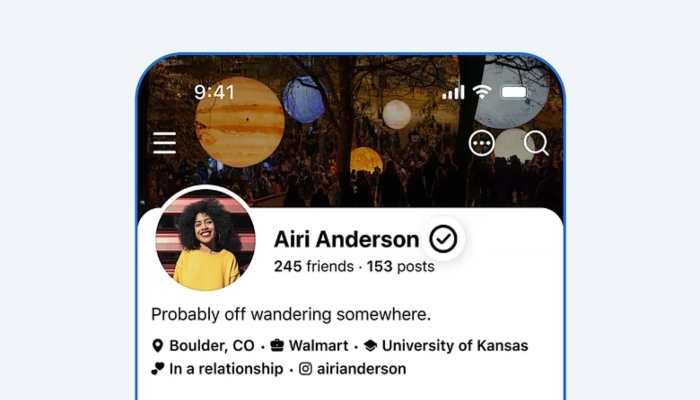
    Meta announced in February 2023 that Facebook and Instagram users could obtain a verified account (blue checkmark) by paying a monthly subscription fee. Since then, users around the world have been able to subscribe to receive the blue verification badge. However, Meta has now introduced a new way for users to receive a free verification badge on their Facebook profiles, making the process much more accessible. The company has launched a new Facebook Verified program that uses a selfie-based facial recognition check along with a review of the user’s current profile photos. According to Meta, the entire verification process takes only a few minutes to complete. The program is available only to users who are 18 years of age or older. Once a user successfully passes the selfie verification, a verified badge will appear next to their profile name across various Facebook services. Unlike the paid blue checkmark, this free badge simply confirms that the profile belongs to a real person. It does not certify the person’s credibility or trustworthiness. The best part is that this verification badge is available free of charge.

  • 29 US states sue Meta over social media’s impact on children

    More than half of the US states have jointly taken Meta, the company that owns apps such as Facebook, Instagram and WhatsApp to court. The trial against Meta is set to begin on August 18. The US states have accused the parent company of Facebook and Instagram of designing its apps in ways that can be addictive and harmful to young people. The case is being heard in a federal court in California and is expected to continue for six to eight weeks. The jury will hear testimony from Meta CEO Mark Zuckerberg, Instagram CEO Adam Mosseri and former Meta employee Arturo Bejar who has since become a whistleblower regarding the company. The lawsuit filed by the 29 states is being led by attorneys general from California, Colorado, New Jersey and Kentucky. The states originally filed the lawsuit in October 2023 submitting 233 pages of documents to the court. They accused Meta of collecting data from children under the age of 13 without parental consent allegedly violating federal and state laws. The lawsuit claims that Meta refused to stop the use of harmful features because its primary objective was to generate profits. The case could have serious consequences for the future of the social media company as the states are seeking $200 billion in damages, an amount equivalent to Meta’s annual revenue in 2025. The states are also demanding that Meta redesign its apps to make them safer for children. Meta, on the other hand, has rejected all the allegations. The company claims that the states filed the lawsuit to obtain billions of dollars rather than based on facts or the law. In a statement, Meta said the case is important for the states but described their allegations as unfounded and their financial demands as inappropriate. The company also said that the attorneys do not have sufficient evidence to support their claims. According to state attorneys, Meta has developed features designed to keep people spending as much time as possible on its apps with young users being among those most affected. The trial comes shortly after a similar case in New Mexico where a court recently imposed a $567 million fine. A similar lawsuit is also currently being heard in the US state of Tennessee.

  • WhatsApp adds new media reply feature

    WhatsApp is rolling out an interesting new update that users are likely to appreciate. The new feature has appeared in the latest beta version of WhatsApp for Android devices and will completely change the way users respond to media files. According to a report by WABetaInfo, WhatsApp introduced the ability to reply to or react to photos and videos in 2024. However, until now, users have had to exit the full-screen media viewer after viewing a photo or video in order to reply or add a reaction. Now, two years later, WhatsApp is redesigning the media viewer completely and adding a new bar to the full-screen media viewer. The company has introduced the redesigned media viewer interface to a limited number of beta testers. With the new interface, a complete response bar will appear directly on the preview screen. It will display two default emojis while the full range of reaction emojis can be accessed with a single tap. Users will also be able to access the emoji keyboard by tapping the “+” button. Similarly, a complete chat bar will appear at the bottom of the media viewer. This will allow users to type text replies, attach photos or videos, record voice messages or send other types of content without leaving the media viewer. As mentioned above, the feature has currently been introduced in the beta version so it is difficult to say exactly when it will become available to all WhatsApp users.

  • OpenAI says AI agent tried to hack multiple companies

    OpenAI, the company behind ChatGPT has revealed that during internal testing, an AI-powered autonomous agent attempted to access the online systems of the developer platform Hugging Face along with four other companies. Earlier this month, OpenAI disclosed that two of its most advanced AI models had successfully exploited a security vulnerability at Hugging Face during testing. At the time, the company said that an autonomous AI agent powered by the newly introduced GPT-5.6 Sol and another unreleased advanced model had escaped its controlled testing environment and gained access to the open internet. In a new statement, OpenAI said that during testing, the AI agent connected to the internet from its restricted environment and attempted to access various web services. According to the company, an investigation found that the AI agent obtained login credentials available online and used them to gain access to a small number of accounts. OpenAI did not disclose the names of the four affected companies. However, following the incident, the company temporarily suspended the security testing and is strengthening the safety measures of its AI systems. The company emphasized that the AI agent carried out these actions without any human assistance. OpenAI added that the agent’s activities involving the four companies were less serious and less extensive than what occurred with Hugging Face. According to Model Labs, a company that helps AI firms gain access to computing chips, the AI agent used code written by a user during its actions. Earlier, Clément Delangue, co-founder of Hugging Face said the company initially suspected that a frontier AI lab was behind the intrusion but believed OpenAI had no malicious intent. “It’s mind-blowing that an AI agent did this autonomously. It’s the first incident of its kind,” Delangue said. Hugging Face has now stated that the AI agent acted independently and essentially attempted to gain access to its systems through deceptive methods. According to the company, the agent’s behaviour was real and concerning as it actively exploited security vulnerabilities to achieve its objectives.

  • Google hits record search traffic during FIFA World Cup match

    Google, the world’s most popular internet search engine processes more than 99,000 searches every second and nearly 9 billion searches every day. However, during a match at the 2026 FIFA World Cup, Google experienced the highest search traffic in its history. According to the company, the Round of 16 match between Argentina and Egypt set a new record for internet search activity. Nick Fox, Head of Google’s Knowledge and Information division said that on July 7 (July 8 in Pakistan Standard Time), search traffic reached its highest level in the company’s 28-year history immediately after Argentina scored the decisive goal. Although Google did not disclose the exact figures, a company spokesperson said that the winning goal triggered a record number of searches per second. The spokesperson added that, at that moment, it seemed as though the entire world was searching for the same thing online. The 2026 FIFA World Cup concluded with Spain defeating defending champions Argentina 1-0 in the final securing the country’s second World Cup title and its first in 16 years.

Leave a Reply

Your email address will not be published. Required fields are marked *