imf hurdle blocks
| | |

IMF hurdle blocks fuel levy cut, Senate told

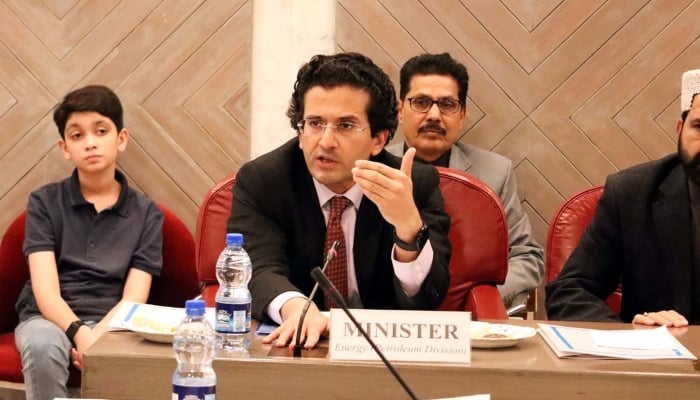
Petroleum Minister Ali Pervaiz Malik has said the government is unlikely to reduce the petroleum levy unless it can identify another source of revenue to compensate for the financial shortfall, warning that such a move would be difficult to secure without the approval of the International Monetary Fund (IMF).

Speaking during a meeting of the Senate Standing Committee on Petroleum, the minister explained that any reduction in the levy would affect government revenues and would require a credible alternative before it could be considered. He said the IMF was unlikely to support the proposal unless Pakistan presented a replacement revenue stream.

The committee also discussed the country’s fuel pricing mechanism, with several lawmakers expressing concerns over the introduction of daily price adjustments. Members argued that frequent revisions create uncertainty for consumers and make it difficult for the public to understand fuel costs.

Responding to the criticism, Malik defended the system, saying the government had removed political influence from fuel pricing by giving the Oil and Gas Regulatory Authority (OGRA) the authority to determine prices through an independent and transparent process. He said the mechanism was designed to reflect international market trends more accurately.

The OGRA chairman informed the committee that local petrol and diesel prices are linked to fuel product prices in the Singapore market rather than international crude oil prices. He said the daily pricing system allows authorities to respond quickly to changes in global markets and helps reduce the impact of sudden price fluctuations.

However, some lawmakers remained unconvinced. They argued that the pricing formula is too complicated for ordinary consumers and warned that frequent changes place additional financial pressure on households already struggling with rising living costs.

The committee also raised concerns over the lack of performance audits of oil drilling rigs operating in the country. Members directed the relevant authorities to complete and submit an audit report within seven days to assess operational standards and efficiency.

During the meeting, lawmakers questioned the continued delay in appointing a permanent chairman of OGRA. The petroleum minister replied that the recruitment process had been restarted after the earlier selection exercise failed to identify a suitable candidate.

Similar Posts

  • | |

    Sindh restores Saturday holiday for schools

    The Sindh government has revised the weekly schedule for schools, restoring Saturday and Sunday as official weekly holidays for all public and private educational institutions across the province. According to the School Education and Literacy Department, the updated schedule has been approved by the chief secretary and will be implemented in all government and privately managed schools. Under the new arrangement, schools will operate five days a week, from Monday to Friday. To compensate for the reduced number of working days and ensure timely completion of the academic syllabus, daily teaching hours will be extended by one additional hour. Officials said the revised timetable aims to maintain the pace of academic activities while providing students and teachers with a two-day weekend. The latest decision replaces an earlier directive issued last month, under which all public and private schools in Sindh had been instructed to observe a six-day working week from August 1, with classes scheduled from Monday to Saturday. The change comes shortly after educational institutions resumed classes following the two-month summer vacation, which lasted from June 1 to July 31. Education authorities said the revised schedule will apply uniformly across the province and schools have been directed to implement the updated working days and teaching hours accordingly.

  • | | | |

    NAB clarifies Rs500 million jurisdiction threshold

    ISLAMABAD: The National Accountability Bureau (NAB) has internally clarified that inflation-based adjustments to the value of liabilities cannot be used retrospectively to bring older, lower-value corruption cases under its jurisdiction. The clarification follows the enforcement of the National Accountability (Amendment) Act 2026 on March 5. NAB has issued internal guidance for prosecutors and investigators to ensure a uniform legal position on the revised Rs500 million threshold. Under the amended law, an offence falls within NAB’s jurisdiction when it involves corruption or misconduct involving at least Rs500 million. The law also links the financial threshold to annual inflation indicators issued by the Pakistan Bureau of Statistics, with the adjustment taking effect from July 1, 2026. However, NAB’s internal interpretation distinguishes between the statutory jurisdictional threshold and the inflation-adjusted value of liabilities. The Rs500 million figure remains the basic test for determining jurisdiction. Inflation adjustment is applied only after the actual liability involved in a case has been finally determined. The guidance identifies three situations based on when the alleged offence occurred. For offences committed before July 2022, the original amount involved will be assessed according to the year in which the offence took place. No inflation adjustment will be applied retrospectively. If the final liability is Rs500 million or more, NAB will retain jurisdiction. If it is below Rs500 million, the case will fall outside NAB’s jurisdiction and may be transferred to the ordinary courts. For offences committed after July 2022, the Rs500 million threshold will initially determine NAB’s jurisdiction. Once an inquiry or investigation establishes the final amount involved, the relevant inflation index for the year in which the case reaches its final stage will be applied if the original liability is at least Rs500 million. The final reference will therefore contain both the original liability and its inflation-adjusted value. If the original liability is below Rs500 million, no inflation adjustment will be made and NAB’s jurisdiction will cease. The third category concerns continuing offences that began before July 2022 but continued after that date. Such cases will be treated in the same manner as offences committed after July 2022. The guidance further states that once the original liability has been finally established and the inflation-adjusted amount has been calculated, the resulting figure will be considered final. It will not be repeatedly revised on the basis of inflation increases in subsequent years. According to the internal legal position, linking the financial threshold to inflation was intended to keep the threshold realistic and relevant over time and prevent inflation from reducing its practical value. NAB has also clarified that the amendment was not intended to retrospectively expand the bureau’s jurisdiction or disadvantage accused persons. The 2026 amendments made another significant change by expanding provisions concerning the transfer of cases falling outside NAB’s jurisdiction. The relevant provision now extends to pending appeals as well, whereas the earlier framework was primarily limited to inquiries, investigations and trials.

  • | | |

    Phuket Nui Beach: A Model for Thailand’s Coastal Encroachment Reform

    Phuket – The recent government-led effort to reopen public access to Nui Beach in Phuket may appear at first glance to be a local dispute over land use. Yet, the case has quickly become emblematic of a broader national challenge: how Thailand manages its natural resources, enforces the law, and protects the public’s right to […]

  • | |

    Court orders Azma Bukhari to appear in person over…

    LAHORE: The Lahore Sessions Court has directed Punjab Information Minister Azma Bukhari to appear in person and record her statement in a case involving the alleged circulation of a fake video on social media. The matter was heard by Additional Sessions Judge Nusrat Ali Siddiqui, who rejected Bukhari’s request to record her statement through video link. The court ordered her to personally appear at the next hearing to record her statement. Bukhari had challenged an earlier order issued by a judicial magistrate requiring her to appear before the court in person. The case relates to allegations surrounding the circulation of a fabricated video attributed to the provincial minister. Bukhari had approached the authorities against the alleged dissemination of the video and lodged a complaint with the National Cyber Crime Investigation Agency (NCCIA) against Falak Javed. The court’s latest order means Bukhari will have to appear before the Sessions Court at the upcoming hearing as proceedings in the case continue.

  • | |

    SBP appoints 10 primary dealers for FY27

    KARACHI: The State Bank of Pakistan (SBP) has appointed 10 financial institutions as Primary Dealers (PDs) and two institutions as Special Purpose Primary Dealers (SPDs) for the fiscal year 2026-27. The appointments will strengthen the government’s domestic borrowing programme and support the country’s financial market. The government continues to rely heavily on domestic borrowing to finance its fiscal requirements. In this system, primary dealers play an important role by participating in government debt auctions and helping raise funds through Treasury Bills and Pakistan Investment Bonds. According to the central bank, United Bank Limited (UBL), National Bank of Pakistan (NBP), and Bank Alfalah secured the top three positions among primary dealers during the fiscal year 2025-26. Their rankings were based on overall performance in government securities auctions and market activities. The 10 institutions selected as Primary Dealers for FY2026-27 are United Bank Limited, National Bank of Pakistan, Bank Alfalah, Habib Bank Limited, Habib Metropolitan Bank, MCB Bank, The Bank of Punjab, Pak Oman Investment Company, JS Bank, and Citi Bank NA Pakistan Branch. The State Bank has also appointed the Central Depository Company of Pakistan Limited (CDC) and the National Clearing Company of Pakistan Limited (NCCPL) as Special Purpose Primary Dealers for the new fiscal year. The appointments were made after evaluating applications submitted by financial institutions under the eligibility criteria laid down in the Primary Dealer System Rules. The central bank had invited applications for the new fiscal year through a circular issued earlier this year. Primary dealers are responsible for purchasing government securities directly from the central bank during auctions. They then distribute these securities among commercial banks, financial institutions and other investors. Their participation ensures that government borrowing operations continue without disruption. These institutions also play an important role in the secondary market by providing liquidity and facilitating the buying and selling of government securities. Their presence helps improve market efficiency and contributes to transparent price discovery. The role of primary dealers has become increasingly important as Pakistan continues to depend on domestic sources to meet its financing needs. Through their participation in debt auctions, they help the government raise funds while supporting stability in the country’s financial system.

  • Thailand Bets Heavily on Natural Gas For Its Economic Growth

    BANGKOK – As Southeast Asia rapidly emerges as a major global energy hub, Thailand’s state-backed conglomerate PTT Plc is aggressively expanding its liquefied natural gas (LNG) trading operations. Facing an expensive global shift toward green energy, Thai leaders are heavily utilizing natural gas to secure domestic economic growth and power stability. The nation aims to […]

Leave a Reply

Your email address will not be published. Required fields are marked *