imf hurdle blocks
| | |

IMF hurdle blocks fuel levy cut, Senate told

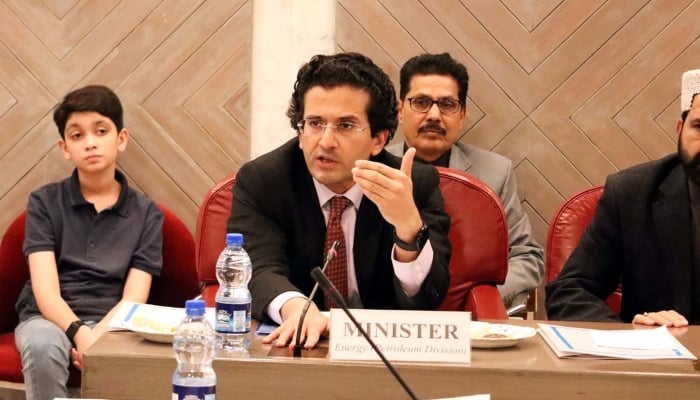
Petroleum Minister Ali Pervaiz Malik has said the government is unlikely to reduce the petroleum levy unless it can identify another source of revenue to compensate for the financial shortfall, warning that such a move would be difficult to secure without the approval of the International Monetary Fund (IMF).

Speaking during a meeting of the Senate Standing Committee on Petroleum, the minister explained that any reduction in the levy would affect government revenues and would require a credible alternative before it could be considered. He said the IMF was unlikely to support the proposal unless Pakistan presented a replacement revenue stream.

The committee also discussed the country’s fuel pricing mechanism, with several lawmakers expressing concerns over the introduction of daily price adjustments. Members argued that frequent revisions create uncertainty for consumers and make it difficult for the public to understand fuel costs.

Responding to the criticism, Malik defended the system, saying the government had removed political influence from fuel pricing by giving the Oil and Gas Regulatory Authority (OGRA) the authority to determine prices through an independent and transparent process. He said the mechanism was designed to reflect international market trends more accurately.

The OGRA chairman informed the committee that local petrol and diesel prices are linked to fuel product prices in the Singapore market rather than international crude oil prices. He said the daily pricing system allows authorities to respond quickly to changes in global markets and helps reduce the impact of sudden price fluctuations.

However, some lawmakers remained unconvinced. They argued that the pricing formula is too complicated for ordinary consumers and warned that frequent changes place additional financial pressure on households already struggling with rising living costs.

The committee also raised concerns over the lack of performance audits of oil drilling rigs operating in the country. Members directed the relevant authorities to complete and submit an audit report within seven days to assess operational standards and efficiency.

During the meeting, lawmakers questioned the continued delay in appointing a permanent chairman of OGRA. The petroleum minister replied that the recruitment process had been restarted after the earlier selection exercise failed to identify a suitable candidate.

Similar Posts

  • |

    Pakistan seal seven-wicket win over County Select XI

    BECKENHAM: Pakistan produced a strong second-half turnaround on Saturday, defeating the Professional County Club Select XI by seven wickets in their three-day practice match at the Kent County Cricket Ground. Chasing 262 runs for victory on the final day, Pakistan made the target look comfortable, reaching 265-3 in just 57.1 overs. The result provided an encouraging boost for the visitors ahead of their three-match Test series against England. The star of Pakistan’s successful chase was Saud Shakeel, who delivered a composed unbeaten century. Coming in at No. 3 after opener Azan Awais was dismissed for just one, Saud took control of the innings and finished with 100 not out from 147 balls, hitting 10 fours and three sixes. He found an ideal partner in Imam-ul-Haq, with the experienced opener producing an attacking 80 from 88 deliveries. Imam struck 13 boundaries and combined with Saud for a crucial 127-run partnership, effectively taking the game away from the hosts. Mohammad Rizwan added a useful 33, while Awais Zafar remained unbeaten on 30 to complete the chase. Earlier, the PCC Select XI resumed their second innings at 128-3, holding a 195-run lead. Pakistan’s bowlers, however, quickly turned the pressure into wickets. The hosts managed only 66 additional runs before being dismissed for 194. Falconer top-scored with 56, while Saif Zaib and Manny Lumsden contributed 24 each. Spinner Ali Usman was Pakistan’s standout bowler, finishing with an impressive five wickets for 42 runs. Ubaid Shah claimed two wickets for just nine runs, while Salman Ali Agha, Sajid Khan and Mohammad Ali took one apiece. The comeback victory comes at an important moment for Pakistan. With their first Test against England scheduled to begin in Leeds on August 19, the performances of Saud, Imam and the bowling attack offer Pakistan plenty of confidence. After struggling earlier in the match, Pakistan finished strongly — exactly the kind of response they will hope to carry into the Test series. Brief Scores Pakistan beat PCC Select XI by seven wickets PCC Select XI: 305 (S. Zaib 65, M. Fisher 62*, C. Falconer 59, T. Haines 51; M. Ali 3-23, M. Abbas 3-37) & 194 (C. Falconer 56, J. Rew 40; A. Usman 5-42, U. Shah 2-9) Pakistan: 238 (A. Shafique 61; S. Bashir 4-76) & 264-3 (S. Shakeel 100*, I. ul-Haq 80 retired not out) Result: Pakistan won by 7 wickets.

  • | | |

    Initial report suggests Mir Raza Ali was shot from…

    KARACHI: An initial medical report has reportedly indicated that businessman Mir Raza Ali sustained a gunshot wound from behind, while several signs of physical violence were also found on his body following his exhumation for a fresh post-mortem examination. According to investigation sources, the preliminary report has addressed all 14 questions raised by police surgeon Dr Summaiya Syed during the medical examination. The findings reportedly include a gunshot injury to the rear of the body, fractured ribs and multiple injuries to Ali’s head and face. The report also noted marks of violence on different parts of the deceased’s body. However, investigators have yet to officially receive the medical findings. SSP SIU Samiullah Somroo, who is leading the police investigation, said the investigation team had not been informed about the report or its findings. The exhumation process lasted around three hours and was conducted under the supervision of forensic experts. During the procedure, 17 samples were collected from the body for further examination. Four samples were preserved for DNA testing, while the remaining samples were collected for chemical analysis. Two additional reference samples were obtained from Ali’s parents to assist with DNA matching. Investigators said the collected samples have been preserved and will be submitted to the forensic laboratory at the University of Karachi on Monday. The chemical and DNA examination reports are expected to be available within three to four days. Ali’s body was exhumed earlier as part of efforts to determine the circumstances surrounding his death. After the medical examination was completed, his remains were reburied at a graveyard near Tariq Road. Ali, an IBA graduate and businessman, had returned home from his shop on the night of July 28. He later left the house again, telling his family that he would return within 10 minutes. He did not return, and his body was subsequently recovered from Gulistan-e-Jauhar. His father, Mir Hussain, has maintained that his son was murdered and rejected suggestions that he died by suicide. During the latest proceedings, members of the medical board collected various samples from Ali’s grave as part of the renewed examination. His family members and their lawyer, Jibran Nasir, were present at the graveyard, while a heavy police contingent was deployed to maintain security. The authorities had restored the original eight-member medical board responsible for supervising the exhumation after the family objected to the replacement of the panel with a five-member board. The disagreement had earlier prevented officials from carrying out the scheduled exhumation. Mir Hussain later said he was satisfied with the latest proceedings. He expressed hope that the fresh examination would provide clarity about what happened to his son. The family has also alleged that a fake audio recording attributed to Ali was circulated in an attempt to influence the case and create confusion around the circumstances of his death. The family’s lawyer had earlier raised concerns about changes to the medical board and questioned the decision to replace the original panel. He later said the family was satisfied with the renewed proceedings, which were conducted in the presence of the judicial magistrate, investigation officer and members of the medical team.

  • Thai Airways Expands Long-haul Capacity With New Boeing 787-9 Delivery

    BANGKOK, Thailand — Thai Airways International Plc has officially taken delivery of a new Boeing 787-9 aircraft, marking the latest step in the national carrier’s strategic initiative to enhance operational efficiency and accommodate surging global travel demand. The airline announced that this latest addition is the first of four Boeing 787-9 aircraft scheduled to join […]

  • | |

    Pentagon signs framework agreement with lockheed M…

      The United States Department of Defense (Pentagon) has entered into a framework agreement with leading American defense contractors Lockheed Martinand Northrop Grumman to expand the production capacity of critical components used in missile defense systems. The agreement is part of the U.S. government’s broader effort to strengthen its defense industrial base and ensure that the military maintains sufficient stocks of advanced missile interception systems amid rising global security challenges. According to Arab media reports, the Pentagon has not disclosed the financial value of the framework agreement. While details regarding the total cost and production timeline remain confidential, officials have indicated that the initiative is intended to significantly increase manufacturing capabilities for components used in missile interceptor systems. The agreement comes at a time when the United States is reassessing its defense production capacity in response to ongoing international conflicts and growing demand for advanced military equipment. Reports suggest that the prolonged wars involving Iran-related regional tensions and the conflict in Ukraine have placed considerable pressure on U.S. weapons and missile inventories. As a result, the Pentagon has been working to replenish depleted stockpiles while ensuring that American forces remain prepared for future security challenges. Missile defense systems play a crucial role in protecting military installations, strategic assets, and civilian populations from incoming missile threats. These systems rely on highly sophisticated interceptor missiles and advanced technologies capable of detecting, tracking, and destroying hostile missiles before they reach their intended targets. Increasing production of the key components used in these systems is expected to improve the United States’ ability to respond quickly to evolving security threats and maintain a reliable supply of defensive capabilities. Defense analysts have noted that expanding manufacturing capacity is becoming increasingly important as global geopolitical tensions continue to rise. The ongoing war in Ukraine has resulted in significant military assistance from the United States and its allies, including the transfer of advanced missile defense equipment and interceptor missiles. At the same time, heightened tensions in the Middle East have increased the demand for missile defense systems capable of countering a wide range of aerial threats. The latest framework agreement follows another major defense contract announced just last week. The U.S. Army awarded Lockheed Martin a contract worth up to $58.6 billion for the production of Patriot interceptor missiles, one of the world’s most widely used air and missile defense systems. The Patriot system is designed to intercept ballistic missiles, cruise missiles, and hostile aircraft, making it a critical component of the United States’ missile defense network as well as that of several allied nations. The new agreement with Lockheed Martin and Northrop Grumman is expected to complement that large Patriot missile contract by ensuring that manufacturers have the capacity to produce the essential components needed for future missile defense programs. By investing in increased production capabilities, the Pentagon aims to strengthen supply chains, reduce manufacturing bottlenecks, and accelerate the delivery of critical defense equipment. Although the Pentagon has not revealed the financial details of the framework agreement, the move underscores Washington’s continued commitment to enhancing national security and maintaining military readiness. As global conflicts and regional tensions persist, expanding defense production is expected to remain a top priority for the U.S. Department of Defense in the years ahead.

  • |

    Pakistan names first lunar rover “Jinnah-1”

    Islamabad: The Space and Upper Atmosphere Research Commission (SUPARCO) has officially announced the name of Pakistan’s first lunar rover. According to SUPARCO, Pakistan’s first lunar rover has been named “Jinnah-1.” The name was selected from suggestions submitted through a nationwide competition. More than 4,000 proposals were received from across the country. SUPARCO stated that seven participants had suggested the name “Jinnah-1.” The winner was selected through a lucky draw and 17-year-old Tayyab Karim from Bahawalnagar was declared the winner for proposing the name. Tribute to Quaid-e-Azam The Chairman of SUPARCO said that “Jinnah-1” is a tribute to Quaid-e-Azam Muhammad Ali Jinnah. He added that the name represents Pakistan’s determination, progress and pursuit of new frontiers in space exploration. It is worth mentioning that Pakistan’s first lunar rover is scheduled to be sent to the Moon in 2029 as part of China’s Chang’e-8 mission. The Jinnah-1 rover will conduct scientific research on the Moon’s south pole.

  • |

    UK expands Global Talent visa scheme to attract world’s top scientists and engineers

    In a major boost to Britain’s science and innovation ambitions, the UK government has announced a significant expansion of its Global Talent visa programme, allowing more than 100 research-intensive companies to sponsor leading scientists and engineers from around the world. Previously focused primarily on universities and research institutions, the expanded scheme will now enable eligible private-sector research organisations to recruit exceptional international talent directly. The move is aimed at strengthening the UK’s position as a global leader in cutting-edge technologies, including artificial intelligence (AI), quantum computing, nuclear fusion, clean energy and life sciences. The government said attracting the world’s brightest researchers would accelerate scientific breakthroughs, support innovation-led industries and create highly skilled jobs across every region of the UK. The initiative forms part of a broader strategy to boost economic growth through investment in advanced research and technology. By widening access to the Global Talent visa route, ministers hope Britain will remain one of the world’s most attractive destinations for leading researchers, scientists and engineers amid increasing international competition for high-skilled talent.

Leave a Reply

Your email address will not be published. Required fields are marked *