sindh schools follow
| |

Sindh schools to follow six-day week from August 1

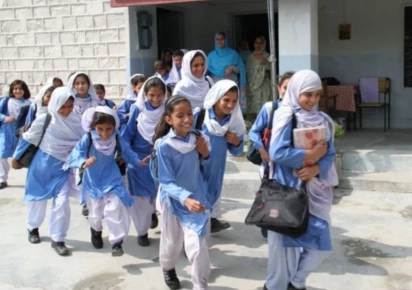
The Sindh government has announced that all public and private schools across the province will observe a six-day working week from August 1. The new schedule will remain in place until further orders.

An official notification issued by the School Education and Literacy Department confirmed that schools will remain open from Monday to Saturday. The decision applies to all educational institutions operating under the department’s administrative control.

The announcement comes as schools prepare to reopen after the end of summer vacations. Educational institutions remained closed for two months, with the holiday period running from June 1 to July 31. Students and teachers will now return to classrooms under the revised weekly schedule.

Officials said the six-day week has been introduced to ensure smooth academic activities and improve the pace of teaching. The move is expected to help schools complete the academic calendar on time and make up for learning time lost due to previous disruptions.

The decision applies equally to government and private schools throughout Sindh. School administrations have been instructed to implement the revised timetable immediately after reopening.

Earlier this year, educational institutions in Sindh also experienced temporary closures because of regional security concerns linked to tensions in the Middle East. Schools remained closed for a brief period before normal academic activities resumed.

Provincial authorities later restored regular operations while maintaining Saturday holidays. However, the latest notification has withdrawn that arrangement and introduced a six-day working week across the province.

Education officials have advised parents, students and school administrations to follow the updated schedule. They said any future changes to school timings or working days will be communicated through official notifications.

Similar Posts

  • |

    Ahsan Khan reveals why he said yes to Aap Ki Izzat

    Pakistani actor Ahsan Khan has opened up about the reasons that convinced him to join the hit drama Aap Ki Izzat, sharing how the project’s strong team, compelling script, and talented director made it an easy decision. The drama has quickly become one of the most talked-about television serials, earning praise from audiences and critics alike. Since its premiere on HUM TV, the series has generated millions of views across digital platforms while maintaining impressive television ratings. Penned by celebrated writer Umera Ahmed, Aap Ki Izzat is produced by Nina Kashif and Momina Duraid and directed by Saifee Hassan. The cast features Ahsan Khan, Urwa Hocane, Sania Saeed, Nauman Masood, and Saif Ali Khan in pivotal roles. During a recent interview, Ahsan Khan reflected on how the project came his way and explained why he immediately felt connected to it. According to the actor, producer Nina Kashif was the first to approach him with the drama. He later met Momina Duraid, and the conversations about the project left a lasting impression on him. Ahsan said he felt warmly welcomed back and appreciated the supportive environment created by the production team. He noted that their professionalism and sincerity made it difficult for him to turn down the offer. The actor also expressed his admiration for director Saifee Hassan, describing him as one of the finest directors in the Pakistani television industry. Ahsan said working with Saifee had long been one of his career ambitions because of the director’s attention to detail and ability to bring emotional depth to every scene. He explained that Saifee Hassan’s narration of the story made the project even more appealing, adding that the director’s vision helped him better understand the emotional layers of his character. Ahsan also praised renowned writer Umera Ahmed, saying that her scripts naturally draw actors in because of their engaging storytelling and well-developed characters. He remarked that it was nearly impossible not to be captivated by a script written by her. The actor further acknowledged that the success of Aap Ki Izzat is the result of a collective effort. He credited the entire production team, including the cast, director, makeup artists, and crew members, for bringing the story to life on screen. Ahsan is currently portraying the character of Tabish, a role that has sparked widespread discussion among viewers. The character has received mixed reactions from fans, with many praising Ahsan’s powerful performance despite the criticism surrounding Tabish’s actions in the drama. The actor also spoke about the conversations generated by his character, suggesting that such reactions are part of portraying a complex role that resonates with audiences. As Aap Ki Izzat continues to attract viewers each week, Ahsan Khan’s performance remains one of the major highlights of the drama, with fans eagerly waiting to see how Tabish’s journey unfolds in the coming episodes.

  • |

    New Delhi distances itself from scheduled online talk by ousted Bangladeshi leader Sheikh Hasina

    The Ministry of External Affairs in New Delhi has formally clarified that the Indian government maintains no connection to or responsibility for an upcoming online address by former Bangladeshi Prime Minister Sheikh Hasina. Officials confirmed that the press gathering is an entirely independent initiative arranged by a private press entity. The official statement came following direct enquiries from diplomatic authorities in Dhaka seeking clarity regarding New Delhi’s position. Sheikh Hasina, the ousted head of the Bangladesh Awami League, is scheduled to deliver a remote address on 5 August during an international media event hosted by the Foreign Correspondents’ Club of South Asia in New Delhi. The date coincides with the second anniversary of the mass student-led demonstrations that brought an end to her administration in 2024. Addressing the matter during a press briefing, an official spokesperson for the Indian foreign ministry emphasized that the gathering is strictly a private affair organised by the media body, adding that the state framework remains wholly unassociated with its coordination or proceedings.

  • | | |

    Heavy rains trigger flash floods in Gilgit-Baltist…

    Torrential rainfall has caused widespread destruction across Gilgit-Baltistan, disrupting transportation networks as flash floods and landslides washed away roads, bridges, and vital infrastructure in several districts. The extreme weather conditions have left thousands of people, including tourists, stranded as major routes connecting different parts of the mountainous region were blocked. Authorities have advised travelers to avoid unnecessary journeys due to ongoing risks from floods and landslides. According to officials, several important roads, including the Karakoram Highway, Babusar Road, Baltistan Road, Naltar Highway, Ghizer-Shandur Road, and Astore Valley Road, have been affected by flooding and landslides. The Gilgit-Baltistan Disaster Management Authority (GBDMA) reported that the Karakoram Highway was blocked at multiple locations between Dassu and the Hunza-Nagar areas, creating difficulties for commuters and relief teams. In Skardu’s Rondu subdivision, severe flooding in the Tormak Nallah area damaged important communication bridges, including the Malan Bridge. Several roads, agricultural lands, crops, and other infrastructure were also affected in Kharmang, Ghanche, and Shigar districts. Flooding also disrupted electricity and water supply systems in areas including Astore, Tangir, and Thore in Diamer district. Communication services were affected, while irrigation channels, drinking water schemes, and protective structures suffered damage. Several villages were cut off, and dozens of families were forced to leave their homes due to floods and landslides. Authorities moved vulnerable residents to safer locations and started relief operations in affected areas. The situation also affected Ghizer district, where temporary road closures, localized flooding, and damage to houses were reported. Rising water levels in the Hunza-Nagar River increased risks for residents in Gilgit’s Jutal area. The Pakistan Meteorological Department has forecast further rainfall in the region and warned about the possibility of glacial lake outburst floods (GLOFs) until July 26. The Gilgit-Baltistan Disaster Management Authority, district administrations, Rescue 1122, and other departments are working together to provide emergency assistance. Officials said affected families are being provided with tents, food supplies, medicines, and clean drinking water. Heavy machinery has also been deployed to restore damaged roads, bridges, and other infrastructure. Gilgit-Baltistan Chief Minister Amjad Hussain has directed authorities to speed up relief and rehabilitation activities and remain alert around the clock to protect lives and property. The chief minister also emphasized the need for stronger disaster preparedness, saying that climate change has increased the risks of flash floods, landslides, and glacial lake outburst floods in the region. Authorities are coordinating with the National Disaster Management Authority (NDMA) to improve emergency response measures and monitor glacier-related risks through scientific and technological systems. The ongoing situation highlights the growing impact of climate-related disasters in Gilgit-Baltistan, where communities continue to face increasing threats from extreme weather events.

  • |

    Baked with Pride, Sung with Love

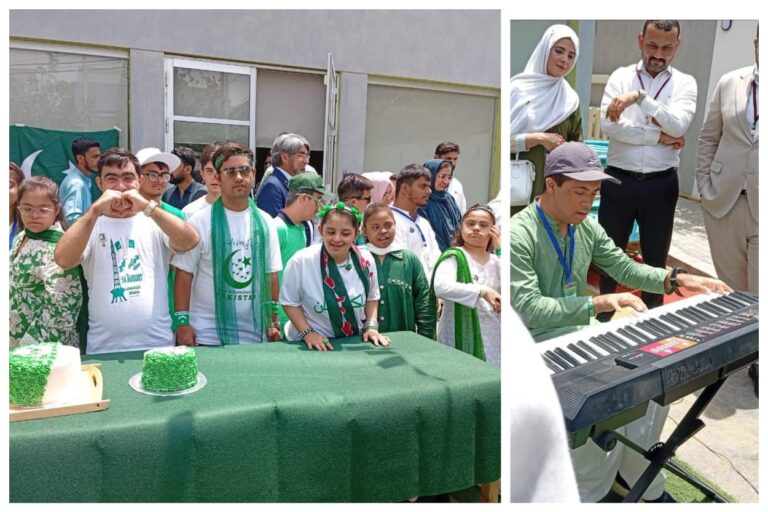
    Karachi: As journalists, we’ve attended countless 14th August celebrations — most of them lost in long speeches, endless queues of guests of honour and chief guests, or simply mismanaged and overcrowded. You leave unable to focus on even a single stage performance, let alone the sequence of events. This year was different. I attended a ceremony that was not only full of joy, but also remarkably well-managed and disciplined — a gathering where everyone truly felt part of the celebration. It was held at KDSP, a centre of excellence for children with Down syndrome. A Lesson in Discipline and Dignity And isn’t it surprising? In a country where we can’t even manage discipline at regular school functions, it took a centre for differently-abled children to show us how it’s done. With sharing. With togetherness. With dignity. I saw real joy and happiness on those children’s faces — and my daughter, Bibi Marium, was among them. The event was full of surprises.   In most gatherings, adults push and shove to get to the main head table and into group photos. Here, the children were gently accommodating each other in the queue for cake cutting. There was no chief guest to distract, no protocol to irritate the kids and parents. Even the CEO and Chairman stood to the side, watching joyfully as their children celebrated. A Family Festival, Not Just a Ceremony The next surprise was this: it wasn’t just a celebration. It was a family festival. Children and parents both came dressed in green and white — shalwar kameez, t-shirts, trousers, mostly in flag colours. They weren’t sitting on the sidelines. They were part of it — they were guests and chief guests both. The entire KDSP management — CEO, Directors, Managers, teachers, staff and mentors — made a point to be present too. But they chose to stand from the sidelines, letting the children take center stage. One of the most moving moments was when Abdullah Haris, a student of KDSP’s EFL program, played the National Anthem on the piano. The entire venue erupted in thunderous applause. And you could see the proudest smile on the face of CEO Tabish Shahzad as she watched her children shine. Baked with Love After the anthem came the cake-cutting ceremony — and again, no pushing, no crowding. Children, staff, and parents all enjoyed the refreshments together. There was enough for everyone. The cake was so soft, yummy and delicious that I assumed it came from some high-profile bakery. But to my surprise, it was prepared in-house — by the children of the cooking class, guided by their young yet expert instructor, Head Chef Zainab Durrani. A COTHM graduate and pursuing her special education degree, Chef Zainab has a rare gift: children instantly connect with her. For years she has been associated with KDSP, putting in all her effort to teach them the skill of cooking on every available platform. Under her guidance, these children aren’t just baking — they’re gaining confidence, independence, and pride. While talking to me, a parent of a child with Down syndrome, Mr. Karim Navroz Ali from the Finance Department said, “KDSP makes every effort to motivate our children, to inspire them, and to build a more inclusive society. These children must be treated equally — and normally.” He nodded, head held high. And again to my surprise, after the ceremony, everyone was back to work and into the class, no day of skill development of a child is wasted, that development means here. “1947. Pakistan. Independence.” I also spoke with Ms. Sadia Navaid, a skills facilitator at KDSP, who teaches and empowers students with fine motor skills and hand-eye coordination. She is among the teachers loved by all. When I asked her whether these children feel patriotism and love for the country, her answer left me speechless. She shared that when she asked the children to make a quilling flag, they instantly said: “1947. Pakistan. Independence.” Ms. Sadia emphasized that these children are often more sensitive than others, and they carry a deeper feeling of ownership for their country. The managers of the Skill Development Program — Ms. Mahzaib Faheem, Ms. Umme Farwa, and Ms. Sania Siddiqui, Ms Mehak — also dressed in green and white, were glowing with pride. They shared that although the event was short and sweet, it took days of decorating the entire center and making arrangements for this precious day. “For us, it’s not just about a celebration,” they said. “It motivates the children, and it also binds us all together in joyful times.” What Independence Is Meant to Be As I walked out of KDSP that day, my heart was full. What I saw wasn’t just an Independence Day celebration. I saw courage, I saw dignity, I saw belonging. These children taught me that patriotism isn’t about grand speeches — it’s about standing together, singing together, baking together, and believing together. KDSP isn’t just building skills. It’s building a Pakistan where every child, regardless of ability, is seen, heard, and celebrated. And in that hall, dressed in green and white, I truly felt it: this is what independence is meant to be. “Independence is not a day on the calendar. It is the day a child feels they belong to.”   Meet the author: The writer is a senior journalist and columnist covering crime, law, social issues, governance, energy, health, literature, and women and children’s rights across Pakistan’s leading English media houses. Feedback: mediawomen2014@gmail.com

  • |

    Sunny Deol’s ‘Batwara 1947’ earns praise for raw, emotional performance

    The story of Partition has returned to the big screen with “Batwara 1947” and early viewers are already sharing largely positive reactions online. Many praised the film’s emotional storytelling, characters and performances. Directed by Rajkumar Santoshi, the film released in cinemas on August 14. It stars Sunny Deol as Sikandar, Shabana Azmi as Mai, and Preity Zinta as Hamida. Several viewers described the film as an emotional watch suited for the whole family. One social media user called it a complete family film and recommended watching it alongside parents, while also praising Azmi’s performance specifically. Other reactions focused on how the film portrayed the struggles people faced during Partition. Viewers pointed to its handling of fear, displacement and uncertainty as key emotional throughlines. One viewer noted that the film avoided painting Sikandar and Hamida as purely right or wrong. According to that reaction, their choices only made sense once the full weight of their circumstances became clear. Sunny Deol’s performance quickly became one of the most talked-about elements of the film. Numerous users praised his portrayal of Sikandar, particularly his expressive work in emotionally heavy scenes. One user wrote on X that Deol completely owns his character throughout the film. Another said his performance revealed emotional range well beyond his well-known action image, highlighting the quieter moments where his expressions carried entire scenes. The film’s character arc also drew significant attention from early viewers. Several noted that Sikandar’s journey across the story stood out as one of its strongest elements. One viewer pointed out that Sikandar was not written as a flawless hero from the start, instead confronting his own anger and beliefs as the narrative unfolds. Another praised a specific scene where his visible helplessness reportedly shifted the entire mood inside the theatre. Set in Lahore during the 1947 Partition, “Batwara 1947” explores the era’s impact through the lives of ordinary people. The film reportedly draws inspiration from Asghar Wajahat’s play “Jis Lahore Nai Vekhya, O Jamya E Nai.” These early reactions reflect only initial social media responses, with more detailed reviews expected as the film reaches wider audiences in the coming days.

  • |

    Sonu Nigam admits he uses auto-tune, explains why it matters now

    Sonu Nigam has admitted to using auto-tune on some of his songs. The confession comes as a surprise, given how often the technology gets associated with less skilled singers. Speaking on the “Game Changers” podcast, the 53-year-old explained why the tool has become genuinely necessary in today’s music landscape. He didn’t shy away from addressing the topic directly. Nigam acknowledged that the rise of auto-tune has brought major changes to the industry. He said people often criticise it, but he personally believes whatever has happened has ultimately been for the good. He recalled that singers of his generation had to perform without auto-tune in earlier years. According to Nigam, that experience gave them the advantage of training their voices the traditional way, without relying on digital correction. Despite that background, he was clear about his own practices today. Nigam admitted he does use auto-tune on certain songs, depending on the requirements of the track. He explained that most modern music now follows a rigid digital pitch, unlike the live instrumentation of earlier decades. Nigam said musicians once played live sarangi and strings, which allowed some natural flexibility in vocal pitch. Now, he explained, everything is digitised and follows an exact tonal line, making raw vocals more likely to sound off. He said singers previously adjusted their voice around live musicians, but today’s productions demand more precision. Nigam did add an important caveat to his comments. He stressed that auto-tune shouldn’t be used as a way to fix the voices of people who genuinely can’t sing. He explained that the responsible use of the tool means enhancing an already strong performance, not creating one artificially. According to him, giving 99% effort and refining it to 100% with auto-tune is very different from relying on it entirely. Nigam added that many actors use auto-tune while pursuing music, which he said is completely fine for personal enjoyment. However, he made clear that trained singers still can’t be replaced by the technology. On the work front, Nigam recently lent his voice to the track “Tabassum” for Rajkumar Santoshi’s “Batwara 1947,” composed by AR Rahman and written by Javed Akhtar. The film stars Sunny Deol, Preity Zinta and Shabana Azmi in lead roles.

Leave a Reply

Your email address will not be published. Required fields are marked *