sonu nigam admits
|

Sonu Nigam admits he uses auto-tune, explains why it matters now

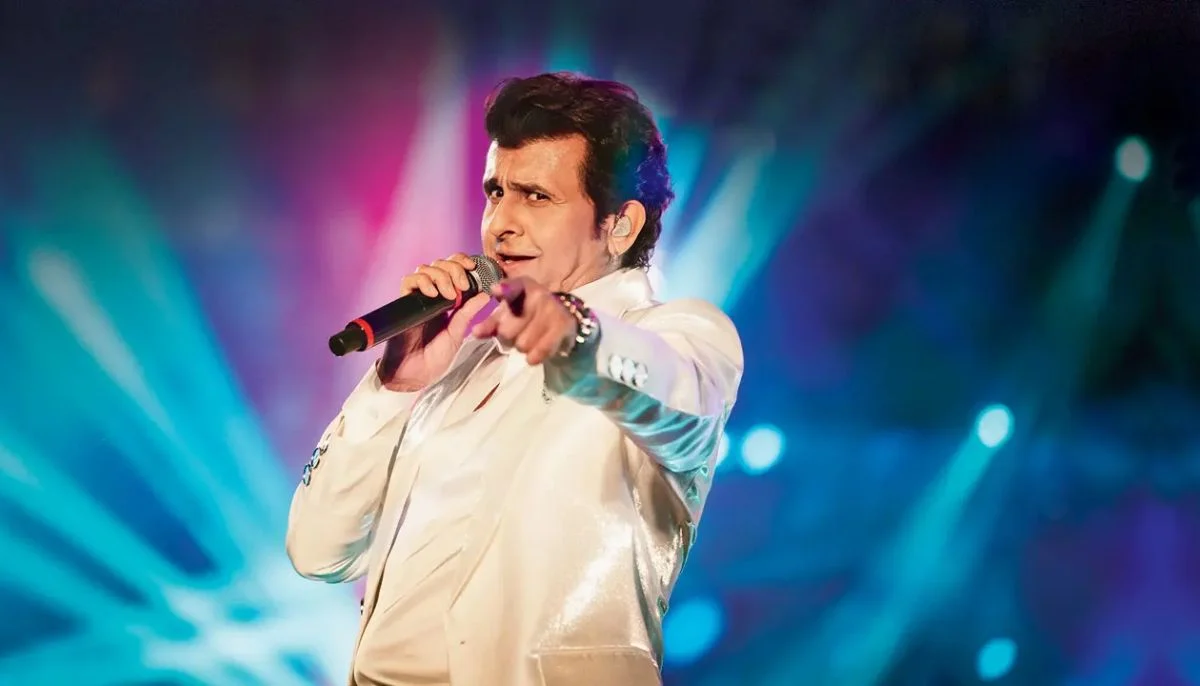
Sonu Nigam has admitted to using auto-tune on some of his songs. The confession comes as a surprise, given how often the technology gets associated with less skilled singers.

Speaking on the “Game Changers” podcast, the 53-year-old explained why the tool has become genuinely necessary in today’s music landscape. He didn’t shy away from addressing the topic directly.

Nigam acknowledged that the rise of auto-tune has brought major changes to the industry. He said people often criticise it, but he personally believes whatever has happened has ultimately been for the good.

He recalled that singers of his generation had to perform without auto-tune in earlier years. According to Nigam, that experience gave them the advantage of training their voices the traditional way, without relying on digital correction.

Despite that background, he was clear about his own practices today. Nigam admitted he does use auto-tune on certain songs, depending on the requirements of the track.

He explained that most modern music now follows a rigid digital pitch, unlike the live instrumentation of earlier decades. Nigam said musicians once played live sarangi and strings, which allowed some natural flexibility in vocal pitch.

Now, he explained, everything is digitised and follows an exact tonal line, making raw vocals more likely to sound off. He said singers previously adjusted their voice around live musicians, but today’s productions demand more precision.

Nigam did add an important caveat to his comments. He stressed that auto-tune shouldn’t be used as a way to fix the voices of people who genuinely can’t sing.

He explained that the responsible use of the tool means enhancing an already strong performance, not creating one artificially. According to him, giving 99% effort and refining it to 100% with auto-tune is very different from relying on it entirely.

Nigam added that many actors use auto-tune while pursuing music, which he said is completely fine for personal enjoyment. However, he made clear that trained singers still can’t be replaced by the technology.

On the work front, Nigam recently lent his voice to the track “Tabassum” for Rajkumar Santoshi’s “Batwara 1947,” composed by AR Rahman and written by Javed Akhtar. The film stars Sunny Deol, Preity Zinta and Shabana Azmi in lead roles.

Similar Posts

  • | | | |

    Russia, COMSTECH seek stronger cooperation in scie…

    Russia and the Organisation of Islamic Cooperation’s Standing Committee on Scientific and Technological Cooperation (COMSTECH) have discussed new opportunities to expand collaboration in science, technology and higher education. Russian Ambassador Albert P. Khorev received a COMSTECH delegation on August 12. The delegation was led by COMSTECH Coordinator General Professor Dr M. Iqbal Choudhary. The meeting focused on strengthening cooperation between Russia and COMSTECH, particularly in areas of scientific research and academic development. Russia participates in the OIC as an observer state. Professor Iqbal Choudhary highlighted existing cooperation between COMSTECH and Russian institutions. He specifically mentioned collaboration with Kazan Federal University and the Russian Association of Earthquake Engineering and Protection against Natural and Man-Made Hazards. The participants identified considerable potential for expanding academic links between the two sides. They discussed stronger partnerships between universities, increased scholarship opportunities and joint research projects in fundamental sciences. Both sides also stressed the need to speed up implementation of initiatives previously agreed upon under their bilateral working mechanism. These initiatives were discussed during the first meeting of the Working Group on Cooperation between COMSTECH and the Russian Federation in science, technology and higher education. The meeting was held in Kazan on May 13, 2026, on the sidelines of the international economic forum Russia–Islamic World: KazanForum. Ambassador Khorev reaffirmed Moscow’s interest in expanding its engagement with the OIC and Muslim-majority countries. He also highlighted the importance of cooperation with Pakistan. The participants noted that stronger scientific and academic links between Russia and COMSTECH could also contribute to closer Russia-Pakistan relations, particularly through education, research and technological cooperation. The two sides agreed to maintain regular communication and provide necessary support for implementing joint initiatives and projects.

  • |

    Mustafa Zahid may return for ‘Awarapan 2’ remake track

    Nearly two decades after Tera Mera Rishta became one of the biggest hits from Awarapan, original singer Mustafa Zahid may be returning for the sequel. The Pakistani vocalist appears set to reunite with the franchise’s makers. According to a Mid-day report, the 41-year-old is reportedly in talks with producers Mukesh Bhatt and Vishesh Bhatt. The discussions center around a remake for Awarapan 2. The development is notable given Bollywood’s long-standing stance on Pakistani artistes since the 2016 Uri attack. That boycott was reaffirmed more recently, following the 2025 Pahalgam attack. Despite that backdrop, talks are reportedly moving forward. If the deal goes through, the song would reportedly be recorded in Dubai rather than India. A source close to the matter told the publication that this could mark one of the rare recent instances of a Pakistani playback singer working on a mainstream Hindi film. However, the track itself will not feature in Awarapan 2 directly, as its inclusion could create certification complications for the film. To work around that, the makers are said to be considering releasing the song exclusively through social media promotions, bypassing theatrical use entirely. Meanwhile, the film’s own trailer dropped on August 6, marking the franchise’s return after 19 years. Emraan Hashmi reprises his role as Shivam Pandit, now portrayed as older and more emotionally scarred. Disha Patani joins the cast as Zara, while Shabana Azmi takes on the role of antagonist Nafisa. The soundtrack brings together composers Mithoon, Jeet Gannguli and Amaal Malik, among others, with tracks like Ve Junoon and Yeh Awarapan already released. The trailer also includes a recreated version of Tera Mera Rishta, now sung by Saaj Bhatt and Subodhh Sharma. Original lyricist Sayeed Qadri has returned to pen the updated version of the track. Directed by Nitin Kakkar, Awarapan 2 is set for a worldwide release on August 14. The film will clash at the box office with Sunny Deol’s Batwara 1947, setting up a high-profile release-date showdown.

  • |

    Kriti Sanon urges people to prioritise mental health

    Bollywood actress Kriti Sanon has opened up about the importance of mental and emotional well-being, urging people to pay as much attention to their minds as they do to their physical health. The National Award-winning actress reflected on how her experiences while working on films such as Mimi and Do Patti changed her perspective on acting and the emotional impact of portraying complex characters. According to Kriti, she once believed that the characters she played remained confined to the world of cinema and did not have any lasting effect on her personal life. However, her experiences with these two films made her realise that characters can leave an unconscious emotional impact on actors. Kriti explained that the effect of a demanding role does not always become apparent immediately. Sometimes, an actor may complete filming and only begin noticing emotional changes several days later. She said that a character can continue to influence a person’s mood, behaviour and thoughts even after the cameras stop rolling. The actress said this experience taught her the importance of consciously separating herself from the characters she portrays. While actors are expected to completely immerse themselves in their roles, Kriti believes that it is equally important to know when to step away from the emotional world created for a film. She also recalled times when she was personally dealing with difficult or emotionally challenging situations while having to continue working on a comedy project. Despite going through personal struggles, she still had to portray cheerful and entertaining characters in front of the camera. Kriti pointed out that actors repeatedly draw upon their own emotions while performing. They have to access different feelings and sometimes revisit difficult emotional spaces to make their performances believable. Because of this, she believes that maintaining good mental and emotional health should be an important part of an actor’s life. The actress encouraged people to find healthy ways of managing their emotions and maintaining mental balance. She suggested practices such as meditation, therapy and other activities that help individuals feel mentally grounded and emotionally stable. Kriti also shared that she personally turns to meditation from time to time and finds it beneficial. For her, taking a pause and reconnecting with herself helps maintain emotional balance, particularly after working on emotionally demanding projects. Her comments highlight a broader reality of the entertainment industry, where performers are often required to move between intense emotions and different personalities within a short period of time. While professional commitment is important, Kriti believes that taking care of one’s mental health should never be overlooked. Kriti Sanon was most recently seen alongside Shahid Kapoor and Rashmika Mandanna in Cocktail 2. The actress continues to remain one of Bollywood’s prominent performers, balancing commercially successful projects with roles that require emotional depth and versatility.

  • |

    Cristiano Ronaldo marries Georgina after 8-year love story

    Cascais, Portugal: Football superstar Cristiano Ronaldo and his longtime partner Georgina Rodríguez have officially turned nearly a decade of love into marriage, marking a new chapter in one of the world’s most closely followed celebrity relationships. The 41-year-old Portuguese football icon and 32-year-old Spanish-Argentine model tied the knot in a private civil ceremony in Cascais, Portugal, on August 11, with their five children reportedly present for the intimate occasion. The couple confirmed the news through a simple but powerful social media post. Ronaldo shared a photograph showing the couple’s hands together, with their wedding bands clearly visible, alongside the caption “C❤️G”. The understated announcement quickly sent fans around the world into celebration mode. The wedding comes exactly one year after Rodríguez announced their engagement in August 2025, displaying her striking oval-shaped diamond ring and declaring that she would say “yes” to Ronaldo in this life and every life. Their love story began in 2016, when Rodríguez was working as a sales assistant at a Gucci store in Madrid. Their relationship soon grew beyond the fashion world, and they made their first major public appearance together at the Best FIFA Football Awards in Zurich in January 2017. Over the years, the pair built a family life away from Ronaldo’s demanding football career. They share five children: twins Eva Maria and Mateo, daughters Alana and Bella, and Ronaldo’s eldest son, Cristiano Jr. Their journey has also included profound personal hardship. In 2022, the couple announced the heartbreaking death of Bella’s twin brother, Ángel, shortly after his birth. The tragedy became one of the most difficult moments of their relationship, with the couple supporting each other through the loss. Now, after years of shared memories, family milestones and public attention, Ronaldo and Rodríguez have officially become husband and wife. For fans who have followed their journey since its early days, the wedding represents the long-awaited finale to a love story that began quietly in a Madrid fashion store and eventually captured global attention.

  • |

    PhD exams face explosive questions over quality

    A renewed debate over the reliability of PhD examinations has emerged following questions surrounding the doctoral thesis of Professor Jason Arday. Arday submitted his PhD thesis at Liverpool John Moores University in July 2015. The controversy resurfaced after Professor Richard Dawkins publicly questioned whether the thesis had been thoroughly examined. Other commentators have also raised concerns about its academic quality and allegations of plagiarism. The debate has now expanded beyond the individual case. It has prompted questions about how universities assess doctoral research and whether the existing system consistently maintains the required academic standards. A PhD normally represents several years of specialised research. A doctoral thesis can contain tens of thousands of words and often requires extensive academic reading and analysis. The assessment is generally carried out by two examiners. One is usually from the candidate’s university, while the other comes from an external institution. Critics argue that the workload involved in examining a thesis is not always matched by the financial compensation provided to examiners. Examiners are commonly paid a relatively modest fee for reviewing lengthy and complex research. This has raised concerns that some may not devote sufficient time to the process. There are also concerns about inconsistencies in examination decisions. Some candidates have reportedly failed their PhDs despite believing that their research met the required standard. Others have received a pass even when questions remained about the quality of their work. The appeal process can be particularly difficult for unsuccessful candidates. A failed PhD can mean years of research being lost. Students who finance their own studies can also face substantial financial losses. For those hoping to build academic careers, the consequences can be even more serious. Another issue is the selection of examiners. Supervisors often play a role in recommending academics to assess their students’ work. Critics say professional relationships within academia could potentially influence the choice of examiners or the assessment itself. Academic misconduct presents another challenge. Universities can spend considerable time investigating allegations of plagiarism and other forms of cheating. Lengthy investigations can involve hearings, appeals and administrative procedures. The discussion has also highlighted the subjective nature of academic assessment. Different examiners can sometimes reach different conclusions about the same research. In some cases, candidates who fail with one set of examiners may later receive a pass from another panel after an appeal. There is no suggestion that these concerns necessarily apply to Arday’s examination. The available debate does not establish whether his thesis met or failed to meet the required standard. However, the controversy has renewed calls for universities to examine their doctoral assessment systems. Questions include how examiners are selected, whether they receive adequate compensation, how thoroughly theses are reviewed and how allegations of academic misconduct are handled. The wider debate is therefore about more than one doctoral thesis. It raises fundamental questions about the credibility, consistency and accountability of the PhD examination process.

  • | |

    Security forces intensify K-P anti-terror operatio…

    Security forces have stepped up intelligence-based operations (IBOs) across Khyber Pakhtunkhwa under the Azm-e-Istehkam campaign, targeting militant hideouts and disrupting terrorist networks in several areas over the past two months, according to security sources. Officials said one of the major operations was carried out in the Khatti Killi area of North Waziristan, where security forces raided suspected militant hideouts following intelligence reports. During the operation, several terrorists were killed after an exchange of fire, while others sustained injuries and managed to flee. Security sources said troops recovered a large cache of weapons, ammunition and communication equipment from the militants’ hideouts. The recovered material is expected to assist investigators in tracing the activities and support networks of militant groups operating in the region. According to officials, the operations specifically targeted members of Fitna al-Khawarij, the term used by the state for the banned Tehreek-e-Taliban Pakistan (TTP). Authorities said the campaign was conducted with great care to protect civilians and prevent damage to local communities. Security officials emphasised that the ongoing operations are aimed at eliminating terrorist threats, restoring law and order, and ensuring lasting peace across Khyber Pakhtunkhwa. They reaffirmed that intelligence-led operations would continue until militant networks are dismantled and terrorism is eradicated. The latest operations are part of the broader Azm-e-Istehkam strategy launched to strengthen counterterrorism efforts nationwide. The campaign focuses on targeted intelligence operations against militant groups while enhancing the security of vulnerable areas. Last week, Director General of Inter-Services Public Relations (ISPR) Lieutenant General Ahmed Sharif Chaudhry said security forces had carried out more than 40,000 intelligence-based operations across Pakistan so far this year, with a significant number conducted in Balochistan and Khyber Pakhtunkhwa. He said nearly 194 intelligence-based operations are being conducted daily across the country. According to the military spokesperson, security forces have eliminated more than 2,000 terrorists during 2026, reflecting the intensified pace of counterterrorism operations.

Leave a Reply

Your email address will not be published. Required fields are marked *